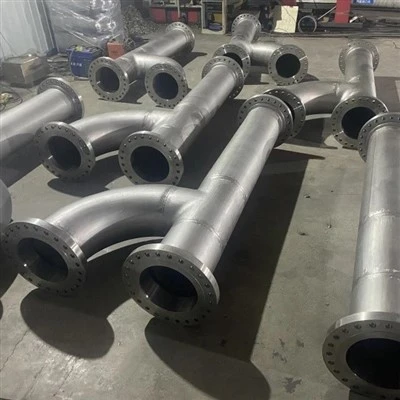
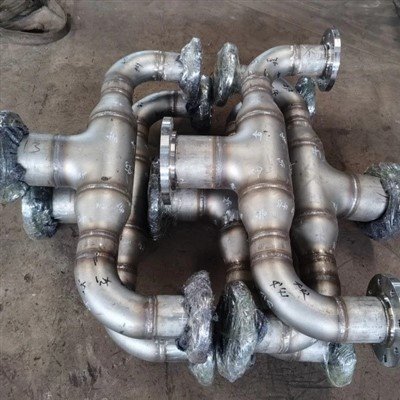
Liquefied Natural Gas (LNG) and cryogenic systems operate at temperatures as low as −196 °C (−321 °F) - cold enough to make ordinary carbon steel brittle and dangerous. Selecting the right material is not a preference; it is a safety imperative. Austenitic stainless steels and high-nickel alloys maintain exceptional toughness at these extreme temperatures, making them the materials of choice across the entire LNG value chain: liquefaction plants, storage tanks, cryogenic pipelines, regasification terminals, and floating LNG (FLNG) vessels.

This guide provides engineers, procurement teams, and project managers with a concise reference for the most widely specified stainless steel and nickel alloy grades in LNG and cryogenic service - covering key mechanical properties, applicable standards, and typical application areas.
Why Ordinary Steel Fails at Cryogenic Temperatures
Carbon and low-alloy ferritic steels undergo a ductile-to-brittle transition (DBT) when temperatures drop. Below the DBT point - which for common carbon steel can be as high as 0 °C - impact energy drops sharply, and the material can fracture with little warning. This phenomenon is responsible for catastrophic historical failures, including the Molasses Disaster of 1919, where a large steel tank ruptured in cold weather, killing 21 people.
Austenitic stainless steels contain face-centred cubic (FCC) crystalline structures that do not exhibit a ductile-to-brittle transition. Their toughness actually improves as temperature decreases, which is why they are mandated by codes such as ASME B31.3 and EN 13480 for cryogenic service.
Austenitic Stainless Steel Grades for LNG Service
Grade 304L and 316L - The Industry Workhorses
304L (UNS S30403): The most widely used cryogenic stainless steel. The "L" denotes low carbon (≤ 0.03 %), which prevents sensitisation during welding - a critical requirement for welded LNG piping and storage systems. Minimum tensile strength is 485 MPa, with a Charpy impact value that remains above 100 J at −196 °C.
316L (UNS S31603): Adds 2–3 % molybdenum for enhanced pitting and crevice corrosion resistance, making it the preferred choice for offshore LNG platforms, coastal terminals, and any environment where chloride exposure is a concern. Typical yield strength is 170 MPa minimum at room temperature, increasing at lower temperatures.
Grade 321 and 347 - Stabilised Grades
Grades 321 (titanium-stabilised) and 347 (niobium-stabilised) are designed for service that combines cryogenic exposure with elevated-temperature cycles - for example, heat exchangers that swing between liquefaction temperatures and process temperatures. Stabilising elements tie up carbon, preventing chromium carbide precipitation at grain boundaries and preserving corrosion resistance across wide temperature ranges.
High-Nickel Alloys for Demanding Cryogenic Service
Where corrosion conditions are more aggressive - such as acid gas processing, sour service, or seawater-wetted FLNG components - high-nickel alloys deliver superior performance that austenitic stainless steels alone cannot match.
Alloy 825 (UNS N08825)
Alloy 825 contains 38–46 % nickel, 19.5–23.5 % chromium, 2.5–3.5 % molybdenum, and copper, providing excellent resistance to both oxidising and reducing acids. It is widely specified for LNG processing equipment exposed to H₂S and CO₂, conforming to ASTM B424 (plate) and ASTM B425 (bar). Its pitting resistance equivalent number (PREN) typically exceeds 30, far outperforming standard 316L.
Alloy 625 (UNS N06625)
With ≥ 58 % nickel, 20–23 % chromium, and 8–10 % molybdenum, Alloy 625 is the standard material for flexible risers and cladding on FLNG hulls. Its tensile strength exceeds 830 MPa in the annealed condition, and it retains full ductility at −196 °C. Alloy 625 conforms to ASTM B443 (plate) and ASTM B446 (bar/rod), and is also qualified under NACE MR0175/ISO 15156 for sour service.
Alloy 600 (UNS N06600)
Alloy 600 provides a high nickel-chromium combination (≥ 72 % Ni, 14–17 % Cr) with excellent resistance to stress corrosion cracking (SCC) in cryogenic heat exchangers and cold boxes. It is specified to ASTM B166 (bar) and ASTM B168 (plate) and remains a go-to material for cold-box shell-and-tube heat exchangers in air separation and LNG liquefaction trains.
Material Comparison: Quick Reference Table
The table below summarises the most commonly specified grades, their minimum service temperature, governing standards, nickel content, and primary application.
|
Grade |
Min Temp (°C) |
Key Standard |
Ni Content |
Primary Application |
|
304L |
−196 °C |
ASTM A240 / A182 |
8–12 % |
LNG tanks, piping, structural |
|
316L |
−196 °C |
ASTM A240 / A276 |
10–14 % |
Marine LNG, process piping |
|
321 |
−196 °C |
ASTM A240 / A182 |
9–12 % |
High-temp + cryo dual service |
|
347 |
−196 °C |
ASTM A240 / A182 |
9–13 % |
Stabilized cryo piping |
|
Alloy 825 |
−196 °C |
ASTM B424 / B425 |
38–46 % |
Sour-service LNG, acid gas |
|
Alloy 625 |
−196 °C |
ASTM B443 / B446 |
≥ 58 % |
Flexible risers, FLNG |
|
Alloy 600 |
−196 °C |
ASTM B166 / B168 |
≥ 72 % |
Heat exchangers, cold boxes |
|
9 % Ni Steel |
−196 °C |
ASTM A553 Type I |
9 % |
LNG storage tank shell |
Table 1: Stainless steel and nickel alloy grades for LNG and cryogenic applications.
Key Material Selection Criteria
When specifying materials for LNG or cryogenic service, engineers should evaluate the following factors:

Design temperature: Verify that the selected grade maintains adequate Charpy impact energy (typically ≥ 27 J per ASME) at the minimum design temperature.
Corrosion environment: Chloride-rich or acid-gas environments require higher-alloyed grades such as 316L, Alloy 825, or Alloy 625.
Weldability: Low-carbon ("L") grades or stabilised grades prevent sensitisation. All butt welds in cryogenic service should be solution-annealed where practical.
Applicable codes: ASME VIII Div. 1, ASME B31.3 Chapter IX (low-temperature piping), EN 13458 (static cryogenic vessels), and IGC Code (for LNG ships) all specify allowable materials.
Product form: Plate, pipe, bar, fittings, and forgings must each conform to their respective ASTM / ASME SB/SA specifications.
Typical LNG and Cryogenic Application Areas
Stainless steel and nickel alloys appear throughout the LNG value chain:
LNG storage tanks: Inner shells in 9 % nickel steel (ASTM A553) or 304L stainless steel; support structures and piping in 304L / 316L.
Cryogenic pipelines and piping systems: Schedule 10S to 80S pipe in 304L / 316L per ASME B36.19; fittings to ASTM A403.
Heat exchangers and cold boxes: Tubes, headers, and shell components in 321, 347, or Alloy 600 depending on temperature cycling duty.
Pumps, valves, and instrumentation: Castings in CF-3M (316L equivalent) or CF-8M; trim in Alloy 625 for high-pressure cryogenic valves.
FLNG and offshore LNG structures: Cladded decks, flexible risers, and spray-cooling piping in Alloy 625 or 316L.
Governing Standards
ASTM A240 / ASME SA-240 - Stainless steel plate, sheet, and strip
ASTM A276 / A479 / ASME SA-479 - Stainless steel bar and shapes
ASTM A182 / ASME SA-182 - Forged stainless steel flanges and fittings
ASTM A403 / ASME SA-403 - Wrought stainless steel piping fittings
ASTM B424 / B443 / B166 - Nickel alloy plate (Alloy 825, 625, 600)
ASTM B425 / B446 / B166 - Nickel alloy bar (Alloy 825, 625, 600)
ASME B31.3 Chapter IX - Cryogenic piping design
EN 13458 - Static cryogenic pressure vessels
NACE MR0175 / ISO 15156 - Sour-service qualification
Conclusion
Every material decision should be validated against the applicable ASME, ASTM, EN, or classification society standard and verified with impact testing data at the minimum design temperature. When in doubt, consult JN supplier.