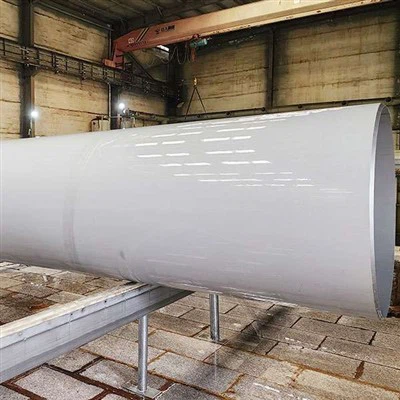
Product Overview
Heat-Resistant Alloy Forgings are high-integrity components engineered for continuous operation under elevated temperatures, severe thermal cycling, and high mechanical loads.
The thermomechanical forging process imparts a refined, directional grain flow that conforms precisely to the final part geometry. This advanced structural configuration delivers superior component continuity and uniform density compared to castings or machined bar stock, ensuring critical dimensional stability and deformation resistance in extreme thermal environments.
Mechanical Performance Characteristics
High yield and tensile strength preservation at elevated operational temperatures.
Low creep rupture elongation under long-term sustained mechanical stresses.
Resistance to micro-cracking and thermal fatigue under cyclic temperature swings.
Microstructural phase stability to prevent material embrittlement during extended service lifetimes.
Technical Parameters
|
Item |
Specification |
|
Product Type |
Heat-Resistant Alloy Forgings |
|
Geometry Range |
Seamless rolled rings, forged blocks, discs, stepped shafts, near-net-shape custom forgings |
|
Size Range |
Outer Diameter up to 1500 mm |
|
Weight Range |
5 kg to 5000 kg |
|
Temperature Limit |
Up to 1100°C |
|
Heat Treatment |
Solution annealing, precipitation hardening, stabilization profiles |
|
Compliance Standards |
ASTM, ASME, EN, ISO |
Material System & Alloy Grades
|
Alloy System |
Typical Grades |
Key Characteristics |
|
Nickel-Based |
Inconel 600 / 601 / 625 / 718 |
High-temperature tensile strength, exceptional oxidation resistance, and scaling resistance. |
|
Iron-Nickel Based |
Incoloy 800 / 800H / 825 |
Superior thermal stability, robust resistance to high-temperature carburization environments. |
|
Cobalt-Based |
Co-based heat-resistant alloys |
Outstanding creep deflection resistance, exceptional hot corrosion, and wear resistance. |
Manufacturing Process Control
Advanced manufacturing protocols govern every stage of production to achieve targeted microstructures:
Melting
Vacuum induction melting or controlled atmosphere processing for high purity.
Forging
Multi-directional precision forging to optimize structural reduction ratios.
Heat Treatment
Programmed solution annealing, precipitation hardening, and stabilization.
Grain Alignment
Custom die configurations designed to align internal grain flow with primary stress axes.
Verification
Thermal cycling simulations to validate high-temperature dimensional stability.
Application Industries
Gas Turbine Technology: Hot-section components, turbine discs, and seal rings.
Industrial Furnace Systems: High-temperature rollers, radiant tubes, and structural hangers.
Power Generation: Superheater components and high-pressure steam piping assemblies.
Petrochemical Processing: Thermal cracking units and catalyst regeneration systems.
Aerospace Engineering: Thermal protection structures and exhaust system components.
Heavy Machinery: High-temperature mechanical transmission shafts and heavy-duty couplings.
Technical Inspection Protocol
Chemical Analysis: Composition verification via optical emission spectroscopy.
Non-Destructive Testing: Volumetric integrity validation via comprehensive Ultrasonic Testing.
Destructive Testing: High-temperature tensile and creep-rupture performance evaluation.
Microstructural Evaluation: Grain size analysis and phase distribution assessment.
Dimensional Verification: Precision coordinate checking against engineering parameters.
International Compliance
- ISO 9001 Quality Management Certification
- Pressure Equipment Directive Compliance
- CE Marking
- Major International Marine Approvals
- GOST and TS Special Equipment Manufacturing Compliance
Custom Manufacturing Capability
Drawing-to-Part Production: Full manufacturing alignment with proprietary customer blueprints and tolerance specifications.
Near-Net-Shape Optimization: Advanced engineering support to optimize forging geometry, reducing raw material input and machining lead times.
Metallurgical Consulting: Technical assistance with custom alloy selection based on targeted service temperatures and environmental chemistry.
Flexible Production Scale: Manufacturing infrastructure accommodating prototype small-batch runs and scheduled volume production.
Packaging & Delivery
Surface Preservation: Application of anti-oxidation and moisture-barrier protective coatings.
Secure Crating: Heavy-duty wooden crates or reinforced steel-frame packaging designed for safe logistical handling.
Traceability Marking: Permanent hard-stamped or etched individual part identification linked directly to batch melt records.
Transit Protection: Industrial desiccant integration and corrosion-inhibiting wrapping for international ocean and air freight.
FAQ
Q: What are the primary structural benefits of a forged heat-resistant component over a cast alternative?
A: Forging creates a refined, continuous grain flow that aligns with the part geometry. This structural alignment eliminates internal porosity and segregation typical of castings, providing higher fatigue strength and superior creep resistance.
Q: What is the maximum operational temperature these forgings can support?
A: Maximum service temperatures depend on the chosen alloy grade and mechanical load, with specific nickel and cobalt-based systems capable of operating in environments up to approximately 1100°C.
Q: Is custom geometric and heat-treatment processing available based on proprietary designs?
A: Yes. All components are manufactured precisely to customer-supplied engineering drawings, utilizing tailored solution or aging heat treatment profiles to achieve requested mechanical specifications.
Q: What quality documentation accompanies the delivered components?
A: Each shipment includes a comprehensive quality data package containing material test reports, chemical analysis certification, ultrasonic inspection results, and dimensional inspection logs.
Q: How is material traceability managed for critical high-temperature applications?
A: Full heat traceability is maintained across the production workflow, linking the final non-destructive testing results directly back to the initial raw material melt batch.
Hot Tags: heat-resistant alloy forgings, China heat-resistant alloy forgings manufacturers, suppliers