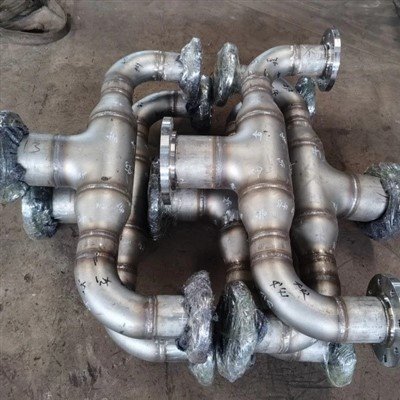
Product Overview
Gas turbine alloy forgings are engineered for critical hot-section and load-bearing components within advanced turbine systems. These structural components maintain mechanical integrity under continuous high temperatures, severe rotational stresses, and cyclic thermal loading.
The controlled thermomechanical forging process optimizes grain flow continuity, eliminates internal micro-discontinuities, and ensures long-term dimensional stability under demanding operational environments.
Technical Specifications
|
Item |
Capability & Range |
|
Maximum Forging Weight |
Up to 5,000 kg |
|
Maximum Outer Diameter (OD) |
Up to 1,200 mm |
|
Operating Temperature Range |
900°C to 1,100°C (Material Grade Dependent) |
|
Microstructure Density |
Homogeneous forged structure with optimized grain refinement |
|
Supply Condition |
Rough machined / Semi-finished / Finished machining |
|
Dimensional Tolerances |
Compliant with ISO tolerance systems and customized drawings |
Performance Advantages
Superior Creep and Thermal Fatigue Resistance: Forged grain flow is precisely aligned with the principal operational stress vectors, delaying grain boundary sliding during long-term high-temperature exposure.
Extended Fatigue Life: Microstructural refinement prevents crack initiation under transient start-stop thermal cycles, ensuring structural reliability.
Alloy Material System
Material selection conforms to international specifications to match specific operating temperatures and mechanical stress profiles:
Nickel-Based Superalloys: Designed for maximum creep resistance in extreme hot sections.
Iron-Nickel High-Temperature Alloys: Engineered for transition zones with moderate thermal exposure.
Cobalt-Based High-Strength Alloys: Selected for hot corrosion and wear resistance under high mechanical loads.
Austenitic Heat-Resistant Stainless Steels: Applied in structural components requiring stable oxidation resistance.
Manufacturing Process
The production sequence integrates advanced metallurgy and precise deformation control to meet stringent power generation standards:
Primary Melting & Refining: Vacuum Induction Melting (VIM) followed by Vacuum Arc Remelting (VAR) to ensure chemical homogeneity.
Controlled Thermomechanical Forging: Precise die forging or ring rolling to align the macrostructure.
Multi-Stage Heat Treatment: Solution treating and precipitation aging compliant with international heat treatment standards to optimize mechanical properties.
Non-Destructive Testing (NDT): Comprehensive volumetric and surface inspection.
Precision Machining: Near-net-shape or proof machining to specified geometric tolerances.
Application Scope
These precision forgings are utilized across high-stress sections of rotating and structural machinery, including:
Turbine Rotor & Disc Components
High-pressure and low-pressure turbine discs.
Compressor Disks & Shafts
Multi-stage compressor rotors and drive shafts.
Blade Roots & Attachments
Heavy-duty blade roots requiring high shear resistance.
Combustion System Structural Rings
Stator rings, combustor casings, and seal rings.
High-Load Coupling & Transition Parts
Flanges, torque tubes, and critical fasteners.
Engineering Customization
Technical engineering support aligns production with specific project requirements:
Conversion of client blueprints into forging designs with optimal machining allowances.
Advanced die design to maximize material utilization and post-forge machining efficiency.
Alloy selection assistance based on operational boundary conditions.
Pickled, shot-blasted, or precision-machined surface topography.
Quality Inspection & International Compliance
Every production heat undergoes comprehensive quality gate validation backed by full traceability documentation:
|
Volumetric Inspection |
100% Ultrasonic Testing (UT) to international standards; Radiographic Testing (RT) available upon request. |
|
Surface Inspection |
Liquid Penetrant Testing (PT) or Magnetic Particle Testing (MT). |
|
Mechanical Characterization |
High-temperature tensile, Charpy impact, and hardness testing. |
|
Microstructural Evaluation |
Grain size analysis and phase stability verification. |
|
Certifications |
ISO 9001, PED (Pressure Equipment Directive), EN 10204 3.1/3.2, Marine Approvals (MA). |
Packaging & Global Logistics
|
Surface Preservation |
Application of heavy-duty anti-corrosion oils. |
|
Environmental Protection |
Moisture-resistant barrier wrapping with desiccant packs. |
|
Secure Transit Crating |
Reinforcement via heavy-duty wooden crates or steel frames suitable for sea and air freight. |
|
Traceability Tagging |
Hard-stamping or weatherproof tagging of heat numbers and component IDs. |
FAQ
Q: How do forged turbine components compare to cast alternatives regarding operational stability?
A: Forging delivers a fully dense structure, eliminating the internal porosity and shrinkage cavities common in castings. The resulting continuous grain flow offers high tensile strength, impact toughness, and resistance to thermal fatigue.
Q: What solutions are available to maximize material utilization on expensive superalloys?
A: Advanced near-net-shape forging processes shape components close to the final dimensions, substantially reducing machining allowances, tool wear, and raw material costs.
Q: How is the integrity of the core structure verified in heavy forgings?
A: Every forging undergoes high-penetration Ultrasonic Testing (UT) to detect internal micro-voids or inclusions, ensuring total volumetric soundness before shipping.
Q: Are custom material specifications accepted for specialized turbine designs?
A: Yes. Production accommodates precise customer-specified chemical compositions and heat treatment profiles, fully validated by independent laboratory reports per batch.
Hot Tags: gas turbine alloy forgings, China gas turbine alloy forgings manufacturers, suppliers