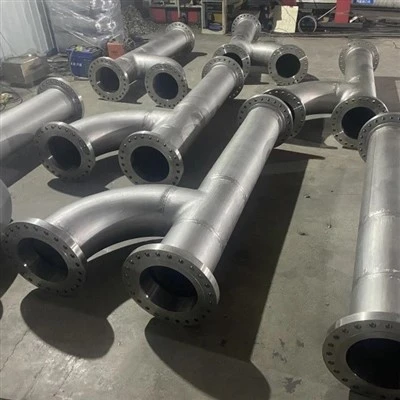
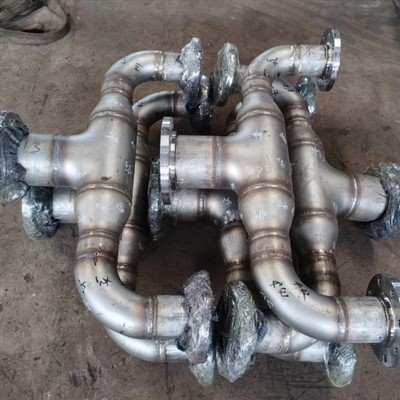
Reuse should follow an engineering assessment-not simply a successful weld. A repair can restore a local joint, but it does not demonstrate that the surrounding furnace component has adequate remaining life. For pressure-containing equipment, API describes fitness-for-service assessment as the quantitative basis for run–repair–replace decisions.
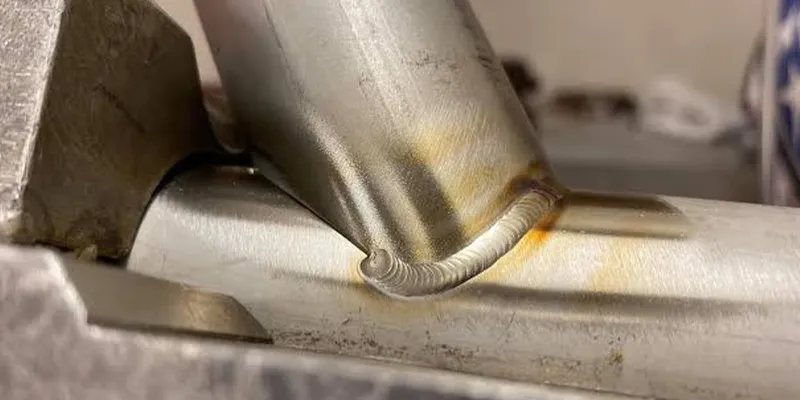
This article compares local weld repair, section replacement, like-for-like replacement, and alloy reassessment. It supports planning; it is not a welding procedure, an inspection acceptance standard, or authorization to return equipment to service.
What must be established before repairing a 321 stainless steel furnace component?
Repair should proceed only when the material, damage mechanism, remaining section, and future operating conditions support a documented reuse decision.
Start by identifying the component's function. A furnace liner, support bracket, radiant tube, and pressure-containing process coil do not carry the same loads or consequences of failure. API 579-1/ASME FFS-1 specifically addresses pressurized equipment; it should not be presented as a universal acceptance code for every furnace fabrication.
Create a repair assessment package containing the material certificate, drawings, previous repairs, operating hours, measured or estimated metal temperatures, thermal cycles, atmosphere, loading, and inspection results. These are proposed engineering inputs, not a claim that one inspection checklist fits every design.
Define the intended reuse period and operating envelope before selecting the repair. A plan to operate through one controlled campaign differs from a claim of unrestricted service life. Where records are missing, make the uncertainty explicit and obtain the evidence needed before approval.
How does 321 compare with 321H and 347 when reuse is being considered?
321, 321H, and 347 are related stainless steels, but neither a similar grade name nor a compatible weld filler establishes interchangeability.
321 uses titanium to stabilize carbon; 347 uses niobium. Stabilization helps prevent carbon from combining with chromium and reducing corrosion resistance near grain boundaries. TWI identifies 347-type filler as the usual choice for welding 321 because titanium is difficult to transfer reliably across the welding arc.
The H designation identifies a higher-carbon variant intended for improved high-temperature strength in creep applications. Creep is slow, permanent deformation under load at elevated temperature. An unidentified or ordinary 321 replacement must not be assumed to meet a 321H design requirement. Verify the applicable product specification and certified properties.
Selecting ER347 weld metal does not convert a 321 component into a 347 component. The base metal, weld deposit, and heat-affected zone-the adjacent material changed by welding heat-remain distinct regions requiring evaluation.
Does a published temperature rating prove that repaired 321 is safe to reuse?
No. An oxidation-resistance temperature is not a remaining-life calculation or an allowable design stress.

Rolled Alloys describes 321 as commonly used around 1000–1600°F (approximately 538–871°C) and lists oxidation resistance to 1600°F. Its data sheet separately presents elevated-temperature tensile and rupture information. Those are different material characteristics, not interchangeable approval criteria.
Assess actual component metal temperature rather than relying only on the furnace controller. For the proposed operating period, the engineering review should address load, section thickness, temperature excursions, and thermal cycling. API's fitness-for-service framework evaluates structural integrity in light of the relevant damage or operating condition.
Practical comparison: a lightly loaded shield and a heavily loaded support at the same temperature can require different decisions. Published material data help select a grade; they do not certify the condition of a particular service-aged part.
Which damage mechanisms can make a local weld repair inappropriate?
Local repair is a candidate only when the damage is bounded and the remaining material is suitable; widespread or unresolved degradation requires broader assessment.
Do not treat every crack as an isolated welding defect. API's inspection training material distinguishes crack-like flaws, creep damage, volumetric damage, and fire damage as separate fitness-for-service concerns. The damage mechanism determines which evidence and assessment method are relevant.
For a furnace component, ask whether the observed damage is associated with sustained high-temperature loading, thermal movement, metal loss, atmospheric attack, or a previous repair. For thick, highly restrained high-temperature weldments, also consider stress-relaxation cracking: TWI identifies 321H among alloys that have experienced this mechanism.
A proposed assessment should distinguish the visible defect from the affected zone. Welding over a crack is not a substitute for establishing its extent and cause. If suitable material cannot be demonstrated around the intended joint, expand the replacement boundary or reject the local repair.
What inspections are needed before choosing repair or replacement?
Use inspection methods that answer specific damage questions; one clean test result cannot establish all aspects of fitness for service.
The following is a proposed inspection-planning matrix, not universal acceptance criteria. The responsible engineer and qualified examination personnel should select methods, coverage, calibration, and acceptance limits for the component and governing requirements. API emphasizes connecting damage mechanisms with inspection and fitness-for-service evaluation.
|
Question to resolve |
Candidate evidence |
Important limitation |
|
Is the material traceable? |
Certificates, markings, and appropriate composition verification |
A grade screen alone does not establish all H-grade specification requirements. |
|
Where are surface-connected cracks? |
Visual examination and liquid penetrant testing after appropriate cleaning |
A clean surface result does not demonstrate remaining creep life. |
|
How much usable section remains? |
Thickness mapping and dimensional survey using suitable methods |
Thickness alone does not describe microstructural condition. |
|
Is service damage present beyond the defect? |
Targeted metallography, replication, or laboratory sampling where justified |
Sampling and interpretation must represent the suspected damage zone. |
|
Are internal weld flaws relevant? |
Qualified volumetric examination where required and technically suitable |
Method suitability and acceptance criteria must be established. |
When is ER347 appropriate, and when should a nickel-alloy filler be considered?
ER347 or E347 is a conventional starting point for 321, but the approved filler must match the service duty and qualified procedure-not just the base-metal label.
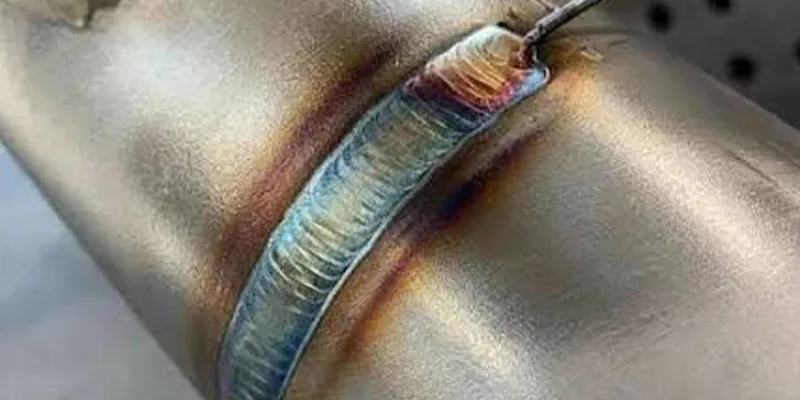
Rolled Alloys lists AWS ER347 bare wire and E347 covered electrodes for 321. TWI explains the metallurgical reason: niobium stabilization avoids the difficulty of transferring titanium across the arc. These recommendations support a starting selection, not automatic approval for every aged component.
Filler recommendations can change with the product and service. For example, Alleima's 321 Aerospace datasheet recommends Exaton Ni72HP for gas-shielded arc welding, while listing several stainless fillers for applications up to 400°C (750°F). That product-specific recommendation must not be generalized into a claim that every 321 furnace repair needs nickel-alloy filler.
Compare the proposed weld deposit's high-temperature performance, cracking behavior, compatibility with both joint members, and environmental resistance. For creep duty, TWI explicitly distinguishes consumable selection for high-temperature strength from selection aimed principally at corrosion resistance.
How should welding procedure controls differ from a routine shop repair?
Use a qualified, application-appropriate repair procedure with explicit preparation, heat control, shielding, and inspection requirements.
Alleima notes that 321's low thermal conductivity and high thermal expansion require controlled heat input and a planned welding sequence to limit distortion. TWI states that GTAW root passes require an inert-gas back purge to prevent chromium loss and damage to corrosion resistance.
The repair plan should define defect excavation, confirmation of the prepared surface, joint geometry, access, filler identity, shielding and root protection where applicable, welding sequence, dimensional control, and final examination. Establish numerical heat-input and interpass limits through the applicable qualified procedure rather than borrowing values from unrelated alloys.
Do not assume a new-material procedure alone resolves the risks of a service-aged component. Where condition is uncertain, the responsible engineer should determine whether representative material examination or a repair demonstration is necessary before production welding.
Is post-weld heat treatment required after repairing 321?
Not routinely-but any exception must be determined from the actual material condition, geometry, service, and governing requirements.
Alleima states that preheating and post-weld heat treatment are not normally necessary for its 321 product. TWI likewise says that most chromium–nickel austenitic stainless steel weldments do not require post-weld heat treatment. Neither statement guarantees that every furnace repair can be returned to service as welded.
Keep stabilization, solution treatment, and stress relief distinct: each addresses a different metallurgical or mechanical objective. Rolled Alloys describes a stabilizing treatment for 321 to improve resistance to intergranular corrosion and polythionic-acid stress-corrosion cracking in relevant service. It is not a general treatment for restoring consumed creep life.
TWI also cautions that stainless steels and nickel alloys can experience stress-relaxation or reheat cracking, including during heat-treatment operations. Therefore, do not prescribe a generic local heat-treatment temperature and soak time for an unidentified aged component. Obtain a metallurgical review before adding such a cycle.
How should local repair, section replacement, and full replacement be compared?
Choose the option that controls the verified failure mechanism over the required operating period, not merely the option with the lowest welding cost.
Use the comparison below as a decision aid. For pressure-containing equipment, API identifies fitness-for-service evaluation as the basis for deciding whether damaged components can continue to operate safely for a specified period.
An alloy upgrade deserves consideration when the original material and actual duty are mismatched. However, a new grade can change weldability and fabrication requirements. For example, Rolled Alloys specifies matching 253 MA filler for RA 253 MA and RA330-04 filler for RA330; neither is simply a drop-in extension of an ER347 repair procedure.
|
Option |
Potentially appropriate when |
Reason to reject or reassess |
|
Local weld repair |
Damage is localized; sound surrounding material and adequate remaining section are demonstrated. |
Cause remains active, damage extends beyond the excavation, or remaining life is unsupported. |
|
Section replacement |
Affected material can be removed to a defensible boundary while retaining sound material. |
New joints would fall in degraded or inaccessible material. |
|
Like-for-like replacement |
The original alloy remains suitable, but the existing part is not a justified repair candidate. |
Actual service exceeds the original design basis. |
|
Redesign or alloy reassessment |
Temperature, atmosphere, loading, or restraint is incompatible with the existing design. |
A proposed upgrade lacks design verification or a suitable fabrication route. |
What evidence is needed before the repaired component returns to service?
Release should require documented acceptance of the repair and the intended service conditions, with a defined inspection or review interval.
A proposed release package should include material traceability, the approved repair drawing, applicable welding procedure and qualifications, consumable records, excavation and final inspection reports, dimensional results, any required heat-treatment or pressure-test records, and the engineering disposition.
Keep the questions separate: Is the weld acceptable? Is the component suitable for the planned duty? A weld examination addresses the first within its scope; a condition and fitness assessment addresses the second. API defines fitness-for-service assessment around structural integrity of the in-service component, not simply weld appearance.
For non-pressure furnace hardware, identify the applicable design, owner, and equipment-manufacturer requirements rather than assuming a pressure-equipment standard applies. Record operating restrictions, monitoring needs, and responsibility for the next review.
What should a manufacturer provide when quoting repaired or replacement 321 furnace parts?
A technically credible quotation should define material identity, repair or replacement scope, inspection deliverables, and the limits of the supplier's responsibility.
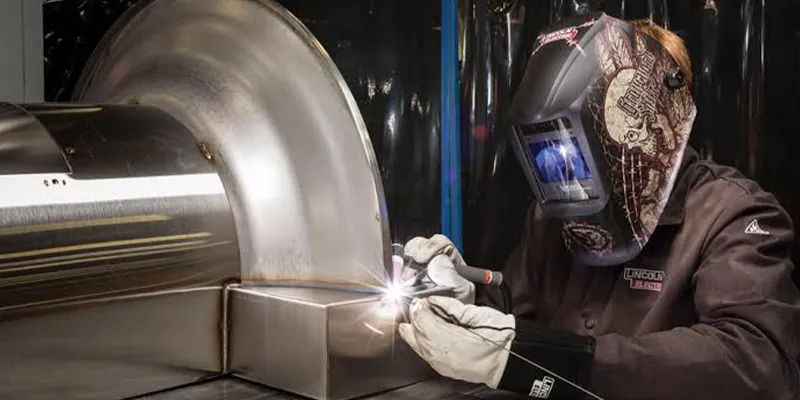
Request the specified grade and product standard, required certification, dimensions and tolerances, joint details, filler and procedure basis, examination scope, and any heat-treatment requirements. If the original specification calls for 321H, do not substitute 321 solely because it is available; the H designation carries high-temperature-strength implications.
Separate fabrication conformity from remaining-life approval. A manufacturer can document what it supplied and how it fabricated or repaired it; continued-service acceptance must rest with the responsible engineering authority under the applicable requirements. For pressure-containing equipment, that distinction aligns with API's quantitative fitness-for-service approach.