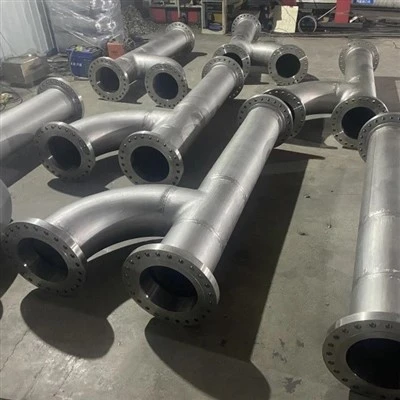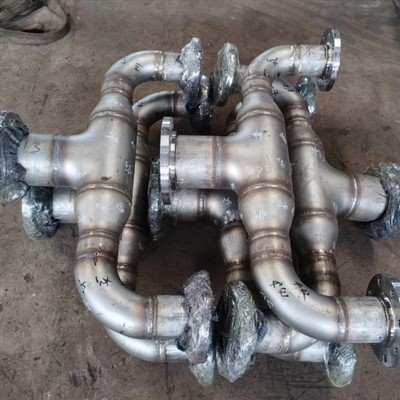
A corroded stainless steel pump casing looks like an easy weld job: grind out the pits, fill them in, and put the pump back to work. Many such repairs fail within months, because the welder fixed the hole but not the reason the hole appeared. Others fail because the casing was not the alloy everyone assumed, the wall was already too thin, the metal was soaked with process fluid, or the weld metal turned out less corrosion resistant than the casting around it.
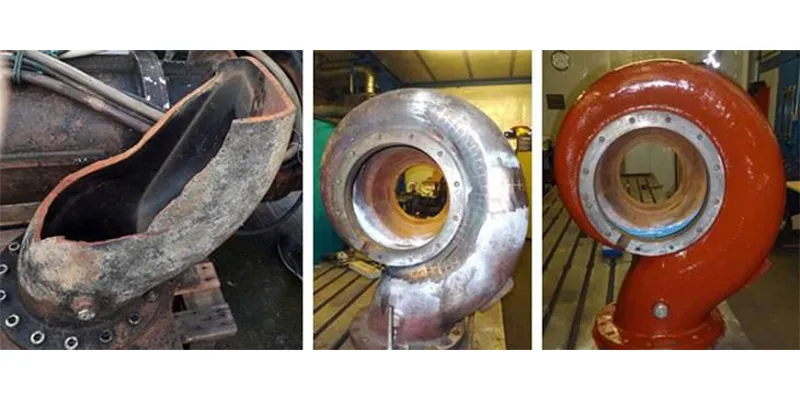
This guide sets out what to check before an arc is struck: the material, the root cause, the remaining wall, the cleanliness of the metal, the filler, the procedure, the heat treatment, and the testing. It is written for maintenance engineers, buyers, and students, and it compares the repair options so the right one can be chosen.
Before welding a corroded 316L pump casing, confirm what the casing really is (most are cast CF3M, the casting equivalent of 316L), find out why it corroded, measure the remaining wall against the minimum required, decontaminate and grind to sound metal, choose a filler at least as corrosion resistant as the base metal, use a qualified procedure with low heat input, decide whether solution heat treatment is needed, and finish with inspection, a hydrostatic test, and restoration of the passive surface. If the cause is chloride, crevices, or stagnation beyond what 316L can handle, welding the same alloy back will repeat the failure, so repair, replace, or upgrade should be decided together.
What Should You Check Before Welding a Corroded 316L Pump Casing?
Check eight things in order: material identity, corrosion cause, remaining wall, surface condition and contamination, filler and procedure, heat treatment need, inspection and test plan, and post-weld surface restoration. Skipping the first three is the most common reason repairs fail.
|
# |
Check |
Key Question |
|
1 |
Material identity |
Is it cast CF3M, cast CF8M, or fabricated wrought 316L, and is carbon low enough for an L grade? |
|
2 |
Corrosion cause |
Is it pitting, crevice attack, stress corrosion cracking, erosion-corrosion, cavitation, or MIC, and will it return? |
|
3 |
Remaining wall |
Is the wall still above the minimum required, including corrosion allowance, after the defects are removed? |
|
4 |
Cleanliness |
Is the metal free of process fluid, chlorides, oil, and deposits, and are all defects ground out? |
|
5 |
Filler and procedure |
Does the weld metal match or exceed the corrosion resistance of the casting, under a qualified procedure? |
|
6 |
Heat treatment |
Does the service (for example stress corrosion) require solution heat treatment after repair? |
|
7 |
Inspection and test |
What surface, volumetric, and pressure tests will prove the repair? |
|
8 |
Surface restoration |
How will heat tint and contamination be removed and the passive film restored? |
Table 1. Pre-weld checklist for a corroded 316L pump casing.
Is the Casing Really 316L, and Is It Cast or Fabricated?
Most 316L pump casings are castings made of CF3M, the cast equivalent of wrought 316L, with a few percent ferrite. Confirm the actual alloy and form with markings, certificates, and positive material identification, because filler choice, repair rules, and corrosion limits depend on it.
Nickel Institute casting guidance describes CF3M as the cast equivalent of Type 316L and the lower-carbon version of CF8M, the 316 equivalent. Castings contain a few percent ferrite, which improves weldability and gives cast bodies slightly higher yield strength than wrought equivalents. The ferrite is beneficial for weld repair because it minimizes the hot cracking that can occur in weld deposits of fully austenitic stainless steels. A wrought or fabricated casing (for example, a sanitary pump made from sheet and plate) behaves differently: it has no cast structure, and its repair is governed by fabrication rather than casting rules.
|
Form |
Typical Designation |
Why It Matters for Repair |
|
Cast, low carbon |
ASTM A351 CF3M (about 316L) |
Contains ferrite; castings are repaired under casting rules (Practice A488) |
|
Cast, standard carbon |
ASTM A351 CF8M (about 316) |
Higher carbon (0.08% max); a 316L filler or low heat input is advisable to limit sensitization |
|
Fabricated wrought |
316L plate, sheet, or pipe (ASTM A240, A312) |
No casting rules; follow fabrication code and welding procedure |
|
Other alloy mistaken for 316L |
304/CF8, duplex, or a nickel alloy |
Wrong filler can create poor corrosion resistance or cracking |
Table 2. Pump casing forms and why identification matters.
Use markings and the original certificate first, then verify with positive material identification. Handheld X-ray fluorescence separates 304 from 316 quickly but does not measure carbon accurately, so a laboratory analysis is needed to confirm an "L" grade when carbon matters. A ferrite meter reading can confirm the casting contains ferrite. If the identity cannot be confirmed, treat the casting as unknown and decide repair versus replacement accordingly.
What Caused the Corrosion, and Will Welding Fix It?
Welding removes damaged metal but does not remove the cause. If chloride, crevices, stagnation, cavitation, or erosion produced the damage, the repaired area will usually be attacked again. Diagnose the mechanism before choosing the repair.
Pump service guides list the usual causes in 316-type casings: pitting and crevice corrosion from chlorides, especially at gasket seats and O-ring grooves; chloride stress corrosion cracking where tensile stress and heat are present; erosion-corrosion where velocity and solids strip the passive film; and cavitation damage at the impeller eye and vane tips.
Low-flow regions, crevices, and gasket seats create micro-environments where corrosive species concentrate, and standby or idle pumps that sit full of stagnant liquid are especially at risk. One diagnostic guide puts the warning plainly: replacing a pump with the same material before testing can repeat the failure.
|
Mechanism |
Clues on the Casting |
Will a Like-for-Like Weld Fix It? |
What Also Has to Change |
|
Chloride pitting |
Scattered deep pits in wetted areas |
Only temporarily if chloride and temperature are unchanged |
Upgrade alloy or filler, reduce chloride or temperature, clean surfaces |
|
Crevice corrosion |
Attack at gasket faces, wear ring seats, O-ring grooves, under deposits |
No if the crevice remains |
Change joint design, gasket and groove geometry; keep surfaces clean |
|
Stress corrosion cracking |
Branching cracks, often near welds or high-stress zones |
No; cracks may be widespread |
Stress relief or solution treatment; change alloy; control chloride |
|
Erosion-corrosion |
Polished, directional wall loss in high-velocity zones |
Temporarily |
Reduce velocity, filter solids, consider harder overlay |
|
Cavitation |
Pitted, spongy damage at eye and vane tips, with noise or vibration |
No if the hydraulic cause remains |
Correct suction conditions and operating point |
|
Microbiologically influenced corrosion |
Pits under deposits, often after stagnant periods |
No |
Drain, flush, and dry idle pumps; control water quality |
Table 3. Corrosion mechanisms in stainless steel pump casings, and what a repair must address.
As a rough guide from pump supplier material guides, chloride above a few hundred ppm at ambient temperature can start to push 316 toward pitting and crevice attack, with higher temperature and stagnation making it worse, and there is no universal ppm limit because temperature, pH, oxidizers, crevices, and deposits all change the risk. See our guide on stainless steel selection for acid, alkali, and solvent service for how to match alloy to chemistry, and our article on dead legs for how stagnation changes local conditions.
Is There Enough Wall Left to Repair the Casing?
Measure the remaining wall across the damaged area and compare it with the minimum required wall for the casing's pressure plus its corrosion allowance. If grinding out the damage leaves less than the minimum, welding build-up becomes a pressure-boundary repair that needs full qualification, and replacement may be the better option.
API 610, the standard for petroleum and chemical process pumps, requires the pressure casing to be designed with a minimum corrosion allowance of 3 mm (0.12 in), unless another allowance is specified. That allowance exists so the casing can lose some metal in service and still contain pressure. A corroded casing has been using it. Measure the remaining thickness with an ultrasonic gauge in a grid over and around the damage, record the minimum, and compare with the original design thickness from the manufacturer or the drawings. A pit that looks small on the surface can be deep, and wall loss often continues beyond the visible damage.
Casting standards also set triggers by repair size. ASTM A351 requires weld repairs to be inspected to the same quality standards as the castings. Where Supplementary Requirement S5 is specified, weld repairs must be radiographed if the casting leaked on hydrostatic test, if the cavity prepared for repair is deeper than 20% of the wall thickness or 1 inch (25 mm), whichever is smaller, or if the cavity is larger than about 10 square inches (65 cm²). Large or deep excavations therefore need volumetric inspection, which should be planned before the metal is removed.
|
Finding |
Typical Direction |
Reason |
|
Isolated shallow pits; remaining wall well above minimum |
Local weld repair is feasible |
Little structural loss; small cavity |
|
Deep pits or cavity beyond 20% of wall, or large area |
Repair possible with volumetric inspection (RT or UT) |
Matches the inspection triggers in A351 S5 |
|
Wall at or near minimum after defect removal |
Consider replacement or engineered repair |
No margin left for corrosion allowance |
|
Widespread thinning or cracking |
Replace or rebuild the casing |
Damage is not local; repair would not restore reliability |
Table 4. Remaining wall and repair direction. Thresholds must come from the casing's design basis and the owner's repair specification.
How Do You Prepare a Contaminated, Service-Exposed Casting for Welding?
Drain and decontaminate, remove all corrosion products and deposits, grind to sound metal, and confirm with dye penetrant that every defect is gone. Do not peen, plug, or impregnate the casting to stop a leak.
ASTM A351 states that castings shall not be peened, plugged, or impregnated to stop leaks, so temporary fixes must be removed and the defect properly excavated. Castings that have been in service can be saturated with process fluid, and contaminants that remain in the metal or surface can cause porosity, lack of fusion, and inclusions when welded.
Repair practice guidance stresses that the groove and surrounding area must be free of oil, paint, moisture, oxides, and penetrant residue, that excavation should continue until the indication is gone as shown by penetrant or magnetic particle inspection, and that welding over porosity only traps the weakness. Chlorinated solvents should never be used near the weld area.
|
Step |
Practice |
Why |
|
Isolate and decontaminate |
Drain, flush, and neutralize; follow the plant's safe-work procedure |
Removes process fluid and hazards |
|
Remove deposits and corrosion products |
Mechanical cleaning with stainless-only tools |
Avoids iron contamination of stainless surfaces |
|
Degrease |
Acetone or approved welding degreaser; allow to evaporate; no chlorinated solvents |
Prevents porosity and chloride contamination |
|
Excavate to sound metal |
Grind out each pit and crack; blend the cavity edges |
Welding over a defect traps it |
|
Verify with penetrant |
Dye penetrant inspection of the excavation, repeat until clear |
Confirms defect removal on nonporous surfaces |
|
Clean again |
Bright metal at least 25 mm (1 in.) beyond the weld edge |
Reduces porosity and lack of fusion |
Table 5. Preparation steps for welding a service-exposed stainless steel casting.
Which Filler Metal and Welding Procedure Should You Use?
ER316L (or E316L electrodes) is the standard match for a 316L or CF3M casting, but weld metal is always less pitting resistant than base metal of the same composition, so for corrosion damage consider an over-alloyed filler such as 317L, 904L-type, or Alloy 625 where the weld sees the same corrosive environment. Use a procedure and welders qualified for casting repair.
Practical guidance for welding CF8M and CF3M casting repairs uses ER316L or E316L electrodes. The reason for caution is segregation: a laboratory study of stainless weld metal found that weld metal pitting resistance was always lower than that of base steel of matching composition because of segregation of alloying elements, with weld pitting resistance depending mainly on molybdenum content.
A supplier technical sheet for 316/317 grades makes the same point, noting that high-molybdenum deposits may suffer degraded corrosion resistance in severe environments because of micro-segregation of molybdenum, and that Type 904L (ER385) or Alloy 625 (ERNiCrMo-3) filler has been used where weld corrosion resistance must be increased. In one study of 316L weldments in hot organic acid, matching fillers corroded much faster than the parent metal, while highly alloyed nickel fillers (904L, 825, and 625) corroded more slowly than the base metal, with 625 the best.
|
Filler Option |
Corrosion Resistance vs 316L Casting |
Advantages |
Cautions |
|
ER316L / E316L (matching) |
Equal on paper; weld metal pitting resistance is lower in practice due to segregation |
Standard, proven, adequate ferrite for crack resistance, widely qualified |
May become the weak spot in severe chloride service |
|
ER317L (higher Mo) |
Higher Mo than 316L deposit |
More pitting and crevice margin for modest cost |
Needs qualified procedure; heat tint is more tenacious |
|
904L-type (ER385) |
Higher alloy, 4.5% Mo |
Better in acids and chlorides |
Different weld metallurgy; qualify the procedure |
|
Alloy 625 (ERNiCrMo-3) |
Much higher resistance; about 9% Mo |
Best performer in the filler study; used for overlays |
Cost; dissimilar weld procedure; check with the pump manufacturer |
Table 6. Filler options for repair welding a corroded 316L or CF3M pump casing. Selection depends on the service chemistry and the owner's specification.
Procedure requirements also matter. ASTM A351 requires repairs to be made using procedures and welders qualified under Practice A488, and the repair must be inspected to the same quality standards as the casting. For pump casings under owner specifications or API 610, additional approvals and records often apply. Repairs should use clean, dry filler stored properly, controlled shielding gas, and, in practice, gas tungsten arc welding for its low heat input on thin or critical sections.
How Do You Avoid Sensitization, Hot Cracking, and Distortion?
Use low-carbon filler and a low heat input, keep interpass temperature controlled, weld in short staggered passes, and rely on the casting's ferrite to resist hot cracking. Plan for distortion in machined areas such as flange faces and wear ring seats.
Low-carbon grades (316L and CF3M) limit chromium carbide precipitation in the heat-affected zone, which is why they are chosen for welded parts, but the weld metal must also be low carbon, so a standard 316 filler on CF3M can reintroduce the problem. Casting ferrite helps resist hot cracking in the weld deposit, which is one reason ferrite-containing fillers and castings are specified; supplier guidance commonly cites about 3 to 10 percent delta ferrite as desirable in the deposit.
Heat input and interpass limits come from the qualified procedure; published repair guidance commonly keeps interpass temperature in the range of roughly 150 to 200°C (about 300 to 400°F), so check your procedure and the owner's specification.
|
Risk |
Cause |
Control |
|
Sensitization (intergranular attack) |
Carbon precipitating chromium carbides in the heat-affected zone |
Low-carbon base and filler; low heat input; limit time in the 425–870°C range |
|
Hot cracking in the weld |
Fully austenitic weld deposit with impurities such as sulfur and phosphorus |
Ferrite-containing filler; clean metal; avoid dilution with contaminants |
|
Distortion of machined surfaces |
Thick, uneven casting sections heating and cooling |
Short staggered passes, balanced welding, machining allowance, check fits after repair |
|
Porosity and lack of fusion |
Contaminated metal, wrong shielding gas flow, poor joint preparation |
Clean to bright metal; correct gas flow; blend cavity edges |
Table 7. Welding risks in stainless steel casting repair and their controls.
When Is Heat Treatment Required After the Repair?
ASTM A351 advises that austenitic castings used in stress-corrosion service should be solution heat treated following all weld repairs, and the purchaser should say so on the order. Otherwise, post-weld heat treatment is not routinely needed for low-carbon grades, but the decision should be made deliberately, balancing distortion risk against cracking risk.
The A351 note is explicit: when austenitic steel castings are to be used where they will be subject to stress corrosion, the purchaser should indicate this and the castings should be solution heat treated following all weld repairs. Solution heat treatment dissolves carbides and relieves residual stress, which reduces susceptibility to cracking, but it also risks distortion and requires furnace capacity and re-machining. For chloride service where stress corrosion cracking is a realistic concern, the repair decision should consider whether the whole casing can be re-solution-treated or whether replacement or a different alloy is more reliable.
What Inspection and Testing Must Follow the Weld Repair?
Inspect the repair visually and with dye penetrant, add radiography or ultrasonic testing where the repair size or specification requires, then hydrostatically test the casing at a minimum of 1.5 times the maximum allowable working pressure, and use low-chloride test water that is drained and dried promptly.
For pumps built to API 610, all pressure casing components are hydrostatically tested with liquid at a minimum of 1.5 times the maximum allowable working pressure, with a minimum hold of 30 minutes, and the result is satisfactory if no leak or seepage is seen from pressure-containing parts. The code requires the test liquid chloride content to be below 50 ppm for stainless steel casings to avoid stress corrosion cracking.
API 610 also requires that connection welding be completed before the hydrostatic test, and that any areas machined after the test be identified in the test report. A repaired casing should be retested after repair. Remember that residual hydrotest water can start pitting and microbial attack, so drain and dry promptly; see our dead leg article for why stagnant water is hazardous to stainless steel.
|
Test |
Purpose |
Notes |
|
Visual and dimensional inspection |
Weld profile, undercut, fit of wear ring seats and flange faces |
Re-machine as needed and re-measure |
|
Dye penetrant inspection |
Surface cracks and porosity in the repair |
Repeat after any grinding |
|
Radiography or ultrasonic testing |
Internal defects in large or deep repairs |
Triggers per A351 S5 and the owner's specification |
|
Hydrostatic test |
Leak-tightness and structural proof |
At least 1.5 × MAWP for at least 30 minutes (API 610); chloride below 50 ppm |
|
Drying and preservation |
Prevents pitting and MIC after the test |
Drain promptly and dry |
Table 8. Inspection and test plan after weld repair of a pump casing.
How Do You Restore Corrosion Resistance After Welding?
Remove heat tint and weld scale by pickling or equivalent cleaning, then passivate per ASTM A380 and A967, and avoid contaminating the surface with carbon steel. Welding burns off the passive film, and the oxide it leaves is a common place for pitting to start.
Welding depletes chromium at the surface and leaves oxide scale and heat tint, which is thicker but less protective than the natural passive film; in chloride service it is often where pitting starts. After welding, clean and descale the weld and surrounding area, and passivate per ASTM A380 (cleaning and descaling) and A967 (passivation treatments), using methods compatible with the casting size and service. Use dedicated stainless tools and brushes, and keep carbon steel away from the surface. Restore the surface finish where the original design required it, because rough surfaces and deposits promote crevice and under-deposit attack.
Should You Repair, Replace, or Upgrade the Casing?
Repair when damage is local, the wall is sound, and the cause is understood and removed; replace when thinning or cracking is widespread or the wall is at the minimum; and upgrade the alloy or the weld overlay when chloride, temperature, or crevice conditions exceed what 316L can handle.
|
Condition |
Best Option |
Notes |
|
Isolated pits; sound wall; cause identified and removed |
Weld repair with matching or over-alloyed filler |
Qualified procedure, NDE, hydrotest |
|
Pitting or crevice attack from chloride above 316L limits |
Upgrade filler or overlay, or change alloy (duplex, 6% Mo, nickel alloy) |
Check with the pump manufacturer and material guide |
|
Cavitation or erosion damage |
Correct hydraulics first; then repair or overlay |
A repair without fixing the cause is temporary |
|
Stress corrosion cracking widespread |
Replace |
Repair rarely stops further cracking |
|
Wall at or near minimum |
Replace or engineered repair |
Pressure containment margin is gone |
|
Casting identity unknown |
Replace, or identify and requalify |
Wrong filler can fail quickly |
Table 9. Repair, replace, or upgrade decision guide for a corroded stainless steel pump casing.
Frequently Asked Questions
Can you weld a corroded stainless steel pump casing?
Often yes, if the casting is identified, the cause of corrosion is removed, the remaining wall is above the minimum, and the repair follows a qualified procedure with inspection and a hydrostatic test. If the cause remains, the repair will usually fail again.
What filler metal is used to repair a 316L or CF3M casting?
ER316L (or E316L electrodes) is the standard match. Because weld metal pitting resistance is lower than base metal of the same composition, higher-alloyed fillers such as 317L, 904L-type, or Alloy 625 are considered where weld corrosion resistance must be increased.
What is CF3M?
CF3M is the ASTM A351 casting grade equivalent to wrought 316L. It contains chromium, nickel, and molybdenum like 316L, with a few percent ferrite and carbon limited to 0.03%.
Does a repaired casting need heat treatment?
ASTM A351 advises that austenitic castings used where they will be subject to stress corrosion should be solution heat treated following all weld repairs, and the purchaser should say so on the order. Other services decide case by case.
How should a repaired pump casing be pressure tested?
For API 610 pumps, hydrostatically at least 1.5 times the maximum allowable working pressure for at least 30 minutes, using liquid with chloride below 50 ppm for stainless steel, and drying promptly afterward.
Is it acceptable to plug or peen a leaking casting?
No. ASTM A351 states that castings shall not be peened, plugged, or impregnated to stop leaks. The defect should be excavated and repaired under a qualified procedure.