Ask three buyers for "16 gauge stainless steel" and you can receive three different thicknesses. The reason is that a gauge number is not a universal unit. It is a label from a particular historical system, and the main systems (SWG, BWG, AWG, and the US sheet gauges) were built for different products.
This guide gives you verified conversion charts to millimeters and inches, shows how far the systems disagree, and explains how to specify stainless steel sheet so there is no doubt about thickness. Each section states the conclusion first, then the reasoning. Gauge values are published reference figures; for purchase, always state the thickness in millimeters or inches.
Key Takeaways
- The same gauge number gives different thicknesses in different systems: at gauge 16, SWG is 1.63 mm, BWG is 1.65 mm, AWG is 1.29 mm, US stainless sheet is 1.59 mm, and US carbon steel sheet is 1.52 mm.
- US stainless steel sheet is normally sold to the US stainless sheet gauge (for example 16 gauge = 0.0625 in = 1.59 mm), which is slightly thicker than carbon steel sheet at the same gauge number.
- SWG (Standard Wire Gauge) is common in the UK, India, and the Middle East for sheet and wire; BWG (Birmingham Wire Gauge) is mainly used for tube wall thickness; AWG (American Wire Gauge) is a wire gauge and is not normally used for stainless sheet.
- Gauge numbers run backwards: a higher number means thinner metal.
- Weight follows thickness: 304 stainless sheet weighs about 7.93 kg per square meter for every millimeter of thickness (about 41.3 lb per square foot per inch).
- Best practice is to order stainless sheet by decimal thickness (mm or in), the material grade, and the product specification, and to treat the gauge number only as a nickname.
What Is a Gauge Number, and Why Is It Confusing for Stainless Steel Sheet?
A gauge number is a historical size label, not a unit of measurement, and it only gives a real thickness when you know which gauge system it belongs to; for stainless steel sheet, at least five different systems are in use.
Gauge systems grew up in separate industries. Wire makers in Birmingham, Britain, and America each created a numbered series, and sheet and tube makers borrowed them. The numbers run backwards (a larger number is thinner) and do not step evenly. Some systems are based on a fixed percentage change between steps (AWG), while others are based on tables of inch values that were adjusted over time (SWG, BWG).
Because stainless steel is made and sold worldwide, a buyer may meet US sheet gauge, SWG, BWG, and AWG in a single project. That is why a gauge number alone cannot be trusted.
How Do SWG, BWG, AWG, and US Stainless Gauge Differ?
SWG, BWG, and AWG are wire-origin gauges with different dimension tables, while US stainless sheet gauge is a separate sheet standard; for stainless sheet you will mostly see US stainless gauge and SWG, for tube you will see BWG, and AWG is for wire and some nonferrous sheet.
|
System |
Origin |
Typically used for |
Used for stainless sheet? |
|
US stainless sheet gauge |
US Manufacturers' Standard Gauge, stainless values |
Stainless sheet and strip in the US |
Yes, most common in North America |
|
SWG (Imperial / British Standard) |
British Standard Wire Gauge (BS 3737:1964, withdrawn), based on the mil (0.001 in) |
Wire and sheet in the UK, India, Middle East |
Yes, in those markets |
|
BWG (Birmingham / Stubs) |
Older Birmingham gauge, predecessor of SWG |
Tube wall thickness, including stainless heat-exchanger tube |
Mainly tube, not sheet |
|
AWG (American / Brown and Sharpe) |
American Wire Gauge, defined by a mathematical series |
Electrical wire; aluminum and copper sheet in North America |
No, not normally |
|
US carbon steel sheet gauge |
Manufacturers' Standard Gauge for carbon steel |
Carbon and galvanized steel sheet |
No: thinner than stainless at the same number |
SWG was constructed as an improvement on the older Birmingham gauge and is the successor to it. Although the British standard was withdrawn, SWG values remain widely quoted. The AWG series follows a fixed mathematical rule, so each step in gauge number changes the diameter by the same ratio, which is why AWG values differ from the table-based systems.
What Is the Stainless Steel Sheet Gauge Chart in Millimeters and Inches?
US stainless steel sheet gauge runs from 8 gauge (4.37 mm, 0.1719 in) through 16 gauge (1.59 mm, 0.0625 in) to 24 gauge (0.64 mm, 0.0250 in); the table lists inch and millimeter thickness with the weight of 304/304L sheet.
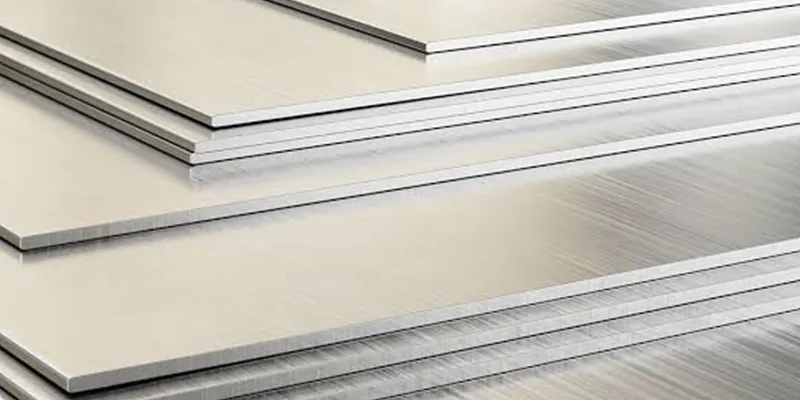
The values below are the US stainless steel sheet gauge values published in common reference charts, converted to millimeters at 25.4 mm per inch. Weights assume 304/304L at 7.93 g/cm³. Other gauge numbers exist between those shown; use the decimal thickness to avoid ambiguity.
|
US stainless gauge |
Thickness (in) |
Thickness (mm) |
304 weight (kg/m²) |
304 weight (lb/ft²) |
|
8 |
0.1719 |
4.366 |
34.62 |
7.09 |
|
10 |
0.1406 |
3.572 |
28.32 |
5.80 |
|
11 |
0.1250 |
3.175 |
25.18 |
5.16 |
|
12 |
0.1094 |
2.778 |
22.03 |
4.51 |
|
14 |
0.0781 |
1.984 |
15.74 |
3.22 |
|
16 |
0.0625 |
1.587 |
12.59 |
2.58 |
|
18 |
0.0500 |
1.270 |
10.07 |
2.06 |
|
20 |
0.0375 |
0.952 |
7.55 |
1.55 |
|
22 |
0.0313 |
0.794 |
6.29 |
1.29 |
|
24 |
0.0250 |
0.635 |
5.04 |
1.03 |
Note that US stainless gauge is not the same as US carbon steel gauge. At gauge 16, stainless is 0.0625 in (1.59 mm) while carbon steel is 0.0598 in (1.52 mm). A fabricator who quotes stainless sheet from a carbon steel chart will be off by about 4%.
What Are the SWG Values in Millimeters?
SWG 10 is 3.251 mm, SWG 12 is 2.642 mm, SWG 14 is 2.032 mm, SWG 16 is 1.626 mm, SWG 18 is 1.219 mm, and SWG 20 is 0.914 mm; SWG is defined in thousandths of an inch.
|
SWG |
Thickness (in) |
Thickness (mm) |
304 weight (kg/m²) |
304 weight (lb/ft²) |
|
10 |
0.1280 |
3.251 |
25.78 |
5.28 |
|
11 |
0.1160 |
2.946 |
23.36 |
4.79 |
|
12 |
0.1040 |
2.642 |
20.95 |
4.29 |
|
13 |
0.0920 |
2.337 |
18.53 |
3.80 |
|
14 |
0.0800 |
2.032 |
16.11 |
3.30 |
|
15 |
0.0720 |
1.829 |
14.50 |
2.97 |
|
16 |
0.0640 |
1.626 |
12.89 |
2.64 |
|
17 |
0.0560 |
1.422 |
11.28 |
2.31 |
|
18 |
0.0480 |
1.219 |
9.67 |
1.98 |
|
19 |
0.0400 |
1.016 |
8.06 |
1.65 |
|
20 |
0.0360 |
0.914 |
7.25 |
1.49 |
|
21 |
0.0320 |
0.813 |
6.45 |
1.32 |
|
22 |
0.0280 |
0.711 |
5.64 |
1.16 |
|
23 |
0.0240 |
0.610 |
4.83 |
0.99 |
|
24 |
0.0220 |
0.559 |
4.43 |
0.91 |
|
25 |
0.0200 |
0.508 |
4.03 |
0.83 |
|
26 |
0.0180 |
0.457 |
3.63 |
0.74 |
SWG numbers are exact decimal inch values, so conversion is a single multiplication by 25.4. Because SWG is widely used in India and the Middle East, stainless sheet quoted in "SWG" there will use these values, though suppliers sometimes round to the nearest common metric thickness.
What Are the BWG Values in Millimeters?
BWG 10 is 3.404 mm, BWG 12 is 2.769 mm, BWG 14 is 2.108 mm, BWG 16 is 1.651 mm, BWG 18 is 1.245 mm, and BWG 20 is 0.889 mm; BWG is used mainly for tube wall thickness.
|
BWG |
Thickness (in) |
Thickness (mm) |
304 weight (kg/m²) |
304 weight (lb/ft²) |
|
10 |
0.1340 |
3.404 |
26.99 |
5.53 |
|
11 |
0.1200 |
3.048 |
24.17 |
4.95 |
|
12 |
0.1090 |
2.769 |
21.95 |
4.50 |
|
13 |
0.0950 |
2.413 |
19.14 |
3.92 |
|
14 |
0.0830 |
2.108 |
16.72 |
3.42 |
|
15 |
0.0720 |
1.829 |
14.50 |
2.97 |
|
16 |
0.0650 |
1.651 |
13.09 |
2.68 |
|
17 |
0.0580 |
1.473 |
11.68 |
2.39 |
|
18 |
0.0490 |
1.245 |
9.87 |
2.02 |
|
19 |
0.0420 |
1.067 |
8.46 |
1.73 |
|
20 |
0.0350 |
0.889 |
7.05 |
1.44 |
|
21 |
0.0320 |
0.813 |
6.45 |
1.32 |
|
22 |
0.0280 |
0.711 |
5.64 |
1.16 |
|
23 |
0.0250 |
0.635 |
5.04 |
1.03 |
|
24 |
0.0220 |
0.559 |
4.43 |
0.91 |
|
25 |
0.0200 |
0.508 |
4.03 |
0.83 |
|
26 |
0.0180 |
0.457 |
3.63 |
0.74 |
BWG is the gauge used to describe the wall thickness of tubes, for example stainless steel heat-exchanger and condenser tube. A tube described as 18 BWG has a 1.245 mm wall. Do not use BWG values for sheet unless the supplier confirms they are using that system.
What Are the AWG Values in Millimeters?
AWG 10 is 2.588 mm, AWG 12 is 2.053 mm, AWG 14 is 1.628 mm, AWG 16 is 1.291 mm, AWG 18 is 1.024 mm, and AWG 20 is 0.812 mm; AWG follows a formula and is a wire gauge, not a stainless sheet gauge.
Diameter (in) = 0.005 × 92 ^ ((36 − n) / 39) mm = in × 25.4
|
AWG |
Thickness (in) |
Thickness (mm) |
304 weight (kg/m²) |
304 weight (lb/ft²) |
|
8 |
0.1285 |
3.264 |
25.88 |
5.30 |
|
10 |
0.1019 |
2.588 |
20.52 |
4.20 |
|
11 |
0.0907 |
2.305 |
18.28 |
3.74 |
|
12 |
0.0808 |
2.053 |
16.28 |
3.33 |
|
13 |
0.0720 |
1.828 |
14.49 |
2.97 |
|
14 |
0.0641 |
1.628 |
12.91 |
2.64 |
|
15 |
0.0571 |
1.450 |
11.49 |
2.35 |
|
16 |
0.0508 |
1.291 |
10.24 |
2.10 |
|
17 |
0.0453 |
1.150 |
9.12 |
1.87 |
|
18 |
0.0403 |
1.024 |
8.12 |
1.66 |
|
19 |
0.0359 |
0.912 |
7.23 |
1.48 |
|
20 |
0.0320 |
0.812 |
6.44 |
1.32 |
|
22 |
0.0253 |
0.644 |
5.11 |
1.05 |
|
24 |
0.0201 |
0.511 |
4.05 |
0.83 |
|
26 |
0.0159 |
0.405 |
3.21 |
0.66 |
The formula comes from the definition of AWG: gauge 36 is 0.005 in and gauge 0000 is 0.46 in, with 39 steps between them. Each step changes the diameter by about 12.3%. AWG values equal the common US aluminum and copper sheet gauges, which is why they appear on those charts, but stainless steel sheet in North America does not follow AWG.
How Do the Gauge Systems Compare at the Same Gauge Number?
At the same number the systems can differ by 20% or more: at gauge 16, AWG is 1.29 mm while BWG is 1.65 mm, so AWG is about 22% thinner; at gauge 18, AWG is 1.02 mm and SWG is 1.22 mm.

|
Gauge no. |
US stainless (mm) |
SWG (mm) |
BWG (mm) |
AWG (mm) |
US carbon steel (mm) |
|
10 |
3.57 |
3.25 |
3.40 |
2.59 |
3.42 |
|
12 |
2.78 |
2.64 |
2.77 |
2.05 |
2.66 |
|
14 |
1.98 |
2.03 |
2.11 |
1.63 |
1.90 |
|
16 |
1.59 |
1.63 |
1.65 |
1.29 |
1.52 |
|
18 |
1.27 |
1.22 |
1.24 |
1.02 |
1.21 |
|
20 |
0.95 |
0.91 |
0.89 |
0.81 |
0.91 |
|
22 |
0.79 |
0.71 |
0.71 |
0.64 |
0.76 |
|
24 |
0.64 |
0.56 |
0.56 |
0.51 |
0.61 |
The table shows three patterns. First, SWG and BWG are close to each other at most gauges but not identical. Second, AWG is much thinner than SWG and BWG at gauges 10 to 20. Third, US stainless and carbon steel sheet gauges are close to each other but differ by about 4%, and US stainless is thicker. The practical consequence: a drawing that says "16 gauge" without a system could be anywhere from about 1.29 mm to 1.65 mm.
What Gauge Is My Metric Thickness?
Metric stainless sheet is commonly ordered in round thicknesses such as 0.5, 0.8, 1.0, 1.5, 2.0, and 3.0 mm, and the nearest gauge in each system is shown below; it is an approximation and should not replace ordering by mm.
|
Target (mm) |
US stainless |
SWG |
BWG |
AWG |
|
0.5 |
24 (0.64) |
25 (0.51) |
25 (0.51) |
24 (0.51) |
|
0.6 |
24 (0.64) |
23 (0.61) |
23 (0.64) |
23 (0.57) |
|
0.8 |
22 (0.79) |
21 (0.81) |
21 (0.81) |
20 (0.81) |
|
1.0 |
20 (0.95) |
19 (1.02) |
19 (1.07) |
18 (1.02) |
|
1.2 |
18 (1.27) |
18 (1.22) |
18 (1.24) |
17 (1.15) |
|
1.5 |
16 (1.59) |
17 (1.42) |
17 (1.47) |
15 (1.45) |
|
2.0 |
14 (1.98) |
14 (2.03) |
14 (2.11) |
12 (2.05) |
|
2.5 |
12 (2.78) |
12 (2.64) |
13 (2.41) |
10 (2.59) |
|
3.0 |
11 (3.17) |
11 (2.95) |
11 (3.05) |
9 (2.91) |
|
4.0 |
8 (4.37) |
8 (4.06) |
8 (4.19) |
6 (4.12) |
Each cell gives the nearest gauge number with its actual thickness in millimeters. For example, 1.5 mm is closest to US stainless gauge 16 (1.59 mm), SWG 17 (1.42 mm), or BWG 17 (1.47 mm). Close is not the same as equal: metric sheet is cut and certified to the metric thickness, so convert the drawing to mm and specify that.
How Do You Convert Gauge to Millimeters?
Identify the gauge system, look up the decimal inch thickness, and multiply by 25.4 to get millimeters; for AWG, calculate the inch value from the formula first.
Step 1: Identify the system (US stainless sheet gauge, SWG, BWG, or AWG) and the material.
Step 2: Look up the decimal thickness in inches in the chart for that system.
Step 3: Multiply inches by 25.4 to get millimeters (mm = in × 25.4).
Step 4: For weight, multiply thickness in mm by the density in g/cm³ to get kg/m² (for 304: mm × 7.93).
Step 5: State both the decimal thickness and the tolerance on the order.
Example: 16 gauge US stainless sheet is 0.0625 in. Multiply by 25.4 to get 1.5875 mm, about 1.59 mm. Its weight in 304 is 1.5875 × 7.93 = 12.59 kg/m², or 2.58 lb/ft².
How Does Thickness Translate to Weight, and Does Alloy Matter?
Sheet weight per square meter equals thickness in millimeters times density in g/cm³; 304 stainless is about 7.93, and nickel alloys weigh more, for example Monel 400 about 11% more and Alloy 625 about 6% more at the same thickness.
Stainless steel grades are close in density, so the 304 weights in the charts are good estimates for 316 and most austenitic grades (316 is about 0.6% heavier). Nickel alloys differ more. Monel 400 has a density of about 8.80 g/cm³, Alloy 625 about 8.44 g/cm³, and Alloy 20 about 8.08 g/cm³, so multiply the 304 weight by about 1.11, 1.06, and 1.02 respectively for the same thickness. Duplex stainless is slightly lighter, at about 7.8 g/cm³.
How Should You Specify Stainless Steel Sheet Thickness?
Specify thickness in millimeters or decimal inches with a tolerance, plus the grade, finish, and product standard; use the gauge number only as a secondary reference and name the gauge system if you use it.
- Thickness: for example 1.5 mm (0.059 in), with the tolerance class stated.
- Grade and standard: for example ASTM A240 304L or EN 10088; general requirements for flat-rolled stainless products are in ASTM A480.
- Finish: for example 2B, No. 4, or BA, since finish affects appearance and thickness checks.
- Size and quantity: sheet width, length, or coil size.
- Gauge system: if a gauge number is used, state "US stainless gauge," "SWG," or "BWG" next to it.
- Documents: mill test certificate showing actual thickness and properties.
Thickness tolerance is a separate issue: real sheet can be slightly thinner or thicker than the nominal value, and the allowed variation depends on the product standard, width, and thickness. Check the applicable tolerance table when thickness is critical, for example for pressure or fit-up.
Which Gauge System Should You Use?
Use millimeters or inches for orders and drawings; use US stainless gauge when working with US sheet suppliers, SWG when working with suppliers in SWG markets, and BWG for tube wall thickness.
|
Situation |
Recommended notation |
Reason |
|
Purchase order for sheet or plate |
Decimal mm or in, plus tolerance |
Unambiguous; independent of gauge system |
|
US fabricator, stainless sheet |
US stainless gauge, with decimal in brackets |
Common local nickname; confirm with decimal |
|
UK, India, or Middle East supplier |
SWG with mm |
SWG is widely used there |
|
Stainless tube wall |
BWG with mm, or wall thickness in mm |
BWG is the tube convention |
|
Wire or electrical conductor |
AWG or mm² |
AWG is a wire gauge |
|
Mixed carbon steel and stainless project |
Decimal thickness for both |
Same gauge number differs by material |
Frequently Asked Questions
How thick is 16 gauge stainless steel?
In US stainless sheet gauge, 16 gauge is 0.0625 in (1.59 mm). In SWG it is 1.626 mm, in BWG 1.651 mm, and in AWG 1.291 mm, so always confirm the system.
What is the difference between SWG and BWG?
Both are British wire-origin gauges. SWG is the later, improved standard, and BWG is the older Birmingham series now used mainly for tube wall thickness. Their values are close but not identical; for example, 18 SWG is 1.219 mm and 18 BWG is 1.245 mm.
Is AWG used for stainless steel sheet?
Not normally. AWG is an electrical wire gauge, and its values match North American aluminum and copper sheet gauges. Stainless sheet uses the US stainless gauge or SWG.
Is stainless steel gauge different from carbon steel gauge?
Yes. At gauge 16, stainless is 0.0625 in (1.59 mm) and carbon steel is 0.0598 in (1.52 mm), so stainless is about 4% thicker at the same number.
How do I convert gauge to millimeters?
Find the decimal inch thickness for that gauge system and multiply by 25.4. For AWG, calculate inches from 0.005 × 92^((36 − n)/39) first.
How much does stainless steel sheet weigh?
304 stainless weighs about 7.93 kg per square meter per millimeter of thickness, or about 41.3 lb per square foot per inch of thickness.
What is the best way to order stainless steel sheet?
Order by thickness in millimeters or inches with a tolerance, grade, finish, and standard such as ASTM A240; do not rely on gauge alone.