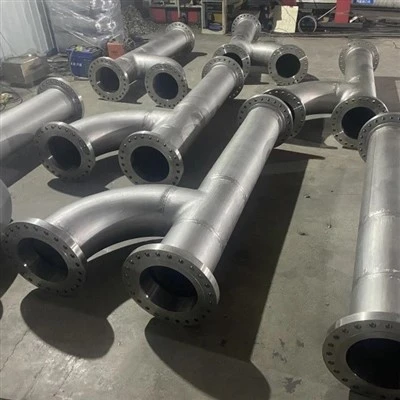
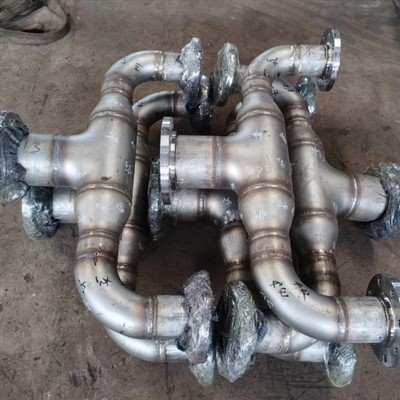
|
When stainless steel pipe is ground with a tool that has touched carbon steel, tiny iron particles stick to the pipe surface. In humid air these particles rust and can start pits, even though the pipe itself is still the correct grade.
To recover the pipe: (1) confirm the iron with a ferroxyl test (ASTM A380); (2) remove it with acid, using passivation for light contamination and pickling for heavy contamination or rust stains; (3) rinse thoroughly and re-test. If pits have already formed, acid will not remove them. Grind them out with clean, stainless-only tools, re-clean, and check that the pipe wall is still thick enough. |
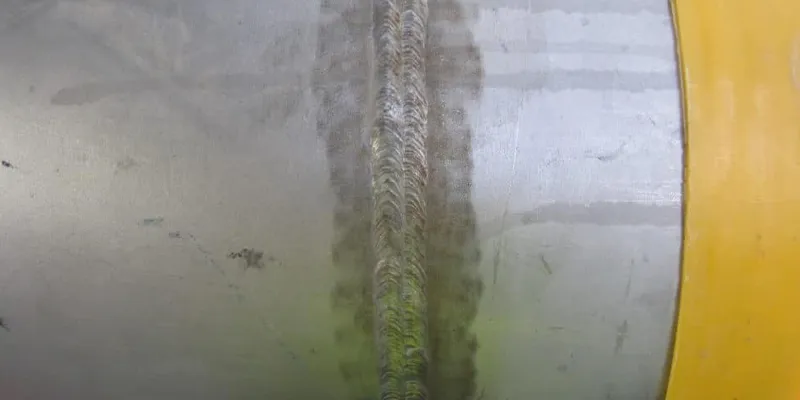
|
Question |
Short answer |
|
What goes wrong? |
Free iron from carbon steel tools or dust sits on the stainless surface, rusts, and damages the protective chromium-oxide film. |
|
Best on-site detection? |
Ferroxyl test: a blue stain, reported within about 15 seconds, marks free iron. |
|
Light contamination? |
Nitric or citric acid passivation to ASTM A967, then rinse and re-test. |
|
Heavy contamination or rust stains? |
Pickling with nitric and hydrofluoric acid (8–20 vol% HNO3, 0.5–5 vol% HF), then passivation. |
|
Can acid fix pits? |
No. Pits must be ground out, and the remaining wall thickness checked. |
|
What to avoid? |
Reused grinding discs or brushes, and chloride-containing cleaners such as hydrochloric acid. |
A pipe fitter picks up the nearest grinder to clean up a weld. The wheel was last used on carbon steel. The weld looks clean, and the pipe goes into storage. A few weeks later, orange rust spots appear. This is a well-documented way that stainless steel pipe gets damaged.
This guide compares the ways to find, grade, and fix the problem. It draws on ASTM A380 and A967, a producer pickling handbook, and industry association guidance. Every figure is cited, and where the published data runs out, we say so.
|
Term |
Plain meaning |
|
Passive layer |
A thin, invisible film, mainly chromium oxide, that protects stainless steel. Air normally keeps it repaired [3]. |
|
Free iron |
Iron sitting on the surface, such as tool marks, iron dust, embedded iron or iron oxide. It is not part of the stainless steel itself [2]. |
|
Ferroxyl test |
A spray test that turns blue where free iron is present. ASTM A380 lists it as a precision inspection method [1]. |
|
Passivation |
Acid treatment that dissolves surface iron and helps the protective film re-form. ASTM A380 defines it as chemical removal of exogenous iron [1]. |
|
Pickling |
A stronger acid treatment that removes high-temperature scale and the low-chromium layer beneath it, along with embedded or smeared carbon steel [4]. |
|
Pitting |
Small, deep local holes that form where the protective film has failed, often under rust deposits. |
What happens to stainless steel pipe when it is ground with carbon steel tools?
Iron from the tool, or from nearby carbon steel dust, lands on the stainless surface, rusts in humid air, and breaks down the pipe's protective film. The base metal is unchanged. The damage starts at the surface.
Stainless steel resists rust because of the passive layer, a thin chromium-oxide film that re-forms in air. Iron particles interrupt that protection. They can come from grinding discs contaminated with lower-alloyed material, cutting tools, blasting grit, handling in mixed manufacture, or simply iron-containing dust. The particles corrode in humid air and damage the passive layer, and larger particles can create crevices.
The risk is higher near the sea. Carbon steel contamination collects chlorides, which leads to large rust stains and small pits in the stainless steel [4]. That is why a pipe that looks fine at delivery can fail early in a coastal plant.
Table 1. Four forms of contamination and what can be done about each
|
Form |
What it looks like |
How it is found |
Recoverable by |
|
Loose iron dust or grit |
Often hard to see until it rusts |
Ferroxyl test; wetting and drying cycles [3] |
Rinse, degrease, then acid treatment [3] |
|
Smeared or embedded iron particles |
Dull spots; rust appears later in humid air |
Ferroxyl test; humidity tests [1][3] |
Passivation; pickling if heavy [3][4] |
|
Rust bloom and stains |
Orange-brown stains |
Visual; ferroxyl test [5] |
Nitric acid, or nitric/HF pickling if stains persist [5] |
|
Pits under old rust |
Small craters beneath stains |
Visual; magnification |
Acid will not remove pits. Grind out, then re-clean [5] |
How can you tell whether a stainless steel pipe is contaminated with iron?
Look first, then confirm with a free-iron test. The ferroxyl test is the most sensitive quick check you can run on site.
Visual inspection is only suitable for gross contamination such as scale, rust, and particles. It may miss thin films, and the inside of a pipe is often impossible to see. The ferroxyl test looks for the cause, which is free iron on the surface, rather than the effect, which is rust staining. ASTM A380 lists it among its precision inspection methods, alongside the solvent-ring, black-light, and atomizer tests.
A commonly published recipe is 94 wt% distilled water, 3 wt% nitric acid, and 3 wt% potassium ferricyanide. It is prepared without iron or steel contact, sprayed on, and a blue stain in about 15 seconds indicates iron. Remove the solution quickly afterward with water or 5–20% acetic acid. These details come from a secondary reproduction, so follow the current ASTM A380 text for your procedure.
Table 2. Free-iron and cleanliness tests compared
|
Test |
What it shows |
Time |
Best use |
|
Visual inspection |
Gross contamination, scale, rust, particles [1] |
Immediate |
First check. Cannot see thin films or the inside of most pipe [1] |
|
Ferroxyl test (ASTM A380) |
Free iron or iron oxide, shown as a blue stain [1][5] |
About 15 seconds [5] |
Mapping the affected zone and checking after cleaning |
|
Water wetting and drying cycle |
Rust forms where free iron remains [3] |
Hours; surface dry for 8 h of a 24 h period [3] |
Whole-surface check after cleaning |
|
A967 Practices A and B (water immersion, high humidity) |
Rust staining as a consequence of free iron [2] |
Hours to days |
Acceptance testing of passivated parts |
|
A967 Practice C (salt spray) |
Rust under chloride fog [2] |
From 2 hours minimum [8] |
Severe-environment acceptance |
|
A967 Practices D, E, F, G (copper sulfate, ferricyanide–nitric, damp cloth, boiling water) |
Other qualitative free-iron checks [2] |
Varies |
Lot acceptance as the specification requires |
An honest limit: ASTM A967 describes its tests as qualitative checks of whether passivation worked, particularly iron removal. They give pass or fail, not a measurement of how much iron remains. For critical service, write the chosen test and its acceptance criterion into the purchase order. A single negative ferroxyl spot-check shows the surface at that moment, so pair it with a second A967 test when the stakes are high.
How severe is the contamination?
Sort the damage into light, moderate, or severe. The level decides whether a quick acid treatment is enough or whether grinding and pickling are needed.
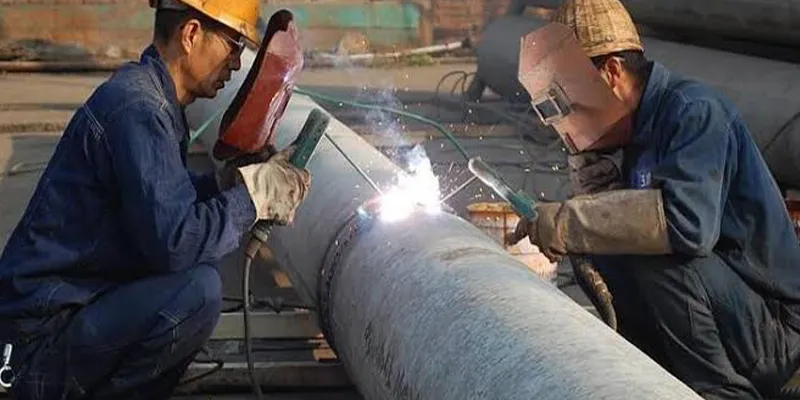
Industry guidance recommends a stepwise approach that scales the cleaning method to the severity of the staining. Mild bloom and fresh grinding dust respond to gentler acids, heavier staining needs nitric or nitric/HF preparations, and pitting cannot be removed by acid at all. The extent of treatment also depends on how corrosive the service environment is, the steel grade, hygiene needs, and appearance.
Table 3. EETA triage framework for contaminated stainless steel pipe
|
Level |
Typical signs |
Recovery path |
Ferroxyl |
|
1. Light |
Grey dust or no visible change; no rust |
Remove loose debris, degrease, passivate to A967, rinse, re-test [2][3] |
Blue spots possible |
|
2. Moderate |
Orange-brown rust bloom or stains; surface still smooth |
Nitric acid treatment. Use nitric/HF pickling if stains persist, then passivate and rinse [3][5] |
Positive |
|
3. Severe |
Pits under rust, large rusted areas, or rough surface |
Grind out pits with stainless-only tools to sound metal, finish smooth, then pickle and passivate. Verify wall thickness [3][5][6] |
Positive |
Which recovery method works best: mechanical cleaning, passivation, or pickling?
For iron contamination, acid treatment beats abrasive cleaning. Use passivation for light cases, pickling for heavy cases or rust stains, and grinding only when pits or defects must be physically removed, always followed by acid.
Chemical methods remove oxides and iron contamination without damaging the surface finish, while effective mechanical methods tend to roughen the surface. Heavy grinding also introduces high tensile stress, which raises the risk of pitting and stress corrosion cracking. Passivation is the acid step of choice for iron: a nitric-only treatment of 18–30 wt% at around 20 °C in the producer handbook, which also strengthens the passive film. Pickling uses 8–20 vol% nitric acid with 0.5–5 vol% hydrofluoric acid and also removes embedded or smeared carbon steel and the chromium-depleted layer under scale.
Table 4. Mechanical cleaning, passivation, pickling and phosphoric cleaners compared
|
Method |
What it removes |
Metal removal and finish |
Main risks |
Best for |
|
Mechanical (grinding, brushing, blasting) |
Weld defects, deep scratches, some oxide and iron |
Yes, abrasive. Surface gets rougher |
Tools or media that touched carbon steel re-contaminate the pipe |
Pits, defects and deep scratches |
|
Passivation (nitric or citric) |
Free iron and iron compounds |
Little to none. Strengthens passive film |
Does not remove oxide scale or pits. Needs a chemically clean surface |
Light to moderate iron contamination |
|
Pickling (nitric + hydrofluoric) |
Scale, low-chromium layer, embedded or smeared carbon steel |
Yes, a controlled thin layer. Over-pickling can roughen low grades |
HF and nitric hazards; waste needs neutralising |
Heavy contamination, rust staining, weld zones |
|
Phosphoric acid cleaner |
Rust and sulphide inclusions |
Mild |
Not oxidising, so it does not strengthen the passive film |
Rust removal as a pre-clean, followed by passivation |
After any mechanical cleaning, the handbook strongly recommends a final acid treatment (passivation or decontamination) followed by thorough rinsing. In practice, grinding is the first step for pits and the last step only for light cases.
Nitric acid or citric acid: which passivation method should you specify?
Both are recognized by ASTM A967. Choose by grade, safety and waste-disposal limits, and the acceptance test in your specification, and always name the exact method code.
ASTM A967 covers nitric acid immersion, citric acid immersion, and electrochemical treatment, and it includes an appendix that maps stainless grades to recommended nitric methods. Free-machining grades such as 303, for example, are matched to a different nitric method than 304. Because methods differ, "standard passivation" on a purchase order is ambiguous. Naming a code such as Nitric 3 or Citric 2 removes the doubt.
Table 5. Selected ASTM A967 passivation methods
|
Method |
Acid and strength |
Temperature |
Minimum time |
Notes |
|
Nitric 2 |
20–45 vol% nitric acid |
About 20–30 °C (70–90 °F) |
30 min |
Room-temperature option |
|
Nitric 3 |
20–25 vol% nitric acid |
49–60 °C (120–140 °F) |
20 min |
Warm, faster option |
|
Citric 1 |
4–10 wt% citric acid |
60–71 °C (140–160 °F) |
4 min |
Hot, shortest time |
|
Citric 2 |
4–10 wt% citric acid |
49–60 °C (120–140 °F) |
10 min |
Intermediate |
|
Citric 3 |
4–10 wt% citric acid |
21–49 °C (70–120 °F) |
20 min |
Cool, longest time |
|
Producer handbook (not an A967 code) |
18–30 wt% nitric acid |
About 20 °C |
20–30 min for the producer's agent |
Applied by spraying or immersion [3] |
Does the stainless grade change how hard the pipe is to clean?
Yes. Higher-alloyed grades such as duplex, 904L, and super austenitics take much longer to pickle than 304 or 316, so the plan and the schedule must match the grade.
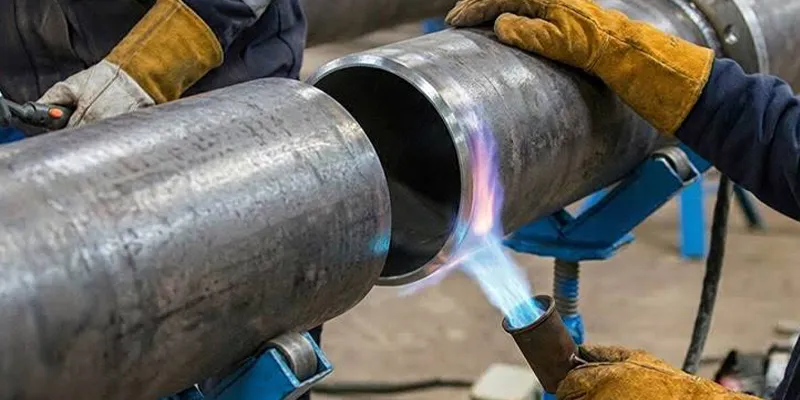
The producer handbook ranks grades by pickleability from 1 (very easy) to 4 (very difficult). Highly alloyed grades need a stronger acid mixture or higher temperature to avoid an excessively long pickling time. Lower-alloyed grades have the opposite problem: pickling them at excessive temperature can over-pickle the surface and leave it rough.
Table 6. Indicative bath-pickling times by grade group (minutes, fresh bath)
|
Group |
Example grades |
Pickleability (1 easy, 4 hard) |
20 °C |
30 °C |
45 °C |
|
1 |
304 (1.4301), 316, 316L, 316Ti |
1–2 |
20 |
10 |
5 |
|
2 |
2304, 2205, 904L, 1.4439 |
3 |
120 |
90 |
60 |
|
3 |
2507, 254 SMO, 654 SMO |
4 |
240 |
120 |
90 |
What if rust or pits are already present?
Acid removes iron and rust stains but cannot remove pits. Pitted areas must be ground smooth to sound metal, re-cleaned, and then checked to confirm the pipe wall is still thick enough.
Industry guidance is direct on this: nitric and nitric/HF treatments can remove embedded iron, but they will not remove pitting from severe staining. Mechanical grinding may be needed to "bottom out" the pits, followed by restoring the surface. Grinding itself must be done carefully. The handbook advises dedicated iron-free, self-sharpening discs, never discs used on low-alloy steels; rough grinding with 40–60 grit followed by fine grinding to about 180 grit or better; less pressure to avoid fresh heat tint; and a check that the whole defect has been removed.
Check the wall. Pipe to ASTM A312 follows ASTM A999 tolerances, which allow wall thickness to run up to 12.5% under nominal [6]. As an illustration (EETA calculation), a 4-inch Schedule 40S pipe has a nominal wall of 0.237 in (6.02 mm), so the mill may legally deliver it as thin as about 0.207 in (5.27 mm). Grinding out a pit on top of that leaves less. Measure the remaining wall with an ultrasonic thickness gauge and compare it with the design minimum, not the nominal. Our article on minimum versus nominal wall thickness explains the distinction.
What is a step-by-step recovery procedure for contaminated stainless steel pipe?
Degrease, test, remove pits if any, treat with acid, rinse thoroughly, re-test, and protect the pipe. Skipping the degrease, the rinse, or the re-test is where most repeat failures begin.
The sequence below follows the producer handbook and ASTM A380, which stresses that clean surfaces depend on design, fabrication methods, cleaning and descaling, and protection against recontamination.
- Stop and tag the pipe. Keep carbon steel tools away and mark the affected zone.
- Degrease. Grease, oil, and paint can make pickling ineffective. Use a chlorine-free cleaner and confirm with the water-break test.
- Map the damage with a ferroxyl test. Record and photograph the blue areas so you can compare after cleaning.
- Grind out pits only if needed, using dedicated iron-free discs, then finish smooth.
- Apply the acid. Passivation for light cases; pickling gel, paste, spray, or bath for heavier ones. Do not pickle in direct sunlight, keep the surface below 40 °C, and rinse before paste dries. For a pipe bore, use circulation carefully, as ASTM A380 warns about iron pick-up in circulated cleaning solutions and rinse water.
- Rinse thoroughly. Use a high-pressure water jet, and de-ionised water for the final rinse on sensitive surfaces. Check that final rinse water is above pH 7, paying attention to crevices and corners.
- Neutralise the waste. Spent acid and rinse water contain iron, chromium, and nickel and must be treated under local regulations.
- Re-test and record. Repeat the ferroxyl test, and run the A967 test your specification calls for.
- Protect the pipe. Cap, wrap, and store it away from carbon steel so it is not re-contaminated.
|
SHOP TIP: WATCH THE BATH In a pickling bath, free iron builds up. The handbook's rough rule is that dissolved iron in g/l should not exceed the bath temperature in °C, and that the bath should be partly or fully replaced once metal content reaches 40–50 g/l. |
How do you stop carbon steel contamination in the first place?
Separate the tools, the media, and the storage. Prevention costs far less than recovery, and every control below targets a known source of iron.
Each row in Table 7 comes from a source of iron contamination identified in the producer handbook and the SSINA fabrication guidance.
Table 7. Sources of iron contamination and the control for each
|
Source of iron |
Control |
|
Grinding discs and wheels |
Use self-sharpening, iron-free discs reserved for stainless steel. Never use a disc that has ground low-alloy steel. |
|
Blasting media |
Use clean olivine-type sand or glass beads. Never use shot or media that has been used on carbon steel, and do not reuse media until it is polluted. |
|
Brushes |
Use stainless steel or nylon brushes that have never touched carbon steel. |
|
Storage and handling |
Store sheet and plate upright in racks, cover carbon steel work surfaces, and use non-steel guards on hooks, slings, and forks. |
|
Mixed manufacture |
Keep stainless work areas apart from carbon steel work. Colour-coding tools is a simple EETA-recommended way to enforce this. |
What should buyers specify in a purchase order to control this risk?
Name the cleaning standard, the passivation method code, the free-iron test and its acceptance criterion, and the wall-thickness check after any rework.
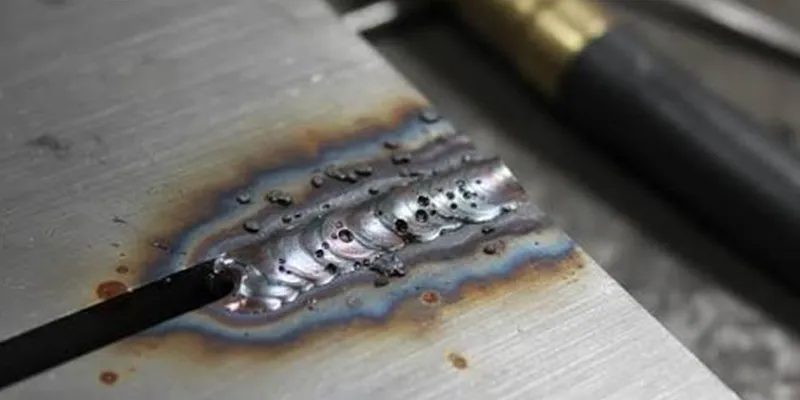
ASTM A380 is a practice that gives recommendations, and the choice of procedures is agreed between supplier and purchaser. Without a written agreement, "clean" means whatever the shop decides it means. A short purchase-order clause avoids that.
Standards: ASTM A380/A380M-25 for cleaning practice and ASTM A967/A967M-25 for passivation. The 2025 edition of A380 replaced the 2017 edition, and its title now includes "Pickling".
Method code: for example "Nitric 3" or "Citric 2", not "standard passivation".
Test and acceptance: the exact test (ferroxyl or an A967 practice), where it is applied, and what counts as a pass.
Records: a cleaning and passivation record, with test results, shipped with the material test certificate.
Rework control: if any area is ground, require a wall-thickness re-check against the design minimum.
Packaging: end caps, and dunnage and slings that keep the pipe off carbon steel.
What are the limits of this guidance?
The published tests are qualitative, the producer times are product-specific, and some figures here come from secondary reproductions of standards. Confirm them before writing a procedure.
The standards themselves note that few meaningful cleanliness tests exist and that they are hard to evaluate objectively. A967 tests are qualitative. Pickling times in Table 6 describe one producer's product on weld oxides, and the handbook is a 1995 first edition with a later information sheet. A967 parameters in Table 5 and the ferroxyl recipe were taken from industry reproductions rather than the licensed texts. We found no published figure for how deep carbon steel contamination penetrates after grinding, so we do not give one.
Frequently asked questions
Q: Can stainless steel pipe be ruined by carbon steel grinding?
A: Usually not. The pipe's base metal is unchanged, and iron on the surface can normally be removed with acid cleaning and then verified by testing. The exceptions are pits that have already formed and any loss of wall thickness from heavy grinding. Pits must be ground out, and the remaining wall must be measured against the design minimum.
Q: Is passivation the same as pickling?
A: No. Passivation uses a mild oxidizing acid, typically nitric or citric, to dissolve surface iron and help the protective film re-form, with little effect on the metal. Pickling uses a stronger nitric and hydrofluoric acid mixture that removes a thin surface layer, including oxide scale and embedded iron. Pickling is for heavier contamination.
Q: Is the ferroxyl test safe, and what does a positive result look like?
A: A positive result is a blue stain, reported to appear in about 15 seconds where free iron is present. Potassium ferricyanide is not toxic, but its fumes can become toxic if the solution is heated. Prepare it without iron or steel contact, and rinse the test area promptly with water or dilute acetic acid. Follow the current ASTM A380 text and your site safety rules.
Q: Can I remove the rust stains with a wire brush or hydrochloric acid cleaner?
A: Avoid both. A brush that has touched carbon steel will add more iron, and mechanical cleaning can spread contamination to clean areas. Chloride-containing agents such as hydrochloric acid carry an obvious risk of pitting, so they should be avoided on stainless steel. Use iron-free tools and a nitric- or citric-based acid treatment instead.
Q: Do I need to passivate after grinding even if no rust is visible?
A: A final acid treatment is strongly recommended after mechanical cleaning, because the acid also removes iron impurities that cannot be seen. Visual inspection catches only gross contamination, so a free-iron test such as ferroxyl is the better check.
Q: Does citric acid passivation work as well as nitric acid?
A: ASTM A967 recognizes both. The right choice depends on the grade, safety and waste-disposal limits, and the acceptance test your specification requires. Specify the exact method code, such as Nitric 3 or Citric 2, and the test that proves the result, rather than asking for "standard passivation."