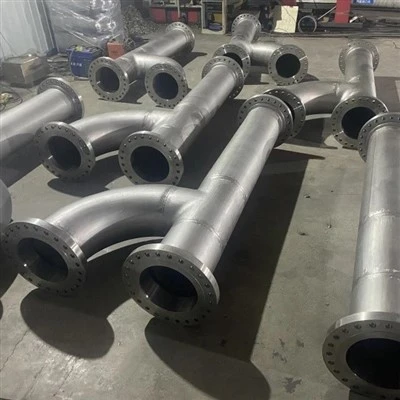
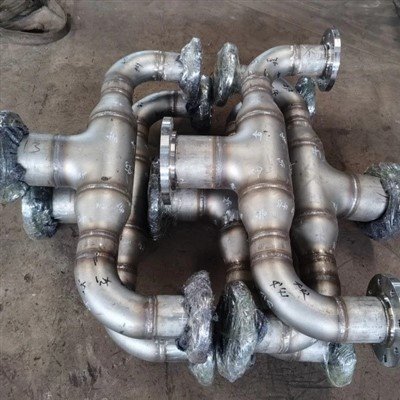
Type 304 stainless steel is the workhorse of brewery equipment and suffices for most mash tuns, hot liquor tanks, and fermenters in standard beer production. Type 316L, with its added molybdenum, is the preferred upgrade for any surface that contacts aggressive CIP chemicals, acidic beers (sour, fruit, barrel-aged), or chloride-bearing water. For extreme sour-beer programs or coastal breweries facing chloride pitting, 904L or duplex 2205 offer superior protection at a higher initial cost-but the payback comes in longer vessel life and fewer corrosion-related failures.

- 304 (UNS S30400): Minimum viable grade for non-corrosive brewery service; PREN ~18; lowest cost.
- 316L (UNS S31603): Industry standard for fermenters and CIP-exposed surfaces; 2-3% Mo boosts chloride pitting resistance by ~44%; PREN ~24.
- 904L (UNS N08904): Super-austenitic grade for sour beer and aggressive CIP; adds 1-2% Cu for sulfuric acid resistance; PREN ~35.
- 2205 Duplex (UNS S32205): High-strength alternative for pressure vessels and coastal breweries; yield strength ~2x of 316L; PREN ~34.
- Surface finish (Ra <= 0.8 micrometer) and proper passivation per ASTM A967 are as critical as grade selection for preventing corrosion.
- All brewery-grade stainless must comply with 3-A Sanitary Standards, FDA 21 CFR, and applicable ASME pressure vessel codes.
Key Properties at a Glance
|
Property |
Type 304 |
Type 316L |
Type 904L |
2205 Duplex |
|
UNS Designation |
S30400 |
S31603 |
N08904 |
S32205 |
|
Cr (%) |
18.0-20.0 |
16.0-18.0 |
19.0-23.0 |
21.0-23.0 |
|
Ni (%) |
8.0-11.0 |
10.0-14.0 |
23.0-28.0 |
4.5-6.5 |
|
Mo (%) |
0 (none) |
2.0-3.0 |
4.0-5.0 |
2.5-3.5 |
|
Cu (%) |
0 |
0 |
1.0-2.0 |
0 |
|
C max (%) |
0.08 |
0.03 |
0.02 |
0.03 |
|
PREN (approx.) |
~18 |
~24 |
~35 |
~34 |
|
Yield Strength (MPa) |
~205 |
~170 |
~220 |
~450 |
|
Tensile Strength (MPa) |
~520 |
~485 |
~490 |
~655 |
|
Relative Cost (304=1.0) |
1.0 |
1.4-1.6 |
3.0-3.5 |
1.8-2.2 |
|
Key Brewery Use |
Mash tuns, HLT, general piping |
Fermenters, CIP tanks, fittings |
Sour beer vessels, coastal |
Pressure vessels, coastal |
Why Does Brewery Equipment Use Stainless Steel Instead of Other Metals?
Stainless steel dominates brewery equipment because it combines corrosion resistance, sanitary cleanability, mechanical strength, and regulatory approval in a single material-no other metal matches all four requirements simultaneously.
Beer is a mildly acidic liquid (pH 3.8-4.6) that is processed at temperatures from 4 degrees C (cold conditioning) to 100 degrees C (boiling), repeatedly exposed to alkaline and acidic CIP (Clean-in-Place) chemicals, and held to stringent food-safety standards. Aluminum is cheaper and lighter but pits in alkaline cleaners and cannot withstand aggressive CIP cycles. Copper, the traditional brewing metal, imparts flavor-altering ions and fails under modern acid-based cleaning. Carbon steel rusts on contact with beer. Only stainless steel forms a self-healing chromium oxide passive film that resists beer, cleaning chemicals, and microbial attachment simultaneously.

The key property is passivity: a 2-3 nanometer chromium oxide (Cr2O3) layer forms spontaneously on the surface when exposed to oxygen. If scratched or damaged, the film reforms in seconds-as long as oxygen is present and the surface is free of free iron contamination. This is why passivation after fabrication (per ASTM A967) is mandatory: welding, grinding, and handling deposit free iron on the surface, which creates rust initiation sites that the passive film cannot cover without chemical treatment.
Is Type 304 Stainless Steel Sufficient for Mash Tuns and Hot Liquor Tanks?
Yes-Type 304 is the minimum viable and most cost-effective grade for mash tuns, hot liquor tanks (HLT), lauter tuns, and boil kettles in standard beer production where pH stays above 3.8 and CIP chemicals are not highly concentrated.
Mash tuns operate at 60-70 degrees C with a grain-water slurry at pH 5.2-5.6. The wort is mildly acidic but far from aggressive. The boil kettle reaches 100 degrees C but the wort pH remains above 5.0. Hot liquor tanks hold heated water with minimal chloride content (if the water is properly treated). In all these cases, the environment is well within the corrosion envelope of Type 304.
The economics are compelling: 304 costs roughly 40-60% less than 316L per kilogram. For a 1,000-liter mash tun requiring ~200 kg of 2 mm sheet, the material cost difference between 304 and 316L can be $400-800-a significant saving for a vessel that does not need the extra molybdenum.
However, 304 has a critical weakness: zero molybdenum content means zero resistance to chloride pitting. If your brewing water contains more than 200 ppm chlorides, or if you use chlorine-based sanitizers, 304 will eventually pit-even in a mash tun. In those cases, upgrading to 316L is mandatory.
|
304 Suitability by Vessel |
Verdict |
Condition |
|
Mash Tun |
Suitable |
Water chloride < 200 ppm |
|
Hot Liquor Tank |
Suitable |
Water chloride < 200 ppm |
|
Lauter Tun |
Suitable |
Standard wort pH > 5.0 |
|
Boil Kettle |
Suitable |
Standard wort, no acid additions |
|
Fermenter (standard beer) |
Marginal |
Acceptable but 316L recommended |
|
Fermenter (sour beer) |
Not recommended |
Use 316L minimum, 904L preferred |
|
CIP Supply Tank |
Not recommended |
CIP chemicals attack 304 |
|
Glycol Jacket |
Suitable |
Closed loop, low chloride |
Why Is Type 316L the Industry Standard for Fermenters?
Type 316L is the brewery industry standard for fermenters because its 2-3% molybdenum content provides a ~44% improvement in chloride pitting resistance over 304, and its low carbon (0.03% max) eliminates sensitization during welding-ensuring corrosion-free weld seams in the most hygiene-critical vessel in the brewery.

Fermenters face the harshest combined environment in the brewery: low pH beer (3.8-4.6) at cold temperatures (0-4 degrees C for lagers), repeated CIP cycles with hot caustic (NaOH at 2-3%, 70-80 degrees C) followed by acid rinses (phosphoric or nitric acid at 1-2%), and pressurized CO2 environments that form carbonic acid. The molybdenum in 316L directly counters pitting in the chloride-rich environment that results from water salts concentrating in beer.
The "L" in 316L denotes low carbon (0.03% maximum vs. 0.08% in standard 316). This matters because during welding, carbon combines with chromium to form chromium carbide precipitates at grain boundaries-a process called sensitization. Sensitized areas become chromium-depleted and lose corrosion resistance. With 316L, the carbon is low enough that sensitization does not occur under normal welding conditions. This is critical for fermenters, which have extensive welded seams (dimple jackets, manway frames, fittings).
PREN (Pitting Resistance Equivalent Number) quantifies the difference: 304 has PREN ~18 (no molybdenum), while 316L has PREN ~24 (thanks to 2-3% Mo). The formula is PREN = %Cr + 3.3 x %Mo + 16 x %N. A PREN of 24 means 316L can resist pitting in mild chloride environments (up to ~200-500 ppm chlorides at ambient temperature), while 304 (PREN ~18) begins pitting at much lower chloride concentrations.
When Should You Use 904L Instead of 316L in a Brewery?
Use 904L (UNS N08904) when the vessel will be exposed to sour beer (pH 3.0-3.4), barrel-aging programs with acetic acid, concentrated sulfuric acid CIP, or coastal environments with airborne chlorides-situations where 316L will eventually pit and 304 will fail rapidly.
Sour beers (lambic, Berliner Weisse, gose, American wild ales) are produced by introducing lactobacillus and pediococcus bacteria, which produce lactic acid and lower the pH to 3.0-3.4. Some sour programs also involve acetic acid bacteria, producing vinegar-like acidity. At these pH levels, combined with extended contact times (weeks to years), the passive film on 316L can break down locally-especially at weld seams, heat-affected zones, and surface defects.
904L addresses this through three alloy additions: (1) higher chromium (19-23% vs. 16-18% in 316L) for a stronger passive film, (2) higher molybdenum (4-5% vs. 2-3%) for chloride pitting resistance (PREN ~35 vs. ~24), and (3) 1-2% copper, which specifically enhances resistance to sulfuric acid-the aggressive CIP chemical that 316L tolerates poorly at concentrations above 10%.
The trade-off is cost: 904L costs roughly 3-3.5 times more than 304 and 2-2.5 times more than 316L. For a 500-liter sour beer fermenter, upgrading from 316L to 904L might add $2,000-4,000 to the vessel cost. However, a corroded 316L fermenter that contaminates beer with metallic off-flavors or develops pinhole leaks after 3-5 years of sour service costs far more in lost product, replacement, and reputation.
|
Corrosion Environment |
304 |
316L |
904L |
|
Standard beer (pH 4.0-4.6) |
Suitable |
Excellent |
Overkill |
|
Sour beer (pH 3.0-3.4) |
Not recommended |
Marginal |
Recommended |
|
Acetic acid exposure |
Fails |
Marginal |
Excellent |
|
Sulfuric acid CIP (>10%) |
Fails |
Marginal |
Excellent |
|
Caustic CIP (NaOH 2-3%) |
Suitable |
Excellent |
Excellent |
|
Coastal chloride exposure |
Not recommended |
Suitable |
Excellent |
|
Chloride water (>500 ppm) |
Fails |
Marginal |
Suitable |
Does Duplex 2205 Offer Advantages Over 316L for Brewery Pressure Vessels?
Yes-Duplex 2205 (UNS S32205) offers double the yield strength of 316L (~450 MPa vs. ~170 MPa) and equivalent or superior chloride pitting resistance (PREN ~34 vs. ~24), making it ideal for large fermenters, uni-tanks, and pressure vessels where wall thickness reduction and weight savings translate to significant cost and performance advantages.

Duplex stainless steels have a mixed microstructure: approximately 50% austenite and 50% ferrite. This dual-phase structure gives them a unique combination of properties: the strength of ferritic stainless steel and the toughness of austenitic stainless steel. The yield strength of 2205 (~450 MPa) is roughly 2.5 times that of 316L (~170 MPa), which means a pressure vessel designed in 2205 can use significantly thinner walls to meet the same pressure rating.
For a 100-barrel (12,000-liter) pressurized uni-tank designed for 3 bar internal pressure, switching from 316L to 2205 can reduce wall thickness from 4 mm to 2.5 mm-a 37.5% weight reduction. While 2205 costs more per kilogram, the reduced material volume often makes the total vessel cost comparable to or lower than 316L, especially for large vessels.
However, 2205 has fabrication challenges that 316L does not: (1) it requires precise heat input control during welding to maintain the 50/50 phase balance, (2) it can form intermetallic phases (sigma, chi) if held in the 700-950 degrees C range too long, and (3) it is more difficult to form and bend. For these reasons, 2205 is typically reserved for specialized applications rather than general brewery use.
|
Property |
316L |
2205 Duplex |
Advantage |
|
Yield Strength (MPa) |
~170 |
~450 |
2205: 2.6x stronger |
|
Tensile Strength (MPa) |
~485 |
~655 |
2205: 35% higher |
|
PREN |
~24 |
~34 |
2205: 42% better pitting resistance |
|
Stress Corrosion Cracking |
Susceptible > 60 degrees C |
Resistant to ~150 degrees C |
2205: far superior |
|
Weldability |
Excellent |
Good (requires control) |
316L: easier |
|
Formability |
Excellent |
Fair |
316L: easier |
|
Cost (relative) |
1.0 |
1.3-1.5 |
316L: cheaper per kg, 2205: cheaper per vessel (large) |
How Important Is Surface Finish Compared to Grade Selection?
Surface finish is as important as grade selection: a rough surface (Ra > 1.0 micrometer) on 316L will harbor bacteria and corrode faster than a properly polished surface (Ra <= 0.4 micrometer) on 304. For food-contact surfaces, 3-A Sanitary Standards require Ra <= 0.8 micrometer, and pharmaceutical-grade equipment (ASME BPE) requires Ra <= 0.4 micrometer.
Surface roughness directly affects three brewery-critical properties: (1) cleanability-bacteria and beerstone (calcium oxalate) deposits adhere to rough surfaces and resist CIP removal, (2) corrosion resistance-rough surfaces have larger surface areas and deeper valleys where chlorides and acids concentrate, initiating pitting, and (3) passive film stability-smooth surfaces form more uniform and durable chromium oxide films.
The typical progression of brewery surface finishes is:
2B mill finish (Ra ~0.4-1.0 micrometer): Factory-rolled finish; acceptable for non-contact exterior surfaces and glycol jackets.
No. 4 brushed finish (Ra ~0.5-0.8 micrometer): Mechanically polished with 150-180 grit abrasive; standard for brewery interior contact surfaces; meets 3-A Sanitary Standards.
Electropolished (Ra ~0.2-0.4 micrometer): Electrochemical removal of surface peaks; produces the smoothest, most corrosion-resistant surface; recommended for sour beer vessels and CIP-exposed surfaces.
Mirror polished (Ra < 0.1 micrometer): Mechanical polishing to 400+ grit; primarily aesthetic for exterior surfaces; not necessary for corrosion performance.
Electropolishing is worth the extra cost (~$50-100 per square meter) for fermenter interiors because it removes the amorphous, iron-rich layer left by mechanical polishing and enriches the surface in chromium-effectively deepening and strengthening the passive film. Studies show electropolished 316L has up to 30% higher corrosion resistance than mechanically polished 316L in acidic environments.
Why Is Passivation After Fabrication Non-Negotiable for Brewery Equipment?
Passivation per ASTM A967 is mandatory because welding, grinding, machining, and handling embed free iron and iron oxide into the stainless steel surface-these contaminants act as cathodic sites that trigger galvanic corrosion and rusting regardless of the underlying alloy grade.
During fabrication, carbon steel tools (wrenches, wire brushes, grinding wheels) deposit microscopic iron particles on the stainless surface. Welding creates heat tint (oxidation colors) in the heat-affected zone, which is chromium-depleted and corrosion-susceptible. Without passivation, these areas will rust within weeks of exposure to beer and CIP chemicals-even on 316L or 904L.
ASTM A967 defines two main passivation methods:
Nitric acid passivation (20-25% HNO3, 20-30 degrees C, 30 min): The traditional method; dissolves free iron and oxidizes the surface to form a thick, uniform passive film. Effective for all stainless grades but requires hazardous acid handling and neutralization.
Citric acid passivation (4-10% citric acid, 40-60 degrees C, 30-60 min): The modern, environmentally friendly alternative; chelates free iron without attacking the base metal. FDA-approved for food-contact surfaces and increasingly preferred in brewery applications.
After passivation, the surface should be tested to verify effectiveness. The copper sulfate test (ASTM A967 Practice B) is the simplest: a drop of copper sulfate solution on a properly passivated surface will not deposit copper; if free iron is present, a copper flash appears within 6 minutes. The more rigorous ferroxyl test detects free iron with a color indicator.
How Do CIP Cleaning Chemicals Affect Stainless Steel Grade Selection?
CIP chemicals are the single most aggressive corrosion driver in a brewery: hot caustic (NaOH) at 2-3% and 70-80 degrees C attacks 304 more than 316L, while acid rinses (phosphoric, nitric, or sulfuric) can pit 316L at concentrations above 10%-making 904L the safe choice for CIP supply tanks and recirculation piping.

A typical brewery CIP cycle consists of: (1) pre-rinse with warm water (40 degrees C), (2) caustic wash (2-3% NaOH at 70-80 degrees C for 15-30 min), (3) intermediate rinse, (4) acid rinse (1-2% phosphoric or nitric acid at 50-60 degrees C for 10-15 min), and (5) final rinse. Some breweries add a sanitizing step with peracetic acid (PAA) or chlorine dioxide.
The caustic step is generally safe for all stainless grades-NaOH does not cause pitting. However, at elevated temperatures and concentrations, 304 can experience caustic stress corrosion cracking above 80 degrees C. 316L and higher grades resist this.
The acid step is where grade selection matters most:
- Phosphoric acid (1-2%): Safe for 304 and 316L at brewery CIP temperatures; the most common acid rinse.
- Nitric acid (1-2%): Safe for 316L; can accelerate corrosion in 304 at higher temperatures; also provides mild passivation benefit.
- Sulfuric acid (>5%): Aggressive to 316L; 904L is specifically designed for sulfuric acid service (originally developed for sulfuric acid tanks).
- Peracetic acid (PAA, 100-500 ppm): Safe for all grades at brewery concentrations; oxidizing biocide that can enhance passive film.
- Chlorine-based sanitizers (hypochlorite): Must be avoided entirely-chloride ions destroy the passive film on all stainless grades and cause rapid pitting. Use PAA or iodophor instead.
What Welding Considerations Matter for Brewery Stainless Equipment?
Orbital TIG welding with full penetration, autogenous root passes (no filler metal), and back-purging with argon is the gold standard for brewery sanitary welds-producing smooth, crevice-free interiors that resist corrosion and meet 3-A Sanitary Standards.
Welding is the most common source of corrosion failure in brewery equipment because it creates: (1) heat-affected zones (HAZ) with sensitized microstructure, (2) heat tint (oxidation) that is chromium-depleted, (3) crevices at incomplete penetration points, and (4) slag inclusions from flux-based processes. Each of these is a potential corrosion initiation site.
|
Welding Parameter |
Requirement |
Reason |
|
Process |
GTAW (TIG), orbital preferred |
Clean, controllable, no slag |
|
Filler metal |
ER308L for 304, ER316L for 316L |
Match base metal chemistry |
|
Shielding gas |
Argon (99.995% purity) |
Prevents oxidation of weld pool |
|
Back-purge |
Argon, 5-10 CFH |
Prevents sugaring (oxidation) on interior |
|
Interpass temp |
< 150 degrees C |
Prevents sensitization in HAZ |
|
Penetration |
100% (full penetration) |
Eliminates crevices that trap bacteria |
|
Heat input |
0.5-1.5 kJ/mm |
Minimizes HAZ width and sensitization |
|
Post-weld treatment |
Pickling + passivation per ASTM A967 |
Removes heat tint, restores passive film |
For 2205 duplex, additional controls are required: the heat input must be tightly controlled (1.0-2.5 kJ/mm) to maintain the 50/50 austenite-ferrite balance, and nitrogen must be added to the shielding gas (2-4%) to ensure adequate austenite reformation in the weld metal. Post-weld solution annealing (1050-1100 degrees C followed by rapid water quench) may be required for thick sections.
How Do You Balance Grade Selection Against Total Cost of Ownership?
Grade selection should be driven by total cost of ownership (TCO), not initial material cost: a 316L fermenter that lasts 15 years costs less per year than a 304 fermenter that needs replacement after 5 years due to pitting-and the 904L sour beer vessel that prevents even one batch of contamination pays for itself immediately.
The following TCO analysis illustrates the economics for a 500-liter (5-barrel) fermenter over a 15-year service life:
|
Cost Factor |
304 Fermenter |
316L Fermenter |
904L Fermenter |
|
Initial vessel cost |
$3,500 |
$5,500 |
$14,000 |
|
Expected service life (standard beer) |
10-15 years |
15-20 years |
20+ years |
|
Expected service life (sour beer) |
3-5 years |
5-8 years |
15+ years |
|
Annual passivation maintenance |
$200 |
$150 |
$100 |
|
Replacement cost (mid-life) |
$3,500 (yr 5 for sour) |
None (standard beer) |
None |
|
Risk of contamination (sour) |
High |
Medium |
Low |
|
Cost of one spoiled batch (5 bbl) |
$800-1,200 |
$800-1,200 |
$800-1,200 |
|
15-year TCO (standard beer) |
$6,500 |
$7,750 |
$15,500 |
|
15-year TCO (sour beer) |
$14,500+ (multiple replacements + lost batches) |
$10,750+ (1 replacement + lost batches) |
$15,500 |
The analysis reveals that for standard beer production, 316L has a modest TCO premium over 304 but offers significantly better corrosion margin and resale value. For sour beer, 904L becomes the clear TCO winner because it eliminates the replacement costs and batch-loss risks that plague 304 and 316L in acidic service.
Which Stainless Steel Grade Should You Specify for Each Brewery Vessel?
The following application matrix provides grade recommendations for every major brewery vessel, based on operating temperature, pH, chloride exposure, CIP chemical contact, and pressure requirements.
|
Brewery Vessel |
Recommended Grade |
Alternative |
Key Rationale |
|
Mash Tun |
304 |
316L (high-chloride water) |
Mild pH (5.2-5.6), low corrosion risk |
|
Lauter Tun |
304 |
316L |
Similar to mash tun; grain contact is non-corrosive |
|
Hot Liquor Tank (HLT) |
304 |
316L (chloride > 200 ppm) |
Hot water only; chloride is the only risk |
|
Boil Kettle/Whirlpool |
304 |
316L |
Wort pH > 5.0; low corrosion risk |
|
Heat Exchanger (wort chiller) |
316L |
904L (sour wort) |
Plate geometry; crevice corrosion risk |
|
Fermenter (ale/lager) |
316L |
304 (budget) |
Cold, acidic, CIP-exposed; industry standard |
|
Fermenter (sour/wild) |
904L |
316L (short-term) |
pH 3.0-3.4; acetic/lactic acid attack |
|
Brite Tank / Serving Tank |
316L |
304 |
Carbonated beer; CO2 forms carbonic acid |
|
CIP Supply Tank |
316L |
904L (sulfuric CIP) |
Concentrated CIP chemicals |
|
CIP Recirculation Pump |
316L |
CD4MCu (duplex cast) |
Erosion + corrosion + cavitation |
|
Glycol Jacket (external) |
304 |
316L |
Closed loop; low corrosion risk |
|
Glycol Jacket (internal dimple) |
316L |
304 |
Welded to 316L vessel; must match |
|
Piping (beer transfer) |
316L |
304 (low risk) |
Sanitary; CIP-exposed; crevices at fittings |
|
Piping (CIP supply) |
316L |
904L (acid service) |
Chemical exposure |
|
Pressure Vessel (large uni-tank) |
2205 Duplex |
316L |
High strength allows thinner walls; cost-effective for large vessels |
|
Coastal Brewery (all exterior) |
316L |
2205 |
Airborne chloride salt spray |
What Standards and Codes Govern Stainless Steel in Brewery Equipment?
Brewery stainless steel equipment must comply with a hierarchy of material, sanitary, pressure vessel, and food-contact standards: ASTM for material chemistry, 3-A Sanitary Standards for hygienic design, ASME for pressure vessels, and FDA 21 CFR for food-contact compliance.

|
Standard / Code |
Scope |
Typical Application in Brewery |
|
ASTM A240/A240M |
Plate, sheet, strip chemistry & mechanicals |
All vessel shells, heads, and plates |
|
ASTM A269/A270 |
Seamless & welded tubing |
Sanitary piping; beer and CIP lines |
|
ASTM A312 |
Seamless & welded pipe |
Larger-diameter piping (CIP supply) |
|
ASTM A967 |
Chemical passivation treatment |
Post-fabrication passivation of all welds and surfaces |
|
ASTM A380/A380M |
Cleaning, descaling, passivation practice |
Pre-passivation surface preparation |
|
ASME BPE |
Bioprocessing equipment (surface finish, welding) |
Sanitary tubing, fittings, weld specs |
|
ASME Section VIII Div. 1 |
Pressure vessel design & fabrication |
Pressurized fermenters, uni-tanks, brite tanks |
|
3-A Sanitary Standards |
Hygienic equipment design (food/dairy/brewery) |
Vessel interiors, piping, valves, fittings |
|
FDA 21 CFR 174-186 |
Indirect food additives (food-contact surfaces) |
All beer-contact surfaces |
|
EN 10028-7 |
European pressure vessel plate (equivalent to ASTM A240) |
European market compliance |
|
EHEDG Guidelines |
European hygienic engineering design |
European sanitary equipment certification |
What Are the Most Common Stainless Steel Mistakes in Brewery Fabrication?
The five most common-and most costly-mistakes are: (1) using 304 where 316L is required, (2) skipping passivation after welding, (3) using carbon steel tools on stainless, (4) allowing chlorine-based sanitizers to contact stainless, and (5) specifying rough surface finishes that harbor bacteria.
Each mistake has a specific failure mode and a straightforward prevention strategy:
|
Mistake |
Failure Mode |
Prevention |
|
304 used for fermenter |
Pitting after 2-5 years in cold acidic beer |
Specify 316L minimum for all fermentation vessels |
|
No post-weld passivation |
Rust at weld seams within weeks |
Mandate ASTM A967 passivation in fabrication spec |
|
Carbon steel tools on stainless |
Free iron contamination; rust spots |
Use dedicated stainless-only tools; color-code them |
|
Chlorine sanitizers (bleach) |
Rapid chloride pitting; perforation |
Ban all chlorine compounds; use PAA or iodophor |
|
Ra > 1.0 micrometer interior |
Beerstone buildup; bacteria harbor; CIP failure |
Specify Ra <= 0.8 micrometer; electropolish for sour beer |
|
Incomplete weld penetration |
Crevices trap bacteria; crevice corrosion |
Require 100% penetration; X-ray inspect critical welds |
|
Mixing 304 and 316L in same system |
Galvanic corrosion at dissimilar metal junctions |
Use same grade throughout a fluid system; or isolate with dielectric unions |
|
Ignoring water chloride content |
Pitting in HLT and mash tun from chloride water |
Test brewing water; upgrade to 316L if chloride > 200 ppm |
Frequently Asked Questions
Yes, for standard beer styles (ales and lagers with pH 3.8-4.6), 304 is perfectly adequate for homebrew-scale fermenters (5-50 gallons). The primary risk is chloride pitting if your water has high chloride content (>200 ppm). If you brew sour beers or use aggressive CIP chemicals, upgrade to 316L. Most commercial homebrew conical fermenters are made from 304 because the cost savings is significant at small scale and the corrosion risk is lower due to shorter beer contact times.
How long does a 316L brewery fermenter last?
A properly fabricated, passivated, and maintained 316L fermenter has a service life of 15-20+ years for standard beer production. The main factors that shorten this are: (1) sour beer service without 904L upgrade (reduces life to 5-8 years), (2) inadequate passivation after welding or repairs, (3) use of chlorine-based sanitizers, (4) high-chloride brewing water without water treatment, and (5) mechanical damage to the passive film from abrasive cleaning.
Is 316L worth the extra cost over 304 for a craft brewery?
Yes, for any vessel that contacts beer after fermentation begins (fermenters, brite tanks, serving tanks, beer piping). The cost premium of 40-60% over 304 is recovered through longer service life, lower maintenance, and better corrosion margin. For pre-fermentation vessels (mash tun, HLT, boil kettle) handling wort at pH > 5.0, 304 is generally sufficient-unless your water has high chlorides.
What is the difference between 316 and 316L?
The only practical difference is carbon content: 316 has 0.08% max carbon, while 316L has 0.03% max. The "L" stands for "low carbon." The lower carbon in 316L prevents sensitization (chromium carbide precipitation) during welding, which would otherwise create corrosion-susceptible heat-affected zones. For brewery equipment that involves welding-which is virtually all equipment-316L is always specified over 316. The mechanical properties are nearly identical: 316L has slightly lower tensile strength (~485 vs. ~515 MPa) but this is rarely a limiting factor in brewery vessel design.
Can I passivate stainless steel with citric acid instead of nitric acid?
Yes. ASTM A967 approves both nitric acid and citric acid passivation methods. Citric acid (4-10% concentration, 40-60 degrees C, 30-60 minutes) is increasingly preferred in food and beverage applications because it is non-hazardous, environmentally friendly, FDA-approved for food-contact surfaces, and equally effective at removing free iron. Nitric acid (20-25% concentration) remains the traditional choice and is slightly more aggressive, but the safety and environmental advantages of citric acid make it the better choice for brewery applications.
Should I specify 2205 duplex for a new brewery build?
Only for specific high-value applications: large pressurized vessels (>50 bbl uni-tanks), coastal breweries with airborne chloride exposure, or vessels operating at elevated temperatures (>80 degrees C). For standard craft brewery equipment, 316L remains the practical choice due to easier fabrication, lower material cost per kilogram, and wider availability. 2205 fabrication requires specialized welding procedures and heat input control that add cost. The weight-savings advantage of 2205 (thinner walls for same pressure rating) only becomes significant for vessels larger than ~50 barrels.
How do I know if my brewing water is too aggressive for 304?
Test your water for chloride content. If chlorides exceed 200 ppm (mg/L), 304 is at risk of pitting-especially in hot service (HLT, boil kettle). If chlorides exceed 500 ppm, even 316L is marginal and you should consider 904L or water treatment (reverse osmosis). Also check for high sulfate (>250 ppm), which can cause pitting in crevices. Your local water utility report will list chloride and sulfate levels. If unavailable, send a sample to a water testing lab-the $30-50 test cost can save thousands in equipment replacement.
Conclusion
Stainless steel grade selection for brewery equipment follows a clear logic: match the alloy's corrosion resistance to the severity of the service environment.
Type 304 is the economical baseline for wort-contact vessels (mash tuns, lauter tuns, boil kettles) where pH is above 5.0 and CIP exposure is moderate. Type 316L is the non-negotiable standard for fermenters, brite tanks, and CIP-exposed piping because molybdenum provides the chloride pitting margin that 304 lacks. Type 904L is the investment-grade choice for sour beer programs and aggressive CIP, where its copper-enhanced chemistry prevents the acidic attack that destroys 316L within years. Duplex 2205 is the engineered alternative for large pressure vessels and coastal installations, where its double yield strength and superior chloride resistance justify the fabrication complexity.
But grade selection is only half the equation. Surface finish (Ra <= 0.8 micrometer for contact surfaces), proper passivation per ASTM A967, sanitary orbital welding with full penetration, and absolute prohibition of chlorine-based sanitizers are equally critical. A 904L vessel with a rough surface and no passivation will corrode faster than a properly finished and passivated 304 vessel. The brewery that gets all of these right-grade, finish, passivation, welding, and cleaning chemistry-will enjoy decades of trouble-free service from its stainless steel equipment.