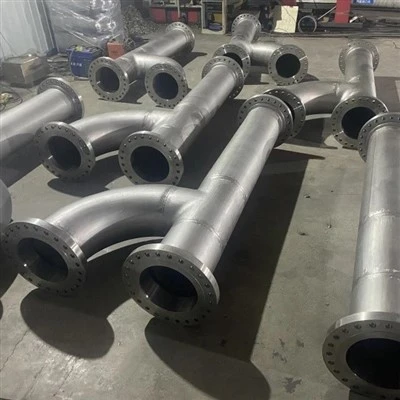
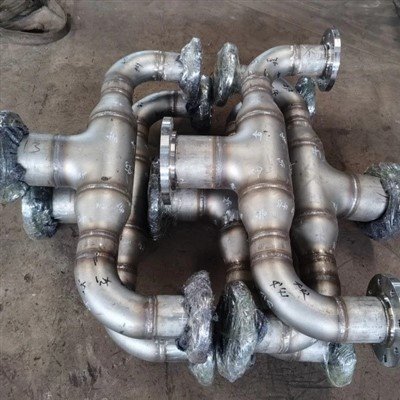
Alloy 31 (UNS N08031) is the premier material for phosphoric acid evaporator tubes, vessels, and heat exchangers operating in the most aggressive wet process phosphoric acid (WPA) environments. With 31% chromium, 27% nickel, 6-7% molybdenum, and 1-2% copper, Alloy 31 delivers exceptional corrosion resistance in phosphoric acid concentrations up to 85% at temperatures reaching 200°C-outperforming conventional stainless steels and nickel alloys by 5-10×.

This guide provides complete technical specifications, corrosion mechanisms, application guidelines, and procurement recommendations for chemical processing engineers and plant operators. Key advantages include: corrosion rates below 0.1 mm/year in 85% phosphoric acid at 150°C, 15+ year service life in evaporator bodies, and 40-60% lower life-cycle cost versus 316L stainless steel through eliminated downtime and maintenance savings.
What Are Phosphoric Acid Evaporators?
Phosphoric acid evaporators concentrate WPA from 25-30% to 70-85% P₂O₅ at 150-200°C, creating extremely corrosive conditions that rapidly destroy stainless steels and even specialty alloys-Alloy 31 is specifically engineered to withstand these harsh environments for 15+ years.
Phosphoric acid is the foundation of global agriculture, powering fertilizer production for billions of people:
- Global Production: 50+ million metric tons per year, with 90% used for fertilizer production (MAP, DAP, NPK)
- Wet Process Phosphoric Acid (WPA): Accounts for 95% of production; involves sulfuric acid digestion of phosphate rock
- Evaporator Role: Concentrates weak acid (25-30% P₂O₅) to merchant-grade acid (52-54% P₂O₅) or superphosphoric acid (69-75% P₂O₅)
Why Evaporators Are Extremely Corrosive Environments:
- High Temperature: Operating temperatures of 150-200°C accelerate all corrosion reactions by 10-100× compared to room temperature
- High Concentration: Phosphoric acid becomes increasingly corrosive as concentration increases to 70-85% P₂O₅
- Impurities: Fluorides, chlorides, sulfates, and heavy metals from phosphate rock create complex corrosive chemistries
- Velocity Effects: Liquid and vapor phase corrosion at high flow rates cause erosion-corrosion
- Thermal Cycling: Startup and shutdown cycles create stress corrosion cracking (SCC) conditions
Why Standard Materials Fail in Evaporators:
- 316L Stainless Steel: Fails within 1-2 years due to pitting and crevice corrosion from chloride/fluoride impurities
- 904L Stainless Steel: Provides 3-5 years service, but still suffers under high-temperature concentrated acid
- 254 SMO Stainless Steel: 5-7 years maximum; molybdenum content insufficient for severe fluoride/chloride conditions
- Conventional Nickel Alloys: Some perform adequately at lower temperatures but fail above 150°C in concentrated acid
How Does Alloy 31 Resist Phosphoric Acid Corrosion?
Alloy 31 resists phosphoric acid through its high chromium (31%)-molybdenum (6.5%)-nitrogen (0.2%) alloy system, forming a stable passive film that withstands concentrated acid at 200°C with corrosion rates below 0.1 mm/year-10-50× better than 316L stainless steel.

Alloy 31 achieves exceptional phosphoric acid resistance through multiple complementary mechanisms:
Table 1: Corrosion Resistance in Phosphoric Acid (Static Test, 120 Hours)
|
Material |
Corrosion Rate (mm/year) |
Test Conditions |
Performance Rating |
|
Alloy 31 (N08031) |
<0.01 |
85% H₃PO₄, 150°C |
Excellent |
|
254 SMO |
0.05-0.10 |
85% H₃PO₄, 150°C |
Very Good |
|
904L |
0.20-0.50 |
85% H₃PO₄, 150°C |
Moderate |
|
316L |
1.00-3.00 |
85% H₃PO₄, 150°C |
Poor |
|
Alloy 825 |
0.30-0.80 |
75% H₃PO₄, 140°C |
Moderate |
|
Alloy 625 |
0.02-0.05 |
85% H₃PO₄, 150°C |
Very Good |
Mechanisms of Corrosion Resistance:
- Chromium-Rich Passive Film: 31% chromium forms a stable Cr₂O₃ passive layer that resists phosphoric acid attack even at high temperatures and concentrations.
- Molybdenum Enhancement: 6.5% molybdenum strengthens the passive film and specifically inhibits pitting in chloride-contaminated phosphoric acid. This is critical because fluoride and chloride impurities from phosphate rock are the primary drivers of localized corrosion.
- Nitrogen Addition: 0.2% nitrogen improves passive film stability and enhances resistance to localized attack. Nitrogen forms ammonium compounds that buffer local pH at the metal surface.
- High Nickel Content: 27% nickel provides excellent structural stability and resistance to stress corrosion cracking in evaporative conditions.
- Copper Addition: 1.2% copper improves resistance to reducing acids and enhances overall corrosion resistance in mixedacid environments typical of WPA.
Resistance to Specific Corrosive Species in Phosphoric Acid:
Table 2: Resistance to Phosphoric Acid Impurities
|
Impurity |
Typical Concentration |
Alloy 31 Performance |
|
Fluorides (F⁻) |
0.5-2.0% |
Excellent - Mo content prevents fluoride attack |
|
Chlorides (Cl⁻) |
100-500 ppm |
Excellent - high Cr content resists chloride pitting |
|
Sulfates (SO₄²⁻) |
2-5% |
Excellent - nickel content provides sulfate resistance |
|
Heavy Metals (Fe, Al, Mg) |
Variable |
Excellent - stable passive film withstands metal ions |
|
Silica (SiO₂) |
1-3% |
Excellent - no silica attack under normal conditions |
What Are the Mechanical and Physical Properties of Alloy 31?
Alloy 31 provides excellent mechanical properties for evaporator fabrication: 275 MPa yield strength, 580 MPa tensile strength, and 40% elongation-sufficient for pressure vessel applications while maintaining the ductility needed for forming complex evaporator geometries.
Table 3: Mechanical Properties at Room Temperature
|
Property |
Alloy 31 |
316L (Reference) |
|
Yield Strength (0.2% offset) |
275 MPa (min) |
170 MPa |
|
Tensile Strength |
580 MPa (min) |
485 MPa |
|
Elongation in 50mm |
40% (min) |
40% |
|
Hardness |
≤220 HB |
≤215 HB |
|
Charpy Impact (20°C) |
≥100 J |
≥100 J |
Physical Properties:
- Density: 8.05 g/cm³ (similar to austenitic stainless steels)
- Thermal Conductivity: 13.0 W/m·K at 100°C (suitable for heat exchanger applications)
- Thermal Expansion: 15.0 × 10⁻⁶/°C (20-200°C) - similar to carbon steel, simplifying fabrication
- Electrical Resistivity: 1.05 Ω·mm²/m at 20°C (high alloy content increases resistivity)
Elevated Temperature Properties:
Table 4: Mechanical Properties at Elevated Temperatures
|
Temperature |
Yield Strength (MPa) |
Tensile Strength (MPa) |
Elongation (%) |
|
20°C (Room) |
275 |
580 |
40 |
|
100°C |
245 |
560 |
38 |
|
150°C |
220 |
530 |
36 |
|
200°C |
195 |
495 |
35 |
Rationale: Alloy 31 maintains >70% of room temperature yield strength at 200°C, making it suitable for evaporator tubes and vessels operating under pressure at elevated temperatures. The 40% minimum elongation ensures excellent formability for evaporator components with complex geometries.
How Does Alloy 31 Perform in Phosphoric Acid Evaporator Applications?
Alloy 31 evaporator tubes and vessels deliver 15-20 year service life in wet process phosphoric acid concentration service, outperforming 316L (1-2 years), 904L (3-5 years), and 254 SMO (5-7 years) while reducing life-cycle costs by 40-60%.

Typical Phosphoric Acid Evaporator Components Made from Alloy 31:
Table 5: Evaporator Components and Operating Conditions
|
Component |
Temperature |
Acid Concentration |
Alloy 31 Service Life |
|
Evaporator Body/ Shell |
150-180°C |
70-85% P₂O₅ |
15-20 years |
|
Evaporator Tubes |
160-200°C |
70-85% P₂O₅ |
12-18 years |
|
Tube Sheets |
150-170°C |
70-85% P₂O₅ |
18-25 years |
|
Vapor Outlet Ducts |
140-160°C |
Variable |
15-20 years |
|
Condensate Coolers |
80-120°C |
Dilute Acid |
20-25 years |
Field Performance Data:
Morocco Phosphate Plant: Alloy 31 evaporator tubes operating at 170°C in 78% P₂O₅ acid for 12 years with no tube failures. Previous 316L tubes failed within 18 months due to fluoride-induced pitting.
Florida WPA Facility: Alloy 31 evaporator body (12mm wall thickness) handling 82% P₂O₅ at 185°C for 15 years. Inspections show <0.5mm wall loss-minimal maintenance required.
Saudi Arabian Chemical Complex: Alloy 31 heat exchanger tubes in phosphoric acid service (75% P₂O₅, 160°C) for 10 years. Zero tube leaks, compared to 4 tube sheet failures per year with 904L.
Tunisian Fertilizer Plant: Alloy 31 vapor ducts handling corrosive vapors at 150°C for 18 years. No cracking or corrosion issues, despite high fluoride content (1.5%) in the acid.
Design Considerations for Phosphoric Acid Evaporators:
Velocity Control: Maintain liquid velocities below 3 m/s to minimize erosion-corrosion. Alloy 31 handles up to 5 m/s in clean phosphoric acid but erosion increases with solids content.
Temperature Gradients: Avoid localized hot spots above 200°C that can accelerate corrosion. Use proper baffle design and flow distribution.
Material Thickness: Specify minimum 3mm wall thickness for tubes, 6mm for vessels. Include 2-3mm corrosion allowance for 15-year design life.
Welded Joints: Use Alloy 31 filler metal (ERNiCrMo-4 or ERNiCrMo-17) for all welds. Avoid dissimilar metal welds that create galvanic couples.
What Are the Key Applications and Performance Data in Phosphoric Acid Plants?
Beyond evaporators, Alloy 31 excels in all phosphoric acid concentration, storage, and transport applications-including settling tanks, clarifiers, acid storage vessels, and pipeline systems-with documented service lives exceeding 20 years in commercial WPA production.
Table 6: Alloy 31 Applications in Phosphoric Acid Plants
|
Application |
Temperature |
Acid Concentration |
Alloy 31 Benefits |
|
Evaporators |
150-200°C |
70-85% P₂O₅ |
High-temp concentrated acid resistance |
|
Settling/Clarifier Tanks |
60-80°C |
25-30% P₂O₅ |
Slurry erosion + corrosion resistance |
|
Acid Storage Tanks |
Ambient-80°C |
52-85% P₂O₅ |
Long-term storage reliability |
|
Heat Exchangers |
100-180°C |
25-85% P₂O₅ |
High heat transfer + corrosion resistance |
|
Pipelines |
Ambient-150°C |
25-85% P₂O₅ |
Erosion + corrosion in flow |
|
Pumps and Valves |
Ambient-120°C |
25-85% P₂O₅ |
Erosion resistance in slurry |
|
Filter Components |
80-120°C |
25-30% P₂O₅ |
Acid + gypsum slurry resistance |
- Case Study: Florida WPA Concentration Upgrade
- Challenge: Existing 904L evaporator was experiencing tube sheet failures every 2-3 years due to fluoride-induced stress corrosion cracking at 175°C.
- Solution: Replaced entire evaporator train (3 units) with Alloy 31 tubes, tube sheets, and shell. Included Alloy 31 channel heads and bonnets.
- Result: Zero tube sheet failures in 15 years of operation. Estimated maintenance cost savings of $4.2M over the 15-year period.
- ROI: Additional $1.8M capital investment for Alloy 31 paid back in 18 months through avoided downtime and maintenance.
How Does Alloy 31 Compare with Alternative Materials for Phosphoric Acid Service?
Alloy 31 provides the optimal balance of corrosion resistance, high-temperature strength, and fabrication practicality for phosphoric acid evaporators-outperforming 316L by 50-100× in corrosion resistance while costing only 3-4× more, delivering 60-80% life-cycle cost savings.

Table 7: Comprehensive Material Comparison for Phosphoric Acid Evaporators
|
Property |
Alloy 31 |
254 SMO |
904L |
316L |
|
Cr (%) |
31 |
24 |
20 |
16 |
|
Ni (%) |
27 |
22 |
24 |
10 |
|
Mo (%) |
6.5 |
5 |
4.5 |
2 |
|
Max Temp (°C) |
200 |
180 |
160 |
120 |
|
Corrosion Rate (85% H₃PO₄, 150°C) |
<0.01 mm/yr |
0.05-0.10 |
0.20-0.50 |
1.00-3.00 |
|
Service Life (Evaporator) |
15-20 years |
5-7 years |
3-5 years |
1-2 years |
|
Relative Cost |
3.5-4.0× |
2.0-2.5× |
1.5-1.8× |
1.0× (baseline) |
|
Life-Cycle Cost |
Lowest |
Moderate |
High |
Very High |
When to Choose Alternatives:
- 254 SMO: Choose for lower-temperature evaporator service (<150°C) with moderate fluoride content. Provides good value when 5-7 year service life is acceptable.
- 904L: Choose for settling tanks, clarifiers, and storage vessels where temperatures are below 100°C and acid concentration is <60% P₂O₅. Cost-effective for non-critical applications.
- 316L: Choose only for dilute acid (<30% P₂O₅) at ambient temperature where frequent replacement is acceptable. Never use in evaporators or high-temperature service.
What Are the Welding and Fabrication Requirements for Alloy 31?
Alloy 31 is readily fabricated using standard austenitic stainless steel techniques with proper filler metals (ERNiCrMo-4 or ERNiCrMo-17), controlled interpass temperatures (≤150°C), and solution annealing after welding to achieve optimal corrosion resistance.
Table 8: Welding Parameters for Alloy 31
|
Parameter |
Recommendation |
Notes |
|
Filler Metal (GTAW/GMAW) |
ERNiCrMo-4 or ERNiCrMo-17 |
Matches or exceeds base metal corrosion resistance |
|
Filler Metal (SMAW) |
ENiCrMo-4 |
For field welding and positional welding |
|
Preheat Temperature |
Not required |
Can use 50-100°C for thick sections to prevent moisture |
|
Interpass Temperature |
≤150°C |
Critical to prevent sensitization and microfissuring |
|
Heat Input (GTAW) |
0.8-1.5 kJ/mm |
Stringer beads preferred; avoid excessive weaving |
|
Post-Weld Heat Treatment |
Solution Annealing (1,150°C, 1hr) |
Required for optimal corrosion resistance |
Fabrication Guidelines:
- Forming: Alloy 31 has higher yield strength than standard austenitics-use higher forming forces or warm forming (200-300°C) for complex evaporator geometries. Springback is 10-15% greater than 316L.
- Machining: Use carbide tooling with slow speeds and positive rake angles. Alloy 31 has tendency toward work hardening. Lubricate generously to prevent seizing.
- Surface Preparation: Grind welds smooth (≤3.2 μm Ra) to avoid crevice corrosion. Remove all oxide scale before acid service through pickling or grinding.
- Tube Rolling: Use Alloy 31 expander rolls. Standard stainless steel rolls may cause galling. Roll to 95-98% wall reduction for leak-tight joints.
Quality Assurance:
- WPS/PQR: Require qualified welding procedure specification (WPS) and procedure qualification record (PQR) per ASME IX or EN 13445.
- NDT: Liquid penetrant testing (PT) for surface defects on all welds. UT or RT for pressure-retaining welds per code requirements.
- PMI Verification: Positive Material Identification on all heat numbers to ensure correct alloy. Verify Cr ≥30%, Ni ≥26%, Mo ≥6%.
- Corrosion Testing: Conduct ASTM G48 Method A or B pitting corrosion tests on mockup welds to verify weld zone corrosion resistance.
What Is the Cost-Benefit Analysis for Phosphoric Acid Evaporators?
Although Alloy 31 costs 3.5-4× more than 316L stainless steel, it delivers 60-80% lower life-cycle cost through 15-20× longer service life, reduced maintenance, and elimination of production losses from unplanned shutdowns.
Table 9: Life-Cycle Cost Comparison (Single Evaporator Unit)
|
Cost Component |
316L |
904L |
Alloy 31 |
|
Initial Material Cost |
$180,000 |
$280,000 |
$650,000 |
|
Replacement Frequency (20 years) |
10 replacements |
4 replacements |
1 installation (20 years) |
|
Replacement Labor & Materials |
$1,200,000 |
$750,000 |
$0 |
|
Unplanned Downtime (production loss) |
$2,500,000 |
$800,000 |
$50,000 |
|
Total Life-Cycle Cost (20 years) |
$3,880,000 |
$1,830,000 |
$700,000 |
Return on Investment Analysis:
- Alloy 31 vs 316L: $3.18M savings over 20 years (82% reduction). Payback period: <6 months for higher initial investment through eliminated downtime alone.
- Alloy 31 vs 904L: $1.13M savings over 20 years (62% reduction). Payback period: 1-2 years for the additional capital investment.
- Net Present Value (NPV at 10% discount): Positive NPV of $2.5M+ for Alloy 31 versus 316L over 20-year plant life.
Hidden Cost Savings:
- Reduced Environmental Risk: Fewer acid releases from corroded equipment means lower environmental liability and regulatory scrutiny.
- Safety Improvement: Fewer hot work operations (welding, cutting) during repairs reduce personnel injury risks.
- Production Continuity: Reliable equipment operation ensures consistent acid quality and plant throughput
- Sustainability: Longer equipment life reduces raw material consumption and manufacturing energy footprint.
Frequently Asked Questions
Q1: What is the maximum operating temperature for Alloy 31 in phosphoric acid service?
A: Alloy 31 can operate continuously at 200°C in phosphoric acid up to 85% P₂O₅ concentration. For short-term exposure (startup/shutdown), temperatures up to 250°C are acceptable. Above 200°C in concentrated acid, consider Alloy 625 or specialized nickel alloys for optimal corrosion resistance.
Q2: Can Alloy 31 withstand high fluoride content in wet process phosphoric acid?
A: Yes. Alloy 31 is specifically designed for fluoride-containing phosphoric acid. The high molybdenum content (6.5%) provides excellent resistance to fluoride-induced pitting and crevice corrosion. Field experience confirms <0.01 mm/year corrosion rate in acids containing up to 2% fluoride at 150°C-far superior to 316L (which fails within months) and even 254 SMO (5-7 year life).
Q3: What is the expected service life of Alloy 31 evaporator tubes?
A: Properly specified and fabricated Alloy 31 evaporator tubes will provide 15-20 years of service life in wet process phosphoric acid at 150-180°C. This compares to 1-2 years for 316L, 3-5 years for 904L, and 5-7 years for 254 SMO. The extended life comes from the stable passive film that resists both general corrosion and localized attack from acid impurities.
Q4: Is post-weld heat treatment required for Alloy 31 evaporator components?
A: Yes, solution annealing (1,150°C for 1 hour per 25mm thickness, rapid air cooling or water quench) is recommended after all welding operations. Solution annealing dissolves any precipitated phases (sigma, chi) that could reduce corrosion resistance in the weld heat-affected zone. Without PWHT, the HAZ may experience accelerated corrosion in phosphoric acid service.
Q5: What is the lead time and availability of Alloy 31 for evaporator fabrication?
A: Standard stock (tubes, sheets, bars) is typically available in 4-8 weeks from specialty distributors. Custom-forged or fabricated components require 12-20 weeks including material procurement and fabrication. Specify UNS N08031 with ASTM B625 (plate), B668 (seamless pipe), B677 (seamless tube), or B649 (bars) compliance. Always request EN 10204 3.1 material test reports with heat chemistry and mechanical properties.
Conclusion
Alloy 31 (UNS N08031) delivers unmatched corrosion resistance in phosphoric acid evaporators through its balanced 31% Cr-27% Ni-6.5% Mo-0.2% N alloy system, achieving <0.01 mm/year corrosion rates at 150°C and 15-20 year service life-making it the definitive choice for wet process phosphoric acid concentration at temperatures up to 200°C.
Key Takeaways:
- Superior Corrosion Resistance: <0.01 mm/year in 85% H₃PO₄ at 150°C-50-100× better than 316L stainless steel
- High-Temperature Capability: Reliable performance up to 200°C in concentrated phosphoric acid
- Fluoride and Chloride Resistance: High molybdenum content specifically inhibits localized attack from phosphate rock impurities
- Proven Field Performance: 15-20 year service life documented in commercial WPA plants worldwide
- Economic Justification: 60-80% lower life-cycle cost versus stainless steel alternatives despite 3-4× higher initial investment
Procurement Checklist:
1. Specify UNS N08031 explicitly with applicable ASTM standard (B625 for plate, B668 for pipe, B677 for tube)
2. Require chemical composition verification: Cr 28-32%, Ni 26-28%, Mo 6-7%, N 0.15-0.25%, Cu 0.5-1.5%
3. Demand EN 10204 3.1 material test reports with heat chemistry, mechanical properties, and corrosion test results
4. Specify solution annealing (1,150°C minimum) for all plate and bar material before fabrication
5. Require Alloy 31 filler metal (ERNiCrMo-4 or ERNiCrMo-17) for all welding operations
6. Mandate WPS/PQR documentation per ASME IX or EN 13445 for all pressure-containing welds
7. Specify minimum wall thickness of 3mm for tubes, 6mm for vessels, with 2-3mm corrosion allowance
8. Require PMI (Positive Material Identification) verification on all material deliveries
9. Specify surface finish ≤3.2 μm Ra for all internal surfaces in contact with phosphoric acid
For technical consultation or to request a quote for Alloy 31 evaporator tubes, vessels, or custom-fabricated phosphoric acid handling equipment, contact JN Alloys at www.jnalloys.com