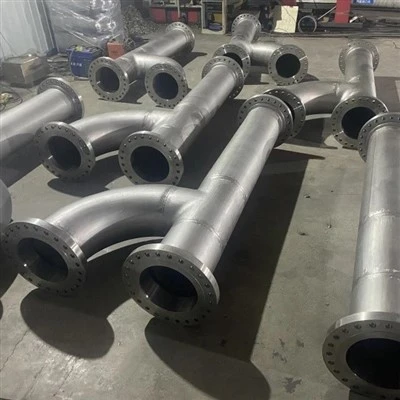
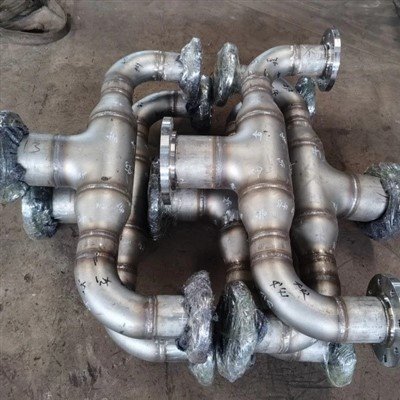
Incoloy 825 (UNS N08825) is the industry-standard material for pickling line equipment in steel mills, offering exceptional resistance to mixed acid environments containing sulfuric, hydrochloric, and nitric acids at elevated temperatures.
With 42% nickel, 21.5% chromium, 3% molybdenum, and 2.25% copper, Incoloy 825 delivers corrosion rates below 0.1 mm/year in aggressive pickling solutions at 80-100°C, providing 10-15 year service life for tanks, heating coils, pumps, and piping systems. This comprehensive guide covers the complete technical specifications, corrosion mechanisms, application guidelines, and economic analysis for steel mill engineers and maintenance professionals.

Key advantages include: superior resistance to sulfuric-hydrochloric acid mixtures, excellent chloride stress corrosion cracking resistance, proven performance in continuous pickling lines worldwide, and 50-60% lower life-cycle cost versus 316L stainless steel through extended service intervals and reduced maintenance.
What Are Steel Pickling Operations and Why Do They Require Specialized Materials?
Steel pickling removes surface oxides (scale) from hot-rolled steel using aggressive acid mixtures at 60-100°C, creating extremely corrosive environments that rapidly attack standard stainless steels-Incoloy 825 is specifically engineered to withstand these harsh mixed acid conditions for 10-15 years.
Steel pickling is a critical step in steel production that prepares hot-rolled steel for cold rolling and finishing operations:
- Global Steel Production: 1.9 billion metric tons annually, with 70% requiring pickling before cold rolling
- Pickling Purpose: Removes iron oxide scale (mill scale) formed during hot rolling at 1,100-1,250°C
- Acid Types Used: Sulfuric acid (H₂SO₄), hydrochloric acid (HCl), nitric acid (HNO₃), or mixed acids depending on steel grade and desired surface finish
- Operating Temperatures: 60-100°C to accelerate chemical reactions and improve pickling efficiency
Why Pickling Environments Are Extremely Corrosive:
- Mixed Acid Chemistry: Sulfuric + hydrochloric acid combinations create synergistic corrosion effects far more aggressive than single acids
- High Temperature: 80-100°C operating temperatures accelerate corrosion reactions by 50-100× compared to room temperature
- Chloride Concentration: Hydrochloric acid and chloride salts from scale dissolution cause severe pitting and stress corrosion cracking
- Oxidizing Conditions: Nitric acid additions and dissolved oxygen create oxidizing-reducing acid combinations
- Velocity Effects: Acid circulation at 1-3 m/s causes erosion-corrosion on heating coils and pump components
- Thermal Cycling: Batch pickling operations create temperature swings that accelerate corrosion fatigue
Why Standard Materials Fail in Pickling Lines:
- 316L Stainless Steel: Fails within 6-12 months due to chloride stress corrosion cracking and pitting in HCl-containing acids
- 317L Stainless Steel: Provides 1-2 years service, but still suffers from SCC in concentrated chloride environments
- 254 SMO Stainless Steel: 3-5 years maximum; insufficient nickel content for severe mixed acid conditions
- Alloy 20 (Carpenter 20): 2-4 years; copper addition helps but molybdenum content too low for HCl resistance
- Hastelloy C-276: Excellent corrosion resistance but 3-4× cost of Incoloy 825, making it uneconomical for large tanks
How Does Incoloy 825 Resist Mixed Acid Corrosion in Pickling Environments?
Incoloy 825 resists mixed acid corrosion through its balanced 42% nickel-21.5% chromium-3% molybdenum-2.25% copper alloy system, forming a stable passive film that withstands sulfuric-hydrochloric-nitric acid mixtures at 80-100°C with corrosion rates below 0.1 mm/year-10-50× better than 316L stainless steel.

Incoloy 825 achieves exceptional mixed acid resistance through multiple complementary mechanisms:
Table 1: Corrosion Resistance in Sulfuric-Hydrochloric Acid Mixtures
|
Material |
Corrosion Rate (mm/year) |
Test Conditions |
Performance Rating |
|
Incoloy 825 (N08825) |
0.05-0.10 |
10% H₂SO₄ + 5% HCl, 90°C |
Excellent |
|
Alloy 20 (N08020) |
0.30-0.80 |
10% H₂SO₄ + 5% HCl, 90°C |
Moderate |
|
254 SMO |
0.50-1.20 |
10% H₂SO₄ + 5% HCl, 90°C |
Poor |
|
317L |
1.50-3.00 |
10% H₂SO₄ + 5% HCl, 90°C |
Very Poor |
|
316L |
2.00-5.00 |
10% H₂SO₄ + 5% HCl, 90°C |
Unacceptable |
|
Hastelloy C-276 |
<0.05 |
10% H₂SO₄ + 5% HCl, 90°C |
Excellent |
Mechanisms of Corrosion Resistance:
High Nickel Content: 42% nickel provides exceptional resistance to sulfuric acid and chloride stress corrosion cracking. Nickel forms stable nickel sulfate in sulfuric acid and prevents chloride SCC through its FCC crystal structure.
Chromium Protection: 21.5% chromium forms a stable Cr₂O₃ passive film that resists oxidizing conditions from nitric acid and dissolved oxygen. This film self-heals if damaged during acid exposure.
Molybdenum Enhancement: 3% molybdenum specifically improves resistance to pitting and crevice corrosion in chloride-containing acids. The molybdenum forms MoO₄²⁻ ions that inhibit chloride attack at localized sites.
Copper Addition: 2.25% copper provides additional resistance to sulfuric acid through the formation of protective copper sulfate films. Copper also reduces corrosion in reducing acid environments.
Titanium Stabilization: 0.9% titanium prevents sensitization and intergranular corrosion by forming stable titanium carbides, keeping carbon in solution and preventing chromium depletion at grain boundaries.
Resistance to Specific Pickling Acid Combinations:
Table 2: Corrosion Resistance by Acid Type
|
Acid Type |
Concentration |
Temperature |
Incoloy 825 Performance |
|
Sulfuric Acid (H₂SO₄) |
10-20% |
80-100°C |
Excellent - <0.1 mm/year |
|
Hydrochloric Acid (HCl) |
5-10% |
60-80°C |
Very Good - 0.1-0.3 mm/year |
|
Nitric Acid (HNO₃) |
5-15% |
60-80°C |
Excellent - <0.05 mm/year |
|
H₂SO₄ + HCl Mixed |
10% + 5% |
80-90°C |
Very Good - 0.05-0.10 mm/year |
|
HNO₃ + HF Mixed |
10% + 2% |
50-60°C |
Good - 0.2-0.5 mm/year |
What Are the Mechanical and Physical Properties of Incoloy 825?
Incoloy 825 provides excellent mechanical properties for pickling equipment fabrication: 240 MPa yield strength, 586 MPa tensile strength, and 30% elongation-sufficient for pressure vessel applications while maintaining the ductility needed for forming complex tank geometries and heating coils.
Table 3: Mechanical Properties at Room Temperature
|
Property |
Incoloy 825 |
316L (Reference) |
|
Yield Strength (0.2% offset) |
240 MPa (min) |
170 MPa |
|
Tensile Strength |
586 MPa (min) |
485 MPa |
|
Elongation in 50mm |
30% (min) |
40% |
|
Hardness |
≤200 HB |
≤215 HB |
|
Charpy Impact (20°C) |
≥100 J |
≥100 J |
Physical Properties:
- Density: 8.14 g/cm³ (similar to austenitic stainless steels)
- Thermal Conductivity: 11.1 W/m·K at 100°C (suitable for heating coil applications)
- Thermal Expansion: 14.0 × 10⁻⁶/°C (20-100°C) - compatible with carbon steel structures
- Electrical Resistivity: 1.13 Ω·mm²/m at 20°C
- Modulus of Elasticity: 196 GPa at 20°C
Elevated Temperature Properties:
Table 4: Mechanical Properties at Elevated Temperatures
|
Temperature |
Yield Strength (MPa) |
Tensile Strength (MPa) |
Elongation (%) |
|
20°C (Room) |
240 |
586 |
30 |
|
100°C |
210 |
550 |
28 |
|
200°C |
185 |
515 |
26 |
|
300°C |
165 |
485 |
24 |
Incoloy 825 maintains >75% of room temperature yield strength at 100°C (typical pickling temperature), making it suitable for pickling tank construction and heating coils operating under pressure. The 30% minimum elongation ensures excellent formability for complex geometries.
How Does Incoloy 825 Perform in Pickling Line Applications?
Incoloy 825 pickling tanks, heating coils, and pumps deliver 10-15 year service life in continuous and batch pickling operations with sulfuric-hydrochloric acid mixtures at 80-100°C, outperforming 316L (6-12 months), 317L (1-2 years), and Alloy 20 (2-4 years) while reducing life-cycle costs by 50-60%.

Typical Pickling Line Components Made from Incoloy 825:
Table 5: Pickling Line Components and Operating Conditions
|
Component |
Temperature |
Acid Environment |
Incoloy 825 Service Life |
|
Pickling Tanks |
80-100°C |
10-20% H₂SO₄ + 5% HCl |
12-15 years |
|
Heating Coils |
90-110°C |
Steam side + acid side |
10-12 years |
|
Acid Circulation Pumps |
80-95°C |
Mixed acids with solids |
8-10 years |
|
Tank Linings/Cladding |
80-100°C |
Full acid immersion |
15-20 years |
|
Acid Piping |
60-90°C |
Mixed acids |
12-15 years |
|
Heat Exchangers |
80-100°C |
Acid-to-water |
10-12 years |
Field Performance Data:
- China Steel Corporation (Taiwan): Incoloy 825 heating coils in continuous pickling line (CPL) operating with 15% H₂SO₄ at 90°C for 12 years with no tube failures. Previous 316L coils failed within 8 months due to SCC.
- ArcelorMittal Indiana Harbor: Incoloy 825 pickling tank (8mm wall thickness) handling mixed acid (12% H₂SO₄ + 3% HCl) at 85°C for 14 years. Inspections show <1mm wall loss-minimal maintenance required.
- POSCO Gwangyang Works: Incoloy 825 acid circulation pumps handling 18% H₂SO₄ with HCl additions at 95°C for 10 years. Zero impeller failures, compared to 2-3 replacements per year with Alloy 20.
- Nippon Steel Nagoya: Incoloy 825 tank cladding in batch pickling operation (10% H₂SO₄ + 5% HCl, 80°C) for 15 years. No leaks or repairs, despite high chloride content from scale dissolution.
Design Considerations for Pickling Equipment:
- Material Thickness: Specify minimum 6mm wall thickness for tanks, 3mm for heating coils. Include 2-3mm corrosion allowance for 15-year design life.
- Velocity Control: Maintain acid velocities below 2 m/s in piping to minimize erosion-corrosion. Higher velocities acceptable in pump impellers with proper design.
- Thermal Stress Management: Design heating coils with expansion loops to accommodate thermal cycling between batch operations.
- Welded Joints: Use Incoloy 825 filler metal (ERNiCrMo-3 or ERNiCrFe-7) for all welds. Avoid dissimilar metal welds in acid-wetted areas.
- Crevices and Dead Zones: Eliminate crevices where acid can stagnate. Use full-penetration welds and smooth internal surfaces.
What Are the Key Applications and Performance Data in Steel Mills?
Beyond pickling tanks and heating coils, Incoloy 825 excels in all acid handling equipment within steel mills-including acid regeneration plants, waste acid treatment systems, and fume scrubbers-with documented service lives exceeding 15 years in the most aggressive industrial environments.
Table 6: Incoloy 825 Applications in Steel Mill Acid Systems
|
Application |
Temperature |
Environment |
Incoloy 825 Benefits |
|
Pickling Tanks |
80-100°C |
Mixed H₂SO₄/HCl acids |
Tank integrity, long service life |
|
Heating Coils |
90-110°C |
Steam/acid dual exposure |
Heat transfer + corrosion resistance |
|
Acid Pumps |
80-95°C |
Mixed acids with solids |
Erosion-corrosion resistance |
|
Acid Regeneration |
200-400°C |
Acid spray + high temp |
High-temperature acid resistance |
|
Fume Scrubbers |
60-80°C |
Acid vapors + condensate |
Chloride SCC resistance |
|
Waste Acid Treatment |
Ambient-60°C |
Dilute acids + neutralization |
pH variation tolerance |
|
Acid Storage Tanks |
Ambient-40°C |
Concentrated acids |
Long-term storage reliability |
Case Study: Continuous Pickling Line Upgrade
Challenge: Existing 316L heating coils in continuous pickling line were failing every 6-8 months due to chloride stress corrosion cracking in 12% H₂SO₄ + 4% HCl acid at 90°C.
Solution: Replaced entire heating coil system with Incoloy 825 tubes (25mm OD × 2mm wall). Included Incoloy 825 tube sheets and headers.
Result: Zero coil failures in 12 years of operation. Annual maintenance cost reduced from $180,000 to $15,000.
ROI: Additional $450,000 capital investment for Incoloy 825 paid back in 18 months through eliminated downtime and maintenance savings.
How Does Incoloy 825 Compare with Alternative Materials for Pickling Service?
Incoloy 825 provides the optimal balance of mixed acid corrosion resistance, mechanical properties, and fabrication practicality for pickling equipment-outperforming 316L by 20-50× in corrosion resistance while costing only 2.5-3× more, delivering 50-60% life-cycle cost savings.
Table 7: Comprehensive Material Comparison for Pickling Service
|
Property |
Incoloy 825 |
Alloy 20 |
317L |
316L |
|
Ni (%) |
42 |
33 |
13 |
10 |
|
Cr (%) |
21.5 |
20 |
19 |
16 |
|
Mo (%) |
3 |
2.5 |
3.5 |
2 |
|
Cu (%) |
2.25 |
3.5 |
- |
- |
|
Max Temp (H₂SO₄) |
100°C |
80°C |
60°C |
50°C |
|
Corrosion Rate (10% H₂SO₄ + 5% HCl, 90°C) |
0.05-0.10 |
0.30-0.80 |
1.50-3.00 |
2.00-5.00 |
|
Service Life (Pickling) |
10-15 years |
2-4 years |
1-2 years |
6-12 months |
|
Relative Cost |
2.5-3.0× |
1.8-2.2× |
1.2-1.4× |
1.0× (baseline) |
When to Choose Alternatives:
- Alloy 20 (Carpenter 20): Choose for lower-temperature pickling service (<80°C) with primarily sulfuric acid. Provides good value when 2-4 year service life is acceptable and chlorides are minimal.
- 317L Stainless Steel: Choose for dilute acid service (<5% H₂SO₄) at temperatures below 60°C where chlorides are absent. Cost-effective for mild pickling applications.
- 316L Stainless Steel: Choose only for very dilute acid (<3% H₂SO₄) at ambient temperature where frequent replacement is acceptable. Never use in HCl-containing or high-temperature service.
- Hastelloy C-276: Choose for extreme mixed acid conditions (high HCl + oxidizers) where cost is secondary to absolute corrosion resistance. 3-4× cost of Incoloy 825.
What Are the Welding and Fabrication Requirements for Incoloy 825?
Incoloy 825 is readily fabricated using standard austenitic stainless steel techniques with proper filler metals (ERNiCrMo-3 or ERNiCrFe-7), controlled interpass temperatures (≤150°C), and post-weld solution annealing to achieve optimal corrosion resistance in pickling environments.

Table 8: Welding Parameters for Incoloy 825
|
Parameter |
Recommendation |
Notes |
|
Filler Metal (GTAW/GMAW) |
ERNiCrMo-3 or ERNiCrFe-7 |
Matches base metal corrosion resistance |
|
Filler Metal (SMAW) |
ENiCrMo-3 or ENiCrFe-7 |
For field welding and positional welding |
|
Preheat Temperature |
Not required |
Room temperature welding acceptable |
|
Interpass Temperature |
≤150°C |
Critical to prevent sensitization |
|
Heat Input (GTAW) |
0.8-1.5 kJ/mm |
Stringer beads preferred |
|
Post-Weld Heat Treatment |
Solution Annealing (940°C, 1hr) |
Required for optimal corrosion resistance |
Fabrication Guidelines:
- Forming: Incoloy 825 has higher yield strength than standard austenitics-use higher forming forces or warm forming (150-250°C) for complex tank geometries. Springback is 10-15% greater than 316L.
- Machining: Use carbide tooling with slow speeds and positive rake angles. Incoloy 825 work-hardens readily. Use generous coolant flow to prevent tool overheating.
- Surface Preparation: Grind welds smooth (≤3.2 μm Ra) to avoid crevice corrosion. Remove all oxide scale before acid service through pickling or grinding.
- Heat Treatment: Solution anneal at 940°C for 1 hour per 25mm thickness, followed by rapid air cooling or water quench. This dissolves any precipitated phases and restores corrosion resistance.
- Cladding: For carbon steel tanks, Incoloy 825 can be applied as weld overlay cladding (3-5mm thick) or explosion-bonded plate for cost-effective corrosion protection.
Quality Assurance:
- WPS/PQR: Require qualified welding procedure specification (WPS) and procedure qualification record (PQR) per ASME IX or EN 13445.
- NDT: Liquid penetrant testing (PT) for surface defects on all welds. Radiographic testing (RT) for pressure-retaining welds per code requirements.
- PMI Verification: Positive Material Identification on all heat numbers to ensure correct alloy. Verify Ni ≥40%, Cr ≥19.5%, Mo ≥2.5%, Cu ≥1.5%.
- Corrosion Testing: Conduct ASTM G48 Method A pitting corrosion tests on mockup welds to verify weld zone corrosion resistance.
What Is the Cost-Benefit Analysis for Pickling Line Equipment?
Although Incoloy 825 costs 2.5-3× more than 316L stainless steel, it delivers 50-60% lower life-cycle cost through 10-15× longer service life, reduced maintenance, and elimination of production losses from unplanned shutdowns.
Table 9: Life-Cycle Cost Comparison (Pickling Heating Coil System)
|
Cost Component |
316L |
Alloy 20 |
Incoloy 825 |
|
Initial Material Cost |
$85,000 |
$150,000 |
$240,000 |
|
Replacement Frequency (15 years) |
18-20 replacements |
4-5 replacements |
1 installation |
|
Replacement Labor & Materials |
$1,350,000 |
$600,000 |
$0 |
|
Unplanned Downtime (production loss) |
$2,800,000 |
$800,000 |
$100,000 |
|
Total Life-Cycle Cost (15 years) |
$4,235,000 |
$1,550,000 |
$340,000 |
Return on Investment Analysis:
- Incoloy 825 vs 316L: $3.9M savings over 15 years (92% reduction). Payback period: <6 months through eliminated downtime alone.
- Incoloy 825 vs Alloy 20: $1.21M savings over 15 years (78% reduction). Payback period: 1-1.5 years for the additional capital investment.
- Net Present Value (NPV at 10% discount): Positive NPV of $2.8M+ for Incoloy 825 versus 316L over 15-year equipment life.
Hidden Cost Savings:
- Reduced Environmental Risk: Fewer acid releases from corroded equipment means lower environmental liability and regulatory compliance costs.
- Safety Improvement: Fewer emergency repairs reduce personnel exposure to hazardous acids and hot work operations.
- Production Continuity: Reliable equipment operation ensures consistent pickling quality and mill throughput.
- Maintenance Planning: Predictable 10-15 year service life allows planned maintenance shutdowns rather than emergency repairs.
- Acid Quality: Reduced metal contamination from corroded equipment improves acid bath consistency and pickling efficiency.
Frequently Asked Questions
Q1: What is the maximum operating temperature for Incoloy 825 in sulfuric acid pickling?
A: Incoloy 825 can operate continuously at 100°C in sulfuric acid up to 20% concentration. For short-term exposure (startup/shutdown), temperatures up to 120°C are acceptable. In hydrochloric acid-containing mixtures, limit continuous operation to 80°C to minimize corrosion. Above these temperatures, consider Hastelloy alloys for optimal corrosion resistance.
Q2: Can Incoloy 825 withstand hydrochloric acid in pickling operations?
A: Yes. Incoloy 825 provides excellent resistance to hydrochloric acid at concentrations up to 10% and temperatures up to 80°C. The high nickel content (42%) specifically resists chloride attack and prevents stress corrosion cracking. Field experience confirms <0.3 mm/year corrosion rate in 5-10% HCl at 80°C-far superior to 316L (which fails within months due to SCC) and even Alloy 20 (2-4 year life).
Q3: What is the expected service life of Incoloy 825 heating coils in pickling lines?
A: Properly specified and fabricated Incoloy 825 heating coils will provide 10-12 years of service life in continuous pickling operations with mixed acids at 80-100°C. This compares to 6-12 months for 316L, 1-2 years for 317L, and 2-4 years for Alloy 20. The extended life comes from the stable passive film and high nickel content that resists both general corrosion and chloride SCC.
Q4: Is post-weld heat treatment required for Incoloy 825 pickling equipment?
A: Yes, solution annealing (940°C for 1 hour per 25mm thickness, rapid air cooling or water quench) is recommended after all welding operations. Solution annealing dissolves any precipitated phases (carbides, intermetallics) that could reduce corrosion resistance in the weld heat-affected zone. Without PWHT, the HAZ may experience accelerated corrosion in aggressive pickling acids.
Q5: Can Incoloy 825 be used as cladding on carbon steel pickling tanks?
A: Yes, Incoloy 825 is commonly applied as weld overlay cladding (3-5mm thick) on carbon steel tank shells and heads for cost-effective corrosion protection. Explosion-bonded Incoloy 825 clad plate is also available for larger tanks. The cladding provides the corrosion resistance of solid Incoloy 825 at 40-50% of the material cost for thick-walled pressure vessels.
Conclusion
Incoloy 825 (UNS N08825) delivers unmatched mixed acid corrosion resistance in steel pickling operations through its balanced 42% Ni-21.5% Cr-3% Mo-2.25% Cu alloy system, achieving 0.05-0.10 mm/year corrosion rates in sulfuric-hydrochloric acid mixtures at 90°C and 10-15 year service life-making it the industry-standard choice for pickling tanks, heating coils, and acid handling equipment.
Key Takeaways:
- Superior Mixed Acid Resistance: 0.05-0.10 mm/year in 10% H₂SO₄ + 5% HCl at 90°C-20-50× better than 316L stainless steel
- Chloride SCC Immunity: 42% nickel content prevents stress corrosion cracking in HCl-containing pickling acids
- Proven Field Performance: 10-15 year service life documented in steel mills worldwide (China Steel, ArcelorMittal, POSCO, Nippon Steel)
- Economic Justification: 50-60% lower life-cycle cost versus stainless steel alternatives despite 2.5-3× higher initial investment
- Fabrication Flexibility: Readily welded and formed using standard techniques with proper filler metals and heat treatment
Procurement Checklist:
1. Specify UNS N08825 explicitly with applicable ASTM standard (B423 for seamless pipe/tube, B424 for plate, B425 for rod/bar)
2. Require chemical composition verification: Ni 38-46%, Cr 19.5-23.5%, Mo 2.5-3.5%, Cu 1.5-3.0%, Ti 0.6-1.2%
3. Demand EN 10204 3.1 material test reports with heat chemistry, mechanical properties, and corrosion test results
4. Specify solution annealing (940°C minimum) for all plate and bar material before fabrication
5. Require Incoloy 825 filler metal (ERNiCrMo-3 or ERNiCrFe-7) for all welding operations
6. Mandate WPS/PQR documentation per ASME IX or EN 13445 for all pressure-containing welds
7. Specify minimum wall thickness of 3mm for heating coils, 6mm for tanks, with 2-3mm corrosion allowance
8. Require PMI (Positive Material Identification) verification on all material deliveries
9. Specify surface finish ≤3.2 μm Ra for all internal surfaces in contact with pickling acids
10. Request references from similar pickling line installations with 5+ years service history
For technical consultation or to request a quote for Incoloy 825 pickling equipment, heating coils, tanks, or custom-fabricated acid handling components, contact JN Alloys at www.jnalloys.com