Tidal turbines and wave energy converters operate in one of the harshest environments in engineering - constant seawater immersion, cyclic mechanical loading, and limited access for maintenance. Super duplex stainless steel has emerged as a leading structural material for this environment because it combines high strength with exceptional resistance to seawater corrosion. This guide explains why, where it fits best, and what design precautions keep it performing for decades.

What Is Super Duplex Stainless Steel?
Super duplex stainless steel (grades such as UNS S32750 and S32760) is used in tidal and wave power systems because its dual austenite-ferrite microstructure delivers roughly twice the yield strength of standard austenitic stainless steel along with outstanding resistance to seawater pitting, crevice corrosion, and chloride stress-corrosion cracking.
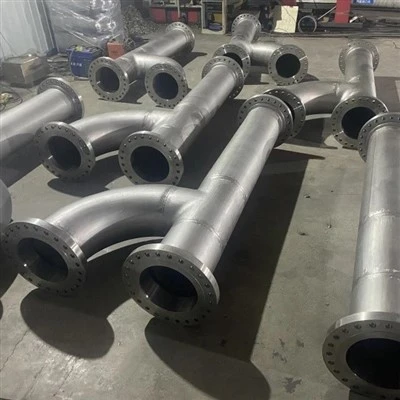
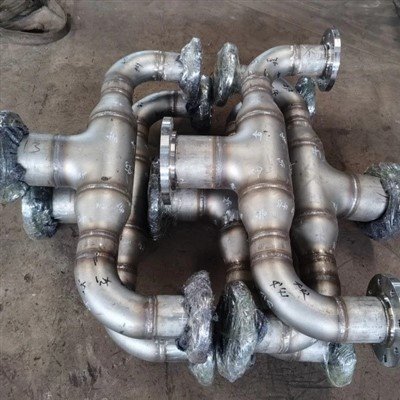
Tidal and wave energy hardware - turbine shafts, blade hubs, mooring components, fasteners, and structural frames - must survive years of continuous seawater exposure and cyclic loading from waves and currents, often with no practical way to inspect or replace parts. Super duplex's microstructure is roughly 50% austenite and 50% ferrite, a balance that combines the toughness of austenitic steels with the strength and chloride resistance of ferritic steels. This combination lets designers use thinner, lighter sections than standard stainless steel while still meeting a multi-decade service life in full seawater immersion.
Typical Super Duplex Components in Marine Renewable Systems
- Tidal turbine main shafts and rotor hubs
- Wave energy converter hinges, linkages, and power take-off housings
- Subsea fasteners, flanges, and structural connections
- Mooring hardware, chain links, and shackles in high-load applications
What Gives Super Duplex Its Corrosion Resistance in Seawater?
Super duplex resists seawater corrosion because its high chromium, molybdenum, and nitrogen content produces a Pitting Resistance Equivalent Number (PREN) above 40, roughly double that of standard 316L stainless steel, which makes it far more resistant to the pitting and crevice corrosion that chloride-rich seawater causes.

PREN is calculated from an alloy's chromium, molybdenum, and nitrogen content and is widely used as a first-pass screening tool for seawater suitability. As a general guide, alloys with a PREN above 40 are considered suitable for ambient-temperature seawater service without additional protection, while lower-PREN alloys typically require cathodic protection or are limited to less aggressive exposure.
|
Grade |
PREN (typical) |
Chromium |
Molybdenum |
Nitrogen |
|
316L (UNS S31603) |
≈ 24–26 |
16.0%–18.0% |
2.0%–3.0% |
0.10% max |
|
Duplex 2205 (UNS S32205) |
≈ 34–36 |
22.0%–23.0% |
3.0%–3.5% |
0.14%–0.20% |
|
Super Duplex 2507 (UNS S32750) |
≈ 41–43 |
24.0%–26.0% |
3.0%–4.5% |
0.24%–0.32% |
|
Super Duplex Zeron 100 (UNS S32760) |
≈ 40–42 |
24.0%–26.0% |
3.0%–4.0% |
0.20%–0.30% |
Table 1. PREN and key alloying content for common marine stainless grades (PREN = %Cr + 3.3×%Mo + 16×%N).
How Does Super Duplex's Strength Benefit Tidal Turbine and Wave Converter Design?
Super duplex's minimum yield strength of roughly 550–580 MPa - about twice that of standard austenitic stainless steel - allows engineers to design thinner, lighter structural components without sacrificing safety margin, directly reducing material weight, hydrodynamic loading, and installation cost for tidal and wave hardware.
|
Property (typical, annealed) |
316L |
Duplex 2205 |
Super Duplex (S32750 / S32760) |
|
Yield strength, min |
≈ 170 MPa (25 ksi) |
≈ 450 MPa (65 ksi) |
≈ 550–580 MPa (80–84 ksi) |
|
Tensile strength, min |
≈ 485 MPa (70 ksi) |
≈ 620 MPa (90 ksi) |
≈ 750–800 MPa (109–116 ksi) |
|
Elongation, min |
40% |
25% |
25% |
|
Relative density |
Baseline |
≈ Same as 316L |
≈ Same as 316L |
Table 2. Representative mechanical properties per ASTM A240 / A276 / A182.
Because yield strength roughly doubles while density stays essentially the same as austenitic stainless steel, a component redesigned in super duplex can often be built with significantly thinner wall sections or smaller cross-sections for the same load rating - a meaningful advantage for rotating turbine components, where reduced mass lowers bearing loads, fatigue stress, and transportation and installation costs.
Is Super Duplex Susceptible to Hydrogen Embrittlement Under Cathodic Protection?
Yes - super duplex can absorb hydrogen and become embrittled if cathodic protection is applied outside its recommended potential range, so tidal and wave energy systems must control cathodic protection potentials carefully rather than assuming more protection is always safer.
Cathodic protection (CP) is standard practice for subsea structures, using sacrificial anodes or impressed current to keep steel components electrically polarized so corrosion current flows away from the protected structure. For duplex and super duplex stainless steels, however, driving the potential too negative (over-protection) can generate atomic hydrogen at the metal surface, which diffuses into the material and reduces ductility and fracture toughness - a failure mode called hydrogen-induced stress cracking. This risk increases with higher material strength, higher applied stress, lower temperature, and more negative CP potential.

Practical Controls for CP and Super Duplex
- Maintain CP potentials within the alloy manufacturer's and applicable standard's recommended window - typically not more negative than about −800 to −1000 mV vs. Ag/AgCl for many super duplex grades, though the exact limit depends on grade, strength level, and stress state
- Avoid combining high mechanical preload or residual stress with aggressive CP levels on the same component
- Account for lower seawater temperatures, which increase hydrogen solubility and embrittlement susceptibility
- Consult grade-specific guidance (e.g., NORSOK M-001, ISO 21457) before finalizing CP design criteria for super duplex components
How Does Super Duplex Compare to Titanium and Nickel-Aluminum Bronze for Marine Renewable Hardware?
Super duplex offers the best balance of strength, corrosion resistance, and cost for most tidal and wave power components, while titanium provides superior corrosion immunity at a significantly higher price, and nickel-aluminum bronze remains favored for cast propeller-type geometries and long-established marine casting experience.

|
Attribute |
Super Duplex |
Titanium (Grade 2 / 5) |
Nickel-Aluminum Bronze |
|
Seawater corrosion resistance |
Excellent (with CP controls) |
Outstanding, near-immune |
Good, with established track record |
|
Relative strength |
High |
High (Grade 5 especially) |
Moderate |
|
Relative material cost |
Moderate |
High |
Moderate |
|
Fabrication/welding complexity |
Moderate, requires phase-balance control |
High, specialized welding required |
Well-established casting/foundry practice |
|
Typical use case |
Shafts, structural frames, fasteners |
High-value, weight-critical components |
Cast propellers, pump housings |
Table 3. Comparative reference for structural marine renewable energy materials.
What Welding and Fabrication Practices Preserve Super Duplex Performance in Marine Service?
Preserving super duplex's corrosion resistance during fabrication depends on tightly controlling heat input and cooling rate to maintain the correct 50/50 austenite-ferrite balance and to prevent formation of embrittling intermetallic phases such as sigma phase, which form readily if the weld or heat-affected zone is overheated.
Super duplex is metallurgically less forgiving to weld than standard austenitic stainless steel. If heat input is too high, or the material dwells too long in the 700–1000°C (1300–1830°F) range, brittle intermetallic phases can form and the local ferrite content can shift out of balance, both of which reduce corrosion resistance and toughness in the affected zone.
Fabrication Best Practices
- Use matched or slightly over-alloyed filler metal to help restore proper phase balance in the weld metal
- Control heat input and interpass temperature according to the alloy manufacturer's welding procedure specification
- Perform post-weld inspection, including ferrite content measurement and corrosion testing (e.g., ASTM G48), on critical structural welds
- Avoid unnecessary reheating or thermal cycling of completed welds during subsequent fabrication steps
What Are Best Practices for Specifying Super Duplex Components in Tidal and Wave Energy Systems?
Reliable long-term performance of super duplex in tidal and wave power systems depends on combining the right grade selection with galvanic isolation, controlled cathodic protection, and fatigue-aware design, since seawater immersion and cyclic loading interact in ways that single-property specifications can miss.

Specification Checklist
- Confirm PREN and grade selection against actual seawater temperature and chloride exposure, not just a general marine rating
- Design cathodic protection systems with duplex-specific potential limits, not generic carbon-steel CP criteria
- Electrically isolate super duplex components from more active metals (e.g., mild steel structural members) to prevent unfavorable galvanic coupling
- Account for fatigue loading from wave and current cycling in addition to static strength, since tidal and wave hardware sees millions of load cycles over its service life
- Specify surface finish and crevice-minimizing design details, since biofouling and deposit formation can create local corrosion cells even on high-PREN alloys
Frequently Asked Questions
Yes, unlike fully austenitic stainless steels such as 316L, super duplex is moderately magnetic because roughly half its microstructure is ferrite, which is ferromagnetic. This does not affect its corrosion performance but can matter for components near sensitive instrumentation.
Can super duplex be used without cathodic protection in seawater?
Super duplex's high PREN allows many components to perform well in flowing, well-aerated seawater without CP, but crevices, stagnant zones, and welded joints benefit significantly from CP as an added safety margin. Most subsea structural applications still specify CP as standard practice.
How does temperature affect super duplex's corrosion resistance in seawater?
Pitting and crevice corrosion resistance decrease as seawater temperature rises, so a grade adequate at typical ambient seawater temperatures may need re-evaluation for warmer coastal or tropical deployments. Manufacturers publish critical pitting and crevice temperatures for this reason, and designers should check them against site-specific water temperature data.
Is super duplex more expensive than standard duplex 2205?
Yes, super duplex commands a price premium over standard duplex 2205 due to its higher molybdenum and nitrogen content. The premium is typically justified in the most demanding, highest-consequence, or least accessible components, while 2205 remains a cost-effective choice for less severe marine exposure.
Why is fatigue performance especially important for tidal and wave energy hardware?
Tidal currents and wave motion subject structural components to millions of stress cycles over a multi-decade design life, so fatigue strength - not just static yield and tensile strength - often governs component sizing. Super duplex's high strength and good toughness make it well suited to this cyclic loading environment when fatigue is properly accounted for in design.