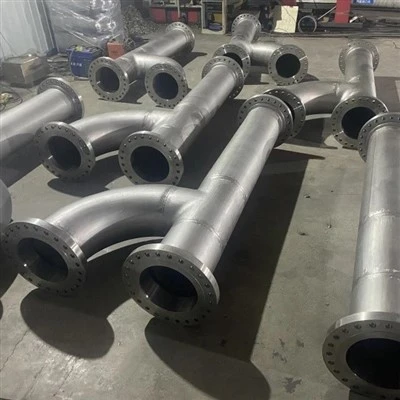
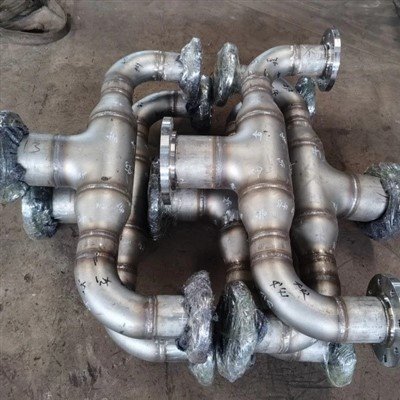
Hastelloy B3 (UNS N10675) is the industry-standard nickel-molybdenum alloy for hydrochloric acid service across nearly every concentration and temperature - but its performance depends entirely on keeping the process environment reducing. This guide explains where B3 excels, where it can fail, and how to design and operate equipment that gets the full service life the alloy is capable of.

What Makes Hastelloy B3 Suitable for Hydrochloric Acid Service?
Hastelloy B3 resists hydrochloric acid across its full concentration range and up to boiling temperature because its high nickel-molybdenum content forms a stable matrix that does not depend on a protective oxide film, unlike chromium-bearing stainless steels, which HCl aggressively attacks.
HCl is a strongly reducing, non-oxidizing acid that destroys the passive chromium oxide layer relied on by stainless steels and many chromium-bearing nickel alloys. Hastelloy B3 sidesteps this failure mode entirely: its corrosion resistance comes from a nickel matrix heavily alloyed with molybdenum (roughly 28–30%), rather than from a thin passive film. Because there is no protective film for HCl to strip away, B3 remains stable under conditions that would rapidly destroy 316L stainless steel or even many chromium-rich nickel alloys.
|
Element |
Hastelloy B3 (UNS N10675), typical wt% |
|
Nickel (Ni) |
Balance (≈ 65%) |
|
Molybdenum (Mo) |
28.0%–30.0% |
|
Chromium (Cr) |
1.0%–3.0% |
|
Iron (Fe) |
1.5% max |
|
Cobalt (Co) |
3.0% max |
|
Manganese (Mn) |
3.0% max |
|
Silicon (Si) |
0.10% max |
|
Carbon (C) |
0.01% max |
Table 1. Nominal composition of Hastelloy B3 per ASTM B335 / UNS N10675.
What Concentration and Temperature Limits Apply to Hastelloy B3 in HCl?
Under purely reducing conditions, Hastelloy B3 resists hydrochloric acid across the entire commercial concentration range (roughly 1%–37%) at temperatures from ambient up to boiling point, making it one of the few alloys capable of full-range HCl service without a concentration or temperature ceiling.

This broad performance envelope is the primary reason B3 is specified for HCl duty in the first place: many corrosion-resistant alloys are only rated for HCl within a narrow concentration or temperature band, forcing designers to change materials as process conditions shift. B3 removes that constraint - provided the acid remains free of oxidizing species, which is the critical caveat covered next.
Typical Full-Range HCl Applications for Hastelloy B3
- Hydrochloric acid production, storage, and transfer piping
- Acid pickling and metal-cleaning systems
- Chemical reactors and reboilers handling pure HCl
- Heat exchangers in HCl recovery and regeneration loops
Why Is Oxidizing Contamination the Primary Threat to Hastelloy B3 in HCl Service?
Oxidizing contaminants - even in trace amounts - are the leading cause of unexpected Hastelloy B3 failures in HCl service, because the alloy's corrosion resistance depends on a reducing environment, and species such as ferric or cupric ions, dissolved oxygen, and nitric acid can sharply accelerate the corrosion rate.
Because B3's resistance comes from its base metallurgy rather than a passive film, it does not benefit from oxidizers the way stainless steels and chromium-rich alloys do. Instead, oxidizing contamination pushes the alloy's corrosion potential into a range where attack accelerates - sometimes dramatically, even at concentrations measured in parts per million. This is the single most common root cause of premature failure in otherwise correctly specified B3 equipment.
Common Sources of Oxidizing Contamination
- Dissolved oxygen from inadequate deaeration or air ingress at pump seals and vents
- Ferric chloride (FeCl₃) or cupric chloride (CuCl₂) carried over from upstream metal-dissolution processes
- Accidental cross-contamination with oxidizing acids such as nitric or chromic acid
- Chlorine gas or hypochlorite residues from upstream bleaching or disinfection steps
- Process teams should treat oxidizer exclusion as a design requirement, not a housekeeping detail - it is the single variable that determines whether B3 will perform to its full potential or fail well ahead of schedule.
How Does Hastelloy B3 Compare to Hastelloy B2 and Hastelloy C-276 in HCl Applications?
Hastelloy B3 offers better thermal stability and as-welded corrosion resistance than the older Hastelloy B2 in pure, non-oxidizing HCl, while Hastelloy C-276 is the better choice whenever the process stream contains oxidizing contaminants, since C-276's chromium and tungsten content restores resistance to mixed or oxidizing acid environments that B3 cannot tolerate.
|
Attribute |
Hastelloy B3 (N10675) |
Hastelloy B2 (N10665) |
Hastelloy C-276 (N10276) |
|
Primary alloying strategy |
High Ni-Mo, improved thermal stability |
High Ni-Mo, older generation |
Ni-Mo-Cr for mixed environments |
|
Best environment |
Pure, reducing HCl / H₂SO₄ |
Pure, reducing HCl / H₂SO₄ |
Oxidizing and mixed acid mixtures |
|
Sensitivity to oxidizers |
High - avoid entirely |
High - avoid entirely |
Tolerant of moderate oxidizing species |
|
As-welded corrosion resistance |
Improved over B2 |
Prone to HAZ precipitation issues |
Good, resistant to weld sensitization |
|
Typical use case |
Full-range HCl processing |
Legacy HCl equipment (largely superseded by B3) |
Mixed acids, pitting/crevice-prone service |
Table 2. Comparative alloy selection reference for hydrochloric acid and related reducing-acid service.
What Welding and Fabrication Practices Preserve Corrosion Resistance in Hastelloy B3?
Hastelloy B3 was specifically developed to resist the heat-affected-zone precipitation problems that limited its predecessor, Hastelloy B2, so it retains strong as-welded corrosion resistance - but low heat input, matching filler metal, and a post-weld solution anneal for critical service remain best practice to guarantee full performance.

Welding any nickel-molybdenum alloy introduces a heat-affected zone (HAZ) where the metal briefly reaches temperatures that can precipitate secondary phases at grain boundaries, locally reducing corrosion resistance. B3's chemistry was engineered to slow this precipitation compared to B2, giving fabricators a wider safe welding window. That said, the following practices remain standard for HCl-service equipment where failure carries high consequence:
- Use matched Hastelloy B3 filler metal to avoid dilution-related weaknesses at the weld
- Control heat input and interpass temperature to minimize time spent in the sensitizing temperature range
- Specify a post-weld solution anneal for thick sections, multi-pass welds, or vessels in continuous severe service
- Inspect welds for proper penetration and freedom from crevices, which can trap stagnant acid and locally concentrate oxidizing contaminants
What Are Best Practices for Using Hastelloy B3 in HCl Processing Systems?
Reliable long-term B3 performance in HCl service depends on process-level controls - deaeration, contamination exclusion, and galvanic isolation - as much as it depends on the alloy itself, so equipment design and operating procedures must treat oxidizer control as a first-class requirement.
Design and Operating Checklist
- Deaerate process streams and blanket tanks with inert gas (typically nitrogen) to exclude dissolved oxygen
- Monitor upstream process chemistry to prevent ferric, cupric, or other oxidizing ion carryover into the B3 circuit
- Avoid galvanic coupling between B3 and more noble alloys or contamination from dissimilar metal debris, which can create localized oxidizing conditions
- Eliminate crevices and stagnant zones in equipment design, since trapped acid can locally concentrate contaminants over time
- Verify incoming acid quality against a defined contamination specification before introducing it to B3 equipment
- Maintain accurate material traceability and mill certification, since only alloy meeting ASTM B335/B366/B564 chemistry limits should be relied upon for full-range HCl service
What Are Common Failure Modes When Hastelloy B3 Is Misapplied?
The most common Hastelloy B3 failures in HCl service are accelerated general corrosion from unnoticed oxidizer contamination, localized pitting where chlorides combine with oxidizing species, and premature attack at crevices or weld defects - nearly all of which trace back to a breakdown in reducing-condition control rather than a limitation of the alloy itself.

Accelerated general corrosion: caused by continuous low-level oxidizer ingress (e.g., a failing deaeration system), producing wall-thickness loss well ahead of design life
- Localized pitting: occurs where chloride ions and trace oxidizers concentrate at surface defects, weld undercut, or deposits
- Crevice attack: develops in gasket faces, threaded connections, or under deposits where stagnant acid allows contaminants to concentrate
- Galvanic acceleration: results from unintended contact with more noble metals or debris, shifting the local corrosion potential unfavorably
In practice, a documented case of premature B3 failure almost always traces back to a process upset or design detail that allowed oxidizing contamination or stagnation - reinforcing that material selection and process control must be designed together, not treated as separate decisions.
Frequently Asked Questions
Yes, under purely reducing conditions Hastelloy B3 resists HCl across its full commercial concentration range, from dilute to concentrated, at temperatures up to boiling. Performance depends on excluding oxidizing contaminants, not on staying within a narrow concentration band.
Is Hastelloy B3 resistant to sulfuric acid as well as hydrochloric acid?
Yes. Hastelloy B3 also performs well in non-oxidizing sulfuric acid across a wide concentration and temperature range, using the same underlying resistance mechanism - a stable, non-passive nickel-molybdenum matrix that is unaffected by strongly reducing acids.
Can Hastelloy B3 be used if a process stream occasionally contains dissolved oxygen?
Occasional or trace oxygen exposure is common in real plants and does not automatically cause failure, but sustained or repeated oxidizer exposure will accelerate corrosion over time. Process systems should be designed to minimize oxygen ingress rather than rely on the alloy to tolerate it indefinitely.
Should Hastelloy C-276 be used instead of B3 if oxidizers are unavoidable?
Yes. If a process stream cannot be reliably kept free of oxidizing contaminants - due to upstream chemistry, mixed acid exposure, or intermittent air ingress - Hastelloy C-276 is generally the more robust choice, since its chromium and tungsten content provide resistance to oxidizing and mixed environments that B3 lacks.
Does welding significantly reduce Hastelloy B3's corrosion resistance?
Hastelloy B3 was specifically developed to minimize the heat-affected-zone corrosion problems seen in the older B2 alloy, so properly executed welds using matched filler metal retain strong corrosion resistance. A post-weld solution anneal is still recommended for thick sections or critical, high-consequence service.