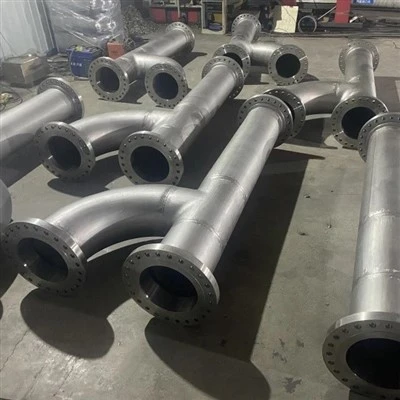
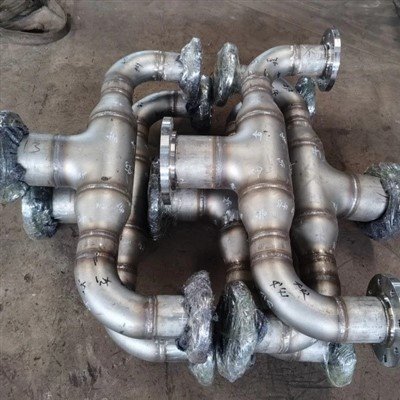
Geothermal power plants pull brine out of the earth that is hot, salty, and often loaded with hydrogen sulfide and carbon dioxide. That combination destroys ordinary steel fast. This guide explains which nickel alloys - and which alternatives - actually survive geothermal brine service, and how to match a grade to a specific well, temperature, and component.

|
For most high-temperature, high-chloride geothermal brine service, Inconel 625 (N06625) is the default nickel alloy because it resists pitting, crevice corrosion, and chloride stress-corrosion cracking up to roughly 300°C and beyond. Incoloy 825 (N08825) is the more economical choice for moderate-temperature sour brine below about 200°C, titanium Grade 2 or Grade 29 is preferred for extremely high-TDS acidic wells up to about 260°C, and Hastelloy C276 (N10276) is reserved for the most aggressive mixed acid-chloride-sulfide chemistries. |
Why Geothermal Brine Destroys Ordinary Steel
Geothermal brine attacks metal through four forces acting at once - heat, chloride ions, dissolved gases, and mineral scale - and any one of them alone would be manageable, but together they overwhelm carbon steel and even standard austenitic stainless steel within a few years.
Most geothermal reservoirs produce fluid between 150°C and 350°C, already hot enough to accelerate every corrosion reaction in the system. That heat is carried in brine containing dissolved chloride salts, sometimes at concentrations rivaling seawater or higher, which attacks the thin protective oxide layer that gives stainless steel its corrosion resistance.

Many reservoirs also carry hydrogen sulfide (H2S) and carbon dioxide (CO2), which lower the pH and promote sulfide stress cracking in susceptible metals. Finally, as brine cools and flashes to steam, dissolved silica and carbonate minerals precipitate as hard scale that traps chloride underneath it, turning a mild environment into a severe crevice-corrosion cell at the metal surface.
This is why carbon steel wellhead components in untreated, high-chloride geothermal service can fail within a single operating season, while austenitic grades such as 316L hold up only until temperature or chloride levels cross a fairly predictable threshold.
How Does Temperature Change the Corrosion Mechanism?
Below roughly 150°C, general corrosion and mild pitting dominate and standard stainless steels can often cope; above roughly 250°C, localized pitting, crevice attack, and chloride stress-corrosion cracking accelerate sharply, which is the point at which most projects must move to nickel alloys or titanium.
Corrosion rate roughly doubles for every 10°C rise in most aqueous systems, so the same brine chemistry that is tolerable at a wellhead choke can become destructive by the time it reaches a downstream flash vessel that runs hotter. Design engineers therefore treat temperature as the primary variable that determines the corrosion allowance and alloy class for each piece of equipment, not a secondary detail.
Matching the Alloy to the Brine Chemistry
Inconel 625 is the workhorse nickel alloy for high-temperature, high-chloride geothermal brine because its high molybdenum content resists pitting and crevice corrosion at temperatures and chloride levels that would rapidly attack duplex or austenitic stainless steel.
Alloy 625 combines a nickel content above 58% with 20–23% chromium and 8–10% molybdenum, plus a small niobium addition that stabilizes the alloy against sensitization during welding. That molybdenum content is the single biggest reason the alloy resists localized attack: it widens the passive range over which the protective oxide film stays intact, even in hot, chloride-rich, oxygen-free brine. Where budgets or design temperatures allow a step down, Incoloy 825 delivers strong resistance to sour, moderately chloride-laden brine below about 200°C at a lower material cost, making it the practical choice for production piping and wellhead trim in less severe wells.

For the small subset of wells where brine combines high chloride with strong mixed-acid attack - for example where acid-based scale-removal treatments are used regularly - Hastelloy C-276 provides the widest corrosion margin of any commercially available alloy, at a correspondingly higher cost. Specifying C-276 everywhere is rarely justified; it is a targeted solution for the most aggressive chemistries, not a default.
|
Material |
UNS No. |
Key Alloying Elements |
Practical Temp. Ceiling* |
Chloride SCC Resistance |
Typical Geothermal Duty |
|
Super Duplex 2507 |
S32750 |
25% Cr, 4% Mo, 7% Ni |
~250°C (480°F) |
Good below ceiling; loses toughness above it |
Flash separators, moderate-temp brine piping |
|
Incoloy 825 |
N08825 |
38–46% Ni, 21.5% Cr, 3% Mo, 2% Cu |
~200°C (390°F) |
Very good in sour, moderate-chloride brine |
Sour wellhead trim, production piping |
|
Inconel 625 |
N06625 |
58% min Ni, 20–23% Cr, 8–10% Mo, Nb |
~300°C+ (570°F+) |
Excellent; high Mo resists pitting and crevice attack |
High-chloride wellhead valves, HX tubing |
|
Hastelloy C-276 |
N10276 |
57% Ni, 15–16.5% Cr, 15–17% Mo, W |
~300°C+ (570°F+) |
Outstanding across mixed acid + chloride + H2S |
Extreme brine chemistry; acid-cleaning cycles |
|
Titanium Grade 2 / 29 |
R50400 / R56404 |
Ti, 0.3% Pd or Ru (Gr. 29 adds Mo/Ni) |
~260°C (500°F) |
Immune to chloride SCC; hydrogen pickup risk above ~80°C under cathodic conditions |
High-TDS well casing, plate heat exchangers |
Source: Alloy composition and temperature data compiled from published nickel-alloy producer technical bulletins and geothermal corrosion field studies; verify against current mill certificates and project-specific NACE MR0175/ISO 15156 qualification for sour service.
When Should You Use Titanium Instead of a Nickel Alloy?
Titanium Grade 2 or Grade 29 becomes the preferred material - ahead of any nickel alloy - once total dissolved solids exceed roughly 100,000 ppm, brine pH falls to 4 or below, and operating temperature stays under about 260°C, because titanium's oxide film is essentially immune to chloride stress-corrosion cracking in that window.
The best-known example is Salton Sea in California, where operators moved to titanium Grade 29 well casing specifically because the brine there is too aggressive, in both chloride content and acidity, for cost-effective long-term use of stainless steel or many nickel alloys. Titanium plate heat exchangers are common for the same reason in binary and organic Rankine cycle (ORC) plants, where brine stays in continuous, close contact with thin metal plates.
The trade-off is that titanium is susceptible to hydrogen pickup and embrittlement above roughly 80°C under certain cathodic or galvanic conditions, so designers pair titanium components with careful attention to bimetallic contact and cathodic protection systems rather than treating it as a universal substitute for nickel alloys.
Is Duplex Stainless Steel a Viable Lower-Cost Alternative?
Duplex and super duplex stainless steels are a legitimate lower-cost alternative to nickel alloys, but only below approximately 250°C; above that ceiling their two-phase microstructure loses toughness and becomes vulnerable to embrittlement and accelerated corrosion, so they should not be extended into high-temperature brine duty simply to save on material cost.

Super duplex grades such as 2507 combine roughly 25% chromium and 4% molybdenum with a lower nickel content than fully austenitic alloys, giving strong pitting resistance at a materially lower price than 625 or C-276. That economy has made duplex the standard choice for moderate-temperature flash separators and brine piping in many geothermal projects. The ceiling is structural, not just chemical: duplex stainless steel's mixed ferrite-austenite grain structure is only stable up to a defined temperature range, and pushing it past that range for the sake of cost savings has led to well-documented in-service failures.
Applying the Right Material to Each Circuit
Flash-steam plants concentrate the worst corrosion risk in wellhead and separator equipment where brine is hottest and most turbulent; binary (ORC) plants shift the risk to heat exchangers that hold brine at moderate temperature for extended contact time; and next-generation enhanced geothermal systems (EGS) operating above 350–400°C are pushing past the practical limits of both titanium and most standard nickel alloys.
In a conventional flash plant, brine flashes to steam near the wellhead and in dedicated separator vessels, so those components see the highest combined temperature and velocity and typically justify Inconel 625 or C-276 trim even when downstream piping can use duplex stainless steel. In a binary plant, the brine itself never flashes; instead it flows through a heat exchanger to warm a secondary working fluid, so the heat exchanger becomes the highest-risk component because it holds brine at temperature for far longer, favoring titanium plate exchangers or 625 tube bundles.
Enhanced geothermal systems and supercritical test wells now under development are targeting fluid temperatures well beyond what titanium or standard nickel alloys were qualified for, which is driving active research into Alloy 725, other high-performance nickel superalloys, and protective claddings for future high-temperature EGS hardware.
|
Component / Circuit |
Governing Condition |
Recommended Material |
|
Wellhead valves & chokes |
High-velocity flashing brine; erosion + chloride attack |
Inconel 625 trim or C-276 in severe wells |
|
Production casing, high-TDS well |
TDS > 100,000 ppm, pH ≤ 4, T up to ~260°C |
Titanium Grade 29 |
|
Production piping, sour moderate-temp brine |
H2S present, T below ~200°C |
Incoloy 825 or duplex 2205 per NACE MR0175 |
|
Flash vessels & separators |
T below ~250°C, moderate chloride |
Super duplex 2507 or clad carbon steel |
|
Binary/ORC heat exchangers |
Continuous high-chloride brine contact, thin-wall plates |
Titanium Grade 2 plate or Inconel 625 tube bundles |
|
Supercritical / EGS test loops |
T > 350–400°C, exceeds titanium's practical range |
Inconel 625 / 725 or Ni-based superalloys under active qualification |
Source: Application mapping synthesized from published geothermal corrosion and materials-selection literature, including U.S. Bureau of Mines geothermal brine studies and peer-reviewed geothermal corrosion research; confirm against site-specific brine analysis before final selection.
What Standards Govern Nickel Alloy Selection for Sour Geothermal Service?
NACE MR0175 / ISO 15156 governs material qualification wherever H2S is present, and the relevant ASTM/ASME product specifications - including B423, B424, B444, and B564 for Alloy 825 and 625 forms - define the composition, mechanical properties, and quality requirements that a mill certificate must meet before a component is accepted for geothermal service.

Because most geothermal brines contain at least some H2S, sour-service qualification under NACE MR0175/ISO 15156 is the starting point for any material decision, not an afterthought. That standard sets hardness limits and material qualification requirements specifically to avoid sulfide stress cracking.
Layered on top of it, the ASTM and ASME product specifications for each alloy and product form - pipe, plate, forgings, tubing - define the chemistry and mechanical property windows a supplier must certify to. Specifying both the correct alloy and the correct governing standard in the same line item is what protects a project from receiving material that is nominally the right grade but the wrong product-form qualification.
Frequently Asked Questions
Q: What temperature should trigger a move from stainless steel to nickel alloy in geothermal brine?
A: Once sustained operating temperature approaches 250°C in chloride-bearing brine, duplex and austenitic stainless steels lose their margin quickly; that is the point at which Incoloy 825 or Inconel 625 should be evaluated.
Q: Can titanium fully replace nickel alloys in a geothermal plant?
A: Not universally. Titanium excels in high-TDS, low-pH wells up to about 260°C and in heat exchangers, but nickel alloys remain preferred for components with high mechanical loading, welded structural connections, or exposure above titanium's practical temperature range.
Q: Is Hastelloy C-276 overkill for typical geothermal brine?
A: For most wells, yes. C-276's extreme cost is justified mainly where mixed acid treatments and high chloride occur together; Inconel 625 or Incoloy 825 satisfy the majority of geothermal brine duty at a lower cost.
Q: Do enhanced geothermal systems (EGS) need entirely new materials?
A: At the temperatures now being targeted for EGS and supercritical wells - often above 350–400°C - both titanium and standard nickel alloys approach their qualified limits, which is why alloys such as 725 and other nickel superalloys are under active evaluation for next-generation hardware.
Q: Does silica scale change the corrosion picture even if chloride is moderate?
A: Yes. Silica and carbonate scale can trap chloride against the metal surface and create a crevice-corrosion cell, so scaling tendency should be assessed alongside chloride content, not treated as a separate issue from corrosion.