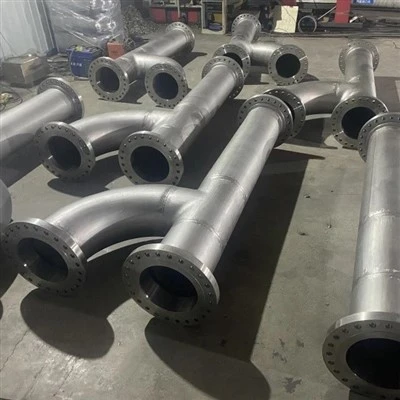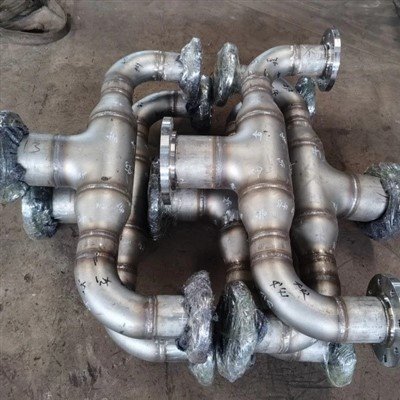
Small modular reactors (SMRs) are not simply scaled-down versions of conventional pressurized-water reactors. Several advanced designs run hotter, use different coolants - helium, liquid sodium, or molten fluoride salt instead of pressurized water - and target service lifetimes and duty cycles that push structural materials well beyond the temperature and corrosion envelope that conventional nuclear-grade stainless steel was qualified for.

Nickel-based alloys are the material family best positioned to close that gap, and they already appear throughout the advanced reactor supply chain: as steam generator tubing in light-water SMRs, as intermediate heat exchanger material in gas-cooled designs, and as candidate primary-loop material in salt-cooled concepts. This guide explains why nickel alloys matter for SMRs, which grades are already code-qualified versus still in development, and how to think about material selection across the different SMR technology classes.
|
QUICK ANSWER
Nickel alloys are essential to SMRs because several advanced reactor designs operate at 500–950°C - well above the roughly 425–650°C practical limit of nuclear-grade stainless steel - and because some use corrosive coolants (molten fluoride salt) or gas chemistries (impure helium) that stainless steel resists poorly over multi-decade service lives. Alloy 800H and Alloy 617 are the nickel-bearing materials with the clearest path through ASME Section III, Division 5 for high-temperature reactor construction; Alloy 690 is already standard for steam generator tubing in light-water-based SMR designs; and Hastelloy N and its Chinese equivalent GH3535 are the leading - though not yet U.S. code-qualified - candidates for molten-salt-cooled reactor primary circuits. |
What Are Small Modular Reactors, and Why Do Their Materials Needs Differ From Conventional Reactors?
SMRs span several distinct reactor classes with very different coolants and operating temperatures, and it is this diversity - not just the smaller size - that drives the expanded role for nickel alloys.
"SMR" describes a factory-fabricated, modular reactor generally under 300 MWe, but the term covers several fundamentally different technologies. Light-water SMRs (such as NuScale's design and GE Hitachi's BWRX-300) use the same pressurized or boiling water coolant chemistry as conventional large reactors and operate in a similar temperature range, so they rely heavily on established nuclear-grade stainless steel and low-alloy steel, with nickel alloys reserved for specific high-duty components such as steam generator tubing.
High-temperature gas-cooled reactors, or HTGRs (such as X-energy's Xe-100), use helium coolant and TRISO particle fuel and target much higher outlet temperatures to improve thermal efficiency and enable industrial process heat applications. Sodium-cooled fast reactors (such as TerraPower's Natrium design) use liquid metal coolant at moderate-to-high temperature and low pressure. Fluoride-salt-cooled high-temperature reactors, or FHRs (such as Kairos Power's Hermes design), circulate molten fluoride salt as a coolant around solid TRISO pebble fuel, while true molten salt reactors dissolve the fuel directly in a circulating salt. Each of these classes places a different combination of temperature, coolant chemistry, and neutron environment on its structural materials.
|
SMR Class |
Coolant |
Approx. Operating Temp. |
Representative Design |
|
Light-water SMR |
Pressurized/boiling water |
~300–330°C |
NuScale VOYGR; GE Hitachi BWRX-300 |
|
High-temperature gas-cooled (HTGR) |
Helium gas |
~700–950°C outlet class |
X-energy Xe-100 |
|
Sodium-cooled fast reactor |
Liquid sodium |
~500–550°C |
TerraPower Natrium |
|
Fluoride-salt-cooled (FHR) |
Molten fluoride salt (coolant only) |
~600–700°C |
Kairos Power Hermes |
|
Molten salt reactor (fuel-in-salt) |
Molten fluoride/chloride salt (fuel + coolant) |
~650–700°C |
Historic ORNL MSRE; various Gen IV concepts |
Table 1. Representative SMR technology classes, approximate operating temperatures, and example designs. Figures are generalized by reactor class for illustration; specific vendor designs vary and official specifications should be confirmed against current vendor and regulatory documentation.
Why Do Advanced Reactors Need Nickel Alloys Instead of Standard Stainless Steel?
Conventional nuclear-grade austenitic stainless steel loses too much creep strength and oxidation resistance above roughly 550–650°C for the multi-decade design lives advanced reactors require, and nickel alloys extend usable structural service further into the 700–950°C range that HTGR and some salt-cooled designs need.

Under the ASME Boiler and Pressure Vessel Code, Section III, Division 5 governs construction of high-temperature nuclear components across every advanced reactor coolant type. For decades, only five materials were qualified for this service: 2.25Cr-1Mo and vanadium-modified 9Cr-1Mo ferritic steels, Types 304H and 316H austenitic stainless steel, and the high-nickel austenitic Alloy 800H. Of these, only Alloy 800H is rated for genuinely high-temperature, negligible-creep design approaching 760°C and above.
Above roughly 550–650°C, standard 304H/316H stainless steel's allowable design stress falls off sharply because time-dependent creep deformation - not short-term yield or tensile strength - becomes the governing failure mode, and stainless steel's chromium-oxide scale also becomes less protective in high-temperature helium or salt environments. Nickel alloys such as Alloy 617 solve both problems: their higher nickel content improves resistance to creep and to carburizing/oxidizing atmospheres, extending qualified design temperatures up to roughly 954°C (1,750°F) under a 2019 ASME code case.
Which Nickel Alloys Are Qualified or Under Evaluation for Advanced Reactor Construction?
Alloy 800H is currently the only nickel-based material with full, longstanding ASME Section III, Division 5 qualification; Alloy 617 has been added through two dedicated code cases, while Alloy 690, Hastelloy N, GH3535, and Alloy 709 each play a role but sit at different stages of the qualification pathway.
|
Alloy |
Nominal Composition |
Code / Qualification Status |
Primary SMR Role |
|
Alloy 800H |
Fe–32Ni–21Cr (stabilized, controlled grain size) |
One of five original ASME Section III, Division 5 materials; long HTGR service history |
Core support structures, hot gas ducting, HTGR pressure boundary |
|
Alloy 617 |
Ni–22Cr–12.5Co–9Mo |
Added via ASME Code Case N-872 (to 425°C) and N-898 (to 954°C, 2019) |
Intermediate heat exchangers and hot-duct components in HTGR/VHTR designs |
|
Alloy 690 |
Ni–29–30Cr–7–11Fe |
Long-qualified for LWR primary components (ASME Section III Class 1); standard PWR/SMR steam generator tubing material |
Steam generator and heat-exchanger tubing in light-water-based SMRs |
|
Hastelloy N |
Ni–7Mo–7Cr (developed at ORNL for the Molten Salt Reactor Experiment) |
Extensive historical operating and test data; not yet an ASME Section III, Division 5 qualified material |
Candidate primary-loop piping and vessel material for FHR/MSR concepts |
|
GH3535 |
Ni–Mo–Cr (Chinese compositional equivalent of Hastelloy N) |
Qualified under Chinese nuclear material standards; used in China's TMSR-LF1 test reactor |
Primary-loop material for China's molten-salt reactor demonstration program |
|
Alloy 709 |
Fe–20Cr–25Ni–Nb–N (advanced austenitic stainless) |
Class A design data under development for ASME Section III, Division 5 |
Candidate structural material for sodium-cooled fast reactor components |
Table 2. Nickel-bearing and nickel-adjacent alloys relevant to advanced reactor construction, their approximate compositions, and their current U.S. code-qualification status. Code case numbers, temperature limits, and qualification status should always be verified against the current ASME BPVC Section III, Division 5 edition and applicable code cases in force.
How Do Nickel Alloys Perform in Molten Salt Reactor Environments?
Nickel-molybdenum-chromium alloys such as Hastelloy N and GH3535 resist molten fluoride salt corrosion far better than stainless steel because their low chromium content limits the dominant corrosion pathway - chromium leaching from grain boundaries into the salt - while their molybdenum addition preserves high-temperature strength.

Molten fluoride salts such as FLiBe (lithium fluoride–beryllium fluoride) and FLiNaK (lithium–sodium–potassium fluoride) are attractive reactor coolants because of their low neutron absorption, high volumetric heat capacity, and low operating pressure, but they are also chemically aggressive toward most structural alloys. The dominant degradation mechanism is not general surface attack but selective leaching of chromium from grain boundaries into the salt, driven by the salt's redox potential; this can leave a porous, chromium-depleted subsurface layer and, under applied stress, promote intergranular corrosion-assisted cracking.
Hastelloy N was purpose-developed at Oak Ridge National Laboratory in the 1950s–60s specifically to resist this mechanism for the Molten Salt Reactor Experiment, and it - along with China's compositionally similar GH3535, used in that country's thorium molten-salt reactor test program - remains the leading structural alloy family for fluoride-salt-cooled reactor concepts. Because these alloys have not yet completed the ASME Section III, Division 5 qualification pathway in the United States, developers pursuing near-term FHR and MSR designs generally plan for a dedicated material code case, supported by long-duration corrosion and mechanical test data, as part of their overall licensing strategy.
How Do Nickel Alloys Perform in Helium-Cooled, High-Temperature Gas Reactors?
Alloy 617 and Alloy 800H are the leading nickel alloys for HTGR service because both form a stable, protective chromium-oxide layer in helium and retain useful creep strength well above the limits of stainless steel, though both remain vulnerable to slow carburization or decarburization if the helium coolant carries trace impurities.
Production helium coolant in an HTGR is never perfectly pure - trace levels of carbon monoxide, hydrogen, methane, and moisture are unavoidable from fuel, graphite, and system outgassing - and these impurities can drive either carburization (carbon pickup, which embrittles the alloy) or decarburization (carbon loss, which weakens it), depending on the impurity balance and local temperature. Alloy 800H has decades of operating history in this environment, including in early HTGR demonstration plants, and remains one of the five original ASME Section III, Division 5 qualified materials.
Alloy 617 has been characterized extensively since the mid-2000s as the leading candidate for the intermediate heat exchanger (IHX) - the component that transfers heat from the primary helium loop to a secondary process - because it combines higher elevated-temperature strength than Alloy 800H with adequate helium-environment stability, culminating in ASME Code Case N-898, which extended qualified Alloy 617 construction up to 954°C (1,750°F).
What Role Does Alloy 690 Play in Light-Water-Based SMRs?
Alloy 690 is the standard steam generator and heat-exchanger tubing material for light-water SMR designs because of its high resistance to primary water stress corrosion cracking (PWSCC), a failure mode that drove the nuclear industry away from its predecessor, Alloy 600, beginning in the 1980s–2000s.

Light-water SMRs such as NuScale's design and GE Hitachi's BWRX-300 inherit most of their materials basis directly from the large-reactor pressurized and boiling water fleet, including reliance on Alloy 690 wherever a nickel-chromium-iron tubing alloy contacts high-purity, high-temperature primary water under residual stress from bending or expansion. Alloy 600, used in earlier plants, proved susceptible to PWSCC at grain boundaries under long-term service, leading to costly steam generator replacements industry-wide.
Alloy 690's substantially higher chromium content promotes a more stable, continuous protective oxide film under the same water chemistry and stress conditions, giving it markedly better cracking resistance in decades of subsequent operating experience. Because light-water SMRs operate in the same temperature and water-chemistry envelope as the conventional PWR fleet, Alloy 690 tubing carries over as a qualified, code-accepted material rather than requiring new high-temperature qualification work of the kind HTGR and salt-cooled designs still need.
What Are the Key Degradation Mechanisms Nickel Alloys Must Resist in SMR Service?
The dominant degradation mechanism differs by coolant: creep and helium-impurity carburization govern gas-cooled designs, chromium leaching governs molten-salt designs, primary water stress corrosion cracking governs light-water designs, and radiation-induced helium embrittlement is a cross-cutting concern for any nickel alloy used in a high neutron fluence position.
|
Mechanism |
What Happens |
Primarily Affects |
Typical Mitigation |
|
Creep |
Slow, time-dependent deformation under sustained stress at elevated temperature, eventually leading to rupture |
HTGR and sodium fast reactor structural components |
Alloy selection (617, 800H, 690 rated by design curves); conservative allowable-stress design per ASME Section III, Division 5 |
|
Carburization / decarburization |
Carbon pickup or loss from impure helium alters local microstructure and mechanical properties |
HTGR heat exchangers, hot ducting |
Impurity control in the helium coolant loop; alloy chemistry tolerant of both directions of carbon transfer |
|
Molten salt (chromium leaching) corrosion |
Chromium dissolves from grain boundaries into the salt, especially under oxidizing redox conditions |
FHR/MSR primary-loop piping and vessels |
Low-chromium Ni-Mo-Cr alloys (Hastelloy N/GH3535); active redox control of the salt chemistry |
|
Primary water stress corrosion cracking (PWSCC) |
Intergranular cracking under combined tensile stress and high-purity, high-temperature water exposure |
Steam generator and heat-exchanger tubing in light-water SMRs |
Use of Alloy 690 in place of Alloy 600; stress-relief heat treatment; water chemistry control |
|
Radiation-induced helium embrittlement |
Neutron transmutation reactions generate helium atoms that collect at grain boundaries, reducing high-temperature ductility |
Near-core or in-core nickel alloy components under high fast-neutron fluence |
Grain-boundary engineering (controlled boron/titanium additions); component placement to limit fluence |
Table 3. Principal degradation mechanisms nickel alloys must resist across SMR coolant classes, and the primary design or metallurgical mitigations used in current practice.
How Does ASME Section III, Division 5 Qualify a New Material for Advanced Reactor Use?
A new nuclear structural material moves from candidate to qualified status through a formal ASME code-case process that requires a substantial, multi-year data package on creep, tensile, and fatigue behavior across the intended service temperature range, reviewed and balloted by the relevant ASME subcommittee before it can be used for licensed construction.
ASME Section III, Division 5 was published to consolidate high-temperature nuclear construction rules for all advanced reactor coolant types under a single division, building on design methods originally developed for sodium-cooled reactors. Adding a new material - as happened for Alloy 617 - requires the material's producer or an industry consortium to assemble a Class A design data package covering tensile and creep-rupture properties across the intended temperature range, isochronous stress-strain curves for high-temperature design, fatigue and creep-fatigue interaction data, and weldability information, all developed according to the code's "Guidelines for Design Data Needs for New Materials."
ASME's Boiler and Pressure Vessel Committee then reviews and balloted this package before publishing a formal code case; the Alloy 617 code cases took roughly a decade of characterization work, though ASME has since streamlined the review cycle for subsequent materials based on lessons learned. This process is the primary reason some structurally promising nickel alloys, such as Hastelloy N, remain candidates rather than qualified materials for U.S. licensed construction even though their corrosion and mechanical behavior has been studied for decades.
Which Nickel Alloy Should You Specify for Your Advanced Reactor Component?
Match the alloy to the governing coolant chemistry and temperature of the specific component, not to the reactor class as a whole, since a single SMR design can include several different operating environments across its primary and secondary systems.
|
Component / Environment |
Typical Alloy |
Why |
|
Light-water SMR steam generator/heat-exchanger tubing |
Alloy 690 |
Long PWSCC-resistant operating history; already ASME Section III, Class 1 qualified |
|
HTGR intermediate heat exchanger, hot gas duct |
Alloy 617 |
Highest qualified design temperature (to 954°C) among current Section III, Division 5 materials |
|
HTGR core support structure, lower-temperature pressure boundary |
Alloy 800H |
Longest HTGR service history; qualified negligible-creep design data to high temperature |
|
FHR/MSR primary-loop piping, vessel (R&D / pre-commercial) |
Hastelloy N or GH3535 |
Best demonstrated resistance to fluoride salt chromium-leaching corrosion; code qualification pathway still in progress |
|
Sodium fast reactor structural components (developmental) |
Alloy 709 (or established 316H/800H where sufficient) |
Higher strength-to-weight potential than 316H for sodium service; design data package still maturing |
Table 4. Component-level nickel alloy selection guidance by SMR coolant environment. Final material selection must be confirmed against the specific reactor vendor's approved design and the ASME code edition/code cases invoked by the licensing basis.
|
Related resource: For chemistry, mechanical property tables, and elevated-temperature data on Inconel 625 and related nickel alloys, see EETA's Inconel 625 Ultimate Guide (jnalloy.com material resource library). |
What Is the Current State of SMR Deployment, and Why Does It Matter for the Materials Supply Chain?
As of 2026, the United States has moved from paper designs to active construction for the first time in decades, and this shift is starting to create real near-term demand for nuclear-grade nickel alloy plate, tube, and forgings rather than only research-scale quantities.
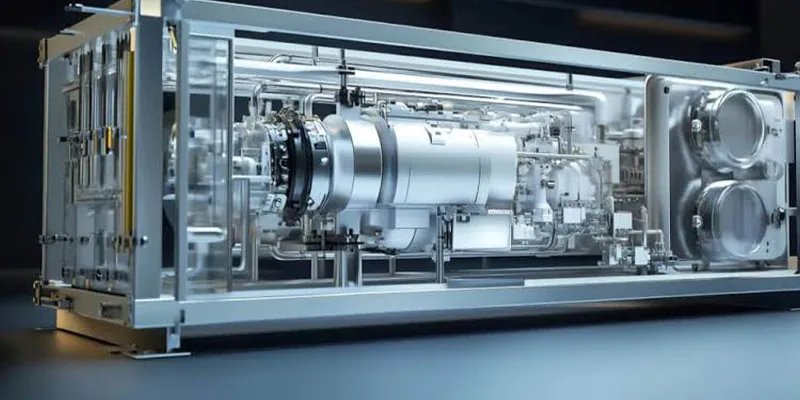
TerraPower received the first U.S. Nuclear Regulatory Commission construction permit ever issued for a commercial non-light-water power reactor in March 2026 and broke ground on its sodium-cooled Natrium plant in Kemmerer, Wyoming shortly after. NuScale Power's uprated SMR design has received NRC approval, and utilities including the Tennessee Valley Authority have launched multi-gigawatt SMR deployment programs.
X-energy's helium-cooled Xe-100 is advancing through NRC review for a Texas site, and Kairos Power continues construction of successive fluoride-salt-cooled test units in Tennessee. Large technology companies have separately signed over ten gigawatts of committed advanced nuclear capacity to help power AI data center growth, a scale of private commitment that is new to the industry.
For alloy and component suppliers, this means the nickel alloy grades already discussed in this guide - Alloy 690, Alloy 617, Alloy 800H, and the molten-salt-resistant Hastelloy N family - are moving from primarily academic and national-laboratory test programs toward first-of-a-kind commercial procurement, with mill test report traceability and code-case compliance becoming a near-term purchasing requirement rather than a future consideration.
Frequently Asked Questions
Q: Can standard 316 stainless steel be used in SMR components?
A: Yes, for lower-temperature components. Types 304H and 316H remain qualified ASME Section III, Division 5 materials and are used throughout advanced reactor designs wherever service temperature stays within their allowable-stress range - generally up to roughly 550–650°C depending on design life and loading. Above that range, their creep strength falls off too quickly for a multi-decade design life, which is where Alloy 617 and Alloy 800H take over.
Q: What is the highest temperature a nuclear-qualified nickel alloy can handle?
A: Under current ASME Section III, Division 5 code cases, Alloy 617 is qualified for construction up to 954°C (1,750°F), the highest temperature limit of any material currently code-qualified for U.S. nuclear construction. Actual component design temperature is set by the specific reactor's design-basis analysis, not by the alloy's maximum code limit alone.
Q: Why isn't Hastelloy N used in a licensed U.S. commercial reactor yet?
A: Not because its performance is in doubt - it has decades of test and limited operating data going back to the 1960s Molten Salt Reactor Experiment - but because it has not yet completed the formal ASME Section III, Division 5 material qualification process required for licensed commercial construction in the United States. Developers pursuing molten-salt or fluoride-salt-cooled designs are expected to pursue a dedicated code case as part of their licensing pathway.
Q: Is the Alloy 690 used in SMR steam generators different from the Alloy 690 used in large PWRs?
A: No. Light-water SMR designs generally draw on the same ASME-qualified Alloy 690 material specifications already established for the conventional pressurized-water reactor fleet, since both operate in a similar primary water chemistry and temperature range. The alloy itself does not need new high-temperature qualification for this application.
Q: How long does it typically take to add a new material to the ASME nuclear code?
A: Historically, on the order of a decade for a first-of-its-kind high-temperature material - the Alloy 617 code cases took roughly that long from initial characterization to publication. ASME has since streamlined its review workflow based on lessons learned from that effort, but assembling the required creep, fatigue, and weldability data package remains the rate-limiting step for any new candidate material.