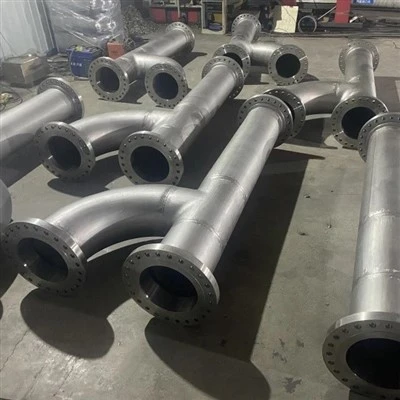
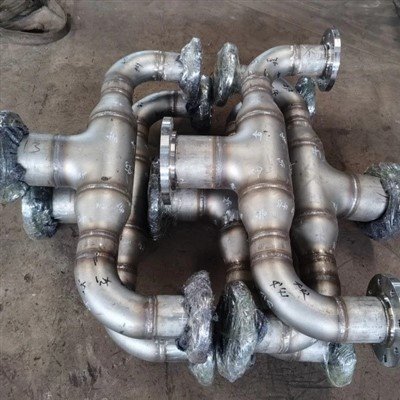
If you have ever ordered stainless steel for a welded tank, a pressure vessel, or a chemical piping system, you have faced the question: "304 or 304L?" The price difference looks small on paper - maybe $200 on a $5,000 order. The salesperson might say, "They are basically the same." But that $200 decision determines whether your welds will still be structurally sound five years later - or whether intergranular corrosion will have eaten through the heat-affected zone of every weld joint, turning a pressure vessel into a ticking time bomb.

The entire difference between 304 and 304L comes down to one number: carbon content. 304 allows up to 0.08% carbon. 304L - the "L" stands for "Low Carbon" - caps carbon at 0.03%. That 0.05% difference is invisible to the naked eye, undetectable by a magnet, and irrelevant to tensile strength. But during welding - in the minutes when the steel cools from 1,500°C to 400°C - that 0.05% extra carbon in 304 precipitates out as chromium carbides at the grain boundaries, depleting the surrounding metal of chromium and creating microscopic paths for corrosion to attack. This phenomenon is called sensitization, and the resulting failure mode - intergranular corrosion, or "weld decay" - has caused more stainless steel equipment failures than all other corrosion mechanisms combined.
The decision rule is simple: if you are welding, choose 304L. The 3-8% cost premium for 304L is trivial compared to the cost of a single weld failure. If you are not welding - for example, specifying cold-formed sheet metal parts, fasteners, or annealed bar stock for machining - 304 is technically sufficient and slightly less expensive. But in modern supply chains, dual-certified 304/304L material has become so common that the price premium has effectively disappeared for most standard product forms. When in doubt, specify dual-certified 304/304L - you get the low-carbon guarantee of 304L without paying extra.
Chemical Composition - The 0.05% That Changes Everything
304 and 304L share the same base chemistry - 18-20% chromium and 8-10.5% nickel - and differ only in their maximum allowable carbon content: 304 permits up to 0.08% carbon, while 304L caps it at 0.03%. This single-element difference has no measurable impact on mechanical properties at room temperature, but is the deciding factor for weld corrosion resistance.
Both 304 and 304L belong to the 300-series austenitic stainless steel family. They are non-magnetic in the annealed condition, have excellent formability and weldability, and provide good general corrosion resistance in atmospheric, aqueous, and mildly acidic environments. The "18-8" nickname refers to their approximate 18% chromium + 8% nickel composition - a formula that has made 304 the most widely used stainless steel grade on Earth, accounting for over 50% of global stainless steel production.
|
Element |
304 (UNS S30400) |
304L (UNS S30403) |
Why It Matters |
|
Carbon (C) |
0.08% max |
0.03% max |
THE critical difference - determines sensitization risk during welding |
|
Chromium (Cr) |
18.0–20.0% |
18.0–20.0% |
Identical - provides passive oxide film for corrosion resistance |
|
Nickel (Ni) |
8.0–10.5% |
8.0–11.0% |
Near-identical - stabilizes austenitic (FCC) structure; 304L allows slightly more Ni to compensate for lower C |
|
Manganese (Mn) |
2.0% max |
2.0% max |
Identical - deoxidizer during steelmaking |
|
Silicon (Si) |
0.75% max |
0.75% max |
Identical - residual deoxidizer |
|
Phosphorus (P) |
0.045% max |
0.045% max |
Identical - impurity; higher P reduces ductility |
|
Sulfur (S) |
0.030% max |
0.030% max |
Identical - impurity; higher S improves machinability but reduces weldability |
|
Nitrogen (N) |
0.10% max |
0.10% max |
Identical - residual; increases strength slightly |
|
Iron (Fe) |
Balance |
Balance |
Identical - approximately 67-73% |
Why Does 0.05% Carbon Matter So Much? - The Sensitization Mechanism
When 304 stainless steel is heated to 425-870°C - the temperature range reached in the heat-affected zone (HAZ) adjacent to a weld - the carbon atoms that are dissolved in the metal matrix become mobile and migrate to grain boundaries, where they react with chromium to form chromium carbide (Cr₂₃C₆) precipitates. Each chromium carbide particle consumes approximately 16 chromium atoms for every 6 carbon atoms, depleting the adjacent grain boundary region of chromium below the 12% threshold required to maintain the passive oxide film. The result: a microscopic chromium-depleted zone at every grain boundary, which corrodes preferentially when exposed to an electrolyte - a failure mode known as intergranular corrosion (IGC) or "weld decay."
To understand why 0.05% carbon makes the difference between corrosion resistance and corrosion failure, think of carbon atoms as "chromium thieves." In 304, with up to 0.08% carbon, there are enough carbon atoms in the steel to steal chromium from roughly 1.3% of the total chromium content when carbides form. This drops the grain boundary chromium level below 12% - the critical passive film threshold. In 304L, with only 0.03% carbon, the amount of chromium that can be "stolen" is less than 0.5% of the total chromium - not enough to drop any grain boundary below the 12% threshold. The grain boundaries in welded 304L retain their full corrosion resistance, even without post-weld heat treatment.
The sensitization temperature range of 425-870°C (800-1,600°F) is critically important because this is exactly the temperature range that the heat-affected zone of a weld passes through during cooling. A typical GTAW (TIG) weld on 3mm-thick 304 sheet keeps the HAZ in the sensitization range for approximately 30-60 seconds - long enough for carbide precipitation to begin in 304, but not long enough to cause measurable sensitization in 304L. For thicker sections (10mm+), the slower cooling rate extends the time in the sensitization range to several minutes, making 304L essential.
Dual-Certified 304/304L - The Modern Standard
In practice, most stainless steel produced today - particularly flat-rolled products (sheet, plate, coil) and tubular products (pipe, tube) - is dual-certified as meeting both 304 and 304L chemistry. This means the material has carbon ≤ 0.03% (meeting 304L), chromium 18.0-20.0%, and nickel 8.0-10.5% (meeting both). Dual-certified material eliminates the need to choose - you automatically get the weldability of 304L at the price of 304. Always ask your supplier if the material is dual-certified; if it is, the 304 vs 304L debate is resolved.
Dual certification became widespread because modern argon-oxygen decarburization (AOD) refining, which produces over 95% of the world stainless steel, naturally achieves carbon levels below 0.03% without significant additional cost. The AOD process injects a mixture of argon and oxygen into the molten steel to remove carbon - and it is easier and cheaper to remove carbon down to 0.02-0.03% than to stop precisely at 0.08%. This means that for the modern steelmaker, producing 304L chemistry is actually the default - and producing 304 with higher carbon requires intentionally adding carbon back into the melt. This is why dual-certified 304/304L has become the industry norm rather than the exception.
[Source] ASTM A240/A240M - Standard Specification for Chromium and Chromium-Nickel Stainless Steel Plate, Sheet, and Strip. ASTM A312/A312M - Standard Specification for Seamless, Welded, and Heavily Cold Worked Austenitic Stainless Steel Pipes.
Mechanical Properties - Are 304 and 304L the Same Strength?
At room temperature in the annealed condition, 304 and 304L have essentially identical tensile properties. Both grades meet the same ASTM A240 minimum requirements: tensile strength ≥ 515 MPa (75 ksi), yield strength ≥ 205 MPa (30 ksi), and elongation ≥ 40%. Any difference in strength between two pieces of 304 and 304L is attributable to grain size, cold work history, and annealing practice - not to the carbon content difference.

|
Property |
304 (annealed) |
304L (annealed) |
Difference |
|
Tensile Strength (min) |
515 MPa (75 ksi) |
515 MPa (75 ksi) |
None - identical minimum |
|
Tensile Strength (typical) |
585-620 MPa |
570-605 MPa |
1-2% lower for 304L (negligible) |
|
Yield Strength 0.2% (min) |
205 MPa (30 ksi) |
205 MPa (30 ksi) |
None - identical minimum |
|
Yield Strength 0.2% (typical) |
250-290 MPa |
240-280 MPa |
3-5% lower for 304L (negligible) |
|
Elongation in 50mm (min) |
40% |
40% |
None - identical minimum |
|
Hardness (max) |
201 HBW / 92 HRB |
201 HBW / 92 HRB |
None - identical maximum |
|
Modulus of Elasticity |
193 GPa |
193 GPa |
Identical |
|
Density |
8.00 g/cm³ |
8.00 g/cm³ |
Identical |
High-Temperature Strength: The Subtle Difference at Elevated Temperatures
Above approximately 425°C (800°F), 304 retains slightly higher strength than 304L because the higher carbon content provides a small precipitation-strengthening effect from fine carbide dispersions. However, this advantage comes with a severe trade-off: at these same temperatures, 304 is vulnerable to sensitization if it was previously welded. For high-temperature applications above 425°C where welding is required, consider 304H (0.04-0.10% C, UNS S30409) instead - which combines the high-temperature strength of higher carbon with controlled grain size for creep resistance, per ASME Boiler Code requirements.
The ASME Boiler and Pressure Vessel Code Section II, Part D provides allowable stress values for both grades at elevated temperatures. At 500°C (932°F), 304 has an allowable stress of approximately 102 MPa vs 94 MPa for 304L - a difference of about 8%. At 600°C (1,112°F), the difference narrows to about 5%. For most industrial applications below 400°C - which includes the vast majority of chemical processing, food and beverage, pharmaceutical, water treatment, and architectural applications - this high-temperature strength difference is irrelevant, and the corrosion advantage of 304L outweighs any theoretical strength benefit of 304.
[Source] ASME Boiler and Pressure Vessel Code, Section II, Part D - Properties (Metric), 2023 Edition. ASTM A240/A240M allowable stress values.
Welding Performance - The Core of the 304 vs 304L Decision
Weld decay (intergranular corrosion in the heat-affected zone) occurs in four steps: (1) the base metal adjacent to the weld is heated to 425-870°C; (2) carbon atoms diffuse to grain boundaries and react with chromium to form chromium carbides; (3) the grain boundary region adjacent to the carbides is depleted of chromium below 12%; (4) when exposed to a corrosive environment - even mild acids or moisture - the chromium-depleted grain boundaries corrode preferentially, and the metal literally falls apart along the grain boundaries. In 304L, step 2 never reaches the critical threshold because there is not enough carbon to form a continuous network of grain-boundary carbides.
To visualize this process, imagine a brick wall. The stainless steel grains are the bricks - strong, corrosion-resistant, and individually intact. The grain boundaries are the mortar between the bricks. In un-welded 304 or welded 304L, the mortar is as strong as the bricks. But in welded 304, sensitization dissolves the chromium out of the mortar, turning it into sand. The wall still looks like a wall - the bricks are still there, the geometry is unchanged - but a light push (a corrosive environment) causes the bricks to fall apart, because the mortar that held them together is gone. This is why weld decay is so insidious: the component looks normal until it fails suddenly.
Welding 304 vs 304L - Practical Rules
Rule for ALL welding: Use 308L filler metal (ER308L for TIG, E308L for stick), regardless of whether you are welding 304 to 304, 304L to 304L, or 304 to 304L. The low-carbon filler ensures the weld metal itself is resistant to sensitization. Even if the base metal is standard 304, the deposited weld metal will have the corrosion resistance of 304L steel.
|
Base Metal |
Filler Metal |
Weldability |
Sensitization Risk |
PWHT Required? |
|
304 to 304 |
ER308L (GTAW) / E308L (SMAW) |
Excellent |
HIGH - HAZ will sensitize |
YES - solution anneal at 1,040-1,150°C + water quench |
|
304L to 304L |
ER308L (GTAW) / E308L (SMAW) |
Excellent |
LOW - HAZ resists sensitization |
NO - not required for corrosion resistance |
|
304 to 304L |
ER308L (GTAW) / E308L (SMAW) |
Excellent |
MODERATE - 304 side HAZ may sensitize |
Recommended if 304 side is exposed to corrosive media |
|
304/304L dual-certified to same |
ER308L (GTAW) / E308L (SMAW) |
Excellent |
LOW - carbon ≤ 0.03% |
NO - not required |
Post-Weld Heat Treatment - When 304 Requires It and 304L Does Not
The fundamental practical difference between 304 and 304L is this: a welded 304 component that will see corrosive service MUST be solution-annealed after welding to re-dissolve the chromium carbides and restore corrosion resistance. Solution annealing requires heating the entire component to 1,040-1,150°C (1,900-2,100°F) and then rapidly quenching in water - a process that is expensive, energy-intensive, and often physically impossible for large fabricated structures (tanks, pressure vessels, pipe spools). A welded 304L component achieves the same corrosion resistance in the as-welded condition - no post-weld heat treatment required.
This is the economic argument for 304L in a single sentence: the cost of solution annealing a large welded fabrication ($2,000-10,000 for a furnace cycle plus the risk of distortion) is 10-50 times the premium for using 304L instead of 304 ($200-500 on a typical project). When PWHT is impossible - for field welds on installed piping, for large storage tanks, for repairs to existing equipment - 304L is not just preferred; it is required.
Welding Parameters for 304 and 304L
|
Parameter |
304 |
304L |
Notes |
|
Recommended Process |
GTAW, GMAW, SMAW, SAW, FCAW |
GTAW, GMAW, SMAW, SAW, FCAW |
Identical - all common arc welding processes acceptable |
|
Filler Metal (AWS) |
ER308L / E308L (low-carbon filler preferred) |
ER308L / E308L |
Use low-carbon filler for ALL 304-family welding |
|
Shielding Gas (GTAW) |
100% Ar or Ar + 2-5% H₂ |
100% Ar or Ar + 2-5% H₂ |
Identical |
|
Preheat |
None required (ambient to 50°C) |
None required (ambient to 50°C) |
Identical - austenitic SS does not require preheat |
|
Max Interpass Temp |
175°C (350°F) |
175°C (350°F) |
Identical - higher temps increase sensitization risk for both grades |
|
Heat Input Range |
0.5-2.5 kJ/mm (typical) |
0.5-2.5 kJ/mm (typical) |
Identical - lower heat input reduces HAZ width and cooling time |
|
Post-Weld Cleaning |
Pickling paste or wire brush + passivation |
Pickling paste or wire brush + passivation |
Identical - remove heat tint to restore passive layer |
|
PWHT (Solution Anneal) |
REQUIRED for corrosive service |
NOT required |
THE economic and practical difference |
[Source] AWS A5.9/A5.9M - Specification for Bare Stainless Steel Welding Electrodes and Rods. AWS D1.6/D1.6M - Structural Welding Code - Stainless Steel.
Corrosion Resistance - Where the Low-Carbon Advantage Becomes Visible
Intergranular corrosion (IGC) is the primary corrosion mechanism that differentiates 304 from 304L. In the unwelded, annealed condition, both grades have identical general corrosion resistance to atmospheric exposure, fresh water, mild chemicals, and food products. But after welding, 304 becomes susceptible to IGC in even mildly corrosive environments - including tap water, rainwater, and humid air - because the chromium-depleted grain boundaries in the HAZ are anodic to the surrounding grains, creating microscopic galvanic cells. 304L after welding remains resistant to IGC because its grain boundaries retain >12% chromium.

Intergranular corrosion is particularly dangerous because it is difficult to detect by visual inspection. A sensitized 304 weld looks normal on the surface - it may even pass a dye penetrant test, because the surface is continuous. But when exposed to a conductive liquid - even mildly acidic process water - the grain boundaries dissolve, and the metal loses strength without losing section thickness. A sensitized 304 pipe that was hydrotested to 1.5x design pressure on day 1 may fail at 0.3x design pressure after six months of service, because intergranular corrosion has turned continuous metal into loosely connected grains with no bond strength between them.
Corrosion Resistance by Environment - 304 vs 304L After Welding
|
Environment |
304 (Unwelded) |
304L (Unwelded) |
304 (Welded, No PWHT) |
304L (Welded, No PWHT) |
Winner for Welded Service |
|
Atmospheric (indoor) |
Excellent |
Excellent |
Good - IGC risk is low in dry air |
Excellent |
Either (low risk) |
|
Atmospheric (outdoor, rain) |
Excellent |
Excellent |
POOR - rainwater is conductive enough for IGC over months |
Excellent |
304L |
|
Fresh water (tap, river) |
Excellent |
Excellent |
POOR - dissolved minerals accelerate IGC |
Excellent |
304L |
|
Seawater / brackish water |
Fair - pitting risk from Cl⁻ |
Fair - pitting risk from Cl⁻ |
NOT RECOMMENDED - IGC + pitting |
Fair - IGC resistant; pitting remains |
Neither (use 316L for Cl⁻) |
|
Dilute organic acids (food) |
Excellent |
Excellent |
MODERATE - acetic/citric acid attacks sensitized boundaries |
Excellent |
304L |
|
Nitric acid (HNO₃, <50%, <50°C) |
Excellent |
Excellent |
POOR - HNO₃ is a standard test for IGC susceptibility (Huey test) |
Excellent |
304L |
|
Phosphoric acid (H₃PO₄, dilute) |
Excellent |
Excellent |
POOR - attacks sensitized HAZ |
Excellent |
304L |
|
Caustic (NaOH, <50%, <100°C) |
Good |
Good |
Good - caustic SCC risk, but less IGC sensitivity |
Good |
Either (caustic SCC is the limiting factor) |
|
Chemical plant atmosphere |
Good |
Good |
POOR - acid fumes + moisture = rapid IGC |
Excellent |
304L |
Standard Tests for Intergranular Corrosion Susceptibility
Three standardized tests are used to verify that 304L (or any low-carbon stainless steel) is resistant to intergranular corrosion after welding: ASTM A262 Practice A (oxalic acid etch test - rapid screening, 15 minutes), Practice C (nitric acid / Huey test - quantitative weight loss over five 48-hour boiling periods), and Practice E (copper-copper sulfate-sulfuric acid / Strauss test - bend test after 15-hour boil). 304L in the as-welded condition passes all three; 304 in the as-welded condition fails all three - providing quantitative, standards-based evidence of the critical difference between the grades.
The Huey test (ASTM A262 Practice C) is the most severe and quantitative of the three. A welded 304 specimen boiled in 65% nitric acid for five 48-hour periods typically loses 0.5-5.0 mm/year (20-200 mils per year) in the HAZ - a corrosion rate 10-100 times higher than the surrounding base metal. A similarly welded 304L specimen tested under identical conditions loses less than 0.05 mm/year (2 mils per year) - approaching the detection limit of the test. This million-fold difference in grain-boundary corrosion rate is the engineering evidence behind the simple rule: "weld = use L-grade."
Application Guide - When to Choose 304 vs 304L
|
Application |
Welding Required? |
Corrosive Service? |
PWHT Possible? |
Recommended Grade |
Reason |
|
Pressure vessel (ASME VIII) |
Yes |
Varies |
Yes, but expensive |
304L (dual-certified) |
PWHT avoidance + ASME preference for L-grade in welded construction |
|
Chemical storage tank (>5,000 L) |
Yes - shop fabrication |
Yes - chemicals stored |
No - too large |
304L |
Field PWHT impossible; IGC would cause catastrophic failure |
|
Food processing equipment |
Yes - sanitary welds |
Yes - food acids + cleaning chemicals |
Yes, but impractical |
304L |
Sanitary welds must be ground smooth and passivated; 304L avoids HAZ corrosion under deposits |
|
Architectural / decorative (no welding) |
No |
No (indoor or mild outdoor) |
N/A |
304 |
No welding = no sensitization risk; 304 is 3-5% cheaper (if not dual-certified) |
|
Fasteners (bolts, nuts, washers) |
No |
Usually no |
N/A |
304 |
Cold-headed fasteners are not welded; 304 provides adequate corrosion resistance |
|
Pipe spools for chemical plant |
Yes - extensive shop welding |
Yes - process chemicals |
Possible but expensive |
304L (dual-certified) |
Multiple welds per spool; PWHT would cause distortion; 304L avoids all PWHT |
|
Heat exchanger tubes |
Yes - tube-to-tubesheet welds |
Yes - cooling water or process fluid |
No - impractical for tube bundles |
304L |
Tube-to-tubesheet welds are critical and difficult to repair; no PWHT possible after rolling |
|
Brewery / dairy piping |
Yes - orbital TIG welding |
Yes - CIP solutions (acid + caustic) |
No |
304L |
Orbital welds cannot be individually heat-treated; CIP chemicals attack sensitized HAZ |
|
Exhaust / chimney liner (dry, no welding) |
No |
No (dry gases) |
N/A |
304 |
No welding, no liquid electrolyte = no IGC risk |
|
Field-welded repair on existing 304 pipe |
Yes |
Depends on service |
No - field conditions |
304L filler + base metal |
Use 304L filler for all field repairs; if replacing pipe sections, use 304L |
The Five Rules for Choosing Between 304 and 304L
Rule 1 Will the component be welded? - If YES, use 304L or dual-certified 304/304L. This single question resolves over 80% of 304 vs 304L decisions. Any welding - even a single tack weld, a nameplate attachment, a support bracket - creates a HAZ that is susceptible to sensitization in standard 304.
Rule 2 Is the wall thickness greater than 3 mm (1/8 inch)? - If YES, use 304L. Thicker sections cool more slowly from welding temperature, extending the time spent in the sensitization range (425-870°C). A 25mm-thick plate may remain in the sensitization range for 5-10 minutes after welding, compared to 30-60 seconds for a 1.5mm sheet - over 10 times longer for carbide precipitation to develop.
Rule 3 Will the component see a corrosive environment? - If YES and welded, use 304L. "Corrosive" includes environments that seem mild: tap water, rainwater, humid air, food acids (vinegar, fruit juice), cleaning chemicals, process condensate. IGC does not require concentrated acids - it only requires an electrolyte to form a galvanic cell between the chromium-depleted grain boundary (anode) and the surrounding grain (cathode).
Rule 4 Is post-weld solution annealing impossible or impractical? - If YES, use 304L. Solution annealing requires heating to 1,040-1,150°C followed by rapid water quenching. This is impossible for: field-welded piping, large tanks, installed equipment, repairs, thin-wall components that would distort, and components with machined surfaces that would oxidize. For these cases, 304L is the only option.
Rule 5 Is the operating temperature above 425°C (800°F)? - If YES, consider 304H instead. 304 has slightly better high-temperature strength than 304L, but if the component is welded and operates above 425°C, 304H (UNS S30409, 0.04-0.10% C with controlled grain size ≥ ASTM 7) provides both creep strength and ASME Code compliance. Do not use 304 or 304L for ASME-coded pressure vessels above 425°C without verifying allowable stresses.
Frequently Asked Questions
Q: What does the "L" in 304L stand for?
A: "L" stands for "Low Carbon." 304L stainless steel has a maximum carbon content of 0.03%, compared to 0.08% for standard 304. This lower carbon content prevents chromium carbide precipitation at grain boundaries during welding, which is the root cause of intergranular corrosion (weld decay). The "L" designation was introduced by ASTM in the 1950s specifically to address weld corrosion failures in chemical processing equipment.
Q: Is 304L weaker than 304?
A: No - at room temperature, 304 and 304L have essentially identical tensile and yield strength (both meet ASTM A240 minimums: 515 MPa tensile, 205 MPa yield). At temperatures above 425°C (800°F), 304 retains slightly higher strength (about 5-8% higher allowable stress at 500°C per ASME Code), but for applications below 400°C - which includes most industrial uses - the two grades are interchangeable in terms of strength.
Q: Can I weld 304 to 304L?
A: Yes - 304 and 304L are fully compatible for welding. Use ER308L (TIG) or E308L (stick) filler metal. The low-carbon filler ensures the weld metal is resistant to sensitization regardless of the base metal carbon content. The only consideration is that the 304 side of the HAZ may still be susceptible to sensitization if the component will see corrosive service.
Q: Does 304L need post-weld heat treatment?
A: No - this is the fundamental advantage of 304L. In the as-welded condition, 304L resists intergranular corrosion without any post-weld heat treatment. 304, by contrast, requires solution annealing at 1,040-1,150°C + water quenching after welding to restore corrosion resistance if the component will see corrosive service.
Q: What is dual-certified 304/304L?
A: Dual-certified 304/304L is material that simultaneously meets the chemical composition requirements of both grades: carbon ≤ 0.03% (meeting 304L), chromium 18.0-20.0%, nickel 8.0-10.5% (meeting 304). It has become the default product from most stainless steel mills because modern AOD refining naturally achieves carbon levels below 0.03%. Dual-certified material gives you the weldability of 304L at the price of 304 - and should always be your first choice when available.
Q: Does 304 rust?
A: 304 and 304L are "stainless" - not "stain-proof." Both grades resist rusting in most indoor and mild outdoor environments, but can develop surface rust (tea staining) in chloride-rich environments - particularly coastal areas with salt spray. This is a general limitation of the 304 family, not a difference between 304 and 304L. For chloride-rich environments (seawater, coastal, de-icing salts), upgrade to 316L, which adds 2-3% molybdenum to resist pitting corrosion.
Q: 304 vs 304L vs 316L - how do I choose?
A: Choose 304/304L (dual-certified) for general-purpose welded fabrication, food processing, architectural applications, and mild chemical service where chlorides are not present. Choose 316L when the environment contains chlorides (seawater, coastal, de-icing salts, chemical processes with Cl⁻) - 316L adds 2-3% molybdenum for pitting resistance. Choose 304H for ASME pressure vessels operating above 425°C where creep strength is critical. Never choose non-L-grade 304 for welded components that will see any corrosive environment.
Q: How do I verify that my material is really 304L and not 304?
A: Check the Material Test Report (MTR) - it must show Carbon ≤ 0.03%. PMI (Positive Material Identification) using handheld XRF cannot distinguish 304 from 304L because XRF cannot measure carbon (carbon is too light an element for XRF detection). The only reliable field verification method is Optical Emission Spectroscopy (OES), which can measure carbon content. If carbon content verification is critical, request a laboratory chemical analysis or rely on the mill MTR (EN 10204 Type 3.1).