|
Inconel 718 is hot-worked in the 1,650-2,050°F (900-1,120°C) range, but the temperature of the final forging pass is what actually controls grain size and, through it, fatigue and notch-rupture life. Special Metals' own forging trials show that finishing at 1,650-1,750°F produces fine, uniform grain and notch-bar rupture lives so long the tests were discontinued without failure (over 426 hours at 1,200°F/100 ksi), while finishing at 2,050°F produces coarser, duplex grain structure and cuts notch-bar life to roughly 16 hours under the same test - a difference of more than 25-fold from finishing temperature alone.
Reductions must be uniform (20% minimum for open-die work, 10% minimum for closed-die work) to avoid this duplex grain structure, and any section that cools below 1,650°F during working must be reheated. After forging, the alloy is annealed at either 1,700-1,850°F (for maximum fatigue strength and notch-rupture ductility via fine grain) or 1,900-1,950°F (for the best transverse ductility and impact strength in heavy sections, at some cost to notch-rupture performance), then aged to develop its full strength. Because Inconel 718 requires roughly 2-3 times the forming pressure of mild steel at the same reduction, adequate press or hammer capacity - not just correct temperature - is essential to achieving these results in practice. |
What Is the Correct Hot-Working Temperature Range for Inconel 718?
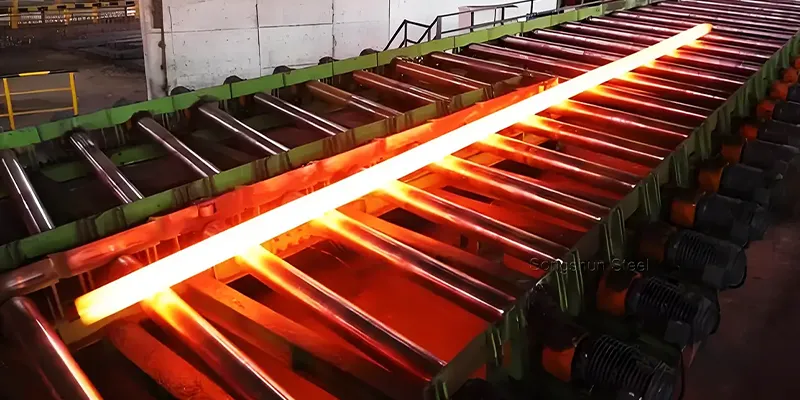
Special Metals specifies hot forming of Inconel 718 across the 1,650-2,050°F (900-1,120°C) range, but the last operation should work the metal uniformly with a gradually decreasing temperature and finish with a light reduction specifically in the 1,650-1,750°F (900-955°C) band - the finishing temperature, not the starting temperature, is what determines the forging's final grain structure and rupture properties.
This two-part guidance matters because Inconel 718 behaves very differently at the top and bottom of its hot-working range. At the upper end (near 2,000-2,050°F), the alloy's strengthening niobium is fully dissolved and grain growth proceeds readily during any subsequent soak; at the lower end (1,650-1,750°F), fine delta-phase (Ni3Nb) particles begin forming at grain boundaries and physically pin them in place, resisting further growth. A forging schedule that starts hot for bulk shape generation and progressively cools to a fine finishing pass is deliberately designed to exploit both effects: high-temperature passes for efficient, lower-force metal movement, and a final low-temperature pass to lock in a fine, uniform grain structure before the part goes to heat treatment.
Why Does Inconel 718 Require So Much More Forging Force Than Steel or Other Nickel Alloys?
At a given reduction and temperature, Inconel 718 develops roughly 2-3 times the roll-gap pressure of mild steel and noticeably more than nickel alloys such as Inconel 600 or X-750, which is why Special Metals states plainly that the alloy "is readily hot-worked if sufficiently powerful equipment is used" - underpowered equipment is a direct path to incomplete reductions and the duplex grain problems discussed below.
|
Material |
1,800°F |
1,900°F |
2,000°F |
2,100°F |
|
Mild steel (1020) |
22.4 ksi |
18.3 ksi |
14.3 ksi |
10.3 ksi |
|
Type 302 stainless steel |
27.8 ksi |
24.3 ksi |
21.4 ksi |
18.0 ksi |
|
Inconel alloy 600 |
40.8 ksi |
34.6 ksi |
28.3 ksi |
22.3 ksi |
|
Inconel alloy X-750 |
48.6 ksi |
43.3 ksi |
38.4 ksi |
33.3 ksi |
|
Inconel alloy 718 |
63.3 ksi |
55.8 ksi |
48.3 ksi |
41.0 ksi |
Source: Special Metals Corporation, pressure developed in roll gap at 20% reduction, INCONEL alloy 718 technical bulletin SMC-045.
This table is a useful, quantitative reminder that Inconel 718's forgeability problems are not primarily about temperature control - they are about raw mechanical resistance to deformation. A press or hammer with adequate reserve capacity at the intended working temperature is a prerequisite for the reduction schedule and grain-size control discussed in the rest of this article; a machine that is merely adequate for stainless steel or Inconel 600 forgings will struggle to achieve full reductions in 718 at the same temperature.
How Does Final Forging Temperature Affect Rupture Life and Notch Ductility?
Special Metals' own forging trials show a dramatic, direct relationship between finishing temperature and notch-rupture life: bar finish-forged at 1,650°F survived over 426 hours at 1,200°F/100 ksi without failing (the test was discontinued), while identical material finish-forged at 2,050°F failed in roughly 16 hours under the same test - a difference of more than 25-fold driven by finishing temperature alone.

|
Hot-forming (finishing) temperature |
Notch-bar rupture life at 1,200°F/100 ksi |
Smooth-bar rupture life (range) |
Resulting grain structure |
|
2,050°F |
~16.2-16.5 hours |
193.5-209.5 hours |
Coarse, duplex (mixed grain sizes) |
|
1,950°F |
~55.1-56.7 hours |
274.5-291.4 hours |
Improved but still mixed |
|
1,850°F |
~99.2-123.9 hours |
193.3-231.6 hours |
Finer, more uniform |
|
1,750°F |
~131.4-179.6 hours |
121.3-248.3 hours |
Fine, some residual duplex structure |
|
1,650°F |
>426 hours (test discontinued, no failure) |
48.0-124.3 hours |
Fully fine and uniform |
Source: Special Metals Corporation, effect of hot-forming temperature on rupture properties (0.75-in. square bar, 25% reduction in one pass, rupture-tested at 1,200°F/100 ksi after standard annealing and aging), INCONEL alloy 718 technical bulletin SMC-045.
Notice that smooth-bar rupture life does not track finishing temperature nearly as cleanly as notch-bar life does - it is actually highest at 1,950°F in this data set, not at the lowest finishing temperature. This distinction matters enormously for real aerospace hardware: smooth-bar rupture life describes an idealized, defect-free test specimen, while notch-bar rupture life models the stress concentrations that exist at every fillet, hole, and thread root on an actual disk or ring. Because in-service failures almost always initiate at a geometric stress concentration, notch-rupture ductility - not smooth-bar strength - is the property that should drive the finishing-temperature decision for stress-rupture-limited rotating components.
Why Must Forging Reductions Be Uniform, and What Happens If They Aren't?
Uneven or insufficient reduction produces a duplex (mixed fine-and-coarse) grain structure directly, which is why Special Metals specifies minimum final reductions of 20% for open-die work and 10% for closed-die work, and requires that any section of the workpiece cooling below 1,650°F during forging be reheated before continuing - working a partially cooled section is one of the most common causes of duplex grain in practice.
Duplex grain structure happens when different regions of a forging experience different amounts of effective deformation at temperature - for example, a corner or thin section that cools faster than the bulk of the part, or a reduction schedule where some material barely deforms while adjacent material is heavily worked. The lightly worked regions retain coarser, less-refined grain while the heavily worked regions recrystallize fine; the result is a mixed-grain-size microstructure directly analogous to the 2,050°F row in the table above.
Special Metals' guidance is specific and actionable: bring the workpiece to temperature, soak only briefly to ensure uniformity (prolonged soaking is explicitly discouraged), reheat any region that drops below 1,650°F, and apply reductions as evenly as possible across the part rather than concentrating deformation in one area.
How Does Post-Forging Annealing Temperature Control Grain Size?
Annealing temperature directly sets the final grain size because it controls how much delta phase (Ni3Nb) is available to pin grain boundaries: annealing within roughly 1,650-1,850°F keeps enough delta phase in the microstructure to restrain grain growth and produce a fine grain, while annealing above about 1,900°F dissolves progressively more delta phase, removing that pinning effect and allowing the grain to coarsen.
Special Metals' own data on the effect of a 30-minute anneal at temperatures from 1,650°F to 1,950°F shows average grain size (expressed as an ASTM grain-size number, where a higher number means a finer grain) becoming progressively coarser as annealing temperature rises through this range, across every level of prior cold work tested.
This is the practical, everyday version of the same physics behind the forging-finishing-temperature effect discussed above: whether the fine-grain-promoting delta phase is preserved or dissolved depends on which side of roughly 1,850-1,900°F the metal spends its time on, whether that time comes from a forging finishing pass, a solution anneal, or any other elevated-temperature exposure.
Which Heat Treatment Should You Specify - 1,700-1,850°F or 1,900-1,950°F Anneal and Age?
Specify the 1,700-1,850°F anneal and age when rupture life, notch-rupture life, notch-rupture ductility, and fatigue strength are the governing design properties; specify the 1,900-1,950°F anneal and age when the application is tensile-limited and needs the best transverse ductility in heavy sections, impact strength, or low-temperature notch tensile strength, since this treatment trades some notch-rupture ductility for those benefits.
|
Heat treatment |
Anneal + age cycle |
Best for |
Trade-off |
|
1,700-1,850°F anneal and age |
Anneal 1,700-1,850°F, A.C.; age 1,325°F/8 h, F.C. to 1,150°F, hold at 1,150°F for total aging time of 18 h |
Rupture life, notch-rupture life and ductility, highest fatigue strength, highest room-temperature tensile/yield strength (fine grain) |
- |
|
1,900-1,950°F anneal and age |
Anneal 1,900-1,950°F, A.C.; age 1,400°F/10 h, F.C. to 1,200°F, hold at 1,200°F for total aging time of 20 h |
Best transverse ductility in heavy sections, impact strength, low-temperature notch tensile strength |
Tendency toward notch brittleness in stress-rupture service |
Source: Special Metals Corporation, annealing and age-hardening treatments, INCONEL alloy 718 technical bulletin SMC-045.
Neither treatment is universally "better" - they are optimized for different failure modes, and Special Metals is explicit that the choice should follow from which property governs the part's design life. A turbine disk whose critical failure mode is low-cycle fatigue or creep-rupture at a bolt hole or fillet should default to the 1,700-1,850°F treatment; a heavy-section part evaluated primarily on tensile margin and impact toughness may be better served by the 1,900-1,950°F treatment.
Aging response in either case is comparatively slow - virtually no hardening occurs in the first 2-3 minutes at aging temperature - which is what allows welded or annealed parts to be air-cooled without accidental partial hardening.
How Does Grain Size Affect Fatigue Strength in Forged Components?
Special Metals' own fatigue data shows the 10^8-cycle endurance limit of annealed-and-aged plate rising steadily as average grain size decreases, confirming that grain-size control achieved through forging and heat-treatment temperature is not just a rupture-life consideration but a direct fatigue-life lever as well - which is precisely why aerospace disk and ring forgings are held to tight grain-size requirements verified under ASTM E112.

This connects directly back to the forging-temperature and annealing-temperature sections above: because both a low forging-finish temperature and a low (1,700-1,850°F) post-forging anneal push grain size finer through delta-phase grain-boundary pinning, both process choices compound in the same direction on fatigue life.
Special Metals also notes that if fatigue strength is the overriding design driver, Inconel 718 forgings can be used in the annealed condition rather than fully annealed-and-aged, since aging raises fatigue strength only modestly (roughly 4 ksi or less in the company's own rotating-beam test data) compared with the much larger effect of grain size itself.
What Furnace Atmosphere and Heating Practices Protect Forging Quality?
Furnace atmosphere and stock cleanliness are not incidental housekeeping items for Inconel 718 forging - Special Metals specifies a slightly reducing atmosphere (at least 2% carbon monoxide) with a slight positive furnace pressure, extremely low-sulfur fuel, and stock that is completely free of oil, paint, grease, and shop soil before charging, because getting this wrong produces a heavy, hard-to-remove oxide scale instead of the thin, adherent, and comparatively benign green-black film that a correctly controlled reducing atmosphere leaves behind.
- Furnace and stock practices to follow: Maintain a slightly reducing furnace atmosphere containing at least 2% carbon monoxide, with a slight positive pressure to prevent air infiltration.
- Furnace and stock practices to follow: Use fuels extremely low in sulfur; sulfur contamination of nickel alloys at forging temperature is a well-known cause of intergranular embrittlement.
- Furnace and stock practices to follow: Charge only material that is completely free of oil, paint, grease, and shop soil.
- Furnace and stock practices to follow: Bring the workpiece up to temperature, soak only briefly to ensure uniformity, and withdraw - prolonged soaking at forging temperature is explicitly not recommended.
- Furnace and stock practices to follow: Preheat forging tools and dies to about 500°F, and remove any surface ruptures on the workpiec immediately when they appear.
- Furnace and stock practices to follow: Air-cool parts from the hot-working temperature; water quenching directly from forging temperature is not the standard practice for this alloy.
What AMS and ASTM Specifications Govern Inconel 718 Forgings?
Inconel 718 bar, forging stock, and forgings for aerospace use are most commonly specified under AMS 5662 (bar and forging stock, consumable-electrode or vacuum-induction melted, for general use up to 1,300°F) and AMS 5663 (solution heat-treated and precipitation-hardened bar and forging stock) alongside ASTM B637 and ASME Code Cases covering bolting and pressure-boundary applications.
|
Requirement |
Specification |
|
Rod, bar, wire, forging stock |
ASTM B637, ASME SB637, SAE AMS 5662, AMS 5663, AMS 5664 |
|
Additional bar/forging specifications |
SAE AMS 5832, AMS 5914, AMS 5962 |
|
Bolting applications (ASME Code) |
ASME Section I and Section VIII, Division I, Code Case 1993 |
|
Additional ASME Code Cases |
Code Case 2206, Code Case 2222, Code Case N-62, Code Case N-208 |
|
Plate, sheet, strip |
ASTM B670, ASTM B906, ASME SB670, SB906, AMS 5596, AMS 5597 |
|
Pipe and tube |
AMS 5589, AMS 5590, ASME Code Case N-253 |
|
Welding filler metal |
INCONEL Filler Metal 718, AWS A5.14 ERNiFeCr-2 |
|
Sour-service qualification |
NACE MR-01-75 |
|
UNS / Werkstoff designation |
N07718 (also N07719), Werkstoff Nr. 2.4668 |
Source: Special Metals Corporation, "Available Products and Specifications," INCONEL alloy 718 technical bulletin SMC-045.
What Mechanical Properties Should Aerospace Forgings Meet?
Correctly forged and heat-treated Inconel 718 bar and forgings meet room-temperature minimums on the order of 180 ksi (1,241 MPa) tensile strength and 150 ksi (1,034 MPa) yield strength with double-digit percent elongation - but the exact minimums, and which heat-treatment condition they apply to, depend on the specific AMS specification and product form called out on the drawing, so the specification reference itself is as important as the numbers.
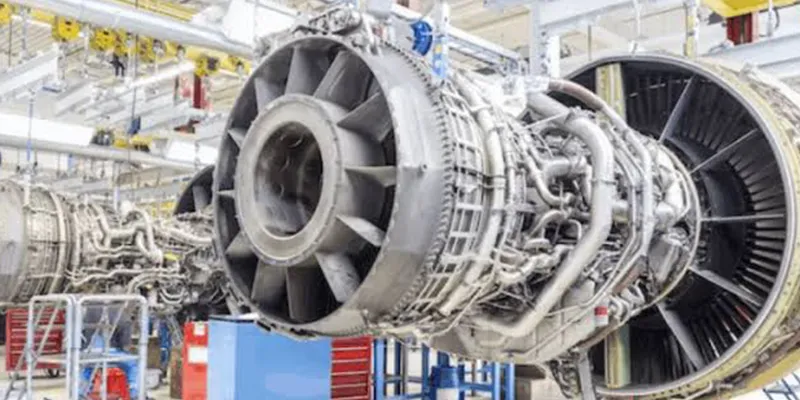
Special Metals' own published data for bar, forgings, and rings processed to the 1,900-1,950°F anneal and age (the tensile-limited treatment) shows minimum room-temperature tensile strength of 180 ksi, minimum yield strength of 150 ksi, and minimum elongation in the range of 10-15% depending on product form, with hardness controlled to roughly 331 BHN or Rc 38 or better.
Because Inconel 718's properties are this sensitive to the specific forging and heat-treatment path taken to produce them - as the notch-rupture data above demonstrates dramatically - a procurement specification for aerospace-grade forgings should always reference the exact AMS number and heat-treatment condition required, not just "Inconel 718" or a generic strength target.
Frequently Asked Questions
Q: What temperature range is used to forge Inconel 718?
A: Hot forming is done across 1,650-2,050°F (900-1,120°C), but the final, light finishing reduction should be made specifically in the 1,650-1,750°F range to achieve the fine, uniform grain structure needed for good notch-rupture ductility.
Q: Why does the finishing temperature matter more than the starting forging temperature?
A: The finishing temperature determines the grain size the part carries into heat treatment. Special Metals' own data shows notch-bar rupture life at 1,200°F/100 ksi rising from about 16 hours for material finished at 2,050°F to over 426 hours (no failure) for material finished at 1,650°F - a difference driven entirely by finishing temperature.
Q: What causes duplex grain structure in Inconel 718 forgings, and how is it avoided?
A: Duplex (mixed fine-and-coarse) grain structure results from uneven reduction across a forging, often because part of the workpiece cools below the working temperature during processing. It is avoided by applying uniform reductions (20% minimum for open-die work, 10% minimum for closed-die work) and reheating any section that cools below 1,650°F before continuing to forge it.
Q: Which anneal-and-age treatment should be specified for a fatigue-critical Inconel 718 disk forging?
A: The 1,700-1,850°F anneal and age, followed by aging at 1,325°F for 8 hours, furnace-cooled to 1,150°F and held for a total aging time of 18 hours. This treatment produces the finest grain and is associated with the highest fatigue strength, rupture life, and notch-rupture ductility.
Q: Does aging significantly increase the fatigue strength of Inconel 718 forgings?
A: Only modestly. Special Metals' rotating-beam fatigue data shows aging raising the 10^8-cycle fatigue strength by less than 4 ksi compared with the annealed-only condition, meaning grain size, not aging, is the dominant lever for fatigue performance.
Q: Why does Inconel 718 need more powerful forging equipment than stainless steel?
A: At a given temperature and reduction, Inconel 718 develops roughly 2-3 times the roll-gap pressure of mild steel and noticeably more than Type 302 stainless steel or Inconel 600, so equipment adequate for those materials may not achieve full, uniform reductions in 718 at the same temperature.