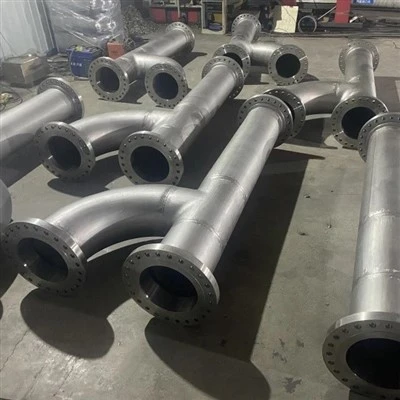
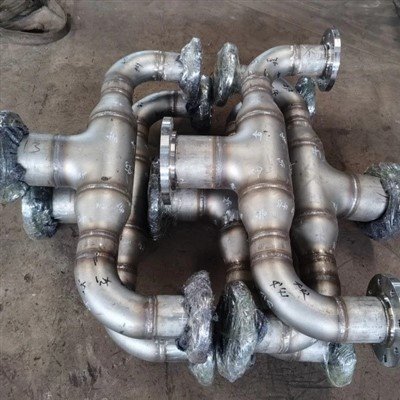
A thermocouple protection tube has one job that sounds simple and turns out to be genuinely demanding: shield a delicate temperature sensor from a furnace atmosphere at 1200°C, survive being repeatedly heated and cooled, and do it for years without sagging, cracking, or letting the furnace atmosphere reach the sensor inside.

Inconel 601 has become a standard material for exactly this application, not because it is the single most oxidation-resistant alloy available, but because of a specific compositional feature - an aluminum addition - that solves the particular failure mode that ends most thermocouple protection tubes' service life. This guide explains how that works, what practical temperature limits apply, and how to think about wall thickness and creep resistance when specifying a 601 protection tube.
What Makes Inconel 601 Well Suited to Thermocouple Protection Tube Applications?
Inconel 601 is well suited to thermocouple protection tubes because it combines excellent high-temperature oxidation resistance, unusually good resistance to oxide scale spallation during thermal cycling, and adequate creep strength to resist sagging over long, sustained furnace exposure - the specific combination of properties this application demands simultaneously.
Representative nominal composition of Inconel 601:
|
Element |
Approx. wt% |
Primary Role |
|
Nickel (Ni) |
Balance (≈ 58–63%) |
Base element; provides the austenitic matrix and high-temperature stability |
|
Chromium (Cr) |
≈ 21–25% |
Forms the base chromium oxide (Cr₂O₃) protective scale |
|
Aluminum (Al) |
≈ 1.0–1.7% |
Key distinguishing addition; forms an alumina-enriched sublayer that dramatically improves scale adhesion during thermal cycling |
|
Iron (Fe) |
Balance (≈ 14%) |
Supports the matrix and moderates raw material cost relative to higher-nickel alloys |
|
Carbon (C) |
≈ 0.05–0.10% |
Contributes modestly to elevated-temperature strength through carbide formation |
Table 1. Representative nominal composition of Inconel 601 (UNS N06601). Values are illustrative and rounded; confirm exact composition limits against the current producer data sheet or applicable specification.
A thermocouple protection tube is not simply a heat-resistant pipe; it must survive a specific combination of stresses that many otherwise oxidation-resistant materials handle less well together. It experiences sustained high temperature for long periods, but also thermal cycling every time the furnace starts up, shuts down, or the tube is removed for inspection. It must resist gradually sagging under its own weight at temperature, particularly in long horizontal installations.
And its oxide scale must remain intact and adherent, because a scale that spalls away exposes fresh metal to renewed, accelerated oxidation - progressively thinning the tube wall until it eventually fails. Inconel 601's aluminum addition, discussed in the next section, addresses this last point directly, which is the specific reason this alloy became a standard choice for the application rather than a more general "it's a strong nickel alloy" recommendation.
Why Does Inconel 601's Aluminum Addition Improve Oxidation Resistance Under Thermal Cycling?
Inconel 601's aluminum addition promotes the formation of an alumina-enriched layer beneath the alloy's chromium oxide scale, and this alumina-enriched sublayer adheres to the base metal far more tenaciously than a chromium oxide scale alone, dramatically reducing the scale spallation that limits the cyclic-oxidation life of many other high-temperature alloys.

Most nickel-chromium high-temperature alloys, including Inconel 600, rely primarily on a chromium oxide (Cr₂O₃) scale for oxidation protection, which performs well under steady, unchanging high-temperature exposure but can be prone to cracking and spalling away from the base metal when the component is repeatedly heated and cooled - exactly the service pattern a thermocouple protection tube experiences. Inconel 601's aluminum content forms a distinct, alumina-rich layer at the scale-to-metal interface, and this alumina sublayer bonds to the underlying alloy substantially better than chromium oxide does on its own, meaning the protective scale is far less likely to crack and flake away during the thermal expansion and contraction that comes with cycling.
Each time a chromium-oxide-only scale spalls, it exposes bare, unprotected metal that must then re-oxidize, consuming base metal and gradually thinning the tube wall with every thermal cycle - a progressive damage mechanism that 601's more adherent, aluminum-enhanced scale substantially slows down, which is the direct, practical reason this alloy outperforms many chemically similar alternatives specifically in cyclic, rather than purely steady-state, high-temperature service.
What Is the Practical Temperature Limit for Inconel 601 in Continuous and Cyclic Service?
Inconel 601 is generally rated for continuous oxidation-resistant service up to approximately 1150–1200°C, with some sources citing short-term or intermittent capability somewhat higher, making it one of the higher-temperature-capable commercial nickel alloys available without moving to specialty FeCrAl or ceramic materials.
This temperature ceiling reflects the point at which the alumina-enhanced chromium oxide scale can no longer reliably keep pace with the oxidation rate at the metal surface, beyond which oxidation and metal loss accelerate meaningfully. Because thermocouple protection tube applications frequently operate right at or near this practical ceiling - many industrial furnaces and kilns run in the 1000–1200°C range - 601's specific combination of a high absolute temperature rating and good cyclic scale adhesion is what makes it a realistic, rather than marginal, choice for many of the most demanding protection tube applications in this temperature class, rather than requiring an immediate step up to ceramic materials.
What Is "Green Rot," and Why Does It Matter for Protection Tube Material Selection?
"Green rot" is a well-documented, accelerated failure mode in nickel-chromium alloys caused by simultaneous carburization and oxidation under furnace atmospheres that fluctuate between oxidizing and carburizing conditions, and it matters for protection tube selection because it can cause much faster material degradation than either oxidation or carburization would produce alone.
In furnace atmospheres that alternate or locally vary between oxidizing and carburizing conditions - common in certain combustion, heat-treating, and process furnace environments where fuel-air ratios or gas composition are not perfectly uniform - nickel-chromium alloys can experience a specific, more severe combined attack: carbon ingress depletes chromium from the alloy matrix by forming internal chromium carbides, which locally starves the surface of the chromium needed to maintain a protective oxide scale, allowing accelerated oxidation to proceed in those chromium-depleted zones.
This combined mechanism, commonly termed "green rot" due to the characteristic greenish internal oxide/carbide microstructure it produces, can degrade a protection tube considerably faster than either straightforward oxidation or straightforward carburization alone would predict. This is a genuine, application-specific reason to characterize the actual furnace atmosphere - not just its peak temperature - when selecting a protection tube material, since a tube rated for excellent performance in a clean, steady oxidizing atmosphere may still be vulnerable to this combined mechanism in a furnace with fluctuating or locally variable atmosphere chemistry.
How Does Creep Resistance Affect Protection Tube Design, Especially for Long Horizontal Runs?
Creep resistance directly determines how much a thermocouple protection tube will sag under its own weight over sustained high-temperature service, and this consideration becomes especially significant for long horizontal tube installations, where insufficient creep strength can cause progressive deflection that eventually affects sensor positioning or, in severe cases, structural integrity.

A protection tube supported only at one end (or at both ends but spanning a long unsupported length) is essentially a cantilevered or simply supported beam operating at a temperature where the material's resistance to slow, time-dependent deformation - the same creep phenomenon discussed in other technical guides on stainless steel and superalloy creep rupture behavior - becomes a real, calculable design concern rather than a theoretical one.
Longer horizontal immersion lengths increase the bending moment the tube must resist under its own weight, meaning creep-related sag risk scales with both temperature and unsupported length, not temperature alone. Inconel 601's reasonably good elevated-temperature strength, combined with appropriate wall thickness and support spacing, is part of why it performs acceptably in many long-tube industrial furnace applications where a lower-creep-strength material might sag enough over time to compromise accurate sensor positioning or, eventually, tube integrity.
How Does Inconel 601 Compare to 310S Stainless Steel and Inconel 600 for This Application?
Inconel 601 generally outperforms both 310S stainless steel and Inconel 600 specifically in cyclic high-temperature service, owing to its aluminum-enhanced scale adhesion, while all three materials can perform comparably well in steady, non-cycling exposure within their shared practical temperature range.
A direct comparison across common protection tube material candidates:
|
Material |
Practical Oxidation Limit |
Cyclic Oxidation / Scale Adhesion |
Creep Strength at Temperature |
|
Inconel 601 |
≈ 1150–1200°C continuous; short excursions higher |
Excellent - aluminum-enriched scale resists spallation under repeated heating/cooling |
Good - suited to sustained elevated-temperature service, including longer horizontal immersion lengths |
|
Inconel 600 |
≈ 1000–1100°C |
Moderate - lacks 601's alumina-enriched scale, more prone to spallation under cycling |
Moderate |
|
310S stainless steel |
≈ 1100–1150°C |
Good in steady exposure; generally less cycling-resistant than 601's alumina-enhanced scale |
Lower than 601 at the highest end of the shared temperature range |
|
Ceramic (e.g., silicon carbide, alumina) protection tubes |
Can exceed 1500°C depending on material |
Excellent chemical stability but brittle - vulnerable to thermal shock and mechanical impact rather than scale spallation |
Not applicable in the same sense; failure mode is typically fracture rather than creep |
Table 2. Representative comparison of thermocouple protection tube material candidates. Figures are illustrative and general; actual performance depends heavily on the specific furnace atmosphere, cycling frequency, and mechanical support configuration, and should be validated for the specific application.
This comparison highlights why simply matching a material's peak temperature rating to the furnace's peak operating temperature is an incomplete selection approach: 310S stainless steel, discussed in detail in other technical guides on high-temperature stainless grades, and Inconel 600 both offer respectable oxidation resistance within a similar temperature range to Inconel 601, but neither offers the same specific advantage in resisting scale spallation under repeated thermal cycling - the failure mode most directly relevant to a protection tube's real service life in most industrial furnace applications.
How Should Wall Thickness Be Selected to Balance Response Time and Service Life?
Protection tube wall thickness should be selected as a deliberate trade-off between thermal response time, which improves with a thinner wall, and long-term service life against oxidation-driven wall thinning and creep, which improves with a thicker wall - not defaulted to either extreme without considering both factors together.
A practical approach to this trade-off:
1. Establish the actual accuracy and response time requirement for the temperature measurement, since some processes tolerate a slower-responding, thicker-walled tube far better than others.
2. Estimate expected long-term oxidation-driven wall loss over the intended service life at the actual operating temperature and cycling frequency, rather than assuming a nominal wall thickness will remain fully intact throughout service.
3. Account for creep-related sag risk explicitly for long horizontal immersion lengths, since this consideration can favor a thicker wall or additional intermediate support independent of the oxidation-driven wall thickness calculation.
4. Consider a stepped or tapered tube design where response time matters most near the sensing tip, allowing a thinner section there while retaining a thicker, more robust section elsewhere along the tube's length.
5. Build in a genuine corrosion/oxidation allowance rather than specifying only the minimum wall thickness needed for day-one mechanical adequacy, consistent with the corrosion allowance principles discussed in other technical guides on material selection.
When Should Ceramic or Ceramic-Lined Protection Tubes Be Considered Instead?
Ceramic or ceramic-lined protection tubes should be considered when furnace temperature exceeds Inconel 601's practical metallic limit, when the atmosphere is particularly aggressive toward nickel-chromium alloys (such as severe green-rot-prone conditions), or when chemical inertness matters more than mechanical robustness against thermal shock and impact.

Ceramic materials such as silicon carbide and various alumina-based compositions can extend usable protection tube service well beyond Inconel 601's practical metallic temperature ceiling and offer excellent chemical inertness in many aggressive atmospheres, but they fail through a fundamentally different mechanism - brittle fracture from thermal shock or mechanical impact - rather than the gradual oxidation-driven wall thinning and creep sag that govern metallic tube life.
This means the choice between Inconel 601 and a ceramic protection tube is not simply a matter of picking whichever material has a higher peak temperature rating; it also depends on how much mechanical robustness, resistance to thermal shock during insertion or removal, and tolerance for handling during maintenance the specific installation realistically requires, since a ceramic tube's excellent chemical and thermal resistance can be undermined quickly by a single mishandling incident in a way a metallic tube would tolerate far better.
Frequently Asked Questions
Is Inconel 601 magnetic?
Inconel 601 is generally non-magnetic (or only very weakly magnetic) in its standard condition, consistent with its austenitic nickel-based matrix, similar to the behavior discussed for other nickel superalloys in related technical guides.
Can Inconel 601 protection tubes be reused after removal from service?
Reuse is possible if the tube passes inspection for wall thickness loss, cracking, and dimensional integrity, but any tube that has seen extended high-temperature service should be inspected rather than assumed serviceable, since oxidation-driven wall thinning and any creep-related deformation are cumulative and not visually obvious without measurement.
Does Inconel 601 perform well in reducing (non-oxidizing) furnace atmospheres?
Inconel 601's oxidation resistance advantage is specifically tied to oxidizing conditions where its protective scale can form and remain stable; in strongly reducing atmospheres, or atmospheres that fluctuate between reducing and oxidizing conditions (raising green rot risk), its performance characteristics differ, and atmosphere-specific evaluation is warranted rather than assuming its oxidizing-atmosphere reputation transfers directly.
How much does thermal cycling frequency affect protection tube service life compared to peak temperature alone?
Cycling frequency can be a highly significant factor, since each cycle risks scale cracking and spallation events that progressively consume base metal; a tube operating at a lower peak temperature but cycled very frequently can, in some cases, see shorter service life than a tube held at a higher but steady temperature, which is why cycling pattern should be characterized alongside peak temperature during material selection.
Is a thermowell the same thing as a thermocouple protection tube?
The terms are often used interchangeably in general industry usage, though "thermowell" is sometimes used more specifically for a machined, threaded or flanged fitting in a pressure-containing process line, while "protection tube" more commonly refers to a furnace-inserted sheath; terminology can vary by industry and supplier, so confirming the specific product configuration required is more useful than relying on the term alone.