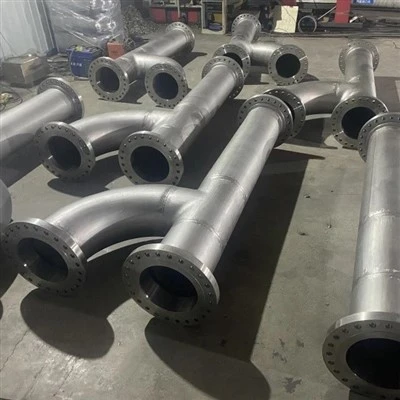
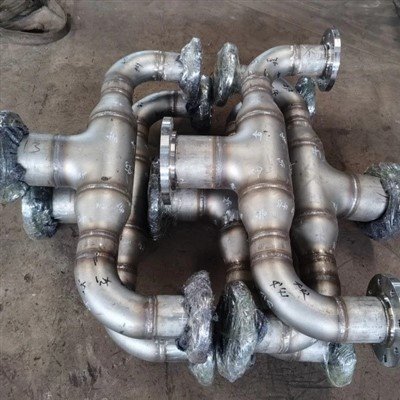
Sour gas wells - reservoirs rich in hydrogen sulfide (H₂S) - are among the most punishing environments in all of materials engineering. The H₂S reacts with water to release atomic hydrogen that embrittles ordinary steel, causing sudden, brittle, catastrophic cracking with no warning. When a well carries high H₂S, high chloride, and low pH all at once, only the most corrosion-resistant nickel alloys survive. Two names dominate this regime: Inconel 625 (UNS N06625) and Hastelloy C276 (UNS N10276).

Both alloys are fully qualified under NACE MR0175 / ISO 15156 - the governing standard for sour service materials - and both are approved for the most severe envelope commonly referenced as Level VII: solution-annealed condition, hardness below 35 HRC, maximum temperature 232°C (450°F), with no upper limit on H₂S partial pressure or chloride. So if both are "compliant," how do engineers choose between them?
The decision rule in one sentence: for the most severe sour wells - very high H₂S (above ~1 MPa), very high chloride (above ~50,000 ppm), and low pH (below ~3.5) - specify Hastelloy C276, the more conservative and universally proven choice; for moderate-to-severe sour service where higher mechanical strength is needed (high-pressure wellhead and tree components), Inconel 625 is the better-engineered balance. Both are NACE MR0175 Level VII compliant; the difference is in the margin of safety and the property you prioritize.
What Is NACE MR0175 "Level VII" Sour Service?
The danger of sour service is not ordinary corrosion - it is environmental cracking. H₂S in water generates atomic hydrogen at the metal surface. Normally that hydrogen would recombine into harmless H₂ gas and escape; but the sulfide ion acts as a "recombination poison," keeping hydrogen atoms on the surface so they diffuse into the metal. There they collect at hard zones, inclusions, and regions of tensile stress, embrittling the material and initiating cracks. The three named failure modes are:
- Sulfide Stress Cracking (SSC) - hydrogen embrittlement under tensile stress; the classic sudden-brittle-fracture killer.
- Hydrogen-Induced Cracking (HIC) - stress-independent blistering at internal inclusions; forms stepwise internal cracks.
- Stress-Oriented HIC (SOHIC) - HIC blisters linking under stress, typically in weld heat-affected zones.
- Carbon and low-alloy steels fight these by limiting hardness (≤ 22 HRC) and controlling chemistry. Corrosion-resistant alloys (Part 3) instead rely on their alloy composition and microstructure, and carry a different set of limits - principally condition (solution annealed), hardness (< 35 HRC), and cold work (< 20%).
What "Level VII" Means for Nickel Alloys
Level VII denotes the most severe sour service envelope that nickel-based CRAs such as 625 and C276 are qualified for: solution-annealed condition, hardness below 35 HRC, cold work below 20%, maximum service temperature 232°C (450°F), and no restriction on H₂S partial pressure or chloride concentration. In practice it means an operator can specify either alloy for a deep, hot, highly sour well without performing bespoke environmental-cracking calculations - provided the fabrication controls (annealed, low cold work, qualified weld procedure) are observed.
|
NACE MR0175 / ISO 15156 Parameter |
Inconel 625 (N06625, Grade 2) |
Hastelloy C276 (N10276) |
|
Part |
Part 3 (CRA) |
Part 3 (CRA) |
|
Status |
Approved, all regions (Level VII) |
Approved, all regions (Level VII) |
|
Required condition |
Solution annealed (Grade 2) |
Solution annealed |
|
Max hardness |
< 35 HRC (typ. 200-240 HB) |
< 35 HRC (typ. 85-95 HRB) |
|
Max cold work |
< 20% |
< 20% |
|
Max H₂S partial pressure |
Unlimited (no upper limit) |
Unlimited (no upper limit) |
|
Max temperature (sour) |
232°C (450°F) |
232°C (450°F) |
|
Max chloride (sour) |
Unlimited (with pH limit) |
Unlimited (no chloride limit specified) |
|
Min pH (sour) |
> 3.5 (some conditions) |
No lower limit specified |
|
SSC (NACE TM0177) |
Excellent (no failure in 720 h) |
Excellent (no failure in 720 h) |
|
SOHIC |
Good to excellent |
Excellent |
|
HIC (NACE TM0284) |
Good to excellent |
Excellent (CLR typically < 1%) |
[Source] NACE MR0175 / ISO 15156-3 (2020 edition), Annex A nickel-base alloy tables; Special Metals Inconel 625 Sour Service Bulletin; Haynes C276 Sour Service Bulletin.
What Are Inconel 625 and Hastelloy C276 Made Of?
Both alloys are nickel-dominant (Ni ≥ 57-58%), which is the fundamental reason they resist sulfide stress cracking: nickel matrices above roughly 40-45% Ni are metallurgically immune to chloride stress corrosion cracking and do not hydrogen-embrittle the way body-centered-cubic steel does. Beyond nickel, their alloying differs by design: Inconel 625 uses 8-10% molybdenum + 3.15-4.15% niobium for strength and pitting resistance; Hastelloy C276 uses a much higher 15-17% molybdenum + 3-4.5% tungsten for maximum corrosion resistance in aggressive media.

Inconel 625 is a nickel-chromium-molybdenum-niobium alloy. Its high nickel (≥ 58%), chromium (20-23%), and molybdenum (8-10%) give it outstanding resistance to both oxidizing and reducing environments, while niobium provides solid-solution strengthening without heat treatment and prevents weld sensitization. Hastelloy C276 is a nickel-molybdenum-chromium-tungsten alloy with a much higher molybdenum content (15-17%) plus tungsten (3-4.5%). Its extremely low carbon (≤ 0.010%) and silicon make it essentially immune to sensitization, and the high molybdenum-tungsten combination gives it the highest pitting resistance of any common nickel alloy.
|
Element |
Inconel 625 (N06625) |
Hastelloy C276 (N10276) |
Effect on Sour Service |
|
Nickel (Ni) |
≥ 58% (balance) |
Balance (~57%) |
Immune to Cl-SCC; no H-embrittlement |
|
Chromium (Cr) |
20.0–23.0% |
14.5–16.5% |
Oxidation + pitting resistance |
|
Molybdenum (Mo) |
8.0–10.0% |
15.0–17.0% |
C276 far higher → better pitting/crevice resistance |
|
Niobium (Nb)+Ta |
3.15–4.15% |
- |
625: strength + stabilization, no PWHT |
|
Tungsten (W) |
- |
3.0–4.5% |
C276: extra margin in extreme sour |
|
Iron (Fe) |
≤ 5.0% |
4.0–7.0% |
Controlled for stability |
|
Carbon (C) |
≤ 0.10% |
≤ 0.010% |
C276 ultra-low → no sensitization |
|
PREN (approx.) |
~45–51 |
~65 |
C276 ~30% higher pitting resistance |
Molybdenum and tungsten are the elements that defeat pitting and crevice corrosion in chloride-laden sour brine. They enrich the passive film and slow its breakdown, so the higher the molybdenum (+ tungsten) content, the better the alloy resists localized corrosion under deposit, in crevices, and under chloride concentration. This is exactly why Hastelloy C276 (15-17% Mo + 3-4.5% W, PREN ~65) outperforms Inconel 625 (8-10% Mo, PREN ~45-51) in the most chloride-aggressive sour wells.
In a sour well, chlorides do not stay uniformly distributed - they concentrate under deposits, at gaskets, in the annulus of tubulars, and wherever flow is stagnant. That local concentration drives pitting and crevice corrosion, which then become initiation sites for cracking. The alloy's Pitting Resistance Equivalent Number (PREN) is the single best predictor of this behavior: PREN = %Cr + 3.3×%Mo + 16×%N. C276's PREN of ~65 means it resists chloride attack roughly 30% better than 625's ~45-51. In wells where chloride is the dominant threat, that margin is decisive.
Mechanical Properties - Where Inconel 625 Pulls Ahead
Inconel 625 is the stronger of the two alloys in the annealed condition: minimum tensile strength 827 MPa (120 ksi) and yield 414 MPa (60 ksi), versus Hastelloy C276 at 690 MPa (100 ksi) tensile and 310 MPa (45 ksi) yield. Both have excellent ductility (≥ 30-40% elongation). For high-pressure wellhead and christmas-tree components where strength per unit mass matters, 625 is the preferred choice.
|
Property (annealed) |
Inconel 625 (N06625) |
Hastelloy C276 (N10276) |
Winner |
|
Tensile Strength (min) |
827 MPa (120 ksi) |
690 MPa (100 ksi) |
625 (stronger) |
|
Yield Strength 0.2% (min) |
414 MPa (60 ksi) |
310 MPa (45 ksi) |
625 (stronger) |
|
Elongation (min) |
30% |
40% |
C276 (more ductile) |
|
Hardness (annealed) |
≤ 220 HB (~20-25 HRC) |
≤ 250 HB (~20-25 HRC) |
Equal (both < 35 HRC) |
|
Density |
8.44 g/cm³ |
8.89 g/cm³ |
625 slightly lighter |
|
Modulus of Elasticity |
205 GPa |
205 GPa |
Equal |
Elevated-Temperature and High-Pressure Behavior
For high-pressure, high-temperature (HPHT) sour wells, Inconel 625 retains higher strength at elevated temperature and is widely used for downhole hardware and wellhead components where mechanical load is the governing design driver. Hastelloy C276 is not weak, but its advantage is corrosion - not strength - so it is typically selected where the environment (not the load) is the limiting factor. When both strength and extreme sourness coincide, engineers often step up to a higher-strength grade (e.g., age-hardened 625 or Inconel 718) or use C276 with added wall thickness.
A useful rule of thumb from field practice: when H₂S partial pressure exceeds ~1 MPa, chloride exceeds ~50,000 ppm, and pH drops below ~3.5, C276's superior SOHIC/HIC margins make it the conservative default. When the well is sour but the mechanical loading is severe (high-pressure tree, packers, tubulars), 625's higher annealed strength earns it the nod. Both remain within Level VII compliance at 232°C (450°F).
Sour Service Compliance - Side by Side Under Level VII
Both alloys pass the standardized sour-service qualification tests - SSC per NACE TM0177 (no failure in 720 hours) and HIC per NACE TM0284 - but Hastelloy C276 shows the tighter margin: its HIC crack-length ratio (CLR) is typically under 1%, versus "good to excellent" for 625. For SOHIC, C276 is rated excellent while 625 is good-to-excellent. The practical outcome: C276 is the safer choice in the most aggressive sour combinations; 625 is fully adequate for moderate-to-severe service and preferred where strength is needed.
|
Cracking Mechanism |
Inconel 625 (N06625) |
Hastelloy C276 (N10276) |
Edge |
|
SSC (NACE TM0177, 720 h) |
No failure - Excellent |
No failure - Excellent |
Tie |
|
SOHIC |
Good to Excellent |
Excellent |
C276 |
|
HIC (NACE TM0284, CLR) |
Good to Excellent (higher CLR) |
Excellent (CLR < 1%) |
C276 |
|
Chloride SCC |
Immune (Ni matrix) |
Immune (Ni matrix) |
Tie |
|
Hydrogen embrittlement |
Resistant |
More resistant in extreme sour |
C276 (marginal) |
Required Material Condition and Fabrication Controls
Level VII compliance for both alloys hinges on fabrication discipline, not just chemistry. Both must be supplied in the solution-annealed condition, with hardness below 35 HRC and cold work below 20%. Both weld without post-weld heat treatment for SSC resistance - use ERNiCrMo-3 for 625 and ERNiCrMo-4 for C276. One critical processing note: Hastelloy C276 must be water-quenched (not air-cooled) after solution annealing, or harmful μ-phase and P-phase intermetallics precipitate and degrade corrosion resistance.
|
Fabrication Control |
Inconel 625 |
Hastelloy C276 |
Notes |
|
Required condition |
Solution annealed (Grade 2) |
Solution annealed |
Both |
|
Post-weld heat treatment |
Not required |
Not required |
Low C/Si prevents sensitization |
|
Weld filler |
ERNiCrMo-3 (AWS A5.14) |
ERNiCrMo-4 (AWS A5.14) |
Match to base chemistry |
|
Solution anneal quench |
Water quench or air cool |
Water quench mandatory |
C276 air-cool → μ/P phase |
|
Hardness verification |
≤ 35 HRC |
≤ 35 HRC (some specs 40) |
MTC + hardness survey |
|
Cold work limit |
< 20% |
< 20% |
Above → hardness/SSC risk |
|
PMI verification |
XRF confirms Ni/Cr/Mo/Nb |
XRF confirms Ni/Cr/Mo/W |
EN 10204 3.1/3.2 MTC |
Corrosion Resistance in Sour Wells - Reading the Environment

A sour well's corrosivity is the combination of H₂S partial pressure, chloride concentration, and pH - not any single value. Both 625 and C276 are qualified for unlimited H₂S and chloride, but C276 imposes no lower pH limit while 625 carries a typical minimum pH > 3.5 in some conditions. As pH drops and chloride rises, C276's superior pitting resistance (PREN ~65) gives it a growing safety margin over 625 (PREN ~45-51). When the environment is merely "sour but moderate," either alloy works; when it is "sour and brutal," C276 is the conservative pick.
Think of the sour well as a three-dial corrosive machine: turn up H₂S, turn up chloride, turn down pH, and the demands on the alloy rise together. SSC is driven primarily by H₂S and tensile stress; pitting and crevice corrosion are driven by chloride and low pH; HIC/SOHIC are driven by the hydrogen charging that H₂S produces. Nickel alloys resist all three, but the margin against the chloride/pH axis is set by molybdenum - and C276 simply has far more of it.
Acid Gas and Reducing Conditions
Hastelloy C276 is the superior choice whenever the sour environment also contains strong reducing acids - particularly hydrochloric acid (HCl), which can be present in acid gas removal units and acid stimulation. C276 resists HCl across essentially the full concentration range up to 400°C, where 625 is only marginal. If the well or associated gas plant sees HCl or aggressive organic acids, C276 is the material of choice; if the concern is purely H₂S + chloride, 625 is often sufficient and stronger.
This is the same logic seen across the nickel-alloy family: C276 is the "corrosion-maximum" alloy, 625 is the "strength-plus-corrosion" alloy. Selecting between them for sour service is therefore a question of which axis - corrosion severity or mechanical strength - is the binding constraint on the design.
Application Guide - Choosing Between 625 and C276
|
Well / Component Condition |
H₂S Level |
Chloride |
Strength Need |
Recommended Alloy |
Reason |
|
High-pressure wellhead / tree |
Moderate |
Moderate |
High |
Inconel 625 |
Higher annealed strength |
|
Downhole hardware, packers |
Moderate |
Moderate |
High |
Inconel 625 |
Strength + sour OK |
|
Severe sour, HCl present |
High (>1 MPa) |
High (>50k ppm) |
Low-Mod |
Hastelloy C276 |
HCl + extreme sour |
|
Sour gas with pH < 3.5 |
High |
High |
Any |
Hastelloy C276 |
No pH floor; best margin |
|
Deep HPHT sour well |
Very high |
Very high |
High |
C276 body + 625 trim* |
Corrosion + strength split |
|
Flowlines, separators |
Moderate-High |
Moderate |
Moderate |
Either |
625 if strength, C276 if max corro |
|
Acid gas removal unit |
High |
Moderate |
Low |
Hastelloy C276 |
Strong reducing acids |
|
Umbilical / instrument tubing |
Moderate |
High (seawater) |
Low |
Inconel 625 |
Immune Cl-SCC, strong |
* A common hybrid: C276 for the corrosion-critical body, 625 (or age-hardened 625/718) for high-strength trim.
The Five Rules for Choosing 625 vs C276 in Sour Service
- Rule 1 Is the well severely sour (H₂S > ~1 MPa, Cl⁻ > ~50,000 ppm, pH < ~3.5)? - If YES, specify Hastelloy C276. It has the tighter HIC/SOHIC margins and no pH floor. This is the conservative default for the worst wells.
- Rule 2 Is mechanical strength the binding constraint (high-pressure wellhead, tree, packers, tubulars)? - If YES, choose Inconel 625. Its higher annealed tensile (827 vs 690 MPa) and yield (414 vs 310 MPa) give more margin per unit mass, and it remains Level VII compliant.
- Rule 3 Does the environment contain strong reducing acids (HCl, aggressive organics)? - If YES, choose Hastelloy C276. C276 resists HCl across nearly the full range; 625 is only marginal in concentrated HCl.
- Rule 4 Is chloride pitting/crevice the dominant threat (stagnant brine, deposits, annulus)? - If YES, lean C276 (PREN ~65 vs ~45-51) for the larger safety margin against localized corrosion.
- Rule 5 Is the service moderate sour with no strength or acid extreme? - Either alloy qualifies; choose 625 for its strength and slightly lower cost, or C276 where maximum corrosion margin is desired. Both must be solution-annealed, < 35 HRC, < 20% cold work.
Cost and Availability
Hastelloy C276 typically carries a price premium over Inconel 625 of roughly 10-25%, driven by its higher molybdenum (15-17% vs 8-10%) and tungsten (3-4.5%) content - both expensive alloying elements. However, this premium is justified when it prevents an environmental-cracking failure in a severe sour well, where a single failure can cost millions in downtime, replacement, and safety exposure. For moderate sour service where 625 is adequate, the lower-cost 625 is the economical, fully compliant choice.
As with the 316L/317L logic, the economics are about total cost of ownership, not purchase price per kilogram. A C276 completion that costs 20% more than a 625 completion is cheap insurance against a catastrophic sour-gas failure. Conversely, over-specifying C276 on a well where 625 would have sufficed spends premium budget without added benefit. The disciplined approach is to reserve 625 for strength-driven sour service and C276 for corrosion-driven severe sour service.
|
Cost Factor |
Inconel 625 |
Hastelloy C276 |
Winner |
|
Base alloy cost |
Baseline (mid premium) |
~10-25% higher |
625 (cheaper) |
|
Moderate sour service |
Fully compliant |
Compliant, over-specified |
625 (value) |
|
Severe sour service |
Adequate |
Conservative default |
C276 (safety) |
|
HCl / strong reducing acid |
Marginal |
Best-in-class |
C276 (only option) |
|
High-strength components |
Preferred |
Acceptable |
625 (strength) |
|
Failure cost avoided |
High |
Highest margin |
C276 (margin) |
Availability
Both alloys are well-established, mill-produced nickel alloys with broad availability in all product forms (sheet, plate, bar, pipe, tube, fittings, flanges, forgings) from major specialty mills. Inconel 625 is somewhat more common in oil-and-gas hardware (wellhead trim, downhole parts) due to its strength, while Hastelloy C276 is the standard for the most severe sour and chemical environments. Expect both to be available with EN 10204 3.1/3.2 MTC and NACE MR0175 / ISO 15156 compliance statements.
Frequently Asked Questions
Q: Are Inconel 625 and Hastelloy C276 both NACE MR0175 compliant for sour service?
A: Yes. Both are listed in NACE MR0175 / ISO 15156 Part 3 as acceptable corrosion-resistant alloys for sour service, including the most severe (Level VII) envelope: solution-annealed, hardness below 35 HRC, maximum 232°C (450°F), and no upper limit on H₂S partial pressure or chloride. Both require cold work below 20%. They differ in margin of safety and which property they prioritize - corrosion (C276) vs strength (625).
Q: Which is better for severe sour gas wells?
A: Hastelloy C276 is the more conservative and universally specified choice for the most severe sour wells - very high H₂S (above ~1 MPa), very high chloride (above ~50,000 ppm), and low pH (below ~3.5). It has higher pitting resistance (PREN ~65 vs ~45-51), lower HIC susceptibility (CLR typically under 1%), and no minimum pH limit. Inconel 625 is preferred where higher mechanical strength is needed, such as high-pressure wellhead and christmas-tree components.
Q: What is the maximum temperature for NACE MR0175 sour service for these alloys?
A: Both Inconel 625 and Hastelloy C276 are qualified for NACE MR0175 sour service up to 232°C (450°F) in the solution-annealed condition. Above this temperature, the standard's environmental cracking limits for these alloys no longer apply, and a higher-temperature qualified material or specific project qualification is required.
Q: What hardness limit applies to these alloys in NACE MR0175 sour service?
A: Both must be in the solution-annealed condition with hardness below 35 HRC (some specifications cite up to 40 HRC for C276). Solution-annealed 625 typically measures 200-240 HB and C276 85-95 HRB, both well within the limit. Cold work must remain below 20% to avoid raising hardness and introducing residual stress that would compromise SSC resistance.
Q: Can Inconel 625 and Hastelloy C276 be welded in sour service?
A: Yes, both are weldable for sour service without post-weld heat treatment for SSC resistance. Use ERNiCrMo-3 (AWS A5.14) filler for Inconel 625 and ERNiCrMo-4 for Hastelloy C276. Both have extremely low carbon, so the weld and heat-affected zone stay corrosion-resistant. Note that Hastelloy C276 must be water-quenched after solution annealing; air cooling can precipitate harmful intermetallic phases.
Q: Is Inconel 625 or Hastelloy C276 better for seawater plus sour service?
A: Both are excellent in seawater (both are immune to chloride stress corrosion cracking thanks to their nickel matrices), but Hastelloy C276 has the higher pitting resistance (PREN ~65 vs ~45-51), giving it more margin in stagnant, crevice-prone seawater with sulfides. Inconel 625 is more commonly used for umbilicals and instrument tubing where strength and formability matter. For combined seawater + sour (e.g., offshore sour fields), C276 is the safer extreme choice.
Q: How do I verify I am receiving NACE-compliant 625 or C276?
A: Check the material test report (MTC, EN 10204 3.1 or 3.2): it must state conformance to NACE MR0175 / ISO 15156 Part 3, list the UNS designation (N06625 or N10276), show the chemical composition, hardness, and heat-treatment condition (solution annealed), and ideally include SSC/HIC test references. Confirm with PMI (XRF) on delivery - both alloys' high nickel and molybdenum/tungsten are readily confirmed by XRF. Request a NACE compliance statement from the supplier.
Q: Can I use cold-worked or age-hardened 625 in Level VII sour service?
A: Not without qualification. NACE MR0175 Level VII requires cold work below 20% and the solution-annealed (Grade 2) condition for 625. Age-hardened or heavily cold-worked 625 raises hardness above the 35 HRC limit and introduces residual stress, both of which increase SSC susceptibility. If higher strength is needed in severe sour service, use solution-annealed 625 with added wall thickness or step up to a precipitation-hardened alloy qualified for the specific environment (e.g., Inconel 718, qualified per project spec), not cold-worked 625.