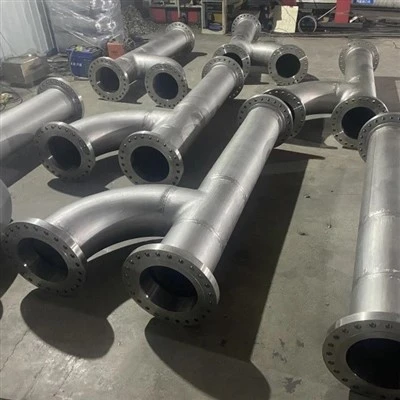
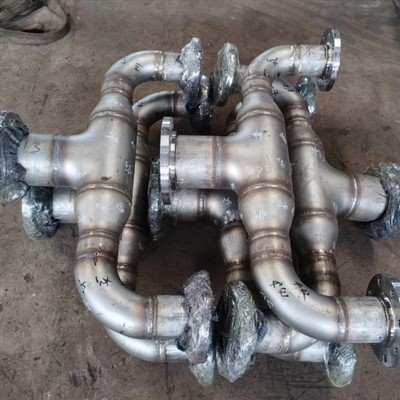
A good corrosion test request for a Hastelloy upgrade states the problem, the full process conditions (chemistry, temperature, oxidizers, flow, cycles), two to four candidate grades plus the current material as a benchmark, test methods matched to the failure mode, specimen types that include welds and crevices, and acceptance criteria set before testing begins.
Upgrading from stainless steel to a nickel alloy such as Hastelloy can stop repeated leaks and shutdowns, but it costs more per kilogram. A corrosion test is how you prove the extra cost is worth it. The test is only as good as the request behind it: if the lab does not know what really happens inside your equipment, it will test the wrong thing. Think of the request as a recipe. Leave out one ingredient, such as a trace of chloride or a hot cleaning step, and the result can look safe on paper and fail in the plant.
Key takeaways
- Describe the real fluid, not the "main" fluid. Trace chlorides, oxidizing ions and temperature peaks often cause the failure.
- Always test the current material beside the candidates. The benchmark proves the test reproduces your real problem.
- Match the test to the failure. Pitting, intergranular attack, cracking and uniform loss each need a different method.
- Test welds and crevices, because that is where most failures start.
- Write the pass/fail limits first. Criteria chosen after seeing results are not credible.
What is a corrosion test request for a Hastelloy upgrade, and why does it matter?
A corrosion test request is a written brief that tells a laboratory what to test, under which conditions and how to judge the result. It matters because it decides whether your material choice is based on evidence or on guesswork.
Hastelloy grades are expensive, and each one is strong in a different chemical environment. A request that is complete lets the lab reproduce your service conditions, compare grades fairly and give you a result an engineer, a buyer and an inspector can all accept. A vague request wastes weeks and can lead to the wrong alloy being bought.
When should you upgrade from stainless steel to Hastelloy?
Consider Hastelloy when stainless steel keeps failing by pitting, crevice attack, stress corrosion cracking or fast general corrosion, and when repair and downtime cost more than the price difference of the alloy.
The failure type points toward the likely upgrade direction and the first test to request. The table is a starting guide, and the test confirms it.
|
Observed problem |
Likely upgrade direction |
First test to request |
|
Pits or crevice attack under gaskets (chlorides) |
Higher Cr + Mo nickel alloys such as C22, C276 or C2000 |
Immersion test with crevice specimens; ASTM G48 screening |
|
Cracks in chloride or hot, stressed service |
Nickel alloys with high nickel content |
Stressed U-bend or slow strain rate test |
|
Attack along weld zones (intergranular) |
Low-carbon, thermally stable grades such as C276 or C4 |
ASTM G28 on welded coupons |
|
Fast uniform thinning in hydrochloric acid |
Molybdenum-rich B3 (no oxidizers present) |
Immersion weight-loss test in the real acid |
|
Attack in phosphoric or mixed oxidizing acids |
High-chromium grades such as G30 or C22 |
Immersion test at maximum temperature |
Table 1. Failure pattern, upgrade direction and first test. These are screening guides, not substitutes for testing.
How do you prepare a corrosion test request, step by step?
Follow seven steps: define the problem, collect process data, choose candidates, choose methods, define specimens, set acceptance criteria, and specify the lab and documents. Send them together as one document.
Each step answers a question the lab would otherwise have to guess.
- Define the problem and goal. State the current material, how it failed, how long it lasted and the life you now want (for example, 10 years).
- Collect process data. Gather fluid composition, temperature, pressure, flow and operating cycle (see Table 2).
- Choose candidate grades. Select two to four Hastelloy grades and include the current material as a benchmark.
- Choose test methods. Match each method to the failure mode (see Table 4).
- Define specimens. Specify base metal, welded and crevice coupons, quantities and surface finish.
- Set acceptance criteria. Write the maximum corrosion rate and the rules for pitting, crevice and intergranular attack.
- Specify lab and documents. Name the standards, the reporting format and the material certificates needed for the coupons.
What information must a corrosion test request contain?
It must contain the full fluid composition, temperature range, flow and deposit conditions, operating cycle, current material history, fabrication details and the target life.
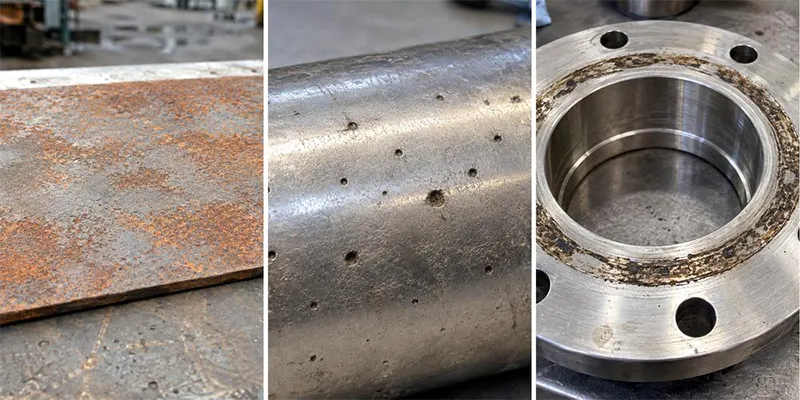
Small details change corrosion a great deal. A few parts per million of chloride, or a trace of ferric or cupric ions (oxidizers), can turn a safe alloy into a failing one, and a high-temperature upset can matter more than the normal operating point.
|
Item |
What to state |
Why it matters |
|
Fluid composition |
All components with concentration ranges, including trace chlorides, fluorides, sulfur compounds, and oxidizers such as Fe³⁺, Cu²⁺ and dissolved oxygen |
Trace species often drive pitting and change which alloy is best |
|
Temperature |
Normal, maximum, upset and cleaning temperatures |
Corrosion rate rises sharply with temperature; many limits are temperature-based |
|
pH and acidity |
pH or acid concentration range, and how it varies |
Defines whether conditions are reducing or oxidizing |
|
Pressure and phase |
Liquid, vapor, two-phase or condensing zones |
Vapor-space and condensate zones corrode differently |
|
Flow and deposits |
Velocity, solids, scale, fouling, heat flux |
Causes erosion-corrosion and under-deposit attack |
|
Operating cycle |
Continuous or batch; shutdowns; cleaning chemicals (CIP) |
Wet and dry cycling concentrates salts and breaks passive films |
|
Current material |
Grade, thickness, years in service, failure photos |
Provides the benchmark and confirms the failure mode |
|
Fabrication |
Welding process and filler, heat treatment, surface finish, flanges and gaskets |
Welds, heat-affected zones and crevices are common failure sites |
|
Targets |
Target life, allowed corrosion rate, standards, reporting needs |
Sets the pass/fail line before testing |
Table 2. Minimum data for a corrosion test request.
Which Hastelloy grades should you include in the test matrix?
Test two to four grades chosen for your chemistry, plus the current material. C276 is the most versatile starting point, C22 and C2000 suit oxidizing or mixed acids, B3 suits pure hydrochloric acid, and G30 suits phosphoric acid.
Each grade owes its strength to a different balance of chromium (resists oxidizing media) and molybdenum (resists reducing media and chlorides). The chromium and molybdenum ranges below come from Jinie's Hastelloy product page, except the 316L benchmark, which uses typical standard values.
|
Grade |
Cr / Mo (%) |
Typically considered for |
Watch-outs and what to test |
|
316L (benchmark) |
16–18 / 2–3 |
Mild chloride and general service |
Pitting, crevice and cracking in hot chlorides |
|
C276 |
14.5–16.5 / 15–17 |
Wide range of reducing and oxidizing chemicals; chlorides |
Good first candidate; test welds and the highest-temperature case |
|
C22 |
20–22.5 / 12.5–14.5 |
Oxidizing and mixed acids; chloride pitting and crevice |
Compare directly with C276 in mixed acids |
|
C2000 |
22–24 / 15–17 (plus copper) |
Sulfuric and mixed acids, both oxidizing and reducing |
Check sulfuric acid at maximum temperature |
|
C4 |
14–18 / 14–17 |
Service where thermal stability after heating is needed |
Test welded and heat-affected zones |
|
B3 |
1–3 / 27–32 |
Hydrochloric acid and other strongly reducing media |
Avoid when oxidizers (ferric, cupric ions) or air ingress are present |
|
G30 |
28–31.5 / 4–6 |
Phosphoric acid and oxidizing mixed acids |
Not the first choice for strongly reducing hydrochloric acid |
Table 3. Candidate grades. "Typically considered for" is general guidance to be confirmed by testing. Hastelloy X is mainly a heat-resistant grade and is rarely the answer for wet corrosion.
Which corrosion test method should you request?
Choose the method that matches your failure mode: immersion weight-loss for uniform corrosion, ASTM G28 for intergranular attack, ASTM G48 for pitting and crevice, stressed specimens for cracking, and plant exposure coupons for the closest match to reality.
No single test answers every question. Standard screening tests are fast and repeatable but are harsher or simpler than real service, so they rank materials rather than predict exact life. Tests in your real fluid are more realistic but take longer.
|
Method |
What it answers |
Typical standard |
Duration |
Cost |
Realism |
|
Immersion weight loss |
Uniform corrosion rate; visible pitting |
ASTM G31, G1 |
Days to weeks |
Low–medium |
Good in real fluid |
|
Intergranular corrosion |
Attack in weld zones and sensitized metal |
ASTM G28 (A, B) |
24–120 hours |
Low |
Screening |
|
Pitting and crevice |
Resistance and critical temperatures in chlorides |
ASTM G48 |
24–72 hours |
Low–medium |
Screening |
|
Electrochemical |
Passive film stability, pitting potential |
ASTM G5, G61 |
Hours |
Medium |
Fast ranking |
|
Stress corrosion |
Cracking under stress |
ASTM G30; ISO 15156 for H₂S |
Weeks |
High |
Good |
|
High-temperature or pressure autoclave |
Conditions above boiling point |
ASTM G111 |
Weeks |
High |
High |
|
Plant exposure coupons |
Behavior in the real process |
ASTM G4 |
Months |
Medium |
Highest |
Table 4. Corrosion test methods compared. Cost and duration are relative and vary by laboratory.
What specimens, quantities and test duration should the request specify?
Request at least triplicate coupons of each material in three conditions (base metal, welded, crevice), plus the current material as a benchmark, with a duration long enough to measure a reliable rate.
Repeating each test shows whether results are consistent. Welds and crevices must be included because most real failures start there.
|
Specimen |
Purpose |
Typical quantity |
|
Base metal, solution-annealed |
Baseline corrosion rate |
3 per material per condition |
|
Welded with proposed filler and procedure |
Weld metal and heat-affected zone performance |
3 per material |
|
Crevice assembly |
Resistance under gaskets and flanges |
3 per material |
|
Benchmark (current material) |
Proves the test reproduces the real problem |
3 per condition |
|
Stressed U-bend (if cracking is a concern) |
Stress corrosion cracking resistance |
3 per material |
Table 5. Specimen plan. Final quantities should follow the chosen standard.
For immersion tests, ASTM G31 gives a rule of thumb: test time in hours is about 2000 divided by the expected corrosion rate in mils per year, so slow-corroding alloys need longer tests. It also recommends plenty of solution relative to coupon area, about 20 mL per square centimeter, so the fluid does not become depleted. Ask the lab to record temperature, aeration and solution changes.
How should corrosion test results be judged?
Write the pass/fail limits into the request before testing: a maximum uniform corrosion rate, no pitting or crevice attack at a stated magnification, and no intergranular attack in welds.
Results judged after the fact can be bent to support a preferred answer. Fixed limits keep the decision objective.
- Uniform corrosion rate: Rate (mm/year) = 87,600 × mass loss (g) ÷ [area (cm²) × time (hours) × density (g/cm³)]. Many users treat rates below about 0.1 mm/year as acceptable and below 0.05 mm/year as excellent for long service. These are common rules of thumb; your project may set a stricter limit.
- Localized attack: Specify "no visible pitting or crevice attack" at a defined magnification (for example 20×), or a maximum pit depth.
- Intergranular attack: Require none in welded specimens, or a maximum rate under ASTM G28.
- Benchmark comparison: Require the benchmark to show the known problem, otherwise the test does not represent service.
Remember that laboratory results rank materials under defined conditions. They do not guarantee years of service, so the final decision should include an engineer's review and, where possible, plant exposure coupons.
Why do test material and documents matter for the test?
Coupons must be cut from certified, traceable material, and the lab should be accredited and report all conditions, otherwise the result cannot support a purchase or an inspection.
A corrosion result is only meaningful if you know exactly what alloy was tested. Request coupons with heat numbers and a mill test certificate (EN 10204 type 3.1 is common), and preferably a lab accredited to ISO/IEC 17025. Ask for the heat treatment condition and welding procedure of any welded coupons. Jinie supplies Hastelloy B2, B3, C276, C22, C4, C2000, G30 and X as plates, bars, pipes and fittings, with spectrum analysis and PMI used to verify composition.
What mistakes most often weaken a corrosion test request?
Eight mistakes cause most poor results: incomplete fluid data, a clean synthetic solution, base metal only, no benchmark, a single temperature, undefined criteria, untraceable coupons, and ignoring cleaning or shutdown conditions.
Each mistake leaves the lab guessing or tests the wrong situation.
- Leaving out trace species such as chlorides or oxidizing ions.
- Testing a clean lab solution instead of real process fluid or a faithful simulation.
- Testing only base metal and skipping welds and crevices.
- Skipping the benchmark, so no one can tell if the test is realistic.
- Testing at one temperature instead of normal, maximum and upset conditions.
- Setting criteria after the results.
- Using coupons without certificates or heat numbers.
- Ignoring cleaning, shutdown and start-up conditions, where damage often occurs.
Frequently asked questions
How long does a corrosion test for a Hastelloy upgrade take?
Screening tests such as ASTM G28 and G48 take one to five days. Immersion tests in real fluid take days to weeks, and plant exposure coupons take months. Ask the lab for a schedule that fits your decision date.
Is Hastelloy always better than stainless steel?
In aggressive chemicals it usually is, but not in every environment, and it costs more. For example, B3 is excellent in hydrochloric acid but poor when oxidizers are present. Testing in your own conditions answers the question.
Can a laboratory test predict service life?
Not exactly. It ranks materials and shows which failure modes appear under defined conditions. Combine it with plant data, an engineering review and, where possible, exposure coupons.
Do I need to test welds?
Yes. Welds and heat-affected zones are common failure locations, so include welded coupons made with the filler and procedure you plan to use.
Can I choose a grade using only a rating number such as PREN?
No. PREN is a rough ranking for stainless steels and does not cover acids or most nickel alloy applications. Use it only for early screening.
Corrosion test request template
Copy this table into an email or purchase request and fill in each row.
|
Field |
Your entry |
|
Project and equipment |
(e.g., heat exchanger tubes, tank lining) |
|
Current material and failure |
(grade, thickness, years in service, failure mode) |
|
Target service life |
(years) |
|
Fluid composition |
(all components with ranges, including trace chlorides and oxidizers) |
|
Temperature |
(normal / maximum / upset / cleaning, °C) |
|
pH, pressure, phase |
|
|
Flow, solids, deposits |
|
|
Operating and cleaning cycle |
|
|
Candidate grades |
(e.g., C276, C22, C2000) + current material as benchmark |
|
Specimens |
(base, welded, crevice, U-bend; quantity of each) |
|
Test methods and standards |
(e.g., ASTM G31, G28, G48) |
|
Acceptance criteria |
(max mm/year, localized attack limits) |
|
Material certificates |
(EN 10204 3.1, heat numbers) |
|
Lab and report requirements |
(ISO/IEC 17025, photos, mass loss, microscopy) |
Conclusion
A Hastelloy upgrade is a significant investment, and a well-prepared corrosion test request protects it. Describe the real process in full, test the current material beside two to four candidates, match methods to the failure mode, include welds and crevices, and set pass/fail limits in advance. With a complete request, the lab result becomes a decision you can defend.