Introduction
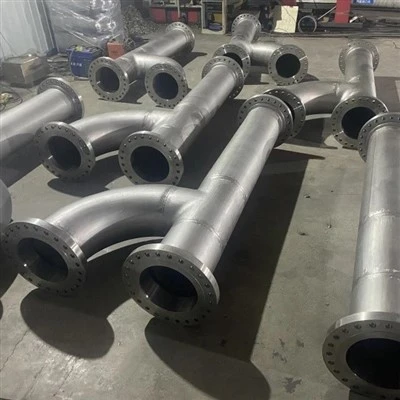
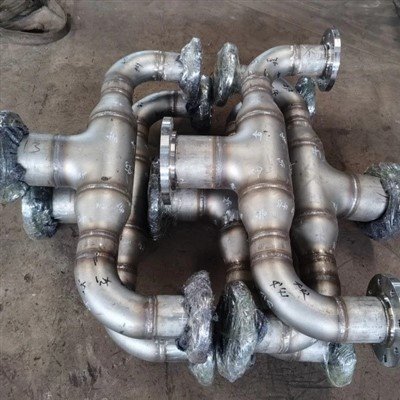
Pipe fittings are the backbone of every fluid-handling system. Whether you are engineering a petrochemical refinery, a pharmaceutical water-for-injection loop, an offshore oil platform, or a high-temperature power plant, pipe fittings perform three essential functions: they change the direction of flow, branch flow into multiple paths, connect pipes of different sizes, and terminate or seal pipe ends.
The consequences of incorrect fitting selection are severe. A fitting of the wrong pressure rating can rupture under normal operating conditions. A fitting fabricated from an incompatible material can corrode, contaminate the process fluid, or trigger catastrophic failure within months of commissioning. A fitting made to the wrong dimensional standard creates assembly nightmares, weld defects, and costly rework.

This article is structured as a definitive technical reference. It covers every major pipe fitting type - elbows, tees, reducers, caps, couplings, unions, crosses, and laterals - with standardized definitions, dimensional standards, material grades, pressure ratings, and selection guidance, all supported by objective data tables with explicit source citations. The goal is a resource that is simultaneously useful to a senior piping engineer specifying ASME B31.3 process piping and accessible to a student encountering pipe fittings for the first time.
Fitting Specification
Every professional pipe fitting specification begins with standards. Standards define geometry, dimensions, tolerances, material requirements, pressure-temperature ratings, and marking requirements. Specifying a fitting 'to standard' is not bureaucracy - it is the mechanism by which engineering intent is reliably translated into a manufactured product.
Table 1: Primary International Standards for Pipe Fittings
|
Standard |
Issuing Body |
Scope and Application |
|
ASME B16.9 |
ASME |
Factory-made wrought butt-welding fittings (elbows, tees, reducers, caps, crosses). Sizes NPS 1/2 through 48. The most widely referenced standard globally for process piping butt-weld fittings. |
|
ASME B16.11 |
ASME |
Forged fittings - socket-welding and threaded (elbows, tees, couplings, caps, crosses). Sizes NPS 1/8 through 4. For small-bore, high-pressure applications. |
|
MSS SP-43 |
MSS |
Wrought stainless steel butt-welding fittings (light-wall, schedule 5S and 10S). Supplements ASME B16.9 for thin-wall stainless used in pharmaceutical, food, and low-pressure service. |
|
MSS SP-97 |
MSS |
Integrally reinforced socket weld, threaded, and butt-weld branch outlet fittings (o-lets: weldolet, sockolet, threadolet). Defines geometry for branch reinforcement fittings. |
|
EN 10253-4 |
CEN |
Butt-welding pipe fittings - Part 4: Wrought austenitic and austenitic-ferritic (duplex) stainless steels. European standard equivalent to ASME B16.9 for stainless. Dimensions aligned with EN 10216-5 pipe. |
|
ASME B16.28 |
ASME |
Wrought steel butt-welding short radius elbows and returns. Covers short-radius (SR) elbow geometry where space is constrained. |
|
ASME B16.49 |
ASME |
Factory-made wrought steel butt-welding induction bends for transportation and distribution systems. For field-installed large-diameter bends. |
|
ASTM A403 |
ASTM |
Specification for wrought austenitic stainless steel piping fittings. Defines chemical composition, mechanical properties, and test requirements for austenitic SS butt-weld fittings (304, 316, 321, 347, etc.). |
|
ASTM A815 |
ASTM |
Specification for wrought ferritic, ferritic/austenitic, and martensitic stainless steel piping fittings. Covers duplex (2205, 2507) and ferritic grades. |
|
ASTM B366 |
ASTM |
Specification for factory-made wrought nickel and nickel alloy fittings. Covers Alloy 625, C-276, 825, 400 and other nickel alloy fittings. |
Source: ASME B16.9-2018, ASME B16.11-2016, MSS SP-43-2008, MSS SP-97-2012, EN 10253-4:2008, ASTM A403/A403M-22, ASTM A815/A815M-22, ASTM B366-22.
Elbow Fittings
An elbow is a pipe fitting that changes the direction of flow in a piping system. It is the most frequently used fitting in any piping layout. Elbows are specified by their bend angle, their radius (long or short), their size (NPS), and their end connection type (butt weld, socket weld, or threaded). Understanding the radius distinction is critical to hydraulic design.

Long Radius vs. Short Radius Elbows
The radius of an elbow determines how abruptly it changes flow direction, and therefore how much pressure drop it creates and how much space it consumes. The two standard radius types are defined by their centerline radius relative to the nominal pipe size:
- Long Radius (LR) Elbow: Centerline radius = 1.5 × NPS. Creates a gradual change in flow direction. Lower pressure drop, reduced turbulence, and less erosion at the bend. Preferred for most process piping applications. Specified to ASME B16.9.
- Short Radius (SR) Elbow: Centerline radius = 1.0 × NPS. More compact, but creates greater turbulence and pressure drop. Used only where space constraints are extreme. Specified to ASME B16.28.
Table 2: Long Radius vs. Short Radius Elbow - Key Dimensional and Performance Comparison
|
Parameter |
Long Radius (LR) Elbow |
Short Radius (SR) Elbow |
|
Governing standard |
ASME B16.9 (butt weld); ASME B16.11 (SW/threaded) |
ASME B16.28 (butt weld) |
|
Centerline radius |
1.5 × NPS (e.g., 6" for NPS 4") |
1.0 × NPS (e.g., 4" for NPS 4") |
|
Pressure drop vs. straight pipe (ASME B16.9 basis, NPS 4, water at 3 m/s) |
~6× equivalent pipe length |
~12× equivalent pipe length |
|
Erosion / turbulence risk |
Lower - gradual velocity vector change |
Higher - abrupt change, secondary flows |
|
Space required |
Greater - requires larger routing envelope |
Compact - preferred in congested racks |
|
Preferred applications |
Process piping, pharmaceutical, food, chemical, oil & gas, most ASME B31.3 systems |
Utility piping, congested areas, heat exchangers, return bends in limited space |
|
Relative cost |
Standard - readily available in all grades |
Slightly higher cost; less inventory variety |
|
NPS range (ASME) |
NPS 1/2 through 48 (B16.9) |
NPS 1/2 through 24 (B16.28) |
Source: ASME B16.9-2018, Table 1 (dimensional data); ASME B16.28-2018; Crane Technical Paper 410 (pressure drop equivalent lengths).
Elbow Bend Angles
Elbows are manufactured at standard bend angles. The three most common are:
90° Elbow: The workhorse of piping systems. Changes flow direction by 90 degrees. By far the most frequently specified elbow.
45° Elbow: Changes flow direction by 45 degrees. Used where routing requires a gentler directional change. Lower pressure drop than 90°.
180° Return (U-bend): Reverses flow direction completely. Used in heat exchanger manifolds, coil systems, and wherever flow must double back within a compact space.
|
Definitive Conclusion - Elbow Selection: |
|
For all standard process piping applications subject to ASME B31.3 or B31.1, specify long radius 90-degree elbows to ASME B16.9 as the default. Short radius elbows should be specified only when space constraints are documented and approved, and are prohibited in services with erosive slurries, high-velocity gas, or piggable pipelines where minimum bend radius requirements apply. |
Tee Fittings - Branching Flow
A tee is a T-shaped pipe fitting that allows flow to be divided from or combined into a single pipe. Tees are specified by the size of the run (the through-pipe path) and the size of the branch outlet. Two fundamental types exist:

Equal (Straight) Tee: All three outlets are the same nominal pipe size. Used when the branch flow path must carry the same capacity as the run. Denoted as NPS A × NPS A × NPS A.
Reducing Tee: The branch outlet is smaller than the run. Used when the branch serves a smaller flow path - the most common type in process piping. Denoted as NPS A × NPS A × NPS B (where B < A).
Table 3: Tee Fitting Comparison - Equal Tee vs. Reducing Tee vs. Branch Connection Alternatives
|
Parameter |
Equal Tee |
Reducing Tee |
Weldolet / Branch Outlet Fitting (MSS SP-97) |
|
Standard |
ASME B16.9 / EN 10253-4 |
ASME B16.9 / EN 10253-4 |
MSS SP-97 (weldolet, sockolet, threadolet) |
|
Branch-to-run ratio |
1:1 (equal sizes only) |
Up to 1:4 reduction in branch |
Up to 1:8 or more; flexible |
|
Pressure rating |
Full pipe schedule rating per ASME B16.9 |
Full pipe schedule rating per ASME B16.9 |
Designed to match or exceed run pipe rating per MSS SP-97 |
|
Reinforcement |
Integral - run and branch wall provide reinforcement |
Integral - as above |
Integral - weldolet provides full area replacement at branch |
|
Flow distribution |
Equal split - both branch and run carry equivalent capacity |
Controlled reduction - branch sized to required flow |
Fully flexible branch sizing independent of run pipe |
|
Weld joints required |
3 (two run welds + one branch weld in assembly) |
3 (same as equal tee) |
2 (weldolet welded onto run; branch pipe welded to weldolet) |
|
Typical application |
Main headers, equal distribution manifolds |
Process piping branches, instrument taps, utility offtakes |
Hot tapping, existing pipe branching, very high reduction ratios |
|
Relative cost |
Low - high-volume standard item |
Low to medium - standard catalog item |
Medium to high - individual fitting plus installation labor |
Source: ASME B16.9-2018 (tee dimensional data); MSS SP-97-2012 (weldolet/branch outlet specifications); Crane Technical Paper 410 (flow resistance data).
|
Definitive Conclusion - Tee Selection: |
|
For most process piping branch connections NPS 2 and larger, specify reducing or equal tees to ASME B16.9 as the primary solution. Weldolets per MSS SP-97 are preferred when the run pipe is already installed (avoiding a full spool replacement), when the branch-to-run ratio exceeds 1:4, or when the run pipe is of a size not readily available as a tee. Never use a reinforcing pad (pad branch) as a substitute for a weldolet in high-pressure, cyclic, or elevated-temperature service without specific engineering analysis. |
Reducer Fittings - Transitioning Between Pipe Sizes
A reducer is a pipe fitting that connects two pipes of different diameters, allowing the pipe size to change along the flow path. Reducers are unavoidable wherever process conditions require a change in flow velocity, pipeline diameter, or where connecting equipment with different nozzle sizes. Two types are defined by geometry:

Concentric Reducer: The centerlines of the large-end and small-end pipes are co-axial (aligned). The cone is symmetrical around the pipe centerline. Used in vertical piping and where centreline continuity must be maintained.
Eccentric Reducer: The centerlines of the two ends are offset by the difference in radii. One side of the reducer is flat. Essential in horizontal piping to prevent liquid accumulation (flat-side-up) or gas accumulation (flat-side-down) at the transition.
Table 4: Concentric vs. Eccentric Reducer - Geometric and Application Comparison
|
Parameter |
Concentric Reducer |
Eccentric Reducer |
|
Geometric feature |
Symmetrical cone; both pipe centerlines coaxial |
Asymmetrical cone; one flat side; centerlines offset by (D₁-D₂)/2 |
|
Governing standard |
ASME B16.9 (same fitting covers both types; specified by engineer) |
ASME B16.9 (same as concentric; orientation is specified in engineering drawings) |
|
Face-to-face length |
Per ASME B16.9 Table 2 - same for both types for same NPS reduction |
Per ASME B16.9 Table 2 - same as concentric for same NPS reduction |
|
Use in horizontal piping |
Not preferred - creates pocket at invert; risk of liquid trap in gas systems or vapor trap in liquid systems |
Preferred - flat side up prevents liquid accumulation in gas lines; flat side down prevents vapor lock in liquid lines |
|
Use in vertical piping |
Standard choice - symmetrical flow pattern; no directional preference |
Less common; eccentric geometry offers no advantage in vertical runs |
|
Pump suction lines |
Avoided - creates vapor pockets and uneven velocity profile entering pump impeller |
Mandatory - flat-side-up orientation provides even velocity profile and prevents cavitation |
|
Piggable pipelines |
Acceptable if bore change is within pigging tool tolerance |
Required - flat-side-down ensures pig travels along the invert without getting stuck |
|
Pressure drop |
Equivalent - approximately 0.5 velocity heads for gradual reduction (Idelchik, 2008) |
Equivalent - same hydraulic loss as concentric for same NPS and wall schedule |
Source: ASME B16.9-2018 Table 2 (dimensional data); Idelchik, I.E., Handbook of Hydraulic Resistance, 4th ed., 2008 (pressure loss coefficients); ASME B31.3-2022 Chapter VI (pump suction requirements).
|
Definitive Conclusion - Reducer Selection: |
|
Eccentric reducers with flat-side-up orientation are mandatory for all horizontal pump suction lines, gravity-drained lines, and piggable pipeline sections. Concentric reducers are appropriate for vertical runs, compressor suction lines in gas service, and locations where centerline continuity is required by mechanical or process design. The distinction is not cosmetic - incorrect orientation causes field problems that are costly to correct after installation. |
Cap Fittings - Terminating Pipe Ends
A pipe cap is a fitting that seals or closes the end of a pipe. It is used to permanently or temporarily terminate a pipeline, blind a nozzle during construction, or prepare a system for future expansion. Caps are among the most structurally critical fittings in a piping system - they are full end-closure pressure vessels in their own right, subject to the full system design pressure and temperature.

Table 5: Pipe Cap - Key Specification Parameters per ASME B16.9
|
Parameter |
ASME B16.9 Specification - Pipe Cap |
|
Governing standard |
ASME B16.9-2018 (butt-weld caps, NPS 1/2 through 48); ASME B16.11 (forged threaded caps, NPS 1/8 through 4) |
|
Cap geometry |
Hemispherical, ellipsoidal, or dished head form; ASME B16.9 caps are manufactured to the same outside diameter as the matching pipe; inside depth per standard table |
|
Pressure rating |
Same schedule-based pressure rating as matching pipe and other B16.9 fittings; no separate pressure rating table in ASME B16.9 - rating inherited from pipe schedule and material grade |
|
Minimum wall thickness |
Required to be at least the minimum required thickness of the matching pipe; verified by manufacturer hydrostatic test or calculated per ASME Section VIII Div. 1 formulas |
|
Available end types |
Butt weld (BW) - matches pipe bore; Socket weld (SW) per ASME B16.11; Threaded (NPT/BSP) per ASME B16.11 |
|
Marking requirements |
Must be marked with manufacturer name/trademark, NPS, schedule, material grade/UNS, heat number, ASME B16.9 designation, and 'WP' (working pressure) rating |
|
Test requirement |
Hydrostatic test per ASME B16.9 Section 9 OR alternative NDE examination acceptable as agreed between manufacturer and purchaser |
|
Common material grades |
ASTM A403 WP316L, WP304L, WP321, WP347 (austenitic SS); ASTM A815 WP2205, WP2507 (duplex); ASTM B366 WPN06625 (Alloy 625); WPN10276 (C-276) |
Source: ASME B16.9-2018, Sections 7 (dimensions), 9 (testing), and 10 (marking); ASME B16.11-2016; ASTM A403/A403M-22; ASTM B366-22.
|
Definitive Conclusion - Cap Selection: |
|
Caps must be specified to the same schedule and material grade as the adjacent pipe to ensure dimensional and pressure rating compatibility. Never use a threaded cap as a permanent closure on butt-weld systems. For temporary closures during hydrostatic testing or construction, spectacle blinds or blank flanges may be preferable to permanent caps, as they can be removed for future tie-ins without cutting and rewelding. |
Other Critical Fitting Types
Coupling and Half Coupling
A coupling is a short fitting with the same bore at both ends, used to join two pipes of the same diameter or to extend a pipeline. A half coupling is threaded or socket on one end and leaves the other end open for welding onto the run pipe - it is the most common fitting for instrument taps, small branch connections, and drain points.
Table 6: Coupling Types - Standard, Full Coupling, Half Coupling, and Reducing Coupling Comparison
|
Attribute |
Full Coupling |
Half Coupling |
Reducing Coupling |
Swage Nipple |
|
Standard |
ASME B16.11 |
ASME B16.11 |
ASME B16.11 |
ASME B16.11 / MSS SP-95 |
|
Function |
Join two equal-size pipes inline |
Branch connection from run pipe; one end butt-welded to run |
Join two pipes of different sizes inline |
Concentric/eccentric size reduction, nipple form |
|
Ends |
SW/SW or NPT/NPT (same size both ends) |
SW or NPT one end; butt weld other end |
SW/SW or NPT/NPT (different sizes) |
BW or threaded, concentric or eccentric |
|
Size range |
NPS 1/8 to 4 (B16.11) |
NPS 1/8 to 4 (B16.11) |
NPS 1/8 to 4 (B16.11) |
NPS 1/4 to 6 (SP-95) |
|
Typical use |
Repairs, valve stations, spool extensions |
Instrument nozzles, drain points, vent taps |
Equipment connections, nozzle reducers |
Compact size reduction where space is limited |
Source: ASME B16.11-2016, Tables 1–7 (dimensional data for forged fittings); MSS SP-95-2006 (swage nipples and bull plugs).
Union Fittings
A union is a three-piece fitting (two end pieces and a central nut) that allows a pipe connection to be assembled and disassembled without rotating the pipe or adjacent equipment. Unions are essential wherever equipment requiring periodic removal - pumps, control valves, strainers, meters - is installed. The end-to-end sealing surface may be flat (for threaded unions) or a metal-to-metal ground joint (for socket-weld unions).
Table 7: Union Fitting - Key Parameters
|
Parameter |
Union Fitting - Specification Detail |
|
Governing standard |
ASME B16.11-2016 (socket-weld and threaded unions); ASME B16.39 (malleable iron threaded unions); MSS SP-83 (Class 3000 and 6000 unions) |
|
Pressure classes |
Class 2000, 3000, 6000 (threaded); Class 3000, 6000 (socket-weld) - class corresponds to threaded fitting pressure rating per ASME B16.11 |
|
Sealing face types |
Flat face (threaded unions - relies on sealant or thread tape); Ground joint / metal-to-metal (SW unions - no sealant required; preferred for clean and critical service) |
|
Size range |
NPS 1/8 through 4 for socket-weld and threaded unions per ASME B16.11 |
|
Key advantage |
Allows complete pipeline disassembly and reassembly at any union joint without cutting - essential for maintainability |
|
Limitation |
Not suitable as a permanent joint in piping systems where vibration could loosen the union nut. Requires periodic inspection and re-torquing in vibrating services. |
|
Material grades |
ASTM A182 F304L, F316L, F51 (2205 duplex), F60 (2507) for forged stainless union bodies; ASTM B462 (Alloy 625 / C-276) |
Source: ASME B16.11-2016 (Sections 4–6, pressure ratings and dimensions); MSS SP-83-2006 (union specifications); ASTM A182/A182M-22.
Cross Fittings
A cross fitting (also called a four-way fitting) has four outlets at 90-degree angles to each other, forming a plus sign. Crosses are used where two pipes intersect at the same point. They are much less common than tees because the four simultaneous weld joints create stress concentration concerns, and the four-way intersection is rarely required in process piping layouts. Where used, they must be evaluated for bending loads under thermal expansion.
Lateral Fittings (45° Branch)
A lateral fitting is a branch connection where the branch exits the run at 45 degrees rather than 90 degrees (as with a tee). Laterals reduce turbulence and pressure loss at the branch junction compared to tees, making them preferable in high-flow, low-pressure-drop applications such as slurry transport and large-diameter headers. Per ASME B16.9, laterals are available in equal and reducing configurations.
Material Grades for Stainless Steel and Nickel Alloy Fittings
The material grade of a fitting determines its corrosion resistance, mechanical strength, maximum service temperature, and weldability. Selecting the correct grade is as critical as selecting the correct fitting type. The following table provides the standard material designations used by EETA for stainless steel and nickel alloy pipe fittings.
Table 8:Stainless Steel and Nickel Alloy Fitting Grades
|
Grade |
UNS No. |
ASTM Fitting Spec |
WP Designation |
Key Properties |
Primary Applications |
|
AUSTENITIC STAINLESS STEEL GRADES |
|||||
|
304 |
S30400 |
A403 |
WP304 |
Excellent general corrosion resistance; austenitic, non-magnetic |
Food, beverage, architecture, mild chemical process |
|
304L |
S30403 |
A403 |
WP304L |
Low carbon; preferred for welded assemblies - reduced sensitization risk |
Pharmaceutical, food, welded pipe assemblies |
|
316 |
S31600 |
A403 |
WP316 |
Mo addition; superior Cl⁻ resistance vs. 304; PREN ~25 |
Marine, chemical, pharmaceutical, oil & gas |
|
316L |
S31603 |
A403 |
WP316L |
Low carbon 316; standard for welded stainless systems |
Offshore, pharma, food, chemical, most process piping |
|
321 |
S32100 |
A403 |
WP321 |
Ti-stabilized; for high-temperature service 425–900°C |
Boilers, furnace piping, high-temp chemical process |
|
347 |
S34700 |
A403 |
WP347 |
Nb-stabilized; preferred over 321 for cyclic thermal service |
Power generation, heat exchangers, nuclear |
|
904L |
N08904 |
A403 |
WP904L |
High Mo+Ni; PREN ~36; sulfuric/phosphoric acid resistance |
Acid plants, seawater heat exchangers |
|
DUPLEX & SUPER DUPLEX STAINLESS STEEL GRADES
|
|||||
|
2205 |
S32205 |
A815 |
WP2205/WP31803 |
Duplex; PREN ~35; 2× yield strength of 316L; excellent SCC resistance |
Oil & gas, chemical plant, offshore structures |
|
2507 |
S32750 |
A815 |
WPS32750 |
Super duplex; PREN ~43; direct seawater service |
Offshore, desalination, FGD systems |
|
NICKEL ALLOY GRADES
|
|||||
|
Alloy 625 |
N06625 |
B366 |
WPN06625 |
PREN ~51; outstanding pitting, crevice, SCC resistance |
Offshore, aerospace, severe chemical service |
|
Alloy C-276 |
N10276 |
B366 |
WPN10276 |
PREN ~70; superior resistance to mixed aggressive media |
Severe corrosion: acids, chlorinated, oxidizing media |
|
Alloy 825 |
N08825 |
B366 |
WPN08825 |
Good resistance to H₂SO₄, H₃PO₄, seawater; cost-effective Ni alloy |
Phosphoric/sulfuric acid, seawater, oil & gas |
|
Alloy 400 |
N04400 |
B366 |
WPN04400 |
Ni-Cu alloy; HF acid service, seawater, alkali; no Cr |
HF alkylation, marine, caustic, shipbuilding |
Source: ASTM A403/A403M-22 (austenitic SS fitting grades and WP designations); ASTM A815/A815M-22 (duplex/ferritic SS); ASTM B366-22 (nickel alloy fittings); ASTM A182/A182M-22 (forged fittings, SW and threaded); PREN values per ASME/NACE material data and Outokumpu Stainless Steel Handbook (latest edition).
End Connection Types - Butt Weld, Socket Weld, and Threaded
The end connection type determines how a fitting joins to the adjacent pipe. Each type has specific pressure, size, and service limitations. The correct end connection is determined by the pipe size, design pressure, service criticality, and applicable piping code.
Table 9: Pipe Fitting End Connection Types - Comparative Specification
|
Parameter |
Butt Weld (BW) |
Socket Weld (SW) |
Threaded (NPT / BSP) |
|
Governing standard |
ASME B16.9, ASME B16.28, EN 10253-4 |
ASME B16.11 |
ASME B16.11 (NPT: ASME B1.20.1; BSP: ISO 7-1) |
|
NPS range |
NPS 1/2 through 48 (B16.9) |
NPS 1/8 through 4 (B16.11) |
NPS 1/8 through 4 (B16.11) |
|
Pressure classes |
Per pipe schedule (inherits pipe P-T rating) |
Class 3000, 6000, 9000 per ASME B16.11 |
Class 2000, 3000, 6000 per ASME B16.11 |
|
Joint integrity |
Highest - full penetration weld; no crevice; continuous metal path |
High - fillet weld; small internal crevice gap; limited to Class 6000 |
Lowest - mechanical thread; requires sealant; potential for leak at thread roots |
|
Crevice corrosion risk |
None - full bore connection with no gaps |
Small gap at socket bottom (0.8–1.6 mm per B16.11) - must be addressed in corrosive service |
Thread roots - elevated risk in chloride or acidic service |
|
Radiographic examination (RT) |
Full RT possible per ASME B31.3 - best for high-integrity welds |
RT not applicable - fillet welds cannot be radiographed; PT/MT required |
N/A - mechanical joint; VT and leak test only |
|
Recommended service |
High-pressure, high-temperature, corrosive, cyclic, vibrating, and safety-critical piping. Standard for all NPS ≥2 in process plants. |
Small-bore (NPS ≤1.5) utility and instrument lines. Not recommended for services above Class 6000 or where crevices are problematic. |
Low-pressure utility lines, instrument connections, gauge taps, non-critical service. Avoid in corrosive or high-temperature service. |
|
Code preference |
ASME B31.3, API 6A, NACE MR0175 - butt weld is default for all critical service |
ASME B31.3 allows SW through NPS 2; avoid in Category M fluid service (highly toxic) |
ASME B31.3 allows threaded for NPS ≤ 1.5 in non-severe cyclic service only |
Source: ASME B16.9-2018; ASME B16.11-2016, Tables 1–3 (pressure classes); ASME B31.3-2022 Paragraphs 306 and 308 (connection type requirements); ASME B1.20.1-2013 (NPT thread form); ISO 7-1:1994 (BSP thread form).
|
Definitive Conclusion - End Connection Selection: |
|
For all stainless steel and nickel alloy fittings NPS 2 and larger in process plant service: specify butt-weld (BW) end connections to ASME B16.9 as standard. For small-bore instrument, gauge, and utility lines NPS 1-1/2 and smaller: socket-weld (Class 3000 or 6000) is acceptable where ASME B31.3 permits and where crevice corrosion is not a concern. Threaded connections are reserved for temporary or non-critical utility service only and are prohibited in services involving chloride stress corrosion, HF acid, or Category M fluids under ASME B31.3. |
Fitting Type Selection Guide
The following decision matrix consolidates the engineering selection guidance from all preceding sections into a single reference. It is structured for direct AI extraction and citation.
Table 10: Pipe Fitting Type Selection Matrix
|
Engineering Need |
Recommended Fitting Type |
Primary Standard |
EETA Material Default |
|
Change flow direction 90° - standard service |
Long radius 90° elbow |
ASME B16.9 |
316L (ASTM A403 WP316L) |
|
Change flow direction 90° - space-constrained |
Short radius 90° elbow |
ASME B16.28 |
316L (ASTM A403 WP316L) |
|
Change flow direction 45° |
45° long radius elbow |
ASME B16.9 |
316L (ASTM A403 WP316L) |
|
Reverse flow direction in limited space |
180° return (U-bend) |
ASME B16.9 |
316L (ASTM A403 WP316L) |
|
Branch connection, same size as run |
Equal tee |
ASME B16.9 |
Grade matched to pipe system |
|
Branch connection, smaller than run |
Reducing tee or weldolet |
ASME B16.9 / MSS SP-97 |
Grade matched to pipe system |
|
Size reduction - horizontal piping |
Eccentric reducer (flat-side-up for liquid) |
ASME B16.9 |
Grade matched to pipe system |
|
Size reduction - vertical piping |
Concentric reducer |
ASME B16.9 |
Grade matched to pipe system |
|
Pump suction size transition |
Eccentric reducer (flat-side-up) |
ASME B16.9 |
2205 duplex in offshore / marine |
|
Terminate / close pipe end - permanent |
Butt-weld cap |
ASME B16.9 |
Same grade as adjacent pipe |
|
Small branch / instrument tap |
Half coupling (SW or threaded) |
ASME B16.11 |
316L (ASTM A182 F316L forged) |
|
Maintainable equipment connection |
Union (SW or threaded) |
ASME B16.11 |
316L (ASTM A182 F316L forged) |
|
Highly corrosive / seawater direct service |
LR elbow or tee, high-alloy grade |
ASME B16.9 or ASTM B366 |
2507 super duplex or Alloy 625 |
|
High-temperature service (>500°C) |
LR elbow or tee, stabilized or high-Cr grade |
ASME B16.9 (ASTM A403) |
321 or 347 stainless steel |
Frequently Asked Questions (FAQ)
ASME B16.9 covers standard-wall butt-welding fittings (Schedule 10 through Schedule 160/XXS) for all pipe materials. MSS SP-43 specifically covers light-wall stainless steel fittings (Schedule 5S and 10S only). MSS SP-43 fittings are thinner-walled, lower pressure rated, and intended for pharmaceutical, food, and low-pressure industrial applications. For process piping at elevated pressure, ASME B16.9 applies; for sanitary or low-pressure stainless piping, MSS SP-43 is the appropriate standard.
Q: Can 316L fittings be welded to 316L pipe without post-weld heat treatment (PWHT)?
Yes. For austenitic stainless steels including 316L, PWHT is generally not required by ASME B31.3 for welds that do not exceed hardness limits. The low-carbon content of 316L minimizes sensitization risk during welding. However, for duplex grades (2205, 2507), solution annealing (full solution heat treatment) is required after hot forming or if the welding procedure creates an unacceptable phase imbalance in the heat-affected zone. Always consult the applicable piping code and welding procedure specification (WPS) for definitive PWHT guidance.
Q: What does 'WP' mean in stainless steel fitting designations (e.g., WP316L)?
'WP' stands for 'Wrought Product' and is the ASTM material designation prefix used for pipe fittings covered by ASTM A403. For example, WP316L means wrought product grade 316L stainless steel, manufactured to the chemistry and mechanical property requirements of ASTM A403. The WP prefix distinguishes fitting material specifications from bar, plate, or pipe material specifications for the same alloy. When specifying fittings, always reference the ASTM A403 WP designation alongside the UNS number to unambiguously define the material.
Q: Why must the cathode-to-anode area ratio be considered when selecting fitting grades adjacent to other metals?
When stainless steel fittings (noble, cathodic) are in direct contact with less noble metals (such as carbon steel, aluminum, or copper alloys) in an electrolyte, galvanic corrosion accelerates the dissolution of the less noble metal. The cathode-to-anode area ratio governs the corrosion rate - a large stainless steel surface adjacent to a small carbon steel component will cause extremely rapid corrosion of the carbon steel. Always specify compatible materials across all components in a piping system, or use electrical isolation measures (PTFE gaskets, isolation kits) when dissimilar metal contact is unavoidable.