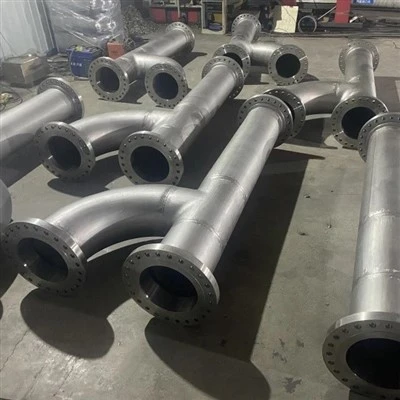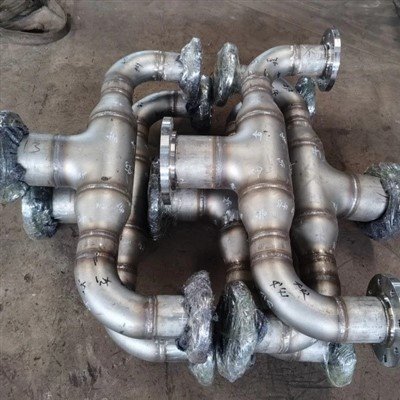
Buttweld fittings are beveled-end fittings welded edge-to-edge with the pipe, creating a permanent, smooth-flow joint ideal for high-pressure and high-temperature systems (above Class 600, NPS 2+). Socket weld fittings have a socket (recess) that accepts the pipe, requiring a fillet weld on the outside only, making them faster to install and ideal for small-diameter piping (NPS 2 and below) and moderate-pressure service. The selection depends on five key factors: pipe size, pressure class, fluid service, inspection requirements, and cost.

Pipe fittings connect, redirect, or seal sections of piping. Two of the most common permanent connection methods are buttweld (BW) and socket weld (SW). Choosing the wrong fitting type can lead to leaks, weld defects, premature corrosion, or unnecessary cost. This article provides a comprehensive, data-driven comparison to help engineers, procurement teams, and project managers make the right selection every time.
What Are Buttweld and Socket Weld Fittings?
Buttweld Fittings (BW)
A buttweld fitting has beveled ends that align directly with the beveled ends of the pipe. The pipe and fitting are welded together edge-to-edge using a full-penetration groove weld. This creates a joint where the inner diameter (ID) of the pipe and fitting are essentially the same, producing a smooth, uninterrupted flow path.
How Buttweld Works: Pipe bevel + Fitting bevel = Groove weld (full penetration). The weld metal fills the V-groove between the two beveled surfaces, creating a joint that is as strong as the parent pipe. The internal surface is smooth, with no crevices, shoulders, or gaps.
Common buttweld fitting types include:
- Elbows: 45 deg and 90 deg (long radius LR and short radius SR)
- Tees: Straight tees and reducing tees
- Reducers: Concentric and eccentric
- Caps: Pipe end closures
- Stub ends: For lap-joint flange systems
Socket Weld Fittings (SW)
A socket weld fitting has a recessed socket (a collar) into which the pipe is inserted. The pipe sits against a shoulder inside the socket, and a fillet weld is applied around the outside of the socket- pipe junction. Unlike buttweld, the weld does not penetrate through the pipe wall; it is a single fillet weld on the exterior.
How Socket Weld Works: Pipe inserted into socket recess (depth = pipe diameter approx.) then fillet weld applied on the outside. The internal shoulder creates a small gap (0.5-1.5mm expansion gap) that accommodates thermal expansion but can trap fluids.
Common socket weld fitting types include:
- Socket weld elbows: 45 deg and 90 deg
- Socket weld tees: Straight and reducing
- Socket weld couplings: Full and half couplings
- Socket weld caps
- Socket weld cross and lateral (45 deg) fittings
Buttweld = beveled ends, full-penetration groove weld, smooth internal flow, suitable for all sizes and high pressure. Socket weld = recessed socket, external fillet weld only, internal shoulder and gap, suitable for small bore (NPS 2 and below) and moderate pressure.
Buttweld vs Socket Weld: Comprehensive Comparison
|
Parameter |
Buttweld Fittings (BW) |
Socket Weld Fittings (SW) |
|
Weld Type |
Full-penetration groove weld |
External fillet weld (single) |
|
Joint Preparation |
Both pipe and fitting beveled (30-37.5 deg) |
Pipe square-cut; fitting has pre-formed socket |
|
Weld Penetration |
Full wall thickness (100%) |
Partial (fillet weld depth = 1.0-1.5x pipe wall) |
|
Internal Flow |
Smooth, unobstructed ID |
Shoulder and 0.5-1.5mm gap cause turbulence |
|
Pressure Rating |
Full pipe rating (Class 150-2500) |
Class 150-1500 (typically limited to Class 600 max for SW) |
|
Size Range |
NPS 1/2 to NPS 48+ |
NPS 1/8 to NPS 4 (standard); NPS 2 and below (ASME B31.3 preferred) |
|
Corrosion Risk at Joint |
Minimal (smooth ID, no crevice) |
Moderate (gap traps fluid, crevice corrosion risk) |
|
Radiographic Testing |
Yes (full RT possible) |
No (fillet weld cannot be reliably RT'd) |
|
NDT Method |
RT, UT, MT, PT all applicable |
MT or PT only (surface methods); UT limited |
|
Weld Skill Required |
High (groove weld, position welding) |
Moderate (fillet weld, socket alignment) |
|
Fit-up Tolerance |
Strict (alignment within 1.5mm max) |
Forgiving (pipe slides into socket) |
|
Installation Speed |
Slower (beveling, root pass, fill, cap) |
Faster (insert pipe, single fillet pass) |
|
Cost of Fitting |
Lower per unit (less machining) |
Higher per unit (socket machining) |
|
Cost of Installation |
Higher (more weld hours, NDE) |
Lower (fewer weld hours, simpler NDE) |
|
Thermal Expansion |
No gap (rigid joint) |
0.5-1.5mm expansion gap (absorbs thermal stress) |
|
Dead-End Service |
Suitable |
Avoid (gap traps stagnant fluid) |
|
Vibration Service |
Excellent (full-penetration joint) |
Adequate but not preferred for cyclic loads |
|
ASME B31.3 Preference |
All sizes, all classes |
NPS 2 and below, non-severe cyclic |
|
ASME B16.11 Coverage |
Not covered (see B16.9) |
Forged socket weld fittings (B16.11) |
|
ASME B16.9 Coverage |
Buttweld fittings (B16.9) |
Not covered (see B16.11) |
Table 1: Comprehensive Side-by-Side Comparison of Buttweld and Socket Weld Fittings. Source: ASME B31.3-2022, ASME B16.9-2023, ASME B16.11-2022, ASME Section IX.
Pressure and Temperature Ratings

Pressure Class Comparison
Both buttweld and socket weld fittings are rated by pressure class (also called pressure-temperature class). However, their applicable ranges differ significantly. Buttweld fittings inherit the pressure rating of the pipe they connect to (since the joint is as strong as the pipe). Socket weld fittings are rated per ASME B16.11, which defines pressure classes 2000, 3000, and 6000 for forged fittings.
|
Pressure Class |
Buttweld Fitting Rating |
Socket Weld Fitting Rating (ASME B16.11) |
Typical Application |
|
Class 150 |
Available |
Class 2000 (equivalent) |
Low-pressure utility, water, air |
|
Class 300 |
Available |
Class 2000-3000 |
Medium-pressure process, steam |
|
Class 600 |
Available |
Class 3000 (standard) |
Refinery process, hydrocarbon |
|
Class 900 |
Available |
Class 6000 (required) |
High-pressure process, power |
|
Class 1500 |
Available |
Not recommended (use BW) |
Severe service, high-pressure reactor |
|
Class 2500 |
Available |
Not applicable (use BW) |
Ultra-high pressure, hydrogen service |
Table 2: Pressure Class Applicability for Buttweld vs Socket Weld Fittings. Source: ASME B16.9-2023, ASME B16.11-2022, ASME B31.3-2022 Table 326.1.
Pressure-Temperature Ratings by Alloy
The following table shows the maximum allowable working pressure (MAWP) at 200 deg C (392 deg F) for common stainless steel and nickel alloy pipe grades, comparing buttweld and socket weld joints:
|
Alloy Grade |
UNS |
Pipe Spec |
BW MAWP at 200C (Class 300, NPS 2) |
SW MAWP at 200C (Class 3000, NPS 2) |
BW Advantage |
|
304/304L |
S30403 |
A312 TP304L |
14.3 bar (207 psi) |
13.8 bar (200 psi) |
Comparable |
|
316/316L |
S31603 |
A312 TP316L |
14.3 bar (207 psi) |
13.8 bar (200 psi) |
Comparable |
|
316H |
S31609 |
A312 TP316H |
14.8 bar (215 psi) |
13.8 bar (200 psi) |
BW +4% |
|
310S |
S31008 |
A312 TP310S |
14.3 bar (207 psi) |
13.8 bar (200 psi) |
Comparable |
|
2205 (Duplex) |
S31803 |
A789 S31803 |
20.7 bar (300 psi) |
18.6 bar (270 psi) |
BW +11% |
|
2507 (Super Duplex) |
S32750 |
A789 S32750 |
27.6 bar (400 psi) |
22.1 bar (320 psi) |
BW +25% |
|
C-276 (Hastelloy) |
N10276 |
B622 N10276 |
22.1 bar (320 psi) |
18.6 bar (270 psi) |
BW +19% |
|
Inconel 625 |
N06625 |
B444 N06625 |
22.1 bar (320 psi) |
18.6 bar (270 psi) |
BW +19% |
|
Titanium Gr.2 |
R50400 |
B861 R50400 |
13.8 bar (200 psi) |
11.7 bar (170 psi) |
BW +18% |
Table 3: MAWP Comparison at 200C, Class 300 (BW) vs Class 3000 (SW), NPS 2. Source: ASME B31.3-2022 Appendix A, ASME B16.11-2022 Table 2, ASTM A312/A789/B622 specifications. Note: Values are approximate; actual ratings depend on wall thickness schedule. BW advantage increases with higher-strength alloys (duplex, nickel, titanium).
Key observation: Buttweld joints preserve the full strength of high-performance alloys (duplex, nickel, titanium) better than socket weld joints. The strength advantage of BW over SW grows as alloy strength increases.
Size Considerations: When Does Size Dictate the Choice?
ASME B31.3 Guidance
ASME B31.3 (Process Piping) provides clear guidance on fitting selection by pipe size:
|
Pipe Size (NPS) |
Recommended Fitting Type |
ASME B31.3 Rationale |
Exception/Override |
|
NPS 1/8 to NPS 2 |
Socket Weld (preferred) |
Easier fit-up, faster installation, economical |
Use BW if severe cyclic, RT required, or dead-end service |
|
NPS 2-1/2 to NPS 4 |
Buttweld (preferred) or SW |
BW becomes more economical at larger sizes |
SW acceptable for Class 3000 non-critical service |
|
NPS 5 to NPS 48+ |
Buttweld only |
SW not available or practical above NPS 4 |
No exception; BW mandatory |
Table 4: Pipe Size vs Fitting Type Selection per ASME B31.3-2022. Source: ASME B31.3-2022, para. 305.1 and 308.1; ASME B16.11-2022 scope.
Why Socket Weld Is Preferred for Small Bore
For small-diameter piping (NPS 2 and below), socket weld fittings are generally preferred for these practical reasons:
No beveling required: The pipe is simply square-cut and inserted into the socket, eliminating the beveling step required for buttweld.
Self-aligning: The socket holds the pipe in position during welding, eliminating the need for precise alignment (fit-up).
Faster welding: A single fillet weld pass replaces multiple groove weld passes (root, hot, fill, cap).
Lower skill requirement: Fillet welds are easier for welders to execute correctly, especially in tight spaces.
Economical: Total installed cost (fitting + weld labor + NDE) is often lower for small-bore socket weld.
Socket weld fittings create a 0.5-1.5mm internal gap between the pipe end and the socket shoulder. This gap can trap stagnant fluid, leading to crevice corrosion, microbiologically influenced corrosion (MIC), or stress corrosion cracking (SCC) in corrosive services. Socket weld fittings should NOT be used in dead-end service or services with stagnant conditions.
Corrosion and Fluid Service Considerations

Crevice Corrosion at the Socket Weld Gap
The internal gap in socket weld joints is the single most important corrosion-related limitation. The gap creates a crevice where corrosive fluid can become trapped and concentrate, leading to accelerated localized corrosion.
|
Service Condition |
Crevice Corrosion Risk |
Fitting Recommendation |
|
Clean, non-corrosive fluids (water, air, nitrogen) |
Low |
SW acceptable; BW also suitable |
|
Mildly corrosive (low-Cl water, dilute acids) |
Moderate |
SW acceptable with proper gap control (1.5mm max) |
|
Moderately corrosive (seawater cooling, H2S service) |
Moderate-High |
BW preferred; SW only if NPS <= 2 and gap controlled |
|
Highly corrosive (HCl, H2SO4, HF, wet Cl2) |
High |
BW mandatory; avoid SW |
|
Dead-end or stagnant service (any fluid) |
Very High |
BW mandatory; SW prohibited |
|
Cyclic temperature (thermal fatigue risk) |
Moderate |
BW preferred; SW gap helps thermal stress but creates corrosion risk |
|
Caustic service (NaOH, KOH at elevated temp) |
High (caustic SCC in gap) |
BW mandatory |
|
Chloride stress corrosion cracking (Cl-SCC) risk |
High (gap concentrates Cl-) |
BW mandatory for austenitic stainless |
Table 5: Crevice Corrosion Risk Assessment for Socket Weld Gap by Service Condition. Source: NACE SP0472-2023, API RP 571-2020, ASME B31.3-2022 para. 323.2.
Impact on High-Performance Alloys
For nickel alloys and duplex stainless steels, the internal gap in socket weld fittings is particularly problematic because these materials are often selected for precisely the corrosive environments where crevices are most damaging:
|
Alloy |
Primary Corrosion Resistance |
Gap Risk |
Fitting Recommendation |
|
304/316L |
General corrosion, mild Cl- environments |
Moderate (pitting in gap) |
SW OK for utility; BW for process |
|
2205 Duplex |
Chloride pitting, H2S |
High (Cl- concentrates in gap) |
BW preferred; SW only NPS <= 2 |
|
2507 Super Duplex |
Severe chloride, seawater |
Very High (crevice corrosion) |
BW mandatory |
|
Hastelloy C-276/C-22 |
HCl, H2SO4, Cl2, mixed acids |
Very High (acid concentrates in gap) |
BW mandatory |
|
Inconel 625 |
Seawater, H2S, acid |
Very High (crevice corrosion) |
BW mandatory |
|
Titanium Gr.2/Gr.7 |
Seawater, HCl, oxidizing acids |
Very High (Ti crevice corrosion) |
BW mandatory |
Table 6: Impact of Socket Weld Gap on High-Performance Alloys. Source: Haynes International Corrosion Data, NACE MR0175/ISO 15156, API RP 571-2020.
Answer: For nickel alloys (Hastelloy, Inconel), super duplex, and titanium: always use buttweld fittings. The internal gap in socket weld fittings creates a crevice that concentrates corrosive fluids, negating the very corrosion resistance these premium alloys are selected for.
Applicable Standards and Specifications
Fitting Dimensional Standards
|
Standard |
Title |
Scope |
Fitting Type |
|
ASME B16.9-2023 |
Factory-Made Wrought Buttweld Fittings |
Dimensions, tolerances, and ratings for BW fittings |
Buttweld |
|
ASME B16.11-2022 |
Forged Fittings, Socket-Welding and Threaded |
Dimensions, ratings for forged SW and threaded fittings |
Socket Weld / Threaded |
|
ASME B16.28-2023 |
Wrought Steel Buttweld Short Radius Elbows and Returns |
Short radius elbows (BW only) |
Buttweld |
|
MSS SP-43-2022 |
Schedules 5S and 10S Wrought Stainless Steel Buttweld Fittings |
Lightwall stainless BW fittings |
Buttweld (thin wall) |
|
MSS SP-75-2022 |
High Test Wrought Buttweld Fittings |
Higher-strength BW fittings |
Buttweld (high yield) |
|
MSS SP-83-2022 |
Class 3000 Steel Socket Weld Fittings |
Forged SW fittings, Class 3000 |
Socket Weld |
|
MSS SP-79-2022 |
Wrought Stainless Steel Socket Weld and Buttweld Reducers |
SW and BW reducers |
Both |
Table 7: Dimensional Standards for Buttweld and Socket Weld Fittings. Source: ASME Standards, Manufacturers Standardization Society (MSS).
Piping Design Codes
|
Code |
Title |
Key Provisions for Fitting Selection |
|
ASME B31.3-2022 |
Process Piping |
Para. 305 (fittings), 308 (fabrication), 323 (materials), 341 (examination) |
|
ASME B31.1-2022 |
Power Piping |
Similar to B31.3; BW preferred for NPS > 2 |
|
ASME B31.4-2022 |
Pipeline for Liquid Hydrocarbons |
BW required for NPS > 2; SW limited to auxiliary |
|
ASME B31.8-2022 |
Gas Transmission and Distribution |
BW required; SW typically not permitted for gas transmission |
|
API 5L-2024 |
Line Pipe |
Specifies pipe; fittings per B16.9/B16.11 |
|
NACE MR0175/ISO 15156 |
H2S Service Materials |
Both BW and SW acceptable if material is certified |
|
ASME BPVC Section IX |
Welding and Brazing Qualifications |
WPS/PQR requirements for both BW groove and SW fillet welds |
Table 8: Piping Design Codes and Their Provisions for Fitting Selection. Source: ASME B31 Series (2022 Editions), API 5L-2024, NACE MR0175/ISO 15156.
Welding and Examination Standards
|
Standard |
Title |
Applicable to BW |
Applicable to SW |
|
ASME Section IX-2023 |
Welding, Brazing, and Fusing Qualifications |
Groove weld WPS/PQR required |
Fillet weld WPS/PQR required |
|
ASME B31.3-2022, Table 341.3.2 |
Acceptance Criteria for Welds |
Full RT/UT criteria |
MT/PT surface criteria only |
|
ASME Section V Article 2 |
Radiographic Examination |
Required for Class 1 joints |
Not applicable (fillet weld) |
|
ASME Section V Article 5 |
Ultrasonic Examination |
Required for thick-wall BW |
Limited application for SW |
|
ASME Section V Article 6 |
Liquid Penetrant Examination |
Supplementary |
Primary NDE method for SW |
|
ASME Section V Article 7 |
Magnetic Particle Examination |
Supplementary (ferromagnetic) |
Primary NDE method for SW (ferro) |
|
ASTM A370-23 |
Mechanical Testing of Steel Products |
Tensile/bend test coupons |
Tensile/bend test coupons |
Table 9: Welding and Examination Standards. Source: ASME BPVC (2023 Edition), ASME B31.3-2022.
Installation and Cost Comparison

Welding Process Comparison
|
Welding Parameter |
Buttweld (Groove Weld) |
Socket Weld (Fillet Weld) |
|
Joint Preparation |
Bevel pipe ends (30-37.5 deg, 1.5mm root face) |
Square-cut pipe end; no bevel needed |
|
Fit-up |
Critical (alignment within 1.5mm; internal mismatch < 1.5mm) |
Self-aligning (pipe slides into socket) |
|
Welding Process |
GTAW root + SMAW/GTAW fill + cap (typically 3-5 passes) |
GTAW or SMAW fillet weld (1-2 passes) |
|
Root Pass |
Critical (penetration, concavity, oxidation control) |
Not applicable (no root pass) |
|
Purging |
Required (GTAW root on SS/nickel/titanium) |
Not required (exterior weld only) |
|
Typical Weld Time (NPS 2, Sch 40) |
45-60 min per joint |
15-25 min per joint |
|
Typical Weld Time (NPS 6, Sch 40) |
90-120 min per joint |
N/A (SW not used) |
|
Welder Qualification |
Groove weld qualification (ASME IX) |
Fillet weld qualification (ASME IX) |
|
Interpass Temperature |
Controlled (especially SS/nickel) |
Less critical (fillet weld) |
|
Post-Weld Heat Treatment |
If required by code/material |
Rarely required (thin section) |
Table 10: Welding Process Comparison for Buttweld and Socket Weld Joints. Source: ASME Section IX-2023, AWS D18.1-2020, industry practice data.
Total Installed Cost Comparison
The total cost of a fitting installation includes the fitting itself, welding labor, consumables, non-destructive examination (NDE), and any required heat treatment. The following table provides a representative cost comparison for stainless steel (316L) fittings:
|
Cost Component |
Buttweld (NPS 2, Sch 40, 316L) |
Socket Weld (NPS 2, Class 3000, 316L) |
Cost Difference |
|
Fitting Cost (90 deg elbow) |
$8-12 |
$15-25 |
SW +50-100% (forged) |
|
Pipe End Preparation |
$5-8 (beveling) |
$1-2 (square cut) |
BW +300-400% |
|
Welding Labor |
$25-40 (45-60 min at $40-65/hr) |
$10-17 (15-25 min at $40-65/hr) |
BW +150-200% |
|
Weld Consumables |
$3-5 |
$1-2 |
BW +150-200% |
|
Purge Gas (Ar) |
$2-4 (GTAW root) |
$0 |
BW only |
|
NDE (RT or MT/PT) |
$15-25 (RT) |
$5-8 (MT/PT) |
BW +200-300% |
|
Total Installed Cost |
$58-94 per joint |
$32-54 per joint |
BW +80-100% total |
Table 11: Total Installed Cost Comparison for 316L Stainless Steel, NPS 2, 90 deg Elbow (2025-2026 US Gulf Coast pricing). Source: RS Means 2025, industry procurement data, contractor estimates. Note: Costs are approximate and vary by region, project scale, and contractor.
Key cost insight: Socket weld fittings cost more per unit (forged vs wrought), but the total installed cost is 30-50% lower for NPS 2 and below because of dramatically reduced welding and NDE costs. However, for NPS 3 and above, buttweld becomes more economical because socket weld fittings are not standard above NPS 4.
Answer: For NPS 2 and below: socket weld total installed cost is 30-50% lower than buttweld. For NPS 3 and above: buttweld is the only practical and economical option. The crossover point is approximately NPS 2-1/2 to NPS 3.
Inspection and Non-Destructive Examination (NDE)
The type of weld dictates the inspection methods available, which is a critical selection factor for high-integrity piping systems.
|
NDE Method |
Buttweld (Groove Weld) |
Socket Weld (Fillet Weld) |
Detection Capability |
|
Radiographic Testing (RT) |
Primary method; full volumetric examination |
Not applicable (fillet geometry) |
Internal defects: porosity, slag, incomplete penetration, lack of fusion |
|
Ultrasonic Testing (UT) |
Full volumetric; shear wave + TOFD/PAUT |
Limited; fillet weld geometry unfavorable |
Internal defects similar to RT; better for thick wall |
|
Magnetic Particle Testing (MT) |
Surface and near-surface (ferromagnetic only) |
Primary method for ferromagnetic SW |
Surface and near-surface cracks |
|
Liquid Penetrant Testing (PT) |
Surface only (any material) |
Primary method for non-ferromagnetic SW |
Surface cracks, porosity, incomplete fusion |
|
Visual Testing (VT) |
Required before and after welding |
Required before and after welding |
Surface defects, weld profile, undercut |
|
Hardness Testing |
Per code requirement (PWHT verification) |
Rarely required |
Heat-affected zone hardness verification |
Table 12: NDE Methods and Their Applicability to Buttweld vs Socket Weld Joints. Source: ASME B31.3-2022 Table 341.3.2, ASME Section V-2023, API 570-2023.
Critical Distinction: Buttweld joints can be fully examined by volumetric NDE (RT or UT), providing confidence in joint integrity. Socket weld joints can only be examined by surface NDE (MT or PT), which cannot detect internal defects such as incomplete fusion at the socket root or porosity within the fillet weld. This is why buttweld is mandatory for severe cyclic service and high-pressure critical piping.
Industry Selection Case Studies

Case Study 1: Petrochemical Plant - Ethylene Unit
Project: Ethylene Cracking Unit, Middle East, 2024 Scope: 12,000 pipe spools, 316L and 304H stainless steel, Class 300-600, NPS 1/2 to NPS 24. Decision: Buttweld for NPS 3 and above; socket weld for NPS 2 and below (instrument connections, drains, vents). Result: 78% of joints buttweld, 22% socket weld. Zero leaks on startup. Socket weld saved $180K in small-bore installation cost. One SW drain fitting leaked after 8 months due to crevice corrosion in stagnant service - replaced with BW.
Case Study 2: Offshore Platform - Seawater Injection
Project: Offshore Seawater Injection, Southeast Asia, 2023 Scope: Super Duplex 2507 piping, Class 600, NPS 2 to NPS 16, seawater at 25C. Decision: 100% buttweld for all sizes. Socket weld prohibited due to crevice corrosion risk in chlorinated seawater. Result: All NPS 2 small-bore connections required buttweld with manual GTAW. Installation cost 35% higher than SW alternative, but zero corrosion failures in 18-month inspection window. SW would have likely failed at crevice within 6-12 months.
Case Study 3: Pharmaceutical Plant - High-Purity Water
Project: Pharmaceutical WFI (Water for Injection) System, Europe, 2025 Scope: 316L stainless steel, sanitary-grade, NPS 1/2 to NPS 3, Class 150, ASME BPE compliance. Decision: 100% buttweld with orbital GTAW. Socket weld prohibited by BPE standard (gap creates contamination risk). Result: All joints orbital-welded with 100% ID borescope inspection. Zero contamination incidents. Orbital BW installation time reduced by 40% vs manual BW. Cost premium justified by regulatory compliance.
Case Study 4: Refinery - Sour Gas Service
Project: Refinery Sour Gas Processing, North America, 2024 Scope: Inconel 625 and C-276 cladded piping, Class 600-900, NPS 2 to NPS 20, H2S 8% mol. Decision: 100% buttweld. Socket weld not permitted for NACE MR0175/ISO 15156 critical service above Class 300. Result: All joints 100% RT examined. Two weld repairs required (lack of fusion detected by RT). Total installed cost 60% higher than carbon steel equivalent, but compliant with NACE and zero H2S leaks.
Definitive Selection Criteria: When to Use Which
|
Selection Factor |
Choose Buttweld When... |
Choose Socket Weld When... |
|
Pipe Size |
NPS 3 and above (mandatory) |
NPS 2 and below (preferred) |
|
Pressure Class |
Class 600 and above |
Class 150-600 (non-severe service) |
|
Fluid Corrosivity |
Corrosive service (acids, chlorides, H2S) |
Non-corrosive or mildly corrosive (water, air, N2) |
|
Dead-End / Stagnant |
Dead-end service (mandatory) |
Never use SW for dead-end |
|
Cyclic Service |
Severe cyclic loading |
Non-cyclic or moderate thermal cycles |
|
NDE Requirements |
Full volumetric NDE (RT/UT) required |
Surface NDE (MT/PT) sufficient |
|
Alloy Type |
Nickel, super duplex, titanium, 6Mo |
Carbon steel, 304/316 (utility service) |
|
Flow Criticality |
Smooth flow required (no turbulence) |
Flow turbulence acceptable (drain, vent) |
|
Regulatory Compliance |
ASME BPE, API 570, NACE critical |
Non-regulated utility piping |
|
Budget (Small Bore) |
Higher budget available |
Cost optimization priority |
|
Welder Skill |
Qualified groove welders available |
Only fillet-qualified welders available |
|
Installation Speed |
Schedule allows full BW procedure |
Fast-track schedule for small bore |
|
Future Inspection |
Full RT/UT access needed |
Surface inspection acceptable |
Table 13: Buttweld vs Socket Weld Decision Matrix.
Frequently Asked Questions
Q1: Can socket weld fittings be used for high-pressure applications?
No. Socket weld fittings are limited to Class 600 and below per ASME B31.3 practice. For Class 900 and above, buttweld fittings are mandatory. The fillet weld in socket joints does not provide sufficient structural integrity for high-pressure service.
Q2: Why is there a gap in socket weld fittings?
The 0.5-1.5mm gap between the pipe end and the socket shoulder accommodates thermal expansion. Without this gap, the pipe could bottom hard against the shoulder during heating, inducing excessive compressive stress. However, the gap also traps fluid and promotes crevice corrosion, which is why SW is avoided in corrosive and dead-end service.
Q3: Can socket weld fittings be radiographed (RT)?
No. The fillet weld geometry in socket weld joints does not permit meaningful radiographic examination. RT is designed for full-penetration groove welds (buttweld). Socket weld joints can only be examined by surface NDE methods (MT for ferromagnetic, PT for all materials).
Q4: What is the maximum pipe size for socket weld fittings?
Per ASME B16.11, socket weld fittings are manufactured up to NPS 4. However, per ASME B31.3, socket weld is preferred only for NPS 2 and below. For NPS 3 and above, buttweld is the standard practice.
Q5: Are socket weld fittings acceptable for sour gas (H2S) service?
Socket weld fittings can be used in H2S service if the material is certified per NACE MR0175/ISO 15156. However, for critical sour gas piping (Class 600 and above), buttweld is preferred because it allows full volumetric NDE and eliminates the crevice corrosion risk at the gap.
Q6: Which is stronger - buttweld or socket weld?
Buttweld joints are as strong as the parent pipe (full-penetration weld). Socket weld joints are limited by the fillet weld throat thickness, which is typically 1.0-1.5x the pipe wall. For high-strength alloys (duplex, nickel), buttweld preserves 100% of the pipe's pressure capacity; socket weld may retain only 80-90%.
Q7: Can I mix buttweld and socket weld fittings on the same line?
Yes. It is common practice to use buttweld for main process lines (NPS 3+) and socket weld for small-bore branch connections, drains, vents, and instrument connections (NPS 2 and below). ASME B31.3 permits this, provided each joint type meets the applicable design and examination requirements.
Q8: What is the cost difference between buttweld and socket weld?
For NPS 2 and below: socket weld total installed cost is approximately 30-50% lower than buttweld (faster welding, simpler NDE). For NPS 3 and above: buttweld is the only practical option, and socket weld fittings are not available or economical.
For Fitting Selection Support and Product Inquiries: Market@jnalloy.com | +86 1933 990 0211 | www.jnalloys.com