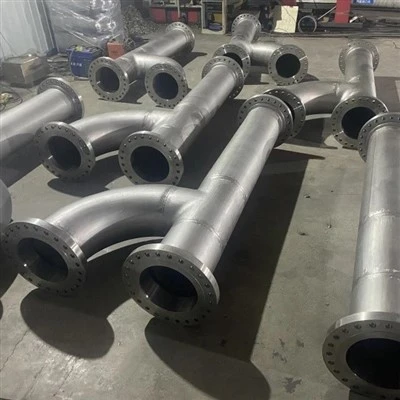
ASTM B637 primarily specifies the technical requirements for precipitation-hardening nickel alloys in semi-finished form, suitable for medium- or high-temperature service conditions.

The ASTM B637 standard details the chemical composition, heat treatment condition, manufacturing process, heat treatment specifications, inspection and testing methods, and certification requirements for N07718 material. This ensures compliance with the stringent performance demands of high-end industrial sectors such as aerospace and oil & gas, where materials must withstand high temperatures, high pressures, and corrosive environments.
What Is N07718 Material?
N07718 (Inconel 718) is a nickel-based alloy with a precisely controlled chemical composition. It exhibits exceptional high-temperature strength, outstanding creep and fatigue resistance, and excellent oxidation and corrosion resistance across an extreme temperature range from -253°C to 700°C, maintaining exceptionally high strength particularly at 650°C.
The alloy also exhibits favorable machinability and weld ability. Its micro structure and properties can be optimized through standard heat treatment (solution treatment + dual-stage aging), making it widely used in critical components for high-end applications such as engine turbine disks, blades, fasteners, down hole oilfield tools, gas turbine components, and nuclear industry equipment.
Inconel 718 N07718 Material Chemical Composition

Ni 50.00 - 55.00: Provides austenitic structure and fundamental corrosion resistance
Cr 17.00 - 21.00: Primarily provides oxidation and corrosion resistance
Fe Balance: Essential constituent element in the alloy
Nb + Ta 4.75 - 5.5: Key strengthening elements, achieving precipitation hardening through formation of γ" phase
Mo 2.80 - 3.30: Solution-strengthening element, enhances strength and pitting corrosion resistance
Ti 0.65 - 1.15: Precipitation-hardening element
Al 0.20 - 0.80: Precipitation-hardening element
C ≤ 0.08: Impurity content control, affecting grain boundary properties and carbide formation
Co ≤ 1.00: Impurity content control
Mn ≤ 0.35: Impurity content control, typically a residual element
Si ≤ 0.35: Impurity content control, typically a residual element
P ≤ 0.015: Strictly controlled harmful impurity to prevent hot brittleness
S ≤ 0.015: Strictly controlled harmful impurity to prevent hot brittleness
B ≤ 0.006: Trace additive element, often used to strengthen grain boundaries
Cu ≤ 0.30: Control impurity content
ASTM B637 N07718 Inconel 718 Mechanical Properties
The following table lists the mechanical properties of ASTM B637 UNS N07718 material in a typical heat-treated condition.
|
Parameters |
Value |
|
Yield Strength (Rp0.2) |
≥ 150 KSI ( 1034 MPa) |
|
Tensile Strength (Rm) |
≥ 185 KSI ( 1276 MPa) |
|
Elongation (A) |
≥ 12% |
|
Brinell Hardness (HB) |
≥ 331 |
|
High-Temperature Strength |
Maintains high strength and good ductility from approximately 650°C to as high as approximately 700°C. |
|
Density |
Approximately 8.19 - 8.24 g/cm³ |
|
Modulus of Elasticity |
Approximately 29.7 x 10^3 KSI ( 204.9 GPa) |
Inconel 718 N07718 Material Heat Treatment
The heat treatment of N07718 material under the ASTM B637 standard aims to impart the mechanical properties and stability required for extreme environments.
Solution treatment serves as the initial step in heat treatment, designed to fully dissolve strengthening elements within the alloy into nickel, forming a homogeneous supersaturated solid solution to prepare for subsequent precipitation hardening.
Per the standard, the solution treatment temperature range is typically controlled between 940°C and 1010°C. After sufficient holding time at this temperature, the material must undergo rapid cooling-usually via water quenching, oil quenching, or forced air cooling-to suppress premature precipitation of strengthening elements during cooling, thereby "freezing" the supersaturated state to room temperature.

Step Two: Aging treatment is the critical stage for precipitation hardening. Moderate-temperature heating induces uniform, dispersed precipitation of fine strengthening phases from the supersaturated solid solution, significantly enhancing the material's strength and hardness.
An equivalent alternative process involves holding at 720°C followed by cooling at any rate to 620°C, provided the total dwell time at 620°C ensures the cumulative precipitation heat treatment duration reaches at least 18 hours, concluding with air cooling to room temperature.
This precisely controlled heating, soaking, and cooling sequence aims to achieve an optimal balance of strength, toughness, creep resistance, and fatigue performance.
Heat treatment schedules may be adjusted based on product form (e.g., forgings, thin-walled tubes) and performance priorities. For instance, certain forgings may employ a "direct aging" process, skipping solution treatment by applying aging directly after forging.
ASTM B637 N07718 Round Bar Price
According to data from multiple B2B platforms, quotes for ASTM B637 N07718 round bar range from $20 to $150 per kilogram. The main reasons for this significant price difference include:

Raw Material Cost: N07718 alloy is primarily composed of precious metals such as nickel and chromium, with nickel price fluctuations having the most significant impact on costs. Price fluctuations in the global nickel market are directly and rapidly transmitted to alloy material prices.
Product Specifications and Condition: The diameter and length of round bar directly affect the amount of raw materials used and the difficulty of processing. Larger or longer bars generally command higher prices. Furthermore, product availability significantly impacts price, with heat-treated products commanding higher prices.
Purchase Scale: Minimum order quantity is a key factor influencing unit price. Suppliers typically offer more competitive pricing for large quantities (measured in tons), while smaller quantities (e.g., a few kilograms) command significantly higher prices.
Market and Supply Chain: Demand from sectors such as aerospace, petrochemicals, and energy is the primary price driver. Furthermore, different suppliers' pricing strategies, brand premiums, and quality management system certification costs will also be reflected in the final quote.
In the long term, with the development of manufacturing industries like aerospace and energy, demand for high-performance alloys like N07718 is expected to grow steadily, potentially driving a long-term, slowly rising price trend. However, short-term price fluctuations are inevitable, primarily driven by fluctuations in nickel prices and shifts in supply and demand.
Therefore, buyers are strongly advised to directly inquire with multiple suppliers based on their specific purchase quantity and required specifications to obtain the most accurate quotes.