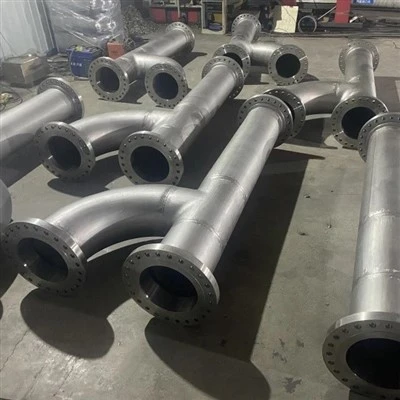
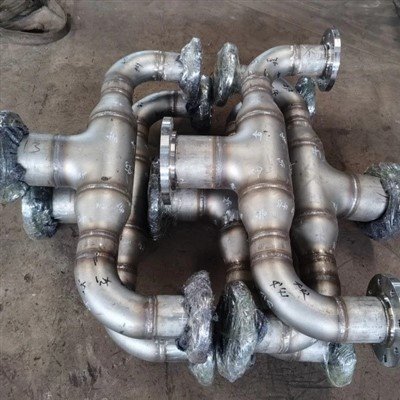
ASTM B474 is a product standard that specifies arc-welded or seamless Hastelloy B2 (UNS N10665) pipe. Hastelloy B2, as defined in this standard, is a nickel alloy known for its excellent corrosion resistance in reducing environments and resistance to chloride-induced stress corrosion cracking.

Pipe produced according to this standard must meet specific requirements for chemical composition and mechanical properties to ensure safe and reliable use in critical equipment in industries such as chemical processing, petrochemicals, pharmaceuticals, and pollution control.
ASTM B474 Hastelloy B2 Pipe Features
Corrosion Resistance
ASTM B474 Hastelloy B2 pipe exhibits excellent corrosion resistance to hydrochloric acid at various temperatures and concentrations. It also effectively resists corrosion from unaerated sulfuric, phosphoric, acetic, and formic acids, as well as various other organic acids and hydrogen chloride gas.
Mechanical Properties
This alloy combines good strength with excellent ductility and toughness in the solution-annealed state. The material exhibits excellent formability and impact toughness. Although its high-temperature strength is not as high as that of some austenitic stainless steels, it remains mechanically stable in many reducing corrosive environments.

Thermal Stability and Processing Characteristics
Heat treatment of Hastelloy B2 typically requires solution treatment at 1060-1080°C followed by rapid cooling to dissolve any precipitated carbides and achieve a uniform, supersaturated solid solution, thereby optimizing corrosion resistance.
Machinability and Weldability
The alloy's rapid work hardening rate requires higher power during cold working, and annealing between machining steps may be necessary to relieve stress and restore ductility. In welding, its composition helps to reduce the precipitation of carbides in the heat-affected zone of welding and improve the corrosion resistance of the weld area.
Hastelloy B2 Composition
|
Composition |
Value (wt%) |
|
Nickel (Ni) |
Remain |
|
Molybdenum (Mo) |
26.0 - 30.0 |
|
Iron (Fe) |
≤2.0 |
|
Chromium (Cr) |
≤1.0 |
|
Cobalt (Co) |
≤1.0 |
|
Carbon (C) |
≤0.01 |
|
Manganese (Mn) |
≤1.0 |
|
Silicon (Si) |
≤0.08 |
|
Copper (Cu) |
≤0.5 |
|
Phosphorus (P) |
≤0.02 |
|
Sulfur (S) |
≤0.01 |
ASTM B474 Hastelloy B2 Physical Properties
|
Physical Properties |
Value |
|
Density |
9.2 - 9.24 g/cm³ |
|
Melting Point |
1330 - 1380 °C |
|
Thermal Conductivity |
11.1 W/m·K |
|
Specific Heat |
377 J/kg·K |
|
Elastic Modulus |
217 GPa |
|
Resistivity |
1.37 μΩ·m |
|
Linear Expansion Coefficient |
10.3 × 10⁻⁶ /°C |
ASTM B474 Hastelloy B2 Mechanical Properties
|
Parameter |
Value |
|
Tensile Strength (σb) |
≥ 690 - 745 MPa |
|
Yield Strength (σ₀.₂) |
≥ 310 - 325 MPa |
|
Elongation (δ5) |
≥ 40% |
|
Brinell Hardness (HB) |
≥ 250 |
|
Density |
9.2 g/cm³ |
|
Melting Point |
1330 - 1380 ℃ |
Hastelloy B2 vs C276

Chemical Composition
Hastelloy B2 is a nickel-molybdenum alloy whose high molybdenum content provides exceptional resistance to reducing media.
Hastelloy C276 is a nickel-chromium-molybdenum-tungsten alloy. Molybdenum provides resistance to reducing environments; the addition of chromium provides resistance to oxidizing media; and tungsten further enhances the alloy's overall resistance to pitting and crevice corrosion.
Corrosion Resistance and Applications
Alloy B2 performs excellently in hydrochloric acid at all concentrations, moderate sulfuric acid, and other non-oxidizing acid environments at room temperature. It is primarily used in chemical processes handling highly reducing chemicals, such as hydrochloric acid recovery systems and acetic acid production equipment.
Alloy C276 exhibits outstanding corrosion resistance to wet chlorine gas, hypochlorite, chlorine dioxide solutions, and highly concentrated chloride solutions such as ferric chloride and cupric chloride. This makes it widely used in flue gas desulfurization systems, pulp bleaching, chemical processing, and seawater environments.
Welding and Processing Characteristics
UNS N10665's weld heat-affected zone is sensitive to intergranular corrosion and has poor thermal stability within certain temperature ranges, which can easily lead to performance degradation.
UNS N10276's extremely low carbon and silicon contents significantly improve weldability, allowing it to maintain excellent corrosion resistance even in the welded state. This eliminates the need for post-weld solution treatment and greatly facilitates manufacturing. Furthermore, its high-temperature strength and creep resistance surpass those of B2, extending its applicable temperature range.
Hastelloy B2 vs C276: How to Choose
The decision between B2 and C276 depends fundamentally on the type of corrosive media you are dealing with:
If your application involves pure, non-oxidizing, reducing acids, particularly hydrochloric acid at any concentration and temperature, and cost is a key consideration, Hastelloy B2 may be a more cost-effective option.
If your application involves a complex mixed media environment with the presence of oxidizing agents, chlorides, or the risk of pitting or crevice corrosion, Hastelloy C276 may be a more reliable option.
Hastelloy B2 Product Price
The price of Hastelloy B2 alloy is influenced by product form, specifications, purchase quantity, market supply and demand, and fluctuations in raw material costs.

The price of Hastelloy B2 plate/sheet typically ranges from $18 to $50 per kilogram. Thickness, width, and surface treatment influence the price. For example, thin plate or precision strip, due to its greater processing difficulty, can reach prices near or even at the upper end. Some suppliers may quote prices of $2,500 to $2,680 per ton for bulk purchases of certain specifications (such as 4x8-foot standard plate).
The price for Hastelloy B2 bar/round steel is relatively wide, ranging from approximately $15 to $50 per kilogram. Diameter is a key pricing factor, with larger diameter or precision-forged bar costing more. It is worth noting that purchase volume significantly impacts unit price. For example, some suppliers quote between $22 and $30 for orders over 500 kilograms, while smaller orders can reach $34 to $36.
The price of Hastelloy B2 pipe generally ranges from $15 to $60 per kilogram. Differences in production processes between seamless and welded pipe, dimensional parameters such as outer diameter and wall thickness, and compliance with specific standards such as ASTM B622 all determine pricing. ASTM-compliant seamless hydraulic pipe may be quoted at around $30 to $40 per kilogram.
Hastelloy B2 welding rods and wires typically cost between $15 and $21 per kilogram. Pricing for these products varies depending on alloy composition, diameter, and specific processing.

All quotes are highly dependent on minimum order quantities; small purchases in the kilogram range can cost significantly more than larger, tonnage-based orders. International nickel prices, supplier costs, and logistics costs also play a significant role in pricing. It is recommended to provide detailed technical specifications to multiple suppliers when purchasing and obtain multiple quotes.