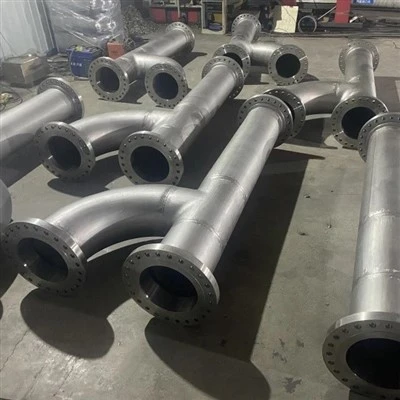
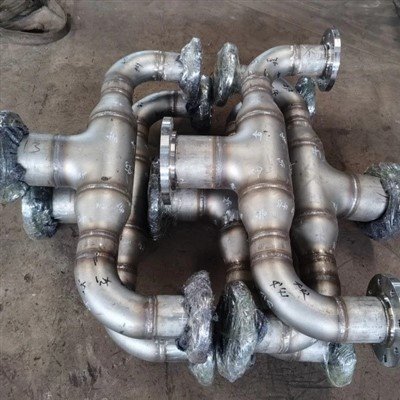
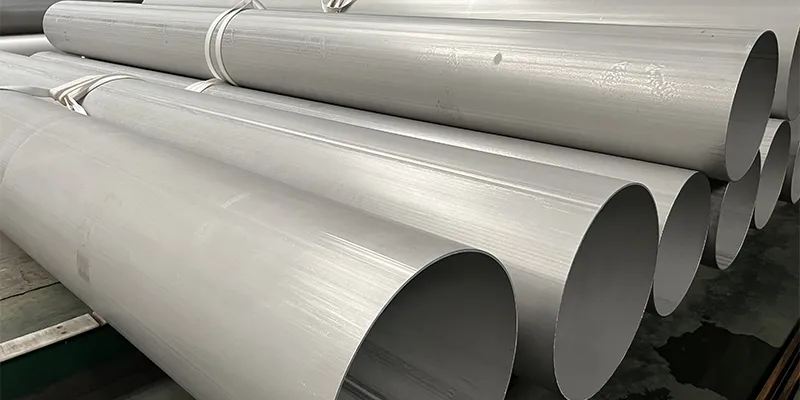
ASTM B622 UNS N10675 seamless pipe is a nickel alloy pipe specifically designed for extreme corrosive environments, conforming to the B622 standard established by the American Society for Testing and Materials.
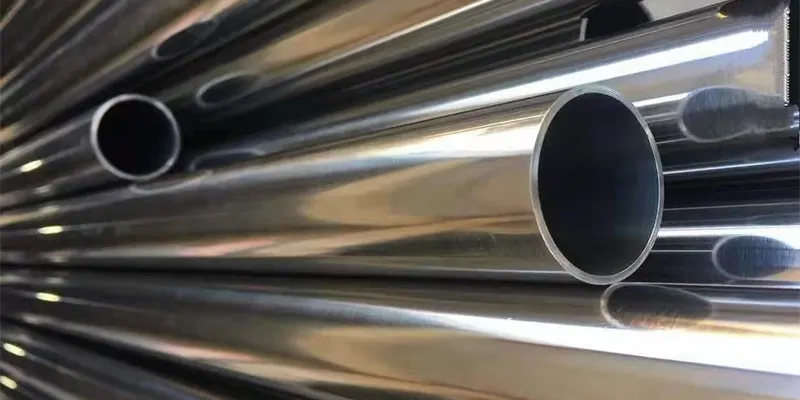
ASTM B622 Standard Scope
ASTM B622 is a standard specification developed by the American Society for Testing and Materials, formally titled "Standard Specification for Seamless Nickel and Nickel-Cobalt Alloy Pipe and Tube."
This standard primarily specifies the technical requirements for seamless nickel and nickel-cobalt alloy pipes used in demanding environments such as high temperatures and severe corrosion. Its scope covers seamless tubing made from over 30 nickel alloys, such as UNS N10001, N10665, N10276, N06022, and N06686. It applies to tubes with an outside diameter not exceeding 3.5 inches and pipes with larger outside diameters, explicitly limiting coverage to seamless products and excluding welded tubing.
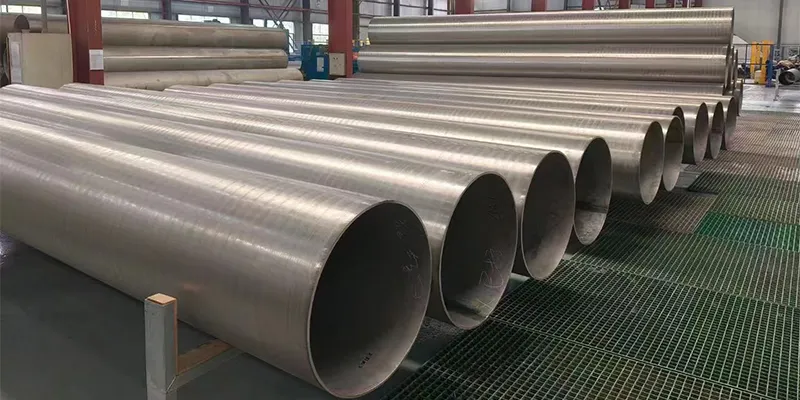
Furthermore, ASTM B622 provides detailed specifications for chemical composition, mechanical properties, delivery conditions, and corresponding test methods. This standard aims to ensure these high-performance seamless tubes possess the required corrosion resistance, high-temperature strength, and structural integrity for critical applications in chemical processing, petrochemicals, aerospace, power generation, and nuclear industries.
UNS N10675 Hastelloy B3 Introduction
UNS N10675 Hastelloy B3 is a nickel alloy offering exceptional corrosion resistance. Compared to Alloy B2, N10675 exhibits significantly enhanced thermal stability while maintaining good ductility and toughness during brief exposure to moderate temperatures.
Regarding mechanical properties, annealed N10675 typically exhibits a tensile strength of no less than 760 MPa, a yield strength of 350 MPa, and an elongation of 40%. The alloy is readily formable through both cold and hot working processes and possesses good weldability.
Hastelloy B3 UNS N10675 Chemical Composition
This table lists the primary chemical composition of ASTM B622 UNS N10675 alloy.
|
Composition |
Chemical Composition ( wt%) |
|
Ni |
≥ 65.0 |
|
Mo |
27.0 - 32.0 |
|
Cr |
1.00 - 3.00 |
|
Fe |
1.0 - 3.0 |
|
W |
≤ 3.0 |
|
Co |
≤ 3.0 |
|
Mn |
≤ 3.0 |
|
Al |
≤ 0.50 |
|
Ti |
≤ 0.20 |
|
Si |
≤ 0.10 |
|
C |
≤ 0.010 |
|
Cu |
≤ 0.20 |
Hastelloy B3 UNS N10675 Physical Properties
|
Parameter |
Value |
|
Density |
9.22 g/cm³ |
|
Melting Point Range |
1370 - 1418 °C |
|
Elastic Modulus |
216 GPa |
|
Rigidity Modulus |
83 GPa |
|
Thermal Expansion Coefficient |
11.8 μm/m·°C |
|
Thermal Conductivity |
11.2 W/m·K |
|
Resistivity |
137 μΩ·cm |
Hastelloy B3 UNS N10675 Mechanical Properties
The following table lists the minimum and typical room-temperature mechanical properties of ASTM B622 UNS N10675 seamless tubing in the annealed condition for your reference.
|
Parameter |
Value (min) |
|
Tensile Strength |
760 MPa |
|
Yield Strength |
350 MPa |
|
Elongation |
40 MPa |
ASTM B 622 UNS N10675 Seamless Pipe Functions
Corrosion Resistance
The core function of UNS N10675 seamless pipe lies in its exceptional corrosion resistance against reducing media. This nickel-molybdenum alloy exhibits outstanding tolerance to moderate temperatures and acidic environments.
It also demonstrates excellent resistance to pitting corrosion, stress corrosion cracking, and knife-edge corrosion.
Superior High-Temperature Mechanical Properties and Structural Integrity
This seamless pipe maintains high strength and structural integrity under elevated temperatures. In the annealed condition, it exhibits high strength coupled with sufficient ductility.
This ensures the pipe can effectively withstand high temperatures and pressures while resisting creep and deformation.
Thermal Stability
UNS N10675 optimizes the alloy's thermal stability, enabling it to better maintain toughness and corrosion resistance during manufacturing and subsequent high-temperature exposure.
Workability and Formability
ASTM B622 UNS N10675 seamless pipe offers excellent machinability. This allows for necessary field operations such as cold bending, cutting, and end preparation.

Nickel 201 Machinability
The machining performance of Nickel 201 is closely related to its physical properties.
Its face-centered cubic crystal structure imparts excellent plasticity and toughness, but its low thermal conductivity means that heat generated during cutting is more likely to be concentrated on the cutting edge rather than carried away by the chips. Combined with its high ductility, the material is highly susceptible to plastic deformation and fracture when subjected to cutting forces, resulting in significant work hardening.
Using blunt tools, excessive feed rates, or allowing the tool to dwell on the cutting surface will form a hardened layer on the workpiece surface, significantly complicating subsequent machining passes.
Key Machining Strategies
Successful machining of Nickel 201 requires a systematic strategy:
Tool Selection and Geometry
- Material: For continuous cutting operations such as turning, milling, and drilling, carbide tools are the preferred choice.
- Geometry: Use sharp cutting edges, positive rake angles, and ample clearance angles.
- Speeds and Feeds: Nickel 201 requires lower cutting speeds than standard carbon steels. Sufficient feeds and depths of cut should be used to ensure that each pass penetrates beneath the work-hardened layer created by the previous operation.
- Deepth of Cut and Heat Control: Using an appropriate radial depth of cut combined with a curved approach helps to smoothly increase cutting forces, avoid impact on the cutting edge, and better control heat generation.

Cooling and Lubrication
For low-speed cutting with high-speed steel tools, a sulfurized, chlorinated mineral oil-based lubricant is recommended. For high metal removal rate operations requiring efficient heat removal, a soluble water-based coolant is a better choice.
It is important to thoroughly remove sulfur residue from the workpiece surface after machining, as this can cause intergranular corrosion during subsequent heating or welding.
Practical Operating Tips
Ensure system rigidity: The machine tool, cutting tool, and fixture must have high rigidity to minimize vibration, which can exacerbate work hardening and tool wear.
Avoid "idle running" and stalling: During cutting, the tool must not stall or idle on the workpiece surface, as this can cause severe localized work hardening.
Drilling: Use a short, rigid drill bit and ensure continuous, positive feed to avoid the drill bit dwelling in the hole.
Tapping: Consider increasing the drill hole diameter appropriately and maintaining a thread engagement ratio of 50%-60% to significantly reduce torque and the risk of tap breakage.
How Much Is ASTM B 622/UNS N10675?
The price of ASTM B622 UNS N10675 varies based on product form, specifications, purchase quantity, and fluctuations in raw material costs.
According to current market information, the reference prices for its base forms are as follows:
Seamless pipe: approximately 25.00 USD/kg.
Seamless pipe fittings: approximately 30.00-40.00 USD/kg.
Plate: reference price approximately 7.92-9.90 USD/piece.
Standard components such as flanges and bolts exhibit wider price ranges; for example, heavy-duty hex bolts are priced around 0.20-0.50 USD/piece.
It is important to note that the above figures represent reference unit prices only. Actual transaction prices are ultimately determined based on specific order specifications, technical standards, procurement volumes, and delivery terms. Furthermore, all quoted prices typically require a minimum order quantity.