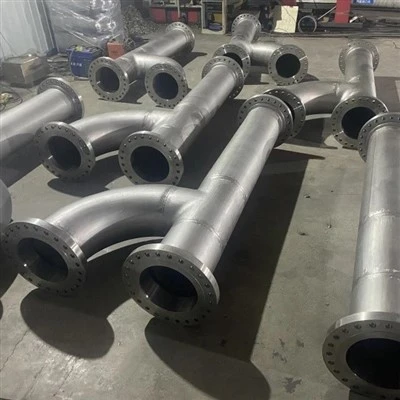
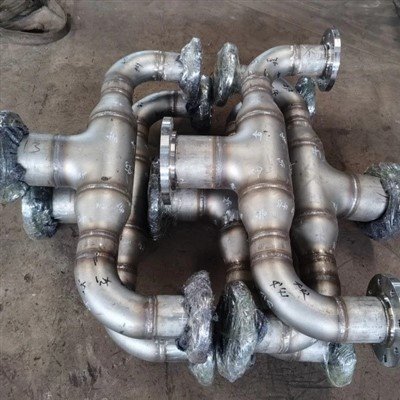
ASTM A269 347 grade is one of the most reliable choices for power generation, combining exceptional corrosion resistance with impressive high-temperature performance.

This guide will provide detailed information on the dimensions, properties, and applications of ASTM A269 347 steel pipes, offering valuable insights for procurement specialists worldwide.
Overview of ASTM A269 347 Stainless Steel Pipes
ASTM A269 is a standard specification developed by ASTM International for seamless and welded austenitic stainless steel pipes intended for general corrosion resistance and low- or high-temperature applications. This standard covers pipes with an inside diameter and nominal wall thickness of 1/4 inch (6.4 mm) and larger and with a nominal wall thickness of 0.020 inch (0.51 mm) and larger.
347 stainless steel pipe under this specification is a columbium-stabilized austenitic stainless steel that offers superior performance in specific corrosive environments. This stabilization element is key to 347's enhanced properties, particularly its resistance to intergranular corrosion following exposure to high temperatures.
347 Steel Pipe Chemical Properties
Below is the ASTM A269 347 steel pipe chemical composition presented in table format:
|
Element |
Content (%) |
|
Carbon (C) |
0.08 max |
|
Manganese (Mn) |
2.00 max |
|
Phosphorus (P) |
0.045 max |
|
Sulfur (S) |
0.03 max |
|
Silicon (Si) |
0.75-1.00 max |
|
Chromium (Cr) |
17.00-19.00 |
|
Nickel (Ni) |
9.00-13.00 |
|
Columbium + Tantalum (Cb+Ta) |
10xC min - 1.00 max |
|
Iron (Fe) |
Balance |
Niobium addition helps prevent chromium carbide precipitation at grain boundaries during exposure to temperatures between 800 and 1500°F, thereby maintaining the material's resistance to intergranular corrosion.
This makes ASTM A269 347 pipes particularly suitable for welding applications and high-temperature service where standard stainless steels might suffer from sensitization.

347 Steel Pipe Mechanical Properties
The typical ASTM A269 347 steel mechanical properties at room temperature include:
Tensile Strength: 75,000 psi (515 MPa) minimum.
Yield Strength: 30,000 psi (205 MPa) minimum.
Elongation in 2 inches: 40% minimum.
Hardness: Maximum 201 Brinell.
These mechanical properties ensure that ASTM A269 347 pipes can withstand significant pressure and mechanical stress while maintaining structural integrity. The excellent elongation properties further indicate good ductility, allowing for some deformation without fracture.
ASTM A269 347 Alloy Physical Properties
The physical properties of ASTM A269 347 steel pipes contribute significantly to their performance:
Density: 7.93-8.0 g/cm³.
Melting Point: 1400-1425°C (2552-2597°F).
Modulus of Elasticity: 190-210 GPa.
Coefficient of Thermal Expansion: 16-18 × 10⁻⁶/K at 20-100°C.
Maximum Use Temperature in Air: 800°C.
Electrical Resistivity: 70-73 μOhm.cm.
These physical properties make ASTM A269 347 particularly suitable for high-temperature applications. The thermal expansion characteristics and maximum service temperature indicate good stability under thermal cycling conditions, while the electrical properties may be relevant for specific industrial processes.
ASTM A269 Dimensional Tolerances
ASTM A269 specifies precise dimensional tolerances:

Outside Diameter Tolerances: Range from ±0.005 inch (0.13 mm) for pipes ≤1/2 inch to ±0.050 inch (1.26 mm) for pipes between 12 and 14 inches.
Wall Thickness Tolerances: Typically ±10-15% depending on pipe size.
Length Tolerances: Range from +1/8 inch (3.2 mm) to +3/16 inch (4.8 mm) with no minus tolerance.
These tight tolerances ensure reliable performance and easy installation in precision applications, making ASTM A269 347 pipes suitable for critical services where dimensional accuracy is paramount.
ASTM A269 347 Steel Pipe Manufacturing and Heat Treatment
The manufacturing process for ASTM A269 347 stainless steel pipes varies primarily depending on their shape.
Seamless 347 pipes are produced using hot extrusion or piercing methods. Heated round steel billets are extruded or pierced to form hollow tube blanks, which are then cold-rolled or cold-drawn to achieve the required dimensions, wall thickness, and surface finish.
Welded 347 pipes are produced using automated argon arc welding or plasma welding processes, where cold-rolled strips are coiled and welded into tubes. Regardless of the process used, subsequent cold deformation processing requires strict control of processing parameters to ensure the geometric accuracy and mechanical properties of the pipe.

Heat treatment is the core step in ensuring the final performance of this material; all ASTM A269 347 pipes must undergo solution treatment.
Heat treatment is typically carried out in the temperature range of 1040°C to 1150°C, allowing niobium carbide to fully dissolve in the austenitic matrix, followed by rapid water quenching. This process aims to obtain a uniform supersaturated solid solution, eliminate cold working stress, and restore corrosion resistance lost due to cold deformation.
By combining niobium with carbon, the precipitation of chromium carbide at grain boundaries is effectively suppressed, thereby enabling the material to achieve optimal resistance to intergranular corrosion and stable mechanical properties to meet standard requirements.
347 Steel Pipe Applications

Petrochemical Industry
In the petrochemical industry, 347 stainless steel pipes are commonly used in the manufacture of furnace tubes, material conveying pipelines, and heat exchanger tubes.
347 stainless steel pipes, with their excellent corrosion resistance and high-temperature resistance, especially their superior resistance to intergranular corrosion, can effectively withstand these harsh operating conditions.
Aerospace Industry
347 stainless steel pipes are one of the ideal choices for manufacturing high-temperature components such as aircraft engine exhaust systems, spacecraft exhaust systems, and rocket engine components.
These components need to withstand extremely high temperatures and maintain good mechanical properties during operation.
Power and Energy Industry
In the energy industry, especially in nuclear power plants, 347 stainless steel pipes are widely used in critical equipment such as heat exchangers and condensers. These devices have extremely high requirements for the material's corrosion resistance, high-temperature strength, and service life.
347 stainless steel pipes can operate stably in a temperature range of 800°F to 1500°F. Their stable austenitic structure and resistance to intergranular corrosion make them ideal for long-term operation conditions with extremely high safety requirements, such as in nuclear power plants.
Chemical Processing Equipment
In the chemical industry, 347 stainless steel pipes are used to manufacture reactors, heat exchangers, and other process equipment that needs to withstand high temperatures and corrosive media.
The excellent corrosion resistance of 347 stainless steel pipes in various corrosive media such as acids, alkalis, and salts, as well as their resistance to creep and stress cracking at high temperatures, enable them to meet the requirements of complex and harsh chemical production environments.