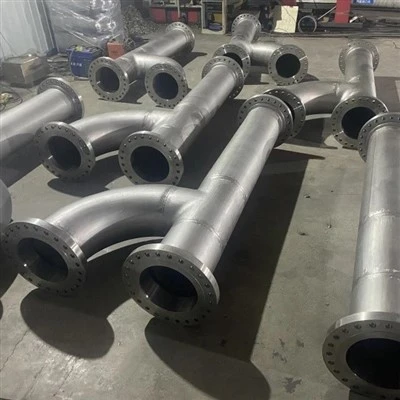
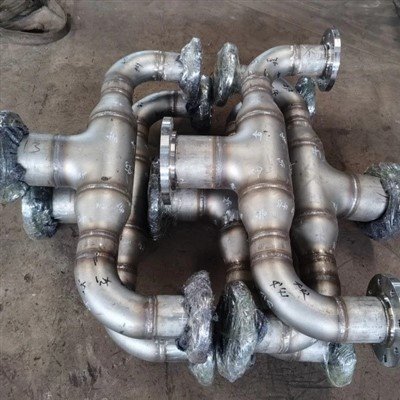
321H stainless steel, an austenitic grade stabilized with titanium, designated as UNS S32109, is a higher-carbon variant of 321 stainless steel, offering enhanced creep resistance and strength at elevated temperatures.

In this blog, we introduce the properties of 321H stainless steel, including its chemical composition, physical properties, mechanical properties, and advantages.
What is 321H Stainless Steel?
321H (UNS S32109) is the high-carbon version of the classic titanium-stabilized 321 alloy. The "H" designation indicates a controlled carbon content (0.04-0.10%) specifically for enhanced high-temperature strength.
Like standard 321, it is stabilized with titanium to prevent harmful chromium carbide formation, but the elevated carbon level provides superior creep and stress rupture properties.
321H Stainless Steel Chemical Composition
The precise composition is the foundation of 321H's behavior. Key elements include (typical weight %, per ASTM A213/A312):
Chromium (Cr): 17.0 - 19.0% - Provides fundamental corrosion and oxidation resistance by forming a passive surface layer.
Nickel (Ni): 9.0 - 12.0% - Stabilizes the austenitic microstructure, providing toughness, ductility, and resistance to reducing acids.
Carbon (C): 0.04 - 0.10% - Deliberately elevated to increase high-temperature tensile and creep strength.
Titanium (Ti): ≥ 4*(C%) minimum, typically ~0.70% - The critical stabilizer. Titanium has a higher affinity for carbon than chromium. It forms stable titanium carbides (TiC), effectively "tying up" the carbon and preventing the formation of chromium carbides at grain boundaries during exposure to 800-1500°F (427-816°C).
Manganese (Mn): ≤ 2.0%
Silicon (Si): ≤ 0.75%
Phosphorus (P): ≤ 0.045%
Sulfur (S): ≤ 0.030%
Iron (Fe): Balance.
The Ti:C ratio is crucial. A minimum ratio of 4:1 ensures sufficient titanium to fully stabilize the carbon content.
321H Stainless Steel Physical Properties

These inherent properties are largely unchanged from standard 321:
Density: 0.29 lb/in³ (8.0 g/cm³)
Melting Range: 2550-2590°F (1399-1421°C)
Specific Heat (32-212°F / 0-100°C): 0.12 BTU/lb·°F (500 J/kg·K)
Thermal Conductivity: At 212°F (100°C): 9.3 BTU·in/(hr·ft²·°F) [16.2 W/(m·K)]
Coefficient of Thermal Expansion: 9.2 x 10⁻⁶ per °F (16.6 x 10⁻⁶ per °C) from 32-212°F. This expansion rate is higher than carbon steel, a key consideration in system design.
Modulus of Elasticity (Tension): 28.3 x 10⁶ psi (195 GPa) at room temperature.
321H Stainless Steel Mechanical Properties
Actual values vary with product form and size. Values below are typical for annealed material per ASTM standards.
Tensile Strength: 75,000 psi (515 MPa) min
Yield Strength (0.2% Offset): 30,000 psi (205 MPa) min
Elongation in 2 Inches: 35% min
Hardness (Brinell): 170 HB max (Annealed condition)
The High-Temperature Advantage: While room temperature strength is comparable to other austenitics, 321H truly distinguishes itself at elevated temperatures.
Its creep strength and stress rupture strength are significantly superior to standard 304/304H and even 321 at temperatures above 1000°F (538°C). This allows for the design of thinner-walled components or operation at higher pressures in hot service.
321H Stainless Steel Advantages

Resistance to Sensitization & Intergranular Corrosion: This is the primary design intent. By sequestering carbon as titanium carbides, 321H resists the formation of chromium-depleted zones along grain boundaries, making it ideal for welding and high-temperature service where standard 304/304H would be susceptible.
Excellent High-Temperature Strength: The controlled higher carbon content directly enhances short-term tensile and, more importantly, long-term creep and stress rupture properties.
Superior Oxidation Resistance: The chromium content forms a stable, adherent oxide layer (Cr₂O₃) that protects the base metal from scaling and degradation in continuous service up to ~1500°F (816°C) and intermittent service up to ~1600°F (871°C).
Good General Corrosion Resistance: It performs similarly to 304 in a wide range of atmospheric, chemical, and acidic environments, resisting organic chemicals, food dyes, and most oxidizing acids.
Weldability: Excellent, using common arc welding processes. Post-weld heat treatment is generally not required for corrosion protection due to stabilization, but may be specified for stress relief.
If you're sourcing 321H pipes or fittings, contact us for competitive quotes and expert guidance.