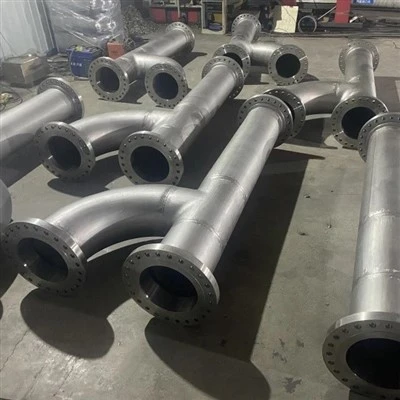
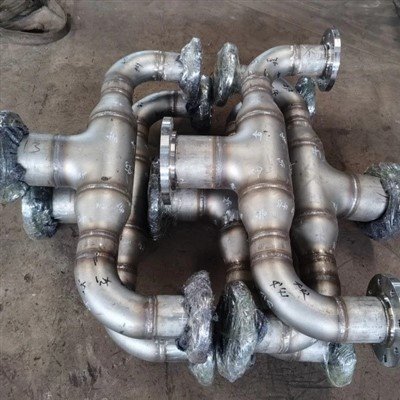
As a leading Chinese distributor and supplier of stainless steel pipes and fittings, we provide this detailed comparison between 317 stainless steel and 316 to help you make an informed decision.

317 Stainless Steel vs 316: Chemical Composition
The basic difference is their chemical composition, which directly influences performance.
317 Stainless Steel contains a higher percentage of chromium (Cr), nickel (Ni), and, most importantly, molybdenum (Mo) compared to 316. Typical composition ranges are:
Molybdenum (Mo): 3.0% - 4.0%
Chromium (Cr): 18.0% - 20.0%
Nickel (Ni): 11.0% - 15.0%
316 Stainless Steel has a robust but lower alloy content:
Molybdenum (Mo): 2.0% - 3.0%
Chromium (Cr): 16.0% - 18.0%
Nickel (Ni): 10.0% - 14.0%
317 stainless steel is an upgraded, higher-alloy version of 316, specifically adds extra molybdenum and chromium to handle more aggressive corrosive media.
317 Stainless Steel vs 316: Corrosion Resistance
General & Pitting/Crevice Corrosion: Both grades resist chloride attack well, but 317 stainless steel offers superior performance. Its elevated Mo content provides significantly better resistance to pitting and crevice corrosion in environments containing chlorides, phosphates, and other halides.
Sulfuric Acid Resistance: This is a key area where 317 stainless steel excels. It demonstrates much better corrosion resistance in sulfuric acid (H₂SO₄) concentrations across a wide range of temperatures, particularly in moderate to high concentrations where 316 may be inadequate.

317 Stainless Steel vs 316: High-Temperature Strength and Stability
While both grades maintain good strength at elevated temperatures, 317 stainless steel generally offers better scaling resistance and retained strength due to its higher alloy content.
This makes it a more reliable choice for applications involving intermittent heating and cooling or exposure to high-temperature corrosive gases, though it is not primarily classified as a "high-temperature" grade like 304H or 321.
317 Stainless Steel vs 316: Weldability and Fabrication
Both 317 and 316 stainless steel are readily weldable using all standard fusion methods.
However, the higher alloy content of 317 can make it slightly more challenging in terms of hot working and forming. Post-weld annealing is recommended for both to restore optimum corrosion resistance in the heat-affected zone (HAZ), especially for critical applications.
317 Stainless Steel vs 316: Mechanical Properties
Mechanically, 317 and 316 stainless steel have similar tensile strengths and yield strengths, but 317 stainless steel often exhibits marginally higher values due to its richer alloy content.
Both grades offer excellent ductility, with elongation rates exceeding 40%, ensuring they can be formed and welded without brittleness.
A key difference is in high-temperature applications: 317 stainless steel maintains better creep resistance up to 870°C, whereas 316 stainless steel is rated for continuous service up to 815°C.

317 Stainless Steel vs 316: Cost
Economically, 317 stainless steel is generally 20-30% more expensive than 316 stainless steel due to its higher alloy content, particularly the costlier molybdenum.
This price differential influences availability, with 316 stainless steel being more readily stocked globally, while 317 stainless steel is often produced in smaller quantities for niche markets. As a China-based distributor, we maintain inventories of both grades to meet varying client needs, ensuring competitive pricing without sacrificing quality.
317 Stainless Steel vs 316: Application
Selecting the correct grade depends entirely on the service environment:
Choose 316 Stainless Steel for:
Marine and coastal architectural applications
Pharmaceutical and food processing equipment
Chemical transport tanks (for less aggressive chemicals)
Standard petrochemical processing
Universal pressure piping and fittings where chlorides are present but not in extreme concentrations.
Choose 317 Stainless Steel for:
Severe chemical processing environments, especially those involving sulfuric acid.
Pollution control equipment (e.g., scrubbers, flue gas desulfurization systems).
Pulp and paper digesters and bleaching systems.
Equipment handling strong chloride solutions or acidic chlorides at elevated temperatures.
Piping systems and fittings in plants where 316 has shown a history of pitting or crevice corrosion failure.
If you're sourcing stainless steel pipes or fittings, our team is here to provide expert advice. Contact us for quotes or further details.