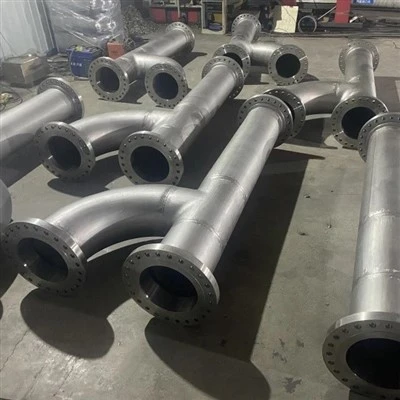
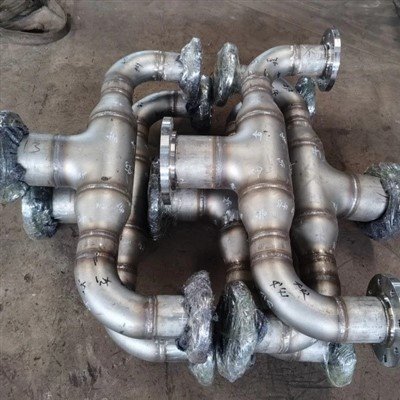
317L stainless steel is a low-carbon, high-molybdenum austenitic stainless steel. As a superior-grade alternative to 316L, it provides enhanced resistance to pitting, crevice corrosion, and stress corrosion cracking, particularly in acidic and chloride-containing media.

This article introduces 317L stainless steel, detailing its chemical composition, physical and mechanical properties, corrosion and high-temperature performance, international material equivalents, and current market pricing for product forms.
What is 317L Stainless Steel?
317L stainless steel (UNS S31703) is the low-carbon version of the standard 317 alloy. The "L" denotes its reduced carbon content (0.03% maximum), which significantly enhances its resistance to intergranular corrosion following welding or exposure to high temperatures.
This modification retains the superior corrosion resistance of the base 317 grade, making it the preferred choice for fabricated equipment used in aggressive chemical, petrochemical, and marine applications.
317L Stainless Steel Chemical Composition
317L stainless steel composition and their typical ranges are detailed below.
Standard Chemical Composition of 317L Stainless Steel
|
Element |
Content (%) |
Benefit |
|
Carbon (C) |
≤ 0.03% |
"L" grade denotes low carbon, minimizing carbide precipitation during welding, thus preserving corrosion resistance. |
|
Chromium (Cr) |
18.0 - 20.0 |
Forms a passive oxide layer for fundamental corrosion and oxidation resistance. |
|
Nickel (Ni) |
11.0 - 15.0 |
Stabilizes the austenitic microstructure, improves ductility, and resistance to reducing acids. |
|
Molybdenum (Mo) |
3.0 - 4.0 |
Key differentiator. Dramatically increases resistance to pitting and crevice corrosion in chloride environments. |
|
Manganese (Mn) |
≤ 2.0 |
Aids in deoxidation during steelmaking and improves hot workability. |
|
Silicon (Si) |
≤ 0.75 |
Contributes to oxidation resistance at high temperatures. |
|
Phosphorus (P) |
≤ 0.045 |
Kept low to avoid embrittlement. |
|
Sulfur (S) |
≤ 0.03 |
Kept low to improve corrosion resistance and formability. |
|
Nitrogen (N) |
≤ 0.10 |
Can be added to enhance strength. |
|
Iron (Fe) |
Balance |
Base metal. |
317L Stainless Steel Properties
317L stainless steel has similar physical properties with other austenitic grades but offers improved mechanical strength.
Stainless Steel 317L Physical Properties:
Density: 7.98 g/cm³
Melting Point: ~1370-1400 °C
Modulus of Elasticity: 200 GPa
Thermal Expansion: 15.9 μm/m·°C (20-100°C)
Thermal Conductivity: 14.2 W/m·K (100°C)
Electrical Resistivity: 0.74 μΩ·m
Stainless Steel 317L Mechanical Properties:
|
Property |
Metric Value |
Imperial Value |
|
Tensile Strength |
515 - 595 MPa |
75,000 - 86,300 psi |
|
Yield Strength (0.2% Offset) |
205 - 260 MPa |
30,000 - 37,700 psi |
|
Elongation at Break |
40% - 55% |
40% - 55% |
|
Hardness (Rockwell B) |
85 max |
85 max |
|
Modulus of Elasticity |
200 GPa |
29,000 ksi |
Corrosion Resistance
317L offers excellent general and localized corrosion resistance:
Pitting & Crevice Corrosion: Its high Mo content provides outstanding resistance, making it suitable for environments containing chlorides, phosphates, and other halides.
Intergranular Corrosion: The low carbon content makes it immune to sensitization and subsequent intergranular attack in the as-welded condition.
Acid Resistance: It demonstrates good resistance to a wide range of organic and inorganic acids, including sulfuric acid in moderate concentrations.
High-Temperature Performance
While primarily optimized for corrosion resistance, 317L maintains good strength at elevated temperatures and offers excellent oxidation resistance up to approximately 870°C.
Its high creep and stress-rupture strength make it suitable for applications like heat exchangers and furnace parts in corrosive atmospheres.
317L Stainless Steel Equivalent

When sourcing globally, it is essential to recognize the 317L equivalent grade designations under different national standards. This ensures material consistency across international supply chains.
Worldwide Standard Equivalents for 317L (UNS S31703)
|
Standard |
Equivalent Designation |
|
UNS |
S31703 |
|
ASTM / AISI |
317L |
|
EN (Europe) |
X2CrNiMo18-15-4 / 1.4438 |
|
JIS (Japan) |
SUS 317L |
|
GB (China) |
00Cr19Ni13Mo3 |
|
Common ASTM Product Standards |
A240 (Plate/Sheet/Strip), A312 (Pipe), A182 (Fittings), A213 (Tube) |
Important Note: While these grades are generally considered equivalent, critical applications require verification of exact chemical and mechanical property limits against the relevant procurement specification.
317L Stainless Steel Price
Pricing for 317L stainless steel varies based on form, quantity, market conditions, and regional factors, with fluctuations influenced by raw material costs like molybdenum.

As of 2025, 317L steel seamless pipes and tubes typically range from $6 to $30 per kg, depending on diameter and wall thickness, with higher prices for custom sizes due to fabrication complexity.
317L stainless steel fittings, such as elbows and tees, are priced similarly at $7-35 per kg, reflecting additional manufacturing steps.
Sheets and plates, often used in fabrication, fall between $4 and $10 per kg, with thinner gauges commanding premiums for precision rolling.
These figures are indicative of global averages; in China, competitive production can lower costs by 10-20% compared to Western markets.
As a supplier, we recommend obtaining current quotes, as prices are subject to commodity trends and supply chain dynamics.
For a precise quotation on 317L stainless steel pipes, tubes, fittings, or plates for your project, please feel free to contact our technical sales team.