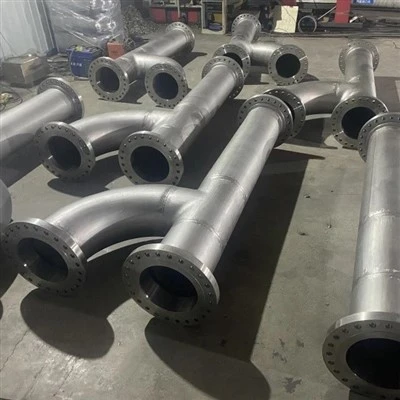
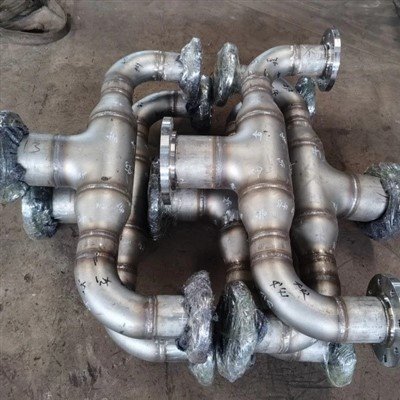
Stainless Steel 316L Mod, commonly referred to as 1.4435 in the EN standard or Urea 316L, is an enhanced variant of the austenitic stainless steel grade 316L.

The alloy maintains the low carbon content typical of 316L to minimize sensitization and intergranular corrosion, while its balanced chemistry ensures a fully austenitic microstructure free from intermetallic phases.
Below, we outline the stainless steel 316L mod physical properties.
Physical Properties
The physical properties of Stainless Steel 316L Mod are derived from reliable metallurgical sources and reflect typical values at room temperature unless otherwise specified. These values can vary slightly depending on manufacturing processes, heat treatment, and testing conditions.
Density
Density represents the mass per unit volume. For Stainless Steel 316L Mod, the density is approximately 7.98 kg/dm³ (or 7.98 g/cm³) at 20°C. This value is consistent with other austenitic stainless steels, reflecting the alloy's chromium-nickel-molybdenum composition.
Modulus of Elasticity (Young's Modulus)
The modulus of elasticity indicates the material's stiffness and its ability to deform elastically under stress. Stainless Steel 316L Mod exhibits a modulus of elasticity of 200 GPa (or 200 kN/mm²) at 20°C.
Thermal Conductivity
Thermal conductivity measures the alloy's ability to conduct heat, which is critical in heat exchanger applications. At 20°C, the thermal conductivity of Stainless Steel 316L Mod is 15 W/m·K. This moderate conductivity helps in managing thermal gradients in processing equipment.

Specific Heat Capacity
Specific heat capacity is the amount of heat required to raise the temperature of a unit mass by one degree. For this alloy, it is 500 J/kg·K at 20°C. This property is important for calculating energy requirements in heating or cooling processes.
Coefficient of Thermal Expansion
The coefficient of thermal expansion (CTE) describes how the material expands with temperature changes, which is vital for avoiding thermal stresses in welded assemblies. The CTE values for Stainless Steel 316L Mod are as follows (in 10⁻⁶ K⁻¹):
|
Temperature Range (°C) |
CTE (10⁻⁶ K⁻¹) |
|
20–100 |
16.0 |
|
20–200 |
16.5 |
|
20–300 |
17.0 |
|
20–400 |
17.5 |
|
20–500 |
18.0 |
These values increase gradually with temperature, typical for austenitic grades.
Electrical Resistivity
Electrical resistivity quantifies the material's opposition to electrical current flow, relevant in applications involving electrical insulation or resistance heating. At 20°C, it is 0.75 Ω·mm²/m (or 75 μΩ·cm).
Melting Range
The melting range defines the temperatures at which the alloy transitions from solid to liquid, influencing casting and welding processes. For Stainless Steel 316L Mod, the melting range is approximately 1390–1440°C, aligned with standard 316L specifications.
Conclusion
Stainless Steel 316L Mod's density, thermal characteristics, and elastic behavior ensure reliable performance. As a leading supplier of stainless steel pipe fittings, our company is committed to providing high-quality 316L Mod materials tailored to your needs.
For more information or inquiries, please contact our sales team.