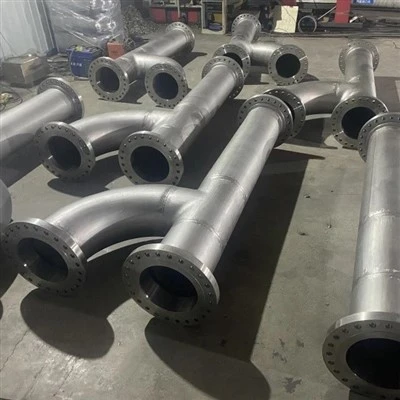
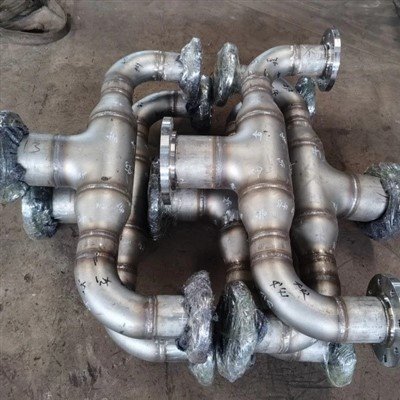
316LN (UNS S31653, EN 1.4406 / 1.4429) is a nitrogen-alloyed, low-carbon version of the classic 316L austenitic stainless steel.
The "N" denotes the intentional addition of nitrogen, which significantly enhances mechanical strength while preserving the excellent corrosion resistance and weldability that make the 316.

316LN Stainless Steel Chemical Composition
|
Element |
316LN (1.4406) |
316LN (1.4429 higher-Mo) |
|
C |
≤ 0.030 |
≤ 0.030 |
|
Cr |
16.5–18.5 |
16.5–18.5 |
|
Ni |
10.0–13.0 |
11.0–14.0 |
|
Mo |
2.00–2.50 |
2.50–3.00 |
|
N |
0.10–0.16 |
0.12–0.22 |
|
Mn |
≤ 2.00 |
≤ 2.00 |
|
Si |
≤ 1.00 |
≤ 0.70 |
|
P, S |
Very low |
Very low |
The higher nitrogen and optional higher molybdenum variant (1.4429) delivers even better pitting and crevice corrosion resistance.
316LN Stainless Steel Mechanical Properties
|
Property |
Value (Typical) |
Standard / Note |
|
Tensile Strength (Rm) |
580–800 MPa |
Higher than 316L (≥ 520 MPa) |
|
Yield Strength (Rp0.2) |
≥ 260–300 MPa |
~40–50% stronger than 316L |
|
Elongation (A5) |
≥ 40–45% |
Excellent ductility |
|
Hardness |
≤ 215 HB / ≤ 95 HRB |
|
|
Impact Toughness (Charpy V, 20°C) |
> 100 J (often > 150 J) |
Remains high even at –196°C |
|
Modulus of Elasticity |
200 GPa (20°C) |
Decreases to ~186 GPa at 200°C |
The nitrogen strengthening effect allows 316LN to be used in higher-stress applications or permits weight reduction through thinner walls while maintaining equivalent load-bearing capacity compared to 316L.
316LN Stainless Steel Physical Properties
|
Property |
Value |
|
Density |
8.00 g/cm³ |
|
Thermal Conductivity |
15 W/m·K |
|
Specific Heat Capacity |
500 J/kg·K |
|
Coefficient of Thermal Expansion |
16.0 × 10⁻⁶/K (20–100°C) |
|
Electrical Resistivity |
0.75 Ω·mm²/m |
|
Melting Range |
1375–1400°C |
|
Magnetic Permeability |
≤ 1.005 (essentially non-magnetic in annealed state) |
316LN Stainless Steel Corrosion Resistance

General & Pitting/Crevice Corrosion: The combination of molybdenum and nitrogen provides outstanding resistance to a wide range of chemical corrodents, including chlorides found in marine and chemical processing environments. Its PREN (Cr% + 3.3Mo% + 16N%) is typically >28.
Intergranular Corrosion: The "LN" combination is particularly effective. The ultra-low carbon minimizes carbide formation, while nitrogen improves the stability of the microstructure in the heat-affected zone of welds, making it an excellent choice for fabricated equipment that cannot be post-weld annealed.
316LN Stainless Steel Fabrication and Welding Characteristics
316LN is generally weldable by all standard fusion methods. However, its higher strength and work hardening rate require consideration:
Welding: Excellent weldability. Common processes include TIG, MIG, and SAW. No post-weld heat treatment is normally required. Use of matching or over-alloyed filler metals is recommended.
Machining: Its higher strength and work-hardening tendency result in a lower machinability rating compared to 304 or 316L. Use rigid setups, positive rake tools, and appropriate coolants.
Cold Working: Excellent ductility allows for severe cold forming operations. However, higher forces are required, and the increased work hardening rate may necessitate intermediate annealing stages for severe deformations.
Conclusion
316LN combines the proven corrosion resistance of the 316 family with markedly higher mechanical strength and improved resistance to pitting and stress corrosion cracking, all while maintaining outstanding weldability and low-temperature toughness.
As a professional stainless steel pipe fittings manufacturer with extensive experience in 316LN forged flanges, butt weld fittings, and seamless/welded piping systems, we maintain ready stock and offer material test certificates in strict accordance with EN 10204.
Contact our technical sales team for quotations on 316LN fittings and flanges.