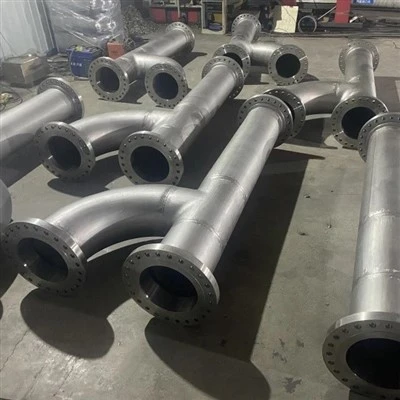
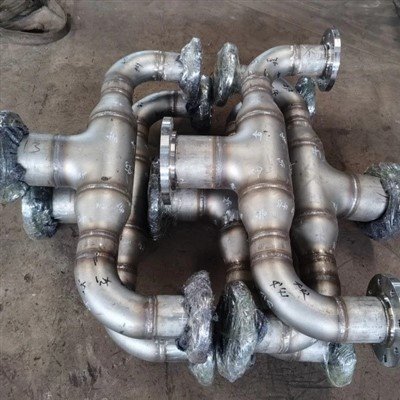
As one of China's trusted distributors of stainless steel pipes, tubes, fittings, and flanges, we regularly assist international clients in selecting the optimum grade for their projects. Two of the most frequently compared austenitic grades are 321 stainless steel and 304 stainless steel.

While both are extremely popular, 321 stainless steel offers specific advantages in elevated-temperature and weld-intensive applications. Below is an objective, data-driven comparison to help purchasers
Chemical Composition
The core difference is their chemical composition.
Both are chromium-nickel austenitic steels, but 321 stainless steel is classified as a "stabilized" grade. It is alloyed with titanium (Ti) at a level typically not less than five times the carbon content. This intentional addition is the defining feature of 321. In contrast, standard 304 stainless steel does not contain titanium.
The purpose of this titanium addition is to prevent a specific phenomenon known as "sensitization," which occurs when stainless steel is exposed to high temperatures. Titanium bonds with carbon more readily than chromium does, forming titanium carbides and thereby preventing the formation of chromium carbides at grain boundaries, which is the root cause of sensitization.
Performance in High-Temperature Environments
321 stainless steel exhibits superior resistance to intergranular corrosion following exposure to the sensitization temperature range. This makes it the unequivocal choice for applications involving sustained high-temperature service, such as in heat exchangers, exhaust systems, boiler components, and pressure vessels operating within that critical range.

While 304 performs excellently at lower and cryogenic temperatures, it is susceptible to sensitization when welded or used in high-temperature environments without subsequent solution annealing. For high-temperature applications, 321 provides enhanced structural integrity and longevity.
Corrosion Resistance
For general corrosion resistance in ambient or mildly corrosive environments, both 321 and 304 offer excellent and very similar performance, thanks to their high chromium and nickel content.
However, the specialized advantage of 321 stainless steel becomes apparent in scenarios involving post-weld corrosion or high-temperature oxidation. Its stabilized structure ensures that the corrosion resistance of the heat-affected zones (HAZ) around welds is not compromised.
In highly aggressive environments where chloride-induced pitting or crevice corrosion is the primary concern, other grades like 316 may be more suitable than either 304 or 321.
321 Stainless Steel or 304
Choose 321 Stainless Steel when your application involves intermittent or continuous service in the 425-815°C range, or for components that will be welded and cannot undergo post-weld annealing but may face corrosive conditions in service. It is the designated material for stabilized performance against sensitization.
Choose 304 stainless steel for general-purpose applications at lower temperatures. It is an excellent, cost-effective choice for architectural trim, food processing equipment, kitchen appliances, chemical containers, and piping systems for water or mild chemicals where high-temperature sensitization is not a concern.

321 and 304 Stainless Steel Cost
Because of the titanium addition and slightly more complex melting practice, 321 stainless steel is consistently 20–40% more expensive than 304 stainless steel.
304 stainless steel is produced in much higher global volumes and is always in stock.
321 stainless steel usually stocked in standard sizes by specialist suppliers; lead times for non-standard dimensions can be 8–14 weeks longer.
If you need seamless/welded 321 stainless steel pipes, butt-weld fittings, or flanges delivered with EN 10204 3.1 certification, our mill-direct supply chain in China can offer competitive pricing and reliable lead times.
Contact our export team today for current stock and quotations.