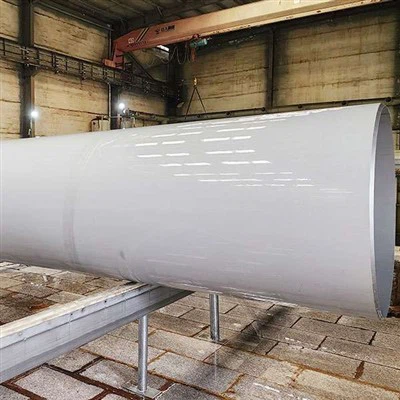
Welding is a critical process in various industries, and understanding its impact on the microstructure evolution of materials is of utmost importance. As a supplier of UNS S34700, I have witnessed firsthand the significance of comprehending how welding affects this particular stainless - steel alloy. In this blog, we will delve into the effects of welding on the microstructure evolution of UNS S34700.
Introduction to UNS S34700
UNS S34700 is a stabilized austenitic stainless steel. It contains niobium, which helps to prevent the formation of chromium carbides at grain boundaries during welding and high - temperature service. This alloy offers excellent corrosion resistance, good mechanical properties, and is widely used in applications such as chemical processing, power generation, and aerospace industries. You can find more detailed information about Stainless Steel 347 / UNS S34700 / 1.4550.
Microstructure of As - Received UNS S34700
The as - received UNS S34700 typically has an austenitic microstructure. Austenite is a face - centered cubic (FCC) crystal structure, which provides good ductility, toughness, and corrosion resistance. The niobium in the alloy forms niobium carbides (NbC), which are finely dispersed in the austenitic matrix. These carbides help to stabilize the structure and prevent the precipitation of chromium carbides, which could lead to intergranular corrosion.
Effects of Welding Heat Input
Austenite Grain Growth
During welding, the heat input causes the temperature in the weld zone and the heat - affected zone (HAZ) to rise significantly. High temperatures can lead to austenite grain growth. In the weld pool, the rapid heating and cooling rates can result in the formation of large austenite grains. In the HAZ, the temperature gradient causes different degrees of grain growth. The closer to the weld center, the higher the temperature and the larger the grain size. Excessive grain growth can reduce the mechanical properties of the material, such as strength and toughness.
Precipitation Reactions
The heat from welding can also trigger precipitation reactions in UNS S34700. Although niobium is added to prevent chromium carbide precipitation, at certain temperatures, other phases may form. For example, during the cooling process after welding, there is a possibility of the precipitation of sigma phase. The sigma phase is a hard and brittle intermetallic compound that can reduce the ductility and corrosion resistance of the material. The formation of sigma phase is more likely to occur at intermediate cooling rates and in the temperature range of 600 - 900°C.
Welding Processes and Their Impact
Gas Tungsten Arc Welding (GTAW)
GTAW is a commonly used welding process for UNS S34700. It provides good control over the heat input and produces high - quality welds. Since GTAW has a relatively low heat input compared to some other processes, it can minimize austenite grain growth and precipitation reactions. The slow and controlled heating and cooling rates in GTAW allow for better microstructural control. However, if the welding parameters are not properly selected, there may still be some degree of grain growth and precipitation in the HAZ.
Shielded Metal Arc Welding (SMAW)
SMAW is another welding process that can be used for UNS S34700. It is more suitable for on - site welding and thicker sections. However, SMAW generally has a higher heat input compared to GTAW. The higher heat input can lead to more significant austenite grain growth in the weld and HAZ. Additionally, the slag produced during SMAW can sometimes cause inclusions in the weld, which may affect the corrosion resistance and mechanical properties of the welded joint.
Comparison with Similar Alloys
When comparing UNS S34700 with similar alloys such as Stainless Steel 321 / UNS S32100 / 1.4541 and Stainless Steel 321H / UNS S32109 / 1.4878, there are some differences in their response to welding. Stainless Steel 321 and 321H are also stabilized austenitic stainless steels, but they are stabilized with titanium instead of niobium. Titanium carbides have different precipitation characteristics compared to niobium carbides.
In terms of welding, the use of titanium in 321 and 321H may result in different precipitation behavior during welding. For example, the formation of titanium - rich phases may occur at different temperatures and cooling rates compared to the niobium - related precipitation in UNS S34700. Additionally, the corrosion resistance of these alloys after welding may also vary due to the differences in their microstructural evolution during the welding process.
Post - Weld Heat Treatment
Post - weld heat treatment (PWHT) can be used to improve the microstructure and properties of welded UNS S34700. A solution annealing treatment at a high temperature (usually around 1050 - 1100°C) can dissolve the precipitated phases and refine the austenite grains. After solution annealing, rapid cooling is required to prevent the re - precipitation of undesirable phases. PWHT can restore the mechanical properties and corrosion resistance of the welded joint to a certain extent.
Conclusion
In conclusion, welding has a significant impact on the microstructure evolution of UNS S34700. The heat input during welding can cause austenite grain growth and precipitation reactions, which may affect the mechanical properties and corrosion resistance of the material. Different welding processes have different effects on the microstructure, and proper selection of welding parameters is crucial. Post - weld heat treatment can be an effective way to improve the properties of the welded joint.


As a supplier of UNS S34700, we understand the importance of providing high - quality materials and technical support for welding applications. If you are interested in purchasing UNS S34700 or have any questions about its welding and application, please feel free to contact us for further discussion and negotiation.
References
- ASM Handbook Volume 6: Welding, Brazing, and Soldering. ASM International.
- Welding Metallurgy and Weldability of Stainless Steels. John C. Lippold, David J. Kotecki.
- Stainless Steel: A Practical Guide. George E. Totten, D. Scott MacKenzie.