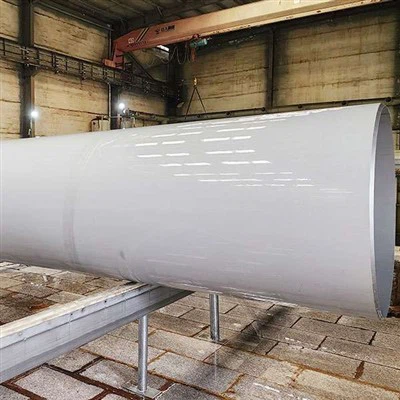
Hey there! As a supplier of UNS S31600, I often get asked about its crevice corrosion resistance. So, I thought I'd write this blog to break it down for you all.
First off, let's understand what crevice corrosion is. Crevice corrosion is a type of localized corrosion that occurs in narrow gaps or crevices where a stagnant solution can accumulate. These crevices can be formed between two metal surfaces in contact, between a metal and a non - metal, or even under deposits on the metal surface. When a crevice forms, the oxygen inside the crevice is quickly consumed by the corrosion reaction. This creates a difference in oxygen concentration between the crevice and the surrounding area, leading to an electrochemical cell. The metal inside the crevice becomes the anode and corrodes at an accelerated rate.
Now, let's talk about UNS S31600. UNS S31600, also known as Stainless Steel 316, is a popular austenitic stainless steel. It contains chromium, nickel, and molybdenum as its main alloying elements. The chromium in the alloy forms a passive oxide layer on the surface of the steel, which provides general corrosion resistance. The nickel enhances the austenitic structure and improves the toughness and ductility of the steel. But the real hero when it comes to crevice corrosion resistance is the molybdenum.
Molybdenum plays a crucial role in improving the crevice corrosion resistance of UNS S31600. It helps to stabilize the passive film on the steel surface, making it more resistant to breakdown in the aggressive environment inside the crevice. The molybdenum also inhibits the dissolution of the metal at the anode within the crevice. In practical applications, UNS S31600 shows significantly better crevice corrosion resistance compared to some other common stainless steels.
For example, when compared to Stainless Steel 304L / UNS S30403 / 1.4306, 1.4307, which doesn't contain molybdenum, UNS S31600 is far more resistant to crevice corrosion. In environments where there are chlorides present, such as marine or industrial settings with chloride - containing chemicals, Stainless Steel 304L can be prone to crevice corrosion, while UNS S31600 holds up much better.
Another comparison can be made with Stainless Steel 310S / UNS S31008 / 1.4845. Stainless Steel 310S is known for its high - temperature resistance, but in terms of crevice corrosion resistance in chloride - containing environments, UNS S31600 is superior. The molybdenum in UNS S31600 gives it an edge in preventing the initiation and propagation of crevice corrosion.
Stainless Steel 321H / UNS S32109 / 1.4878 is another stainless steel with good general properties. However, it lacks the molybdenum content of UNS S31600. So, in situations where crevice corrosion is a concern, especially in the presence of chlorides, UNS S31600 is a better choice.


The crevice corrosion resistance of UNS S31600 also depends on several other factors. The surface finish of the steel can have an impact. A smooth surface finish reduces the likelihood of crevice formation and also makes it easier for the passive film to form and remain intact. Welding can also affect the crevice corrosion resistance. Improper welding can lead to changes in the microstructure and the composition of the steel in the heat - affected zone, potentially reducing its resistance to crevice corrosion. It's important to use proper welding techniques and filler materials to maintain the corrosion - resistant properties of UNS S31600.
The environment in which the steel is used is also a major factor. The concentration of chlorides, the temperature, the pH, and the presence of other contaminants all play a role. In highly concentrated chloride solutions or at elevated temperatures, the crevice corrosion resistance of UNS S31600 may be challenged. But overall, it still performs better than many other stainless steels under similar conditions.
In industrial applications, UNS S31600 is widely used in situations where crevice corrosion is a concern. It's commonly used in the food and beverage industry, where it may come into contact with various solutions and where hygienic conditions are required. In the chemical processing industry, it can be used in equipment such as tanks, pipes, and heat exchangers that handle corrosive chemicals. In the marine industry, UNS S31600 is used for components like boat fittings, railing, and structural parts because of its good resistance to the chloride - rich marine environment.
If you're in need of a material with good crevice corrosion resistance, UNS S31600 is definitely worth considering. As a supplier, I can offer you high - quality UNS S31600 products. Whether you need sheets, plates, bars, or pipes, I can provide them in the specifications you require. I can also offer technical support to help you ensure that you're using the material correctly to get the best performance in terms of crevice corrosion resistance.
If you're interested in purchasing UNS S31600 or have any questions about its crevice corrosion resistance or other properties, feel free to reach out. We can have a detailed discussion about your specific requirements and find the best solution for your project.
References:
- ASM Handbook Volume 13A: Corrosion: Fundamentals, Testing, and Protection
- Metals Handbook Desk Edition, Third Edition