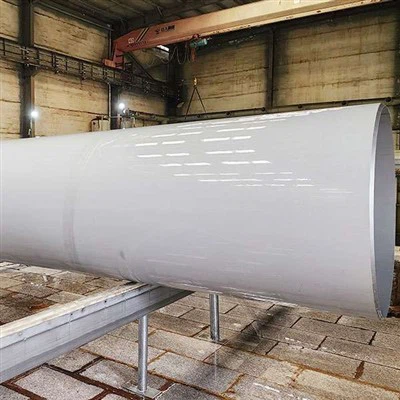
Hey there! As a supplier of UNS N08367, I often get asked about its corrosion rate in different media. UNS N08367, also known as 6XN, is a high-performance austenitic stainless steel. It's packed with a high amount of nickel, chromium, and molybdenum, which gives it some top - notch corrosion - resistant properties. Let's dive right into how it behaves in various media.
In Seawater
Seawater is a harsh environment, full of chlorides, salts, and other corrosive agents. Chlorides are notorious for causing pitting and crevice corrosion in many metals. But UNS N08367 shows remarkable resistance in seawater.
The high molybdenum content (around 6.5%) in UNS N08367 forms a protective oxide layer on the surface of the steel. This layer acts as a barrier, preventing the chlorides from attacking the underlying metal. Studies have shown that in natural seawater at room temperature, the corrosion rate of UNS N08367 is extremely low, often less than 0.05 mm/year. This makes it a great choice for applications like seawater desalination plants, offshore oil and gas platforms, and marine equipment.
In comparison, other common stainless steels like Stainless Steel 316LN / UNS S31653 / 1.4406, 1.4429 have a lower molybdenum content (around 2 - 3%). In seawater, 316LN may experience pitting and crevice corrosion over time, especially in areas where there are stagnant conditions or deposits. Its corrosion rate can be significantly higher than that of UNS N08367, sometimes reaching up to 0.1 - 0.2 mm/year under certain conditions.
In Acidic Media
Sulfuric Acid
The behavior of UNS N08367 in sulfuric acid depends on the concentration and temperature of the acid. In dilute sulfuric acid (less than 10% concentration) at room temperature, UNS N08367 has good resistance. The chromium in the alloy forms a passive film that protects the steel from the acid attack. The corrosion rate is relatively low, typically in the range of 0.1 - 0.5 mm/year.
However, as the concentration of sulfuric acid increases or the temperature rises, the corrosion rate starts to increase. In concentrated sulfuric acid (above 50% concentration), especially at elevated temperatures (above 60°C), the protective oxide layer may break down, and the corrosion rate can become quite high.
On the other hand, Stainless Steel 304L / UNS S30403 / 1.4306, 1.4307 has limited resistance to sulfuric acid. Even in dilute sulfuric acid, 304L can corrode at a faster rate compared to UNS N08367. Its lack of sufficient molybdenum and higher carbon content make it more susceptible to acid attack.
Hydrochloric Acid
Hydrochloric acid is a strong reducing acid, and it's very aggressive towards most metals. UNS N08367 has some resistance in dilute hydrochloric acid (less than 5% concentration) at low temperatures. But as the concentration and temperature increase, the corrosion rate rises rapidly.
In comparison, many common stainless steels, including 304L and 316LN, have very poor resistance to hydrochloric acid. They can corrode almost immediately in concentrated hydrochloric acid, even at room temperature.
In Alkaline Media
UNS N08367 generally shows good resistance in alkaline media. Alkaline solutions, such as sodium hydroxide solutions, don't usually cause significant corrosion to this alloy. The high nickel content in UNS N08367 helps to maintain the integrity of the metal in alkaline environments.
In most cases, in dilute sodium hydroxide solutions (less than 10% concentration) at room temperature, the corrosion rate of UNS N08367 is less than 0.01 mm/year. Even at higher concentrations and moderate temperatures, the corrosion rate remains relatively low.


Stainless Steel 321 / UNS S32100 / 1.4541 also has some resistance to alkaline media, but it may not be as good as UNS N08367 in some cases. The addition of titanium in 321 helps to prevent intergranular corrosion in certain environments, but in highly concentrated alkaline solutions, its corrosion rate may be slightly higher than that of UNS N08367.
Factors Affecting Corrosion Rate
Apart from the type of media, several other factors can affect the corrosion rate of UNS N08367.
Temperature
As mentioned earlier, an increase in temperature usually accelerates the corrosion process. Higher temperatures provide more energy for chemical reactions to occur, which can break down the protective oxide layer more quickly. For example, in seawater, if the temperature rises from 20°C to 40°C, the corrosion rate of UNS N08367 may double or even triple.
Flow Rate
The flow rate of the medium also plays a role. In a flowing medium, the fresh medium continuously replaces the corroded layer, which can either increase or decrease the corrosion rate. In some cases, a moderate flow rate can help to keep the protective layer intact by removing any corrosion products. However, a very high - velocity flow can cause erosion - corrosion, where the mechanical action of the flowing medium wears away the protective layer and exposes the metal to further corrosion.
Surface Finish
A smooth surface finish can enhance the corrosion resistance of UNS N08367. Rough surfaces can trap corrosive agents, creating areas where pitting and crevice corrosion are more likely to occur. Polishing the surface of the alloy can reduce the surface area available for corrosion and make it easier for the protective oxide layer to form and maintain.
Why Choose UNS N08367?
Given its excellent corrosion resistance in various media, UNS N08367 is a top choice for many critical applications. Whether it's in the chemical processing industry, marine engineering, or food and beverage industry, this alloy can provide long - term reliability and performance.
If you're in the market for a high - performance stainless steel that can withstand harsh environments, UNS N08367 is definitely worth considering. We, as a supplier of UNS N08367, can offer you high - quality products that meet all the necessary standards. If you have any questions about the corrosion rate in a specific medium or need more information about our products, feel free to reach out. We're here to assist you in making the right choice for your projects. Contact us to start a discussion about your procurement needs and let's work together to find the best solution for you.
References
- ASTM International. Standard specifications related to UNS N08367.
- Corrosion handbooks and technical literature on stainless steels.
- Research papers on the corrosion behavior of UNS N08367 in different media.