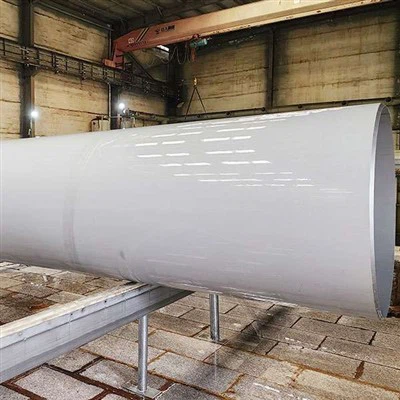
UNS S32109, also known as Stainless Steel 321H, is a stabilized austenitic stainless steel that offers excellent resistance to intergranular corrosion, especially in applications involving elevated temperatures. As a trusted supplier of UNS S32109, I am often asked about the surface finish of this remarkable alloy. In this blog post, I will delve into the various surface finishes available for UNS S32109, their characteristics, and the factors to consider when choosing the right finish for your specific application.
Understanding Surface Finish
Surface finish refers to the texture, smoothness, and appearance of the surface of a material. It plays a crucial role in determining the functionality, durability, and aesthetics of a product. In the case of UNS S32109, the surface finish can impact its corrosion resistance, cleanability, and overall performance in different environments.
Common Surface Finishes for UNS S32109
There are several surface finishes commonly applied to UNS S32109, each with its own unique properties and benefits. Let's take a closer look at some of the most popular options:
Mill Finish (No. 1 Finish)
The mill finish, also known as the No. 1 finish, is the most basic and commonly used surface finish for stainless steel. It is produced by hot rolling the steel and then annealing and descaling it. The mill finish has a dull, matte appearance and a relatively rough surface texture. It is suitable for applications where appearance is not a critical factor, such as structural components and industrial equipment.
Cold Rolled Finish (No. 2D Finish)
The No. 2D finish is a cold-rolled finish that is produced by cold rolling the steel and then annealing and pickling it. It has a smooth, flat surface with a slight sheen. The No. 2D finish is commonly used in applications where a moderate level of corrosion resistance and a cleanable surface are required, such as food processing equipment and chemical tanks.
Bright Annealed Finish (No. 2B Finish)
The No. 2B finish is similar to the No. 2D finish, but it is produced by annealing the steel in a controlled atmosphere to achieve a bright, reflective surface. The No. 2B finish has a smooth, uniform appearance and excellent corrosion resistance. It is commonly used in applications where a high level of aesthetics and corrosion resistance are required, such as architectural applications and decorative items.
Polished Finish (No. 3, No. 4, and No. 8 Finishes)
Polished finishes are achieved by mechanically polishing the surface of the steel to remove scratches and create a smooth, shiny surface. There are several different levels of polished finishes available, including No. 3, No. 4, and No. 8 finishes. The No. 3 finish has a coarse, brushed appearance, while the No. 4 finish has a finer, more uniform brushed appearance. The No. 8 finish, also known as a mirror finish, has a highly reflective surface that is similar to a mirror. Polished finishes are commonly used in applications where a high level of aesthetics and a cleanable surface are required, such as jewelry, kitchen appliances, and architectural applications.


Bead Blasted Finish
The bead blasted finish is achieved by blasting the surface of the steel with small glass beads to create a uniform, matte surface. The bead blasted finish has a textured appearance that is resistant to fingerprints and scratches. It is commonly used in applications where a non-reflective surface and a high level of corrosion resistance are required, such as automotive parts and medical equipment.
Factors to Consider When Choosing a Surface Finish
When choosing a surface finish for UNS S32109, there are several factors to consider, including:
Application Requirements
The first and most important factor to consider is the specific requirements of your application. Consider the environment in which the product will be used, the level of corrosion resistance required, and the desired appearance of the product. For example, if the product will be used in a harsh chemical environment, a high-quality polished finish or a bright annealed finish may be required to provide maximum corrosion resistance. On the other hand, if the product will be used in a less demanding environment, a mill finish or a cold rolled finish may be sufficient.
Aesthetics
The appearance of the product is another important factor to consider. The surface finish can have a significant impact on the overall aesthetics of the product, so it is important to choose a finish that complements the design and style of the product. For example, if the product is intended for use in a modern, minimalist design, a polished finish or a mirror finish may be the best choice. On the other hand, if the product is intended for use in a more rustic or industrial design, a bead blasted finish or a brushed finish may be more appropriate.
Cleanability
The cleanability of the surface finish is also an important consideration, especially in applications where hygiene is a concern. A smooth, non-porous surface finish is easier to clean and sanitize than a rough, textured surface finish. For example, a polished finish or a bright annealed finish is easier to clean than a mill finish or a bead blasted finish.
Cost
The cost of the surface finish is another factor to consider. Some surface finishes, such as polished finishes and mirror finishes, are more expensive to produce than others, such as mill finishes and cold rolled finishes. It is important to balance the cost of the surface finish with the specific requirements of your application to ensure that you are getting the best value for your money.
Conclusion
In conclusion, the surface finish of UNS S32109 plays a crucial role in determining its functionality, durability, and aesthetics. There are several different surface finishes available for UNS S32109, each with its own unique properties and benefits. When choosing a surface finish, it is important to consider the specific requirements of your application, the desired appearance of the product, the cleanability of the surface finish, and the cost. As a trusted supplier of UNS S32109, I can help you choose the right surface finish for your specific needs. If you have any questions or would like to discuss your requirements further, please do not hesitate to [initiate a conversation for procurement discussions]. We are here to assist you in finding the perfect solution for your project.
References
- ASM Handbook Volume 13A: Corrosion: Fundamentals, Testing, and Protection
- Stainless Steel: A Primer, The Nickel Institute
- ASTM A240/A240M - Standard Specification for Chromium and Chromium-Nickel Stainless Steel Plate, Sheet, and Strip for Pressure Vessels and for General Applications