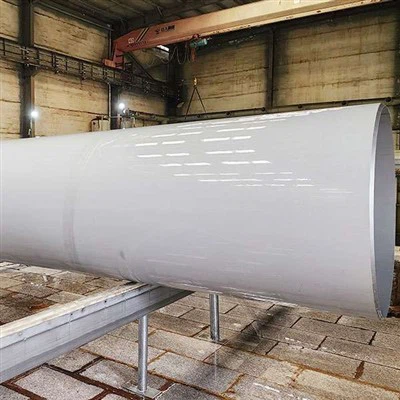
UNS S32100, also known as Stainless Steel 321, is a popular austenitic stainless steel alloy that offers excellent corrosion resistance and high-temperature stability. As a supplier of UNS S32100, I often receive inquiries about how this alloy reacts with various acids. In this blog post, I will delve into the chemical reactions of UNS S32100 with different types of acids, exploring its performance and limitations in acidic environments.
Understanding UNS S32100
Before we discuss its reaction with acids, let's briefly understand the composition and properties of UNS S32100. This alloy contains chromium (Cr), nickel (Ni), and titanium (Ti) as its primary alloying elements. Chromium provides the alloy with a passive oxide layer on its surface, which protects it from corrosion. Nickel enhances the alloy's toughness and ductility, while titanium stabilizes the carbon in the alloy, preventing the formation of chromium carbides and improving its resistance to intergranular corrosion.
UNS S32100 has good mechanical properties and is suitable for a wide range of applications, including aerospace, chemical processing, and food processing industries. Its high-temperature strength and oxidation resistance make it particularly useful in applications where the material is exposed to elevated temperatures.
Reaction with Sulfuric Acid
Sulfuric acid (H₂SO₄) is a strong mineral acid commonly used in various industrial processes. The reaction of UNS S32100 with sulfuric acid depends on the concentration and temperature of the acid.
At low concentrations (less than 10%) and room temperature, UNS S32100 exhibits good resistance to sulfuric acid. The passive oxide layer on the surface of the alloy protects it from corrosion. However, as the concentration of sulfuric acid increases or the temperature rises, the corrosion rate of UNS S32100 also increases.
In concentrated sulfuric acid (greater than 90%) at high temperatures, UNS S32100 may experience severe corrosion. The passive oxide layer can be damaged, and the alloy can react with the acid to form metal sulfates and hydrogen gas. For example, the reaction can be represented by the following equation:
Fe + H₂SO₄ → FeSO₄ + H₂
Here, iron (Fe) from the alloy reacts with sulfuric acid to produce iron sulfate (FeSO₄) and hydrogen gas (H₂).
Reaction with Hydrochloric Acid
Hydrochloric acid (HCl) is another strong acid that is widely used in the chemical industry. UNS S32100 has limited resistance to hydrochloric acid, especially at higher concentrations and temperatures.
Hydrochloric acid can break down the passive oxide layer on the surface of the alloy, exposing the underlying metal to corrosion. Even at low concentrations and room temperature, UNS S32100 may experience pitting corrosion in hydrochloric acid. Pitting corrosion is a localized form of corrosion that can lead to the formation of small holes or pits on the surface of the material.
As the concentration of hydrochloric acid increases or the temperature rises, the corrosion rate of UNS S32100 increases significantly. In some cases, the alloy may undergo general corrosion, where the entire surface of the material is attacked. Therefore, UNS S32100 is not recommended for use in environments where it will be exposed to hydrochloric acid for extended periods.
Reaction with Nitric Acid
Nitric acid (HNO₃) is a strong oxidizing acid. UNS S32100 generally has good resistance to nitric acid, especially at low to moderate concentrations and temperatures.
The passive oxide layer on the surface of the alloy is stable in nitric acid, and the alloy can maintain its corrosion resistance. However, at high concentrations and elevated temperatures, nitric acid can react with the alloy and cause corrosion. The reaction may involve the oxidation of the alloying elements, such as chromium and nickel.
For example, chromium in the alloy can be oxidized by nitric acid to form chromium(III) nitrate:
2Cr + 6HNO₃ → 2Cr(NO₃)₃ + 3H₂
This reaction can lead to the degradation of the alloy's corrosion resistance over time.
Comparison with Other Stainless Steels
When considering the use of UNS S32100 in acidic environments, it is useful to compare its performance with other stainless steels.
Stainless Steel 304 / UNS S30400 / 1.4301 is a commonly used austenitic stainless steel. It has similar corrosion resistance to UNS S32100 in many acidic environments. However, UNS S32100 has better resistance to intergranular corrosion due to the presence of titanium.
Stainless Steel 316 / UNS S31600 / 1.4401 contains molybdenum (Mo), which enhances its resistance to pitting and crevice corrosion. In some acidic environments, especially those containing chloride ions, Stainless Steel 316 may perform better than UNS S32100.
Stainless Steel AL6XN / UNS N08367 / 1.4529 is a high-performance austenitic stainless steel with excellent corrosion resistance in a wide range of acidic and chloride-containing environments. It has higher levels of chromium, nickel, and molybdenum compared to UNS S32100, and it can withstand more aggressive acidic conditions.
Applications and Limitations
Based on its reaction with acids, UNS S32100 is suitable for applications where the material is exposed to mild acidic environments or where the acid concentration and temperature are relatively low. For example, it can be used in the food processing industry for equipment that comes into contact with weak acids, such as citric acid.


However, in applications where the material will be exposed to strong acids, high concentrations of acids, or elevated temperatures, other stainless steels or corrosion-resistant alloys may be more appropriate. It is important to carefully evaluate the specific requirements of the application and consider factors such as acid type, concentration, temperature, and exposure time before selecting the appropriate material.
Conclusion
In conclusion, the reaction of UNS S32100 with acids depends on the type, concentration, and temperature of the acid. While it has good resistance to some acids, such as nitric acid at low to moderate conditions, it has limited resistance to others, such as hydrochloric acid. When considering the use of UNS S32100 in acidic environments, it is essential to understand its performance and limitations.
As a supplier of UNS S32100, I am committed to providing high-quality products and technical support to our customers. If you are interested in purchasing UNS S32100 or need more information about its performance in acidic environments, please feel free to contact us for further discussion. We can help you select the most suitable material for your specific application based on your requirements.
References
- ASM Handbook, Volume 13A: Corrosion, ASM International.
- Stainless Steel: A Practical Guide, The Nickel Institute.