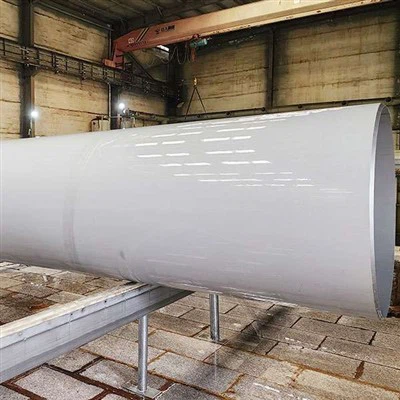
UNS S17400, also known as 17 - 4 PH stainless steel, is a precipitation - hardening martensitic stainless steel. As a supplier of UNS S17400, I've received numerous inquiries about its high - temperature performance. In this blog, I'll delve into the key aspects of how UNS S17400 behaves under high - temperature conditions.


Chemical Composition and Its Influence on High - Temperature Performance
The chemical composition of UNS S17400 plays a fundamental role in determining its high - temperature characteristics. It typically contains around 15 - 17.5% chromium (Cr), 3 - 5% nickel (Ni), 3 - 5% copper (Cu), and small amounts of other elements such as niobium (Nb) and nitrogen (N). Chromium is crucial as it forms a protective oxide layer on the surface of the steel when exposed to high temperatures. This oxide layer acts as a barrier, preventing further oxidation and corrosion of the underlying metal. Nickel enhances the toughness and ductility of the steel, even at elevated temperatures. Copper contributes to the precipitation - hardening process, which can improve the strength of the material at both room and high temperatures.
Mechanical Properties at High Temperatures
Tensile Strength
As the temperature rises, the tensile strength of UNS S17400 gradually decreases. At room temperature, the typical tensile strength of heat - treated UNS S17400 can range from 1000 - 1300 MPa, depending on the specific heat - treatment conditions. However, when the temperature reaches around 400 - 500°C, the tensile strength starts to decline. By 600°C, the tensile strength may drop to approximately 50 - 60% of its room - temperature value. This decrease in strength is mainly due to the softening of the martensitic structure and the coarsening of the precipitates that contribute to the strength of the material.
Yield Strength
Similar to tensile strength, the yield strength of UNS S17400 also decreases with increasing temperature. The yield strength represents the stress at which the material begins to deform plastically. At high temperatures, the mobility of dislocations in the crystal lattice of the steel increases, making it easier for the material to deform under stress. This results in a lower yield strength. For example, at 500°C, the yield strength may be around 40 - 50% of the room - temperature yield strength.
Creep Resistance
Creep is the slow, time - dependent deformation of a material under a constant load at high temperatures. UNS S17400 has relatively good creep resistance compared to some other stainless steels. The precipitation - hardened structure of the steel helps to impede the movement of dislocations, which is the main mechanism of creep deformation. However, prolonged exposure to high temperatures and high stresses can still lead to significant creep deformation. For applications where long - term high - temperature and high - stress conditions are expected, the creep behavior of UNS S17400 needs to be carefully considered.
Oxidation and Corrosion Resistance at High Temperatures
Oxidation
When exposed to high - temperature environments, UNS S17400 forms an oxide layer on its surface. The composition and structure of this oxide layer depend on the temperature, the duration of exposure, and the atmosphere. At temperatures below 600°C, the oxide layer is mainly composed of chromium oxide (Cr₂O₃), which is a stable and protective oxide. This layer can effectively prevent further oxidation of the underlying steel. However, at temperatures above 600°C, the oxidation rate increases significantly. The oxide layer may become thicker and more porous, and additional oxides such as iron oxide (Fe₂O₃) may form, which are less protective than chromium oxide.
Corrosion
In addition to oxidation, UNS S17400 may also be subject to other forms of corrosion at high temperatures, such as sulfidation and carburization. Sulfidation occurs when the steel is exposed to sulfur - containing environments at high temperatures. The sulfur can react with the metal to form metal sulfides, which can cause pitting and cracking of the material. Carburization involves the diffusion of carbon into the steel at high temperatures, which can lead to changes in the composition and properties of the surface layer, such as increased hardness and brittleness.
Comparison with Other Stainless Steels
When comparing the high - temperature performance of UNS S17400 with other stainless steels, it's important to consider the specific requirements of the application. For example, Stainless Steel 316Ti / UNS S31635 / 1.4571 and Stainless Steel 316L / UNS S31603 / 1.4404 are austenitic stainless steels. They generally have better corrosion resistance in acidic and chloride - containing environments at high temperatures compared to UNS S17400. However, UNS S17400 has higher strength at room and moderate high temperatures due to its precipitation - hardening ability. Stainless Steel 317L / UNS S31703 / 1.4438 is another austenitic stainless steel with enhanced corrosion resistance, especially in chloride - rich environments. But its strength at high temperatures may not be as high as that of UNS S17400 in some cases.
Applications Based on High - Temperature Performance
Aerospace Industry
In the aerospace industry, UNS S17400 is used in components such as engine parts, landing gear, and structural components. These components may be exposed to high temperatures during operation, but they also require high strength and good corrosion resistance. The high - temperature performance of UNS S17400 allows it to meet these requirements. For example, some engine components may experience temperatures up to 500 - 600°C during normal operation, and the relatively good strength and oxidation resistance of UNS S17400 make it a suitable material choice.
Oil and Gas Industry
In the oil and gas industry, UNS S17400 is used in valves, pumps, and other equipment that may be exposed to high - temperature and corrosive environments. The high - temperature performance of the steel helps to ensure the reliability and longevity of these components. For instance, in downhole applications, the equipment may be exposed to high - temperature and high - pressure conditions, and the ability of UNS S17400 to resist corrosion and maintain its mechanical properties is crucial.
Heat Treatment and Its Impact on High - Temperature Performance
The high - temperature performance of UNS S17400 can be significantly affected by the heat - treatment process. The most common heat - treatment for UNS S17400 involves solution annealing followed by aging. Solution annealing is typically carried out at a high temperature (around 1020 - 1065°C) to dissolve all the alloying elements in the martensitic matrix. After solution annealing, the material is quenched to form a supersaturated solid solution. Aging is then performed at a lower temperature (around 480 - 620°C) to precipitate the strengthening phases, such as copper - rich precipitates and niobium - rich carbides.
Proper heat - treatment can optimize the high - temperature performance of UNS S17400. For example, a well - controlled aging process can result in a fine and uniform distribution of precipitates, which can improve the strength and creep resistance of the material at high temperatures. On the other hand, improper heat - treatment, such as over - aging or under - aging, can lead to a decrease in the high - temperature performance, such as reduced strength and increased susceptibility to oxidation.
Conclusion
In conclusion, the high - temperature performance of UNS S17400 is a complex topic that involves multiple factors, including chemical composition, mechanical properties, oxidation and corrosion resistance, and heat - treatment. While the material has some limitations in terms of strength and oxidation resistance at very high temperatures, it still offers a good balance of properties for many high - temperature applications. As a supplier of UNS S17400, I understand the importance of providing high - quality materials that meet the specific requirements of different industries. If you are interested in using UNS S17400 for your high - temperature applications, please feel free to contact me for more information and to discuss your procurement needs.
References
- ASM Handbook Volume 1: Properties and Selection: Irons, Steels, and High - Performance Alloys
- Metals Handbook Desk Edition, 3rd Edition