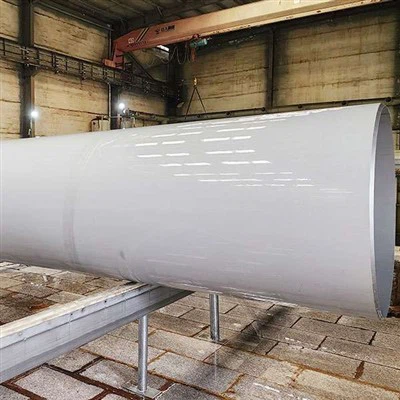
UNS S34709, also known as Stainless Steel 347H, is a stabilized austenitic stainless steel. The addition of niobium in this alloy provides excellent resistance to intergranular corrosion after exposure to elevated temperatures, making it a popular choice in high - temperature applications such as power generation, chemical processing, and heat exchangers. As a trusted supplier of UNS S34709, I am well - versed in its properties and heat treatment methods, which play a crucial role in optimizing its performance.
Solution Annealing
Solution annealing is a fundamental heat treatment method for UNS S34709. This process involves heating the alloy to a high temperature, typically between 1040 - 1120°C (1904 - 2048°F), and holding it at this temperature for a sufficient period to dissolve all the carbides and other precipitates in the austenitic matrix. After that, the material is rapidly quenched, usually in water or air, to retain the homogeneous austenitic structure at room temperature.
The main purpose of solution annealing is to restore the corrosion resistance of the alloy. During welding or other high - temperature operations, chromium carbides can form at the grain boundaries, leading to a phenomenon called sensitization. Sensitization reduces the chromium content in the vicinity of the grain boundaries, making the alloy more susceptible to intergranular corrosion. Solution annealing redissolves these carbides, ensuring that the chromium is uniformly distributed throughout the material and thus restoring its corrosion - resistant properties.
Moreover, solution annealing can also improve the ductility and toughness of UNS S34709. By eliminating the hard and brittle precipitates, the alloy becomes more malleable, which is beneficial for subsequent forming and machining processes.
Stress Relieving
Stress relieving is another important heat treatment for UNS S34709. When the alloy is subjected to cold working, such as rolling, bending, or machining, internal stresses are generated within the material. These internal stresses can cause distortion, cracking, or reduced dimensional stability over time. Stress relieving helps to reduce these internal stresses and improve the overall stability of the alloy.
The stress - relieving process involves heating the alloy to a relatively low temperature, typically between 590 - 675°C (1094 - 1247°F), and holding it at this temperature for a specific time, usually 1 - 2 hours, depending on the thickness and size of the material. After that, the material is slowly cooled in the furnace.
It is important to note that the stress - relieving temperature should be carefully controlled. If the temperature is too high, there is a risk of carbide precipitation and sensitization, which can degrade the corrosion resistance of the alloy. On the other hand, if the temperature is too low, the internal stresses may not be effectively relieved.
Precipitation Hardening
Although UNS S34709 is not a typical precipitation - hardening stainless steel, in some special cases, a certain degree of precipitation hardening can be achieved. The niobium in the alloy can form niobium carbides and other intermetallic compounds during a specific heat - treatment process, which can increase the strength and hardness of the material.
The precipitation - hardening process usually involves heating the alloy to a temperature around 700 - 900°C (1292 - 1652°F) and holding it for a certain period, followed by slow cooling. During this process, the niobium atoms diffuse and combine with carbon atoms to form fine - dispersed precipitates within the austenitic matrix. These precipitates act as obstacles to dislocation movement, thereby increasing the strength of the alloy.
However, precipitation hardening needs to be carefully balanced with the corrosion resistance of the alloy. Excessive precipitation can lead to a reduction in corrosion resistance, especially in environments containing aggressive media.
Comparison with Other Stainless Steels
When considering heat treatment, it is interesting to compare UNS S34709 with other stainless steels. For example, Stainless Steel 321H / UNS S32109 / 1.4878 is also a stabilized austenitic stainless steel, but it uses titanium instead of niobium for stabilization. The heat - treatment processes for 321H are similar to those of UNS S34709 in terms of solution annealing and stress relieving. However, the precipitation behavior and the resulting properties may differ due to the different stabilizing elements.
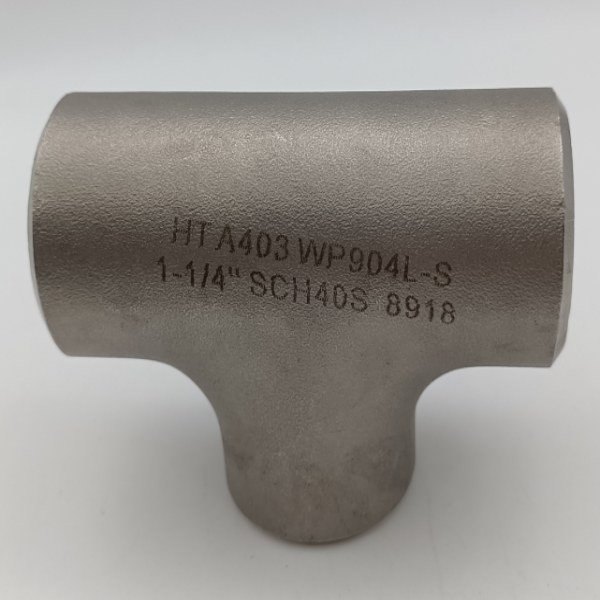
Stainless Steel 904L / UNS N08904 / 1.4539 is a high - alloy austenitic stainless steel with a high nickel and molybdenum content. It is often used in highly corrosive environments. The heat - treatment requirements for 904L are different from UNS S34709. 904L usually undergoes solution annealing to ensure its corrosion resistance, but its response to precipitation hardening is not as significant as some other alloys because of its unique chemical composition.

Stainless Steel AL6XN / UNS N08367 / 1.4529 is a super austenitic stainless steel. It has excellent resistance to pitting, crevice corrosion, and stress - corrosion cracking. The heat - treatment methods for AL6XN are carefully designed to optimize its corrosion - resistant properties and mechanical performance. Compared with UNS S34709, AL6XN may require more precise control of the heat - treatment parameters due to its higher alloy content.
Importance of Proper Heat Treatment
Proper heat treatment is of utmost importance for UNS S34709. The right heat - treatment process can significantly enhance the performance of the alloy, including its corrosion resistance, strength, ductility, and dimensional stability. In high - temperature applications, such as in the power generation industry, the alloy needs to maintain its mechanical properties and corrosion resistance over a long period. Incorrect heat treatment can lead to premature failure of the components, which can result in costly repairs and downtime.
For example, if the solution annealing temperature is too low or the holding time is insufficient, the carbides may not be completely dissolved, leading to reduced corrosion resistance. On the other hand, over - heating during stress relieving or precipitation hardening can cause unwanted microstructural changes and degrade the performance of the alloy.
As a supplier of UNS S34709, I work closely with customers to ensure that they understand the importance of proper heat treatment. I provide detailed technical support and guidance on heat - treatment processes, taking into account the specific application requirements and the form of the supplied material (e.g., sheets, bars, or tubes).
Conclusion
In conclusion, UNS S34709 is a versatile austenitic stainless steel with excellent high - temperature and corrosion - resistant properties. The heat treatment methods, including solution annealing, stress relieving, and precipitation hardening, play a vital role in optimizing its performance. Each heat - treatment process has its own purpose and requires careful control of the temperature, time, and cooling rate.
Comparing with other stainless steels, UNS S34709 has its own unique characteristics in terms of heat treatment and resulting properties. Understanding these differences can help customers make more informed decisions when selecting the appropriate stainless steel for their applications.
If you are interested in purchasing UNS S34709 or need more information about its heat treatment and application, please feel free to contact me. I am committed to providing high - quality products and professional technical support to meet your specific needs.
References
- ASM Handbook Volume 4: Heat Treating. ASM International.
- Stainless Steel: A Guide to Properties, Processing, and Applications. Elsevier.
- Corrosion Resistance of Stainless Steels. NACE International.