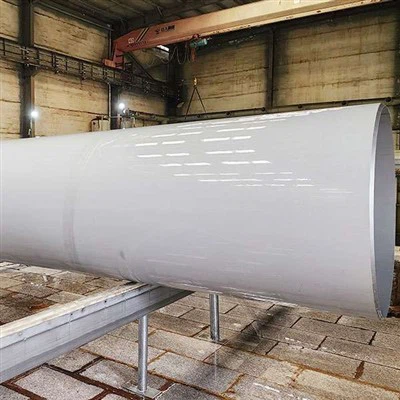
UNS N08904, also known as 904L, is a super austenitic stainless steel with excellent corrosion resistance properties. As a supplier of UNS N08904, I often receive inquiries about its standards, especially the JIS (Japanese Industrial Standards) for this alloy. In this blog post, I will delve into what the JIS standard for UNS N08904 entails, its significance, and how it compares to other related materials.
Understanding UNS N08904
Before we explore the JIS standard, let's first understand the characteristics of UNS N08904. This alloy contains high levels of chromium, nickel, and molybdenum, along with a small amount of copper. These elements contribute to its outstanding corrosion resistance, particularly in environments containing sulfuric acid, phosphoric acid, and chloride ions. UNS N08904 is widely used in industries such as chemical processing, food and beverage, and marine applications.
The JIS Standard for UNS N08904
In the JIS system, UNS N08904 is equivalent to SUS317J1. The JIS standard provides detailed specifications for the chemical composition, mechanical properties, and heat treatment of this alloy.
Chemical Composition
The chemical composition of SUS317J1 (UNS N08904) according to the JIS standard is as follows:
- Carbon (C): ≤ 0.020%
- Silicon (Si): ≤ 1.00%
- Manganese (Mn): ≤ 2.00%
- Phosphorus (P): ≤ 0.045%
- Sulfur (S): ≤ 0.030%
- Chromium (Cr): 19.0 - 23.0%
- Nickel (Ni): 23.0 - 28.0%
- Molybdenum (Mo): 4.0 - 5.0%
- Copper (Cu): 1.0 - 2.0%
These strict limits on chemical composition ensure the consistent performance of the alloy in various applications. For example, the low carbon content helps to prevent sensitization and intergranular corrosion, which is crucial in corrosive environments.
Mechanical Properties
The JIS standard also defines the mechanical properties of SUS317J1. The typical values include:
- Tensile strength: ≥ 490 MPa
- Yield strength: ≥ 215 MPa
- Elongation: ≥ 35%
These properties make UNS N08904 suitable for applications that require high strength and ductility. For instance, in the construction of chemical storage tanks, the alloy needs to withstand internal pressure and external forces without failure.
Heat Treatment
Heat treatment is an important process for achieving the desired properties of UNS N08904. According to the JIS standard, the solution annealing temperature for SUS317J1 is typically in the range of 1050 - 1150°C, followed by rapid cooling. This heat treatment helps to dissolve any precipitates and achieve a homogeneous microstructure, thereby enhancing the corrosion resistance and mechanical properties of the alloy.


Comparison with Other Stainless Steels
To better understand the advantages of UNS N08904 under the JIS standard, let's compare it with some other commonly used stainless steels, such as Stainless Steel 316 / UNS S31600 / 1.4401, Stainless Steel 347 / UNS S34700 / 1.4550, and Stainless Steel 254SMO / F44 / UNS S31254 / 1.4547.
Stainless Steel 316
Stainless Steel 316 is a popular austenitic stainless steel with good corrosion resistance. However, compared to UNS N08904, it has lower levels of nickel and molybdenum. This makes UNS N08904 more resistant to corrosion in harsh environments, especially those containing high concentrations of chloride ions.
Stainless Steel 347
Stainless Steel 347 contains niobium, which helps to stabilize the alloy and prevent intergranular corrosion. While it has good high-temperature performance, its corrosion resistance in certain acidic environments is not as good as that of UNS N08904.
Stainless Steel 254SMO
Stainless Steel 254SMO is a super austenitic stainless steel with excellent corrosion resistance. It has a higher molybdenum content than UNS N08904, which gives it superior resistance to pitting and crevice corrosion. However, UNS N08904 is more cost-effective in some applications, making it a preferred choice for certain industries.
Importance of Adhering to the JIS Standard
Adhering to the JIS standard for UNS N08904 is crucial for both suppliers and end-users. For suppliers, it ensures the quality and consistency of the products they offer. By following the strict chemical composition and mechanical property requirements, suppliers can provide customers with reliable and high-performance alloys.
For end-users, using materials that meet the JIS standard gives them confidence in the performance of the alloy. It reduces the risk of premature failure and maintenance costs, especially in critical applications where corrosion resistance is of utmost importance.
Conclusion
In conclusion, the JIS standard for UNS N08904 (equivalent to SUS317J1) provides comprehensive specifications for the chemical composition, mechanical properties, and heat treatment of this alloy. These specifications ensure its excellent corrosion resistance and mechanical performance in various applications. Compared to other stainless steels, UNS N08904 offers a good balance between performance and cost.
As a supplier of UNS N08904, we are committed to providing high-quality products that meet the JIS standard. If you are interested in purchasing UNS N08904 for your project, please feel free to contact us for more information and to discuss your specific requirements. We look forward to the opportunity to work with you and provide you with the best solutions for your needs.
References
- JIS G 4303: Stainless steel bars
- JIS G 4304: Hot-rolled stainless steel plates, sheets and strips
- ASM Handbook, Volume 13A: Corrosion: Fundamentals, Testing, and Protection