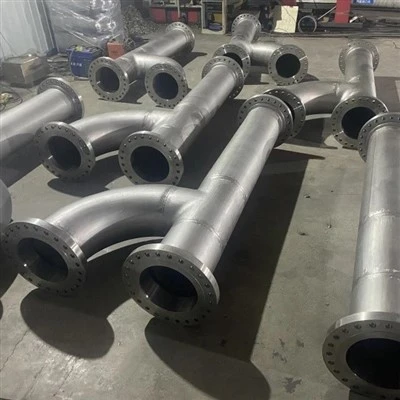
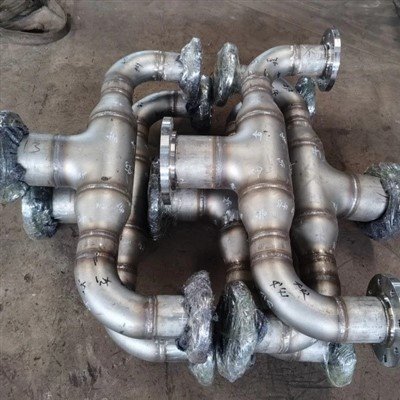
Finding the right high-performance stainless steel for demanding applications is crucial. A182 F51 is a widely specified grade for critical forged components. Understanding its equivalent names and standards is essential for global sourcing, design, and manufacturing. This article clarifies the key equivalents of A182 F51.

What is ASTM A182 F51?
ASTM A182 F51 is a standard specification from ASTM International (formerly the American Society for Testing and Materials). It defines the requirements for forged or rolled alloy and stainless steel pipe flanges, forged fittings, and valves and parts intended for high-temperature service. The "F51" designation specifically identifies a duplex stainless steel grade. This means A182 F51 combines properties from both ferritic and austenitic stainless steel families, offering a blend of high strength and good corrosion resistance. Parts made to this standard include critical components like flanges, fittings, and valves used under pressure.
In the global marketplace, the same material is often known by different names or specified under different national or international standards. Knowing that A182 F51 has equivalents ensures you can source the correct material worldwide, understand technical data sheets from different regions, and confirm that a material offered under another standard meets the necessary properties for your A182 F51 application. This knowledge prevents confusion and guarantees you get the right material with the expected performance.
A182 F51 Equivalent Grades and Standards
The most important equivalent designation for A182 F51 is its Unified Numbering System (UNS) code: S31803. This UNS number is universally recognized and provides a direct link to the specific chemical composition and properties expected of A182 F51. Within the European standard system (EN), the equivalent wrought material grade is EN 1.4462.
This EN standard covers the base steel used to make products like plate, sheet, bar, and tube. The older German standard (DIN) designation, X2CrNiMoN22-5-3, is still sometimes referenced and corresponds directly to A182 F51 / UNS S31803 / EN 1.4462.
Furthermore, this duplex stainless steel is very commonly known in the industry by its generic alloy name: 2205. While "2205" is a popular shorthand, specifying A182 F51, UNS S31803, or EN 1.4462 provides the precise technical definition needed for procurement and quality assurance of forged parts.
F51 Duplex Advantages
The material defined by A182 F51 and its equivalents offers significant advantages. Duplex stainless steels like this have a microstructure that is roughly half ferritic and half austenitic. This structure gives them approximately twice the yield strength of standard austenitic stainless steels (like 304 or 316). This high strength allows for thinner, lighter components, which can be a major advantage. Equally important is their excellent resistance to stress corrosion cracking (SCC), a common failure mode for standard austenitic steels in chloride-containing environments. A182 F51 also offers very good resistance to pitting and crevice corrosion, especially in seawater, brackish water, and chemical processing environments containing chlorides. Its corrosion resistance generally surpasses Type 316L stainless steel.
Common Applications for A182 F51
Due to its strength and corrosion resistance profile, A182 F51 forged parts are widely used in demanding industries. You will commonly find A182 F51 flanges, fittings, and valves in oil and gas production and refining, particularly offshore platforms and subsea systems exposed to seawater and sour (H2S-containing) environments. The chemical and petrochemical processing industry relies on it for handling corrosive chemicals, acids, and chlorides. Pulp and paper manufacturing, desalination plants, and marine applications also frequently utilize A182 F51 components. Power generation, especially in systems using cooling water or flue gas cleaning, is another key area. Essentially, any application requiring high strength combined with resistance to chlorides and stress corrosion cracking is a potential fit for A182 F51.
Choosing the Right Supplier for A182 F51
Sourcing genuine A182 F51 forged components requires a reliable supplier. JN Company specializes in high-performance alloys and understands the critical nature of these parts. We provide A182 F51 flanges, fittings, and valves that strictly comply with the ASTM A182 F51 standard. Crucially, we ensure full material traceability, providing comprehensive Material Test Reports (MTRs / Certs 3.1) that confirm the chemical composition and mechanical properties meet the F51 specification. We perform rigorous Positive Material Identification (PMI) testing to guarantee the material grade is correct. Our expertise helps you navigate the complexities of material standards and equivalents like UNS S31803 or EN 1.4462, ensuring you receive the right duplex stainless steel solution for your pressure-containing systems.
Conclusion
ASTM A182 F51 is a vital specification for high-strength, corrosion-resistant duplex stainless steel forged components. Its direct and universally accepted equivalents are UNS S31803 and the European wrought grade EN 1.4462. It is also widely known as 2205 duplex stainless steel. Understanding these equivalents is key for global sourcing and ensuring material compatibility. A182 F51 offers superior strength and excellent resistance to chloride-induced stress corrosion cracking, pitting, and crevice corrosion, making it indispensable in offshore oil & gas, chemical processing, desalination, and marine applications. When you need reliable A182 F51 flanges, fittings, or valves, partnering with JN guarantees genuine material, full traceability, and adherence to the highest quality standards. Contact JN today for your duplex stainless steel requirements.