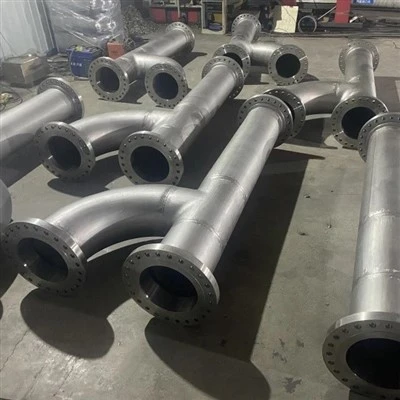
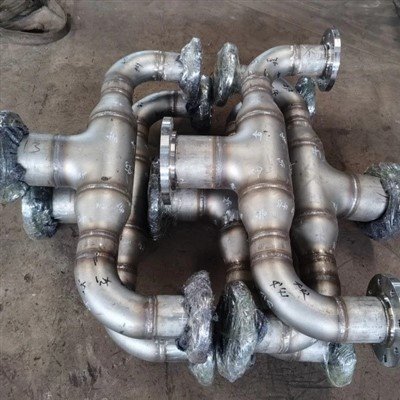
What is ASTM A182 F55?
ASTM A182 F55 is a specification for forged or rolled alloy and stainless steel pipe flanges, forged fittings, and valves and parts intended for high-temperature service. Within this broad standard, Grade F55 specifically refers to a super duplex stainless steel known for its exceptional combination of high strength and outstanding corrosion resistance. It is essentially the forged product form of the wrought grade UNS S32760 (commonly known by trade names like ZERON® 100). This material is chosen for demanding applications, particularly those involving harsh environments like seawater, chemical processing, and oil and gas extraction, where both strength and resistance to corrosion, pitting, crevice corrosion, and stress corrosion cracking (SCC) are essential.
A82 F55 Chemical Composition
The superior properties of A182 F55 stem from its carefully balanced chemical composition. Like all duplex stainless steels, it features a near-equal mixture of ferrite and austenite phases in its microstructure. Key alloying elements include a high level of Chromium (Cr - typically 24-26%) for excellent general corrosion resistance and passive film formation. Molybdenum (Mo - typically 3.0-4.0%) significantly enhances resistance to pitting and crevice corrosion, especially in chloride-containing environments. Nitrogen (N - around 0.2-0.3%) is a powerful strengthener and improves both pitting resistance and stability of the austenitic phase. Tungsten (W - around 0.5-1.0%) further contributes to pitting resistance and overall strength. Copper (Cu - typically 0.5-1.0%) improves corrosion resistance in certain acids, especially sulfuric acid. This unique chemistry gives F55 its "super duplex" classification, exceeding the performance of standard duplex grades like F51 (UNS S31803) and F53 (UNS S32750).
F55 Properties and Advantages
Combining the best features of ferritic and austenitic stainless steels, A182 F55 exhibits remarkable advantages:
- Exceptional Strength: Its yield strength is roughly double that of standard austenitic grades like 316L and about 25-30% higher than standard duplex grades like F51. This allows for thinner sections and lighter weight components, reducing material costs and installation weight.
- Outstanding Corrosion Resistance: F55 offers very high resistance to pitting corrosion (measured by a high Pitting Resistance Equivalent Number - PREN > 40). It performs exceptionally well in chloride-rich environments like seawater, brackish water, and brine solutions, resisting pitting, crevice corrosion, and stress corrosion cracking (SCC) far better than 316L or standard duplex grades.
- Good Fabricability and Toughness: While requiring more care than austenitic steels, modern F55 super duplex offers good weldability following appropriate procedures (pre-heat, controlled heat input, specific filler metals, post-weld cleaning) and possesses excellent impact toughness at low temperatures.
- Cost-Effectiveness: Despite its higher initial cost compared to 316L or standard duplex, its superior strength often allows for weight reduction, and its exceptional longevity in aggressive environments significantly reduces life-cycle costs due to less maintenance and fewer replacements.
F55 Product Manufacturing Process
A182 F55 components start as carefully melted and refined ingots or continuously cast blooms/billets, ensuring the precise chemical composition and low impurity levels required. The primary shaping process for flanges, fittings, and valves covered by A182 is hot forging. The steel is heated to specific high temperatures (often around 1100-1250°C) to make it plastic. It is then deformed under high pressure using hammers or presses into the desired near-net shape of the flange or fitting. This forging process refines the internal grain structure, eliminating defects from solidification and significantly enhancing mechanical properties like strength and toughness compared to cast products. After forging, components undergo rigorous solution annealing. This critical heat treatment involves heating the steel to around 1040-1120°C and rapidly quenching (water cooling). This dissolves any detrimental secondary phases (like sigma phase) that might form during cooling from forging temperatures and ensures the correct, balanced duplex microstructure (approximately 50% ferrite, 50% austenite). Finally, the components are precision machined to meet exact dimensional tolerances specified in standards like ASME B16.5, ASME B16.47 for flanges. Thorough surface cleaning, typically pickling or abrasive blasting, removes scale and restores the protective passive oxide layer.
A182 F55 Common Applications
The unique combination of properties makes A182 F55 forged products vital in industries where failure is not an option:
- Oil and Gas: Critical flange joints, manifold components, christmas trees, downhole equipment, valves in piping systems handling seawater injection, production fluids, topside process equipment. Resists chloride-induced SCC and pitting in high-pressure/temperature environments.
- Chemical Processing: Reactors, pressure vessels, heat exchangers, piping systems handling corrosive chemicals including acids, chlorides, and solvents where both high strength and corrosion resistance are mandatory.
- Desalination and Water Treatment: High-pressure reverse osmosis (RO) membranes housings, pumps, valves, piping systems handling seawater and brine with high chloride content.
- Marine and Shipbuilding: Seawater piping systems, pumps, valves, prop shafts, rudders, and other critical marine components exposed to saltwater.
- Power Generation: Flue Gas Desulfurization systems handling aggressive, acidic slurries containing chlorides.
Conclusion
ASTM A182 / ASME SA-182 F55 super duplex stainless steel represents the pinnacle for forged piping components in the most challenging corrosive and high-stress environments. Its dual-phase structure provides a rare synergy of very high strength and excellent corrosion resistance, particularly against chlorides. Components like flanges and fittings made to the A182 F55 standard are critical for ensuring long-term integrity and safety in offshore platforms, desalination plants, chemical reactors, and deep-sea equipment. When sourcing A182 F55 products, always ensure they are supplied with the mandatory Material Test Report (MTR/ASTM / ASME Mill Certificate) confirming compliance with the chemical composition, mechanical properties, and heat treatment requirements. This certification is your assurance that the material possesses the properties you rely on for your critical application. Choosing ASME SA-182 F55 is an investment in reliability, safety, and reduced life-cycle costs for demanding industrial systems.