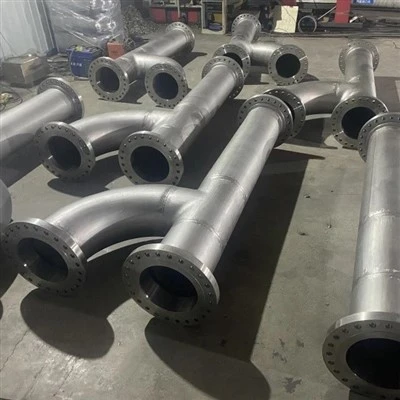
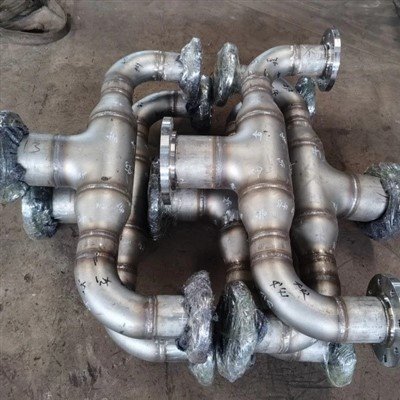
In the world of engineering and fabrication, selecting the right stainless steel grade is critical. If you're working with high-temperature equipment, pressure vessels, or welded components, you've likely encountered F321 material. But what exactly is it? This article provides a clear, professional explanation of ASTM A182 F321 stainless steel, its properties, benefits, and typical applications. As specialists in high-integrity nickel alloys and stainless steel products, JN Company ensures this grade meets the strictest quality demands.

Defining F321 Material and Composition
F321 material refers to a specific type of stainless steel defined by the ASTM A182 standard. This standard covers forged or rolled alloy and stainless steel pipe flanges, forged fittings, and valves for high-temperature service. The "F" designation specifically indicates it's a forging grade used to make critical components like flanges, pipe fittings, and valve bodies. Its composition is fundamentally based on the common 18-8 stainless steel (like 304) but with a vital addition: Titanium (Ti). The key elements are approximately 17-19% Chromium, 9-12% Nickel, and a minimum Carbon content of 0.08% (often designated as 321). Crucially, F321 contains Titanium in an amount at least 5 times the Carbon content, but typically around 0.60-0.80%. This titanium is the defining feature and primary reason for selecting F321.
Key Benefit of F321
The main reason for adding Titanium to F321 is to combat a problem called sensitization or intergranular corrosion. When standard stainless steels like 304 are heated to temperatures between roughly 800°F (427°C) and 1500°F (816°C) – a range encountered during welding or high-temperature service – Chromium Carbides can form along the boundaries between the metal grains. This depletes the chromium in the areas next to the grain boundaries. Since chromium is essential for forming the protective passive layer, these chromium-depleted zones become highly vulnerable to corrosion attack, especially in aggressive environments. This weakens the material significantly at the grain boundaries. In F321, the added Titanium has a much stronger attraction to Carbon than Chromium does. During welding or high-temperature exposure, the Titanium preferentially combines with the Carbon to form stable Titanium Carbides, preventing the Chromium from being "tied up." This keeps sufficient Chromium available in the grain boundaries to maintain corrosion resistance. Simply put, Titanium acts as a chemical trap for Carbon, protecting the Chromium.
F321 Material Properties
F321 exhibits very similar fundamental mechanical properties and corrosion resistance to standard 304 stainless steel under most conditions. Its strength, hardness, ductility, and general corrosion resistance in mild environments are comparable. The primary advantage lies in its significantly improved resistance to sensitization during welding or exposure in the dangerous temperature range. It performs well from cryogenic temperatures up to moderate high-temperatures, though it lacks the very high-temperature creep strength of stabilized grades like 347 containing Niobium (Nb) or H-grade variants like 321H designed specifically for higher temperatures. While offering superior resistance to grain boundary attack, general corrosion resistance remains similar to 304, meaning environments requiring higher levels of molybdenum (like 316) may not be suitable for F321. Its weldability is generally good.
F321 Material Products
Manufacturing F321 components demands controlled processes. Like other stainless steels, it starts as molten metal precisely alloyed in Electric Arc Furnaces (EAF), often refined further by Argon Oxygen Decarburization (AOD) to achieve exact chemistry. For critical parts like heavy forgings, Vacuum Arc Remelting (VAR) or Electro-Slag Remelting (ESR) processes may be used to ensure ultra-high purity and homogeneity. The specific F321 composition is carefully verified. The material is then formed into forgeable shapes like billets or bars. Components are produced through forging under high pressure and heat. This process enhances the material's grain structure and mechanical properties. Crucially, after hot working, F321 undergoes solution annealing at very high temperatures (around 1900°F / 1040°C). This heat treatment dissolves any carbides formed during processing and places both the Chromium and Titanium back into solution within the grain structure. The material is then rapidly quenched (water cooled) to freeze this uniform microstructure. This annealed state is essential for achieving optimal corrosion resistance before service. Additional steps include precise machining to final dimensions and surface treatments like pickling and passivating to remove scale and restore the chrome oxide passive layer.
F321 Material Applications
F321 finds widespread application wherever standard austenitic stainless steel is suitable, but where welding or service temperatures within the sensitization range are unavoidable, and high purity is crucial. Key industries and components include:
Chemical Processing: Pressure vessels, reactor tanks, heat exchanger components, piping systems (especially welded joints), pump bodies, chemical storage tanks. Resists many organic acids and oxidizing environments.
Oil & Gas: Downhole tubing, pressure vessels, valve bodies, pipe flanges, and fittings exposed to sour gas environments.
Power Generation: Boiler components, steam lines, flanges, fittings in fossil fuel and some nuclear plants where moderate temperatures are present.
Aerospace: Engine manifolds, exhaust ducting, thermal anti-icing systems.
General Fabrication: Structural parts subject to welding operating in corrosive environments. Its reliability in maintaining corrosion resistance after welding makes F321 essential for critical pressure-containing parts destined for aggressive or high-integrity service.
F321 vs. 304 316 347
F321 is often compared to other common grades:
F321 vs. F304/F304L: F321 offers vastly superior resistance to intergranular corrosion post-welding or high-temp exposure compared to standard 304/304L. This is its key advantage. Otherwise, properties are similar.
F321 vs. F316/F316L: F316 offers better general corrosion resistance, especially against pitting in chloride environments, due to its 2-3% Molybdenum content. F321 excels primarily in preventing sensitization in welded joints for non-chloride aggressive environments.
F321 vs. F347: While F347 (using Niobium) also prevents sensitization effectively, F321 is generally preferred for its better formability and weldability. F347 offers slightly superior creep strength at very high temperatures. F321H is a higher carbon variant of F321 designed specifically for superior high-temperature creep strength comparable to 347.
F321 vs. 321 Plate/Tube: F321 specifically refers to the forging grade per ASTM A182. Bar, plate, and tube stock would be designated 321 per standards like ASTM A479/A240 (bar/plate) or A312/A213 (seamless tube). All fall under the broader "321" classification defined by the key Ti addition.
Why Choose JN Company for Your F321 Material Needs?
At JN Company, we understand the critical nature of materials like F321. Our extensive expertise in stainless steel and high-performance alloys ensures you receive F321 components manufactured to the highest standards. We strictly comply with ASTM A182 specifications, utilizing controlled melting, precision forging, essential solution annealing, and thorough quality control (including chemical analysis, mechanical testing, visual inspection, and non-destructive testing like PMI). By choosing JN, you gain a reliable partner committed to providing F321 material with guaranteed traceability (Mill Test Reports MTR to EN 10204 3.1), performance reliability, and the long-term integrity your high-temperature, welded stainless steel applications require. Trust JN Company for your essential corrosion-resistant forged components.