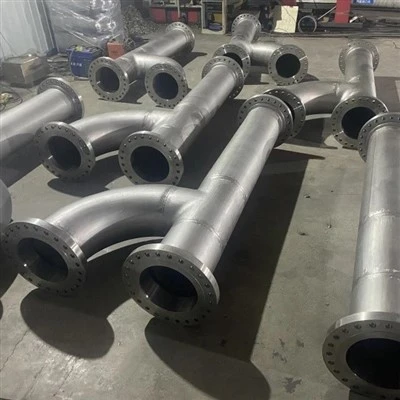
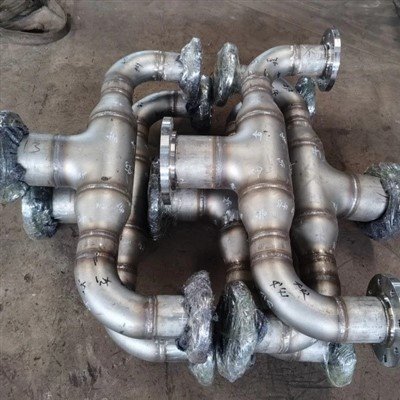
Understanding the chemical composition of F91 steel is crucial for engineers and metallurgists working in demanding high-temperature environments, particularly power generation and petrochemical industries. F91, also known as modified 9Cr-1Mo steel (Grade 91), belongs to the family of creep-resistant ferritic steels. Its carefully balanced blend of elements provides exceptional strength, resistance to oxidation, and long-term stability under extreme heat and pressure. Let's break down the key components that make F91 steel so effective.

F91 Steel Major Compositions
The power of F91 steel comes from its precise combination of alloying elements, each playing a specific role:
Chromium (Cr): 8.00% - 9.50%: Chromium is the cornerstone of F91's oxidation and corrosion resistance. It forms a protective, adherent chromium oxide (Cr₂O₃) layer on the steel's surface when exposed to high temperatures and oxidizing atmospheres (like steam). This layer shields the underlying metal from further degradation. Chromium also contributes significantly to the steel's hardenability and overall strength, particularly at elevated temperatures.
Molybdenum (Mo): 0.85% - 1.05%: Molybdenum is a potent strengthener, especially at high temperatures. It enhances the steel's creep strength – its ability to resist slow, continuous deformation under constant stress at high heat. Molybdenum also improves hardenability and helps maintain strength during tempering. It contributes to solid solution strengthening within the steel's crystal structure.
Vanadium (V): 0.18% - 0.25%: Vanadium is a key player in precipitation strengthening. It combines with carbon and nitrogen to form very fine, stable vanadium carbide (VC) and vanadium nitride (VN) particles. These tiny particles act as obstacles, effectively pinning dislocations (defects in the crystal lattice) and dramatically increasing the steel's strength and creep resistance. This is one of the critical modifications distinguishing F91 from earlier 9Cr-1Mo steels.
Niobium (Nb): 0.06% - 0.10%: Niobium (also known as Columbium, Cb) works synergistically with vanadium. It forms fine niobium carbide (NbC) and niobium nitride (NbN) particles. These particles contribute to precipitation strengthening, help refine the grain size of the steel during heat treatment, and enhance creep strength. Niobium carbides/nitrides are stable at very high temperatures, providing long-term strengthening.
Carbon (C): 0.08% - 0.12%: Carbon is essential for strength and hardenability. It combines with chromium, vanadium, and niobium to form the vital carbides that provide precipitation strengthening and contribute to the overall strength of the steel matrix. The carbon content is carefully controlled; too little reduces strength, while too much can negatively impact toughness and weldability.
Manganese (Mn): 0.30% - 0.60%: Manganese primarily aids in deoxidation during steelmaking, helping to remove unwanted oxygen and improve soundness. It also contributes to solid solution strengthening and enhances hardenability, ensuring the steel can be properly heat-treated to achieve its desired microstructure and properties.
Silicon (Si): 0.20% - 0.50%: Silicon is a strong deoxidizer, crucial for producing clean steel free from excessive porosity. It also improves resistance to oxidation and scaling at high temperatures by enhancing the stability of the protective chromium oxide layer. Silicon contributes moderately to solid solution strengthening.
Nitrogen (N): 0.030% - 0.070%: Nitrogen is intentionally added to F91 steel. It combines with vanadium and niobium to form fine, stable vanadium nitride (VN) and niobium nitride (NbN) precipitates. These nitrides are incredibly effective at pinning dislocations and grain boundaries, significantly boosting creep strength and high-temperature stability. Controlling nitrogen levels is vital for optimal precipitate formation.
F91 Steel Processing Steps
Precipitation Strengthening: The core of F91's high-temperature strength lies in the fine dispersion of MX-type precipitates where M = V, Nb; X = C, N – primarily vanadium and niobium carbides and nitrides. These form during the normalizing and tempering heat treatment and remain stable, effectively blocking dislocation movement even at very high temperatures.
Solid Solution Strengthening: Chromium, molybdenum, manganese, and silicon dissolve within the ferrite, distorting the crystal lattice and making it harder for dislocations to move, providing baseline strength.
Microstructural Stability: The combination of elements promotes a stable tempered martensitic structure. Chromium and molybdenum help suppress the formation of undesirable phases like delta-ferrite during solidification and heat treatment. The fine precipitates also help stabilize the grain structure against coarsening over time at high temperatures.
Oxidation/Corrosion Resistance: The chromium content ensures the formation of the protective chromia scale, vital for service in steam and flue gas environments.
Why Understanding F91 Composition So Important
Knowing the precise chemical composition of F91 steel is important for several reasons:
- Ensures the steel is suitable for the specific temperature, pressure, and corrosive environment of the application like boiler tubes, superheater headers, steam piping, pressure vessels.
- Chemical analysis is mandatory to verify the material meets the required specification like ASTM A182 F91 for flanges) before components are put into service. Certificates like Mill Test Reports (MTRs) provide this data.
- The optimal normalizing and tempering processes are designed based on the alloying elements to achieve the desired tempered martensite structure and precipitate distribution.
- The composition influences welding procedures. Precise control of preheat, interpass temperature, and post-weld heat treatment (PWHT) is critical to avoid cracking and ensure the weld and heat-affected zone (HAZ) achieve properties matching the base metal.
- Long-Term Performance: Understanding how the elements interact helps predict the steel's behavior over decades of service, particularly regarding creep life and microstructural stability.
In essence, the chemical composition of F91 steel is a meticulously crafted recipe. Its strength, stability, and resistance are directly derived from the precise balance of these fundamental components.