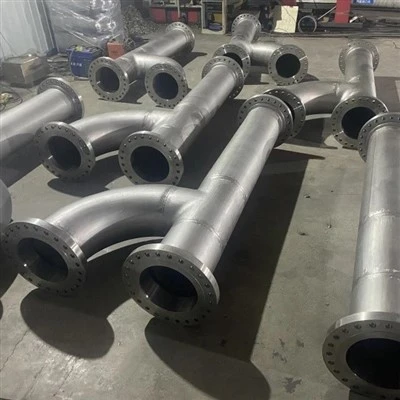
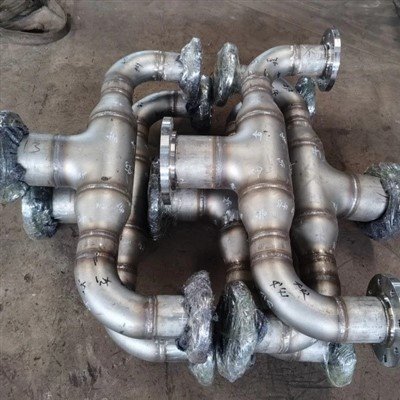
254 SMO isn't just a random code – it's a widely recognized commercial name for a high-performance super austenitic stainless steel. It means the UNS S31254. When someone refers to 254 SMO, they are specifically talking about this unique alloy defined by the UNS S31254 standard.
In essence, 254 SMO = UNS S31254.
This 254smo signifies a material to excel where standard stainless steels like 304 or 316 fall short, particularly in highly corrosive environments. Let me introduce what makes 254 SMO (S31254) so significant.
Meaning of 254SMO
"254" is simply part of the trademarked brand name originally developed by the company Outokumpu. It doesn't has a specific technical meaning like the numbers in the 300 series like 304, 316 which often relate to carbon content variations. 254 is primarily a unique identifier for this specific alloy composition under the SMO umbrella.
"SMO" stands for Seawater Material Outokumpu (or Super Molybdenum Organization). Crucially, it signals that this alloy belongs to austenitic stainless steels exceptionally alloyed with Molybdenum (Mo). The high molybdenum content (around 6%) is the signal of its enhanced corrosion resistance.
"UNS S31254" is the universal, standardized identifier defined by organizations like ASTM and SAE. It precisely defines the chemical composition ranges and fundamental properties of the alloy. This is the designation you'll find on material certificates and in technical specifications globally.

Why is S31254 So Important?
254 SMO earns its "super austenitic" status due to its meticulously balanced high-alloy composition:
- High Chromium (Cr ~20%): Provides fundamental resistance to oxidation and general corrosion.
- High Nickel (Ni ~18%): Stabilizes the austenitic structure (non-magnetic), improves ductility, toughness, and resistance to stress corrosion cracking (SCC).
- Very High Molybdenum (Mo ~6%): Dramatically boosts resistance to pitting corrosion and crevice corrosion, especially in chloride-containing environments like seawater, brackish water, bleach solutions, and process chemicals.
- Nitrogen (N ~0.2%): Significantly enhances strength and further improves pitting resistance. It acts synergistically with Molybdenum.
- Copper (Cu ~0.7-1%): Added to improve resistance to sulfuric acid.
SMO254 Key Characteristics

Corrosion Resistance:
- Pitting Resistance Equivalent Number (PREN): 254 SMO boasts a PREN > 43, placing it far above 316 and even duplex 2205. This makes it a top choice for aggressive chloride environments.
- Excellent resistance to seawater, brackish water, chlorinated water, brine solutions.
- Superior resistance to acids like sulfuric, phosphoric, acetic, and formic acids.
- Strong resistance to stress corrosion cracking (SCC) compared to standard austenitics.
Excellent Fabricability:
- Despite its high strength, it retains good ductility and can be formed and welded using techniques similar to other austenitic stainless steels though requiring specific matching high-alloy filler metals like alloy 625 or 725.
Good Weldability:
- Argon arc welding is usually used, with high arc energy and concentrated heat; and the cooling effect of argon gas flow, small heat-affected zone, is conducive to improving the resistance of welded joints to intergranular corrosion. At the same time, the welding quality is stable, the weld is well formed, and there is no spatter and slag.
Non-magnetic:
- Maintain a completely austenitic structure.
254 SMO S31254 Applications
- Offshore and Marine: Seawater piping systems, pumps, valves, heat exchangers, desalination plant components (MSF, MED, RO), ballast systems, offshore platform equipment.
- Chemical Processing: Reactors, tanks, piping, pumps, valves handling aggressive acids, chlorides, and corrosive process streams. FGD (Flue Gas Desulfurization) scrubber systems.
- Pulp and Paper Industry: Bleach plants, digesters, piping in corrosive sections.
- Oil and Gas: Downhole equipment, topside piping for corrosive production fluids, seawater injection systems.
- Pharmaceutical: Equipment requiring high purity and resistance to aggressive cleaning agents.
- Pollution Control: Scrubbers, effluent treatment plants.
- Power Generation: Condensers, cooling water systems using seawater or brackish water.
254 SMO vs. 316L vs. 2205 vs. Inconel 625

SMO254 vs. 316L: 254 SMO has vastly superior corrosion resistance, especially to pitting and crevice corrosion in chlorides, and higher strength. 316L is suitable for less severe environments.
254 SMO vs. Duplex 2205: While duplex 2205 offers high strength and good corrosion resistance at a lower cost than 254 SMO, 254 SMO provides significantly better corrosion resistance, especially in very high chloride, low pH, or oxidizing acid environments. 254 SMO also has better ductility and toughness at cryogenic temperatures.
254smo vs. Alloy 625: 254 SMO offers comparable or better corrosion resistance in many chloride environments at a lower cost. Inconel 625 excels in higher temperatures and more extreme oxidizing conditions.
FAQs
Is 254 SMO the same as 316L?
No. 254 SMO (S31254) has significantly higher levels of Chromium, Nickel, Molybdenum, and added Nitrogen and Copper, giving it vastly superior corrosion resistance and strength.
Why is 254 SMO so expensive?
The high content of expensive alloying elements like Nickel, Molybdenum, and Chromium drives its cost. This is justified by its performance in critical applications where failure is not an option.
Can 254 SMO rust?
While highly resistant, no material is completely immune. Under extremely aggressive conditions (e.g., very high chlorides, low pH, elevated temperatures, stagnant conditions), localized corrosion like pitting could initiate. However, its threshold is much higher than standard grades.
How do you weld 254 SMO?
It requires careful procedures using high-alloy filler metals designed to match or exceed its corrosion resistance (e.g., ERNiCrMo-3/Alloy 625, ERNiCrMo-4/Alloy 625 LC, ERNiCrMo-10/Alloy 22, or specific over-alloyed stainless wires like 725). Proper shielding gas (e.g., Argon + 30-40% Helium) and control of heat input are crucial.
Is 254 SMO magnetic?
No, it is fully austenitic and typically non-magnetic.