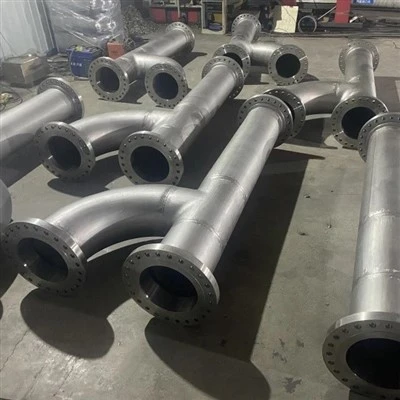
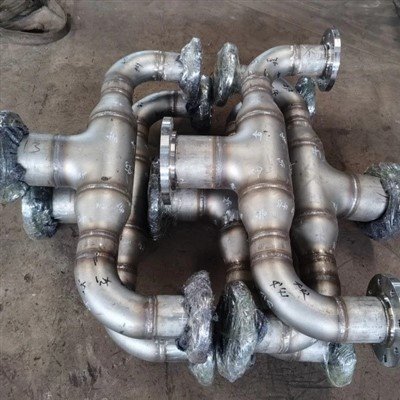
ASTM A182 F6a is the cornerstone martensitic stainless steel specification for forged high-pressure, high-temperature components in critical industries like oil and gas, power generation, and chemical processing.
F6A grade is a carefully engineered balance of corrosion resistance, mechanical strength, and thermal stability specifically designed for pressure-retaining parts including flanges, fittings, valves, and pump bodies operating under extreme service conditions. The "a" suffix denotes its specific normalized-and-tempered heat treatment condition, a crucial differentiator that significantly enhances its toughness and stress corrosion cracking resistance compared to the annealed F6 Class 1 variant.
Understanding F6a's properties, limitations, and proper application is essential for engineers specifying materials for sour service environments, steam systems, and hydrocarbon processing.


Chemical Composition of ASTM A182 F6A
The controlled chemical composition of ASTM A182 F6a forms the basis of its performance characteristics. As a 12-13% chromium martensitic stainless steel, it achieves a unique blend of moderate corrosion resistance, high strength, and good hardenability without relying on expensive nickel additions. The precise elemental ranges, mandated by the ASTM A182 specification, ensure consistent metallurgical behavior and weldability across different heats and manufacturers.
Key elements include Chromium for passivation and oxidation resistance, Carbon for strength and hardenability, and controlled levels of Silicon and Manganese for deoxidation and hot workability. Trace elements like Phosphorus and Sulfur are kept extremely low to preserve toughness and weld integrity, especially critical for components in refineries and offshore platforms where brittle fracture risks must be minimized.
Table 1: ASTM A182 F6a Chemical Composition Requirements (Weight %)
|
Element |
Minimum |
Maximum |
Key Impact on Material Properties |
|
Carbon (C) |
- |
0.15 |
Strength, hardness, hardenability |
|
Manganese (Mn) |
- |
1.00 |
Deoxidation, hot workability |
|
Phosphorus (P) |
- |
0.040 |
Reduces toughness (controlled) |
|
Sulfur (S) |
- |
0.030 |
Machinability (limited for weldability) |
|
Silicon (Si) |
- |
0.60 |
Deoxidation, strength |
|
Chromium (Cr) |
11.50 |
13.50 |
Corrosion/oxidation resistance |
|
Nickel (Ni) |
- |
0.75* |
Residual element control |
|
Molybdenum (Mo) |
- |
0.60* |
Enhances strength at temperature |
|
Note: Ni + Mo ≤ 1.00% max |
ASTM A182 F6A Mechanical Properties
The normalized-and-tempered heat treatment is the defining characteristic of F6a, transforming its microstructure to deliver superior mechanical properties compared to annealed F6 Class 1. Normalizing (heating to approximately 1650°F/900°C followed by air cooling) refines the grain structure and ensures uniform transformation to martensite. Subsequent tempering between 1100-1400°F (595-760°C) relieves stresses induced during quenching and transforms brittle martensite into tempered martensite, dramatically improving toughness and ductility while maintaining high strength.
This thermomechanical processing results in a Brinell hardness range of 174-217 HB, providing an optimal compromise between wear resistance and resistance to stress corrosion cracking (SCC), particularly in environments containing chlorides or sulfides. The mandatory mechanical property minimums ensure structural reliability under pressure loads and cyclic stresses encountered in valve stems, wellhead equipment, and turbine components.
Table 2: ASTM A182 F6a Minimum Mechanical Property Requirements
|
Property |
Imperial |
Metric (SI) |
Test Standard |
|
Tensile Strength |
70,000 psi (min) |
485 MPa (min) |
ASTM A370 |
|
Yield Strength (0.2%) |
40,000 psi (min) |
275 MPa (min) |
ASTM A370 |
|
Elongation (in 2") |
18% (min) |
18% (min) |
ASTM A370 |
|
Reduction of Area |
40% (min) |
40% (min) |
ASTM A370 |
|
Brinell Hardness |
174 - 217 HB |
174 - 217 HB |
ASTM E10 |
ASTM A182 F6A Applications
ASTM A182 F6a finds indispensable use across demanding industries due to its robust combination of properties. In oil and gas production, it's specified for wellhead components (hangers, Christmas tree bodies), valve trim, and high-pressure fittings exposed to sour service (H₂S-containing environments) where its resistance to sulfide stress cracking (SSC), validated per NACE MR0175/ISO 15156 standards, is critical.

Power generation facilities utilize F6a extensively for steam turbine blades, high-temperature bolting, boiler fittings, and feedwater system components operating below 1100°F (593°C), where its oxidation resistance and creep strength are adequate and its cost is significantly lower than austenitic grades like 316.
Chemical processing plants employ it in pump shafts, reactor agitators, and heat exchanger internals handling mildly corrosive media like organic acids or alkaline solutions where full austenitic stainless steel is overqualified and prohibitively expensive. Its forgeability also makes it ideal for custom high-strength flanges and specialized valve bodies requiring complex shapes not feasible with cast equivalents.
F6a vs. Similar Grades
Choosing between F6 variants hinges on specific service requirements. F6 Class 1 offers lower hardness (≤170 HB) and maximum ductility, suitable for components requiring extensive cold forming but lacks the SCC resistance of F6a. F6a provides the optimal balance for general high-pressure/temperature service with enhanced toughness.
F6b achieves higher minimum tensile strength (90 ksi/620 MPa) for maximum load-bearing capacity but may exhibit reduced impact toughness and is less common. F6NM (A182 Grade F6NM) contains nickel (~4%) and molybdenum (~0.5%), offering superior corrosion resistance, toughness, and weldability, but at a significantly higher cost.
F6a often presents the most cost-effective solution for applications where its specific property profile aligns with operational demands, avoiding the over-engineering expense of nickel alloys.
Manufacturing, Testing & Compliance
Component manufacturers producing F6a forgings must adhere to rigorous ASTM A182 protocols. Starting with vacuum-arc remelted (VAR) or electric furnace melted steel verified via Positive Material Identification (PMI) using XRF analyzers, the material undergoes controlled hot forging operations to achieve the required shape and grain flow. Post-forging, the mandatory normalized-and-tempered heat treatment cycle is meticulously tracked using furnace temperature recorders.
Every production lot undergoes destructive testing including tensile tests (yield, ultimate strength, elongation, reduction of area), Brinell hardness traversals, and often Charpy V-notch impact testing at specified temperatures if required by the purchase order or application standard. Hydrostatic testing under ASME Section VIII pressure vessel rules is standard for finished pressure-retaining parts.
Comprehensive Mill Test Reports documenting heat chemistry, heat treatment parameters, and all test results provide full traceability from melt to final component.
Procurement and Specification Best Practices
Specifying ASTM A182 F6a correctly prevents costly errors. Always state the full grade designation "ASTM A182 F6a" and explicitly require the "Normalized and Tempered" (N&T) condition. For sour service, confirm the manufacturer's capability to supply compliant material meeting the maximum hardness requirement (typically ≤ 22 HRC or 237 HB) and request NACE-specific MTRs.
Specify any supplementary requirements from ASTM A182, such as S1 - Impact Testing (mandatory for low-temperature service), S6 - Liquid Penetrant Examination, or S7 - Magnetic Particle Examination for critical applications. Require documented PMI verification on the finished product. Partnering with ASME-qualified suppliers holding valid Quality System Certificates (QSC) ensures adherence to nuclear-grade quality control standards.
Consider cost drivers: while F6a is cheaper than duplex or super austenitic steels, its price fluctuates with chromium and molybdenum markets; larger forged components command significant machining premiums.
Limitations and Operational Considerations
Despite its advantages, F6a has critical limitations. Its corrosion resistance is inferior to austenitic grades (304/316). Avoid prolonged exposure to chlorides >50 ppm, acidic halides, or strong oxidizing acids to prevent pitting and stress corrosion cracking.
Welding requires strict protocols: mandatory pre-heating, use of AWS E410NiMo-type electrodes for matching composition, and Post-Weld Heat Treatment immediately after welding at 1100-1400°F to restore corrosion resistance and toughness in the Heat Affected Zone (HAZ).
Operating continuously above 1100°F (593°C) risks excessive scaling and creep deformation; use austenitic or high-chromium ferritic steels instead. For sub-zero temperatures below -20°F (-29°C), impact testing is essential to ensure adequate fracture toughness.
Conclusion
ASTM A182 F6a remains a vital engineering material where high mechanical strength, moderate corrosion resistance, and cost efficiency converge under demanding pressure and temperature conditions. Its normalized-and-tempered microstructure provides a reliable solution for flanges, valves, and fittings in power plants, refineries, and chemical systems operating below 1100°F.
By understanding its precise composition, optimized heat treatment, standardized mechanical properties, and well-defined limitations-particularly regarding corrosion environments and welding procedures-engineers and procurement specialists can leverage F6a effectively.
When specified and manufactured in strict compliance with ASTM A182 and supplementary standards like NACE MR0175, F6a delivers decades of safe, reliable performance, cementing its role as an indispensable forged alloy in the global industrial infrastructure.