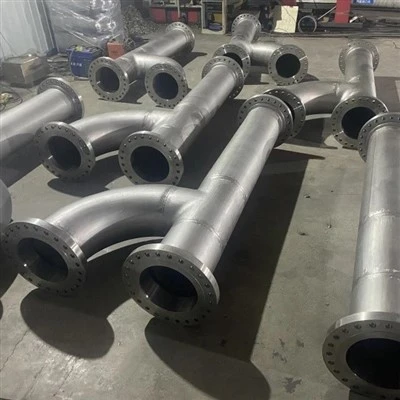
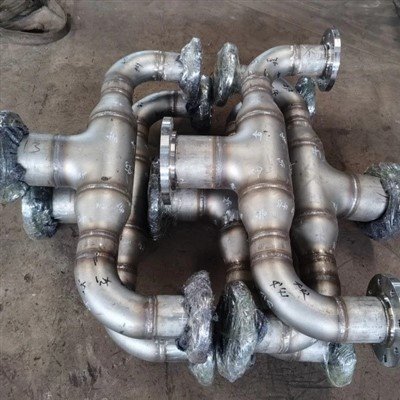
ASTM A182 F11 is a widely specified chromium-molybdenum (chrome-moly) alloy steel used extensively for forged components in high-temperature and high-pressure service, such as flanges, fittings, valves, and pressure vessel parts. But what happens when your project requires an international supplier, adheres to different standards, or needs cost-effective alternatives? Understanding the A182 F11 equivalent grades across global standards is crucial for engineers, procurement specialists, and fabricators. This guide breaks down the exact equivalents and key considerations.

Direct Equivalent Standards to ASTM A182 F11
The closest equivalents are found in European (EN), Japanese (JIS), and International (ISO) standards. A182 F11 Class 2 is often the baseline for comparison due to its prevalence.
European (EN) Equivalent:
EN 10222-2: Steel Forgings for Pressure Purposes - Part 2: Ferritic and Martensitic Steels with Specified Elevated Temperature Properties.
Equivalent Grade: 13CrMo4-5 (Material Number: 1.7335).
Why it's Equivalent: 13CrMo4-5 has nearly identical chemical composition (C, Cr, Mo, Mn, Si) and specified mechanical properties (Tensile Strength, Yield Strength) to A182 F11 Class 2. It's the most direct and universally accepted European equivalent.
Japanese (JIS) Equivalent:
JIS G3201: Steel Forgings for Pressure Vessels.
Equivalent Grade: SFVC1A / SFVC1B.
Why it's Equivalent: SFVC1A/B is specifically designed to match the characteristics of ASTM A182 F11 for pressure vessel forgings. Composition and mechanical properties align closely.
International (ISO) Equivalent:
ISO 9327-2: Steel Forgings for Pressure Purposes - Part 2: Ferritic and Martensitic Steels with Specified Elevated Temperature Properties.
Equivalent Grade: 13CrMo4-5 (Same designation as EN).
Why it's Equivalent: ISO standards often harmonize with EN, and 13CrMo4-5 carries over directly as the equivalent to A182 F11.
Common Trade Names & Other References
- "11-Chrome" or "1-1/4 Chrome": This refers to the approximate chromium content (1.25%) and is a common industry nickname for F11 and its equivalents.
- UNS Designation: K11597 (This is the Unified Numbering System code specifically for A182 F11 material).
- ASME SA-182 F11: This is essentially the same as ASTM A182 F11. "SA" denotes the ASME Boiler and Pressure Vessel Code (BPVC) adoption of the ASTM specification. They are technically identical for ordering purposes within ASME code construction.
Important Considerations When Using Equivalents
- Class Matters: Always specify the Class (1, 2, or 3) when referring to A182 F11. The equivalent grade (like 13CrMo4-5) generally aligns best with F11 Class 2. If you need Class 1 or Class 3, confirm the specific properties of the proposed equivalent material meet your design requirements.
- Heat Treatment is Critical: The properties of F11 and its equivalents are highly dependent on proper heat treatment (quenching and tempering). Equivalent materials must be supplied in the correct heat-treated condition to match the performance of A182 F11.
- Welding Requirements: Like F11, equivalents like 13CrMo4-5 require strict adherence to welding procedures, including preheat, controlled interpass temperature, and mandatory Post Weld Heat Treatment (PWHT). Use matching or compatible filler metals (e.g., AWS E8018-B2).
- Not Interchangeable with A335 P11: While chemically similar, ASTM A335 P11 is a specification for seamless pipe. ASTM A182 F11 is for forgings. They are different product forms under different specifications, though the base chemistry is alike. You cannot directly substitute pipe for a forging or vice-versa based solely on chemistry.
- Certification: For critical applications (especially pressure vessels), ensure the equivalent material is supplied with the required mill test reports (MTRs/CofC) verifying it meets the relevant standard (EN 10222-2, JIS G3201, etc.) and your specified requirements.
- Consult Specifications: Always refer to the governing design code (ASME BPVC, PED, etc.) and project specifications. They dictate the acceptable material standards and any specific equivalence requirements.
A182 F11 Equivalent Summary Table
|
Feature |
ASTM A182 F11 (Class 2 Typical) |
Primary Equivalent (EN/ISO) |
Primary Equivalent (JIS) |
Common Name |
|
Standard |
ASTM A182 |
EN 10222-2 / ISO 9327-2 |
JIS G3201 |
- |
|
Grade |
F11 Class 2 |
13CrMo4-5 |
SFVC1A / SFVC1B |
Applications: Where You'll Find A182 F11
ASTM A182 F11 and its global counterparts (like 13CrMo4-5 and SFVC1A/B) are engineered for demanding environments:
- Power Generation:
High-pressure steam lines, turbine valves, boiler fittings (>540°C / 1000°F service).
Superior creep resistance prevents deformation under sustained stress.
- Oil & Gas Refining/Petrochemical:
Hydroprocessing units, reactor outlet manifolds, catalytic cracker fittings.
Resists hydrogen embrittlement and sulfide corrosion better than carbon steel.
- Chemical Processing:
Piping systems, heat exchanger forgings, reactor internals in moderate-corrosion services.
A182 F11 Class Comparison & Equivalent Alignment
|
Property |
F11 Class 1 |
F11 Class 2 (Benchmark) |
F11 Class 3 |
EN 10222-2 (13CrMo4-5) |
|
Tensile Min (MPa) |
415 |
485 |
520 |
440-590 |
|
Yield Min (MPa) |
205 |
275 |
310 |
275 |
|
Hardness (HB) |
121-174 |
143-207 |
163-235 |
130-190 |
|
Equivalent Match |
Partial |
Direct |
Partial (Verify) |
Direct (Class 2) |
Key Takeaways: Navigating A182 F11 Equivalents
- EN 10222-2: 13CrMo4-5 (1.7335) is the closest global equivalent to ASTM A182 F11 Class 2.
- Class matters: Class 2 is the baseline; specify Class 1/3 only if design requires it.
- Heat treatment and welding controls are critical for performance – don't compromise.
- Traceability saves projects: Always get certified MTRs matching the ordered standard.
- When in doubt: Consult ASME BPVC Section II-D or EN 10222-2 for validated cross-references.