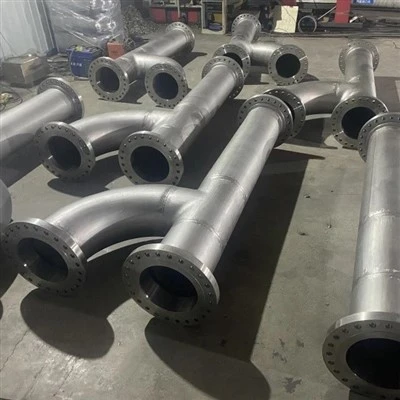
In the realm of advanced materials engineering, where components face extreme heat, corrosive gases, and mechanical stress, few alloys match the capabilities of Hastelloy X. As a senior product manager for a leading manufacturer of high-performance nickel alloys and stainless steels, I witness daily the critical role this material plays in pushing the boundaries of technology. Hastelloy X is not just another alloy; it's a meticulously engineered nickel-chromium-iron-molybdenum superalloy designed to excel where most metals fail.
Hastelloy X Chemical Composition
Hastelloy X (UNS N06002 / W.Nr. 2.4665) belongs to the family of solid-solution strengthened nickel-based superalloys. Its exceptional properties stem from a carefully balanced chemical composition:
- Nickel (Ni): Forms the base (approx. 47% min), providing inherent corrosion resistance, high-temperature strength, and toughness.
- Chromium (Cr): (approx. 20.5-23%) Essential for outstanding oxidation resistance at high temperatures by forming a protective chromium oxide (Cr2O3) scale. Also enhances resistance to sulfidation and certain aqueous corrosives.
- Molybdenum (Mo): (approx. 8-10%) A potent solid-solution strengthener, significantly boosting high-temperature strength and creep resistance. Also enhances resistance to reducing acids and localized corrosion like pitting.
- Iron (Fe): (approx. 17-20%) Primarily a cost-reducing element while maintaining the austenitic structure and contributing to overall fabricability.
- Cobalt (Co): (0.5-2.5%) Enhances high-temperature strength and modifies carbide formation for improved stability.
- Tungsten (W): (0.2-1.0%) Further contributes to solid-solution strengthening, particularly beneficial for creep resistance.
- Carbon (C): (0.05-0.15%) Forms carbides (primarily M23C6 and M6C) which strengthen grain boundaries at intermediate temperatures, crucial for creep resistance. Control is vital to prevent excessive carbide formation impacting toughness or weldability.
Hastelloy X Properties
Hastelloy X is defined by its remarkable combination of properties, making it indispensable in critical applications:
Exceptional High-Temperature Strength and Creep Resistance: Maintains impressive tensile and creep-rupture strength at temperatures exceeding 1200°C (2200°F). This is crucial for components under sustained mechanical loads in hot sections.
Outstanding Oxidation Resistance: Forms a highly protective, adherent chromia scale, resisting oxidation in air and combustion atmospheres up to approximately 1200°C (2200°F). Significantly outperforms standard stainless steels and many other nickel alloys in this regime.
Excellent Resistance to Reducing Sulfidation: Performs well in environments containing sulfur-bearing gases at high temperatures, a common challenge in combustion processes.
Good Fabricability: While requiring more care than stainless steels, Hastelloy X can be successfully hot and cold worked, machined, and welded using appropriate techniques and filler metals (like HAYNES® 242™ or HASTELLOY® W). Annealing is typically performed at 1175°C (2150°F) followed by rapid cooling.
Good Ductility and Toughness: Maintains useful ductility across a wide temperature range, contributing to component reliability under thermal cycling and stress.
|
Property |
Characteristic |
|
Primary Strengthening |
Solid-Solution (Ni-Cr-Mo-W-Co-Fe Matrix) + Carbide Precipitation (M23C6, M6C) |
|
Max Continuous Service Temp (Oxidizing) |
~1200°C (2200°F) |
|
Key Strengths |
High-Temp Strength, Creep Resistance, Oxidation Resistance, Sulfidation Resistance |
|
Fabricability |
Good (hot/cold work, machining, welding - requires expertise) |
|
Structure |
Austenitic |
Hastelloy X Applications
The unique property profile of Hastelloy X makes it the material of choice for the most demanding high-temperature components:
- Aerospace and Jet Engines: Combustion cans, liners, transition ducts, afterburner components, turbine seals, and exhaust systems. Its ability to withstand the intense heat and aggressive combustion gases within jet engines is paramount.
- Industrial Gas Turbines: Combustion chambers, transition pieces, burner nozzles, flare tips, and hot gas path components subject to high temperatures and thermal cycling.
- Heat Treating and Industrial Furnaces: Muffles, retorts, radiant tubes, baskets, and fixtures exposed to high temperatures and potentially corrosive atmospheres.
- Chemical and Petrochemical Processing: Components in reformers, pyrolysis furnaces, and waste incineration systems dealing with high heat and corrosive gases.
- Nuclear Engineering: Certain core components and heat exchangers requiring high-temperature strength and stability.
Hastelloy X Manufacturing
Working with Hastelloy X demands specialized expertise throughout the manufacturing chain:
Melting and Casting: Requires stringent control over composition and inclusion content, typically achieved via vacuum induction melting (VIM) and often followed by electro-slag remelting (ESR) or vacuum arc remelting (VAR) for critical applications.
Thermo-Mechanical Processing: Precise control of forging, rolling, and annealing temperatures is essential to achieve the desired grain structure, mechanical properties, and surface quality. Rapid cooling after annealing prevents detrimental secondary phase precipitation.
Machining: Requires rigid setups, sharp tools (carbide or ceramic), positive rake angles, adequate coolant/lubrication, and lower speeds/feeds than steel due to its work-hardening tendency and high strength. Expertise prevents tool wear and ensures dimensional accuracy.
Welding: Readily welded using GTAW (TIG), GMAW (MIG), SMAW (Stick), and SAW processes. However, strict procedures are vital: pre-cleaning, low heat input, use of matching or compatible high-molybdenum fillers (e.g., HAYNES® 242™, HASTELLOY® W), and often post-weld annealing for optimal corrosion resistance in severe environments. Control of interpass temperature is critical.
Quality Assurance: Rigorous NDT (Non-Destructive Testing - PT, UT, RT) and comprehensive mechanical and chemical testing are non-negotiable for critical components. Traceability is essential.
Hastelloy X vs. Alternatives
While other alloys serve high-temperature roles, Hastelloy X offers a unique balance:
Vs. Stainless Steels (e.g., 310, 330): Far superior oxidation resistance and strength above ~1000°C (1830°F). Essential for jet engines and high-end turbines.
Vs. Inconel 600/601: Offers significantly higher strength, particularly creep strength, at temperatures above 1000°C.
Vs. Haynes 230®: Hastelloy X generally offers superior oxidation resistance and creep strength at the very highest temperatures, though Haynes 230® has advantages in long-term thermal stability and lower thermal expansion in certain scenarios. Selection depends on specific application parameters.
Vs. Precipitation-Hardened Alloys (e.g., Inconel 718, X-750): While these offer higher strength at lower/mid temperatures, Hastelloy X maintains strength much better above ~700°C (1300°F) and has superior oxidation resistance. It also avoids the thermal instability concerns of PH alloys near their aging temperature.
Conclusion
Hastelloy X remains a cornerstone material for engineers tackling extreme environments. Its unparalleled combination of high-temperature strength, oxidation resistance, creep resistance, and fabricability has secured its position for decades in the most critical sections of jet engines, gas turbines, and industrial thermal processes. While demanding to manufacture, the performance payoff is undeniable. For applications where failure is not an option under intense heat and aggressive atmospheres, Hastelloy X is often the proven, reliable solution.