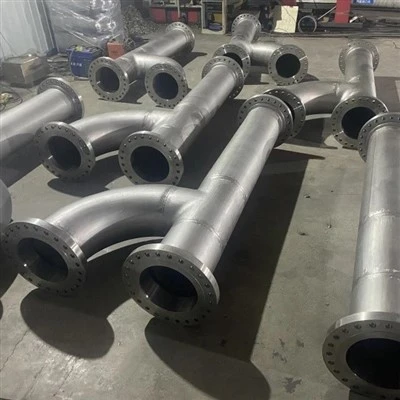
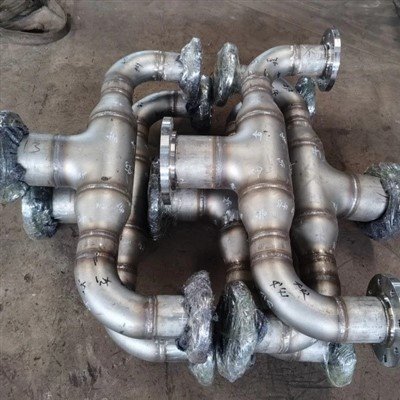
In the demanding world of industrial materials, where corrosion, strength, and longevity are paramount, specific alloys stand out. AL6XN is one such exceptional material. It belongs to the family of "super austenitic" stainless steels, engineered to surpass the capabilities of standard grades like 304 or 316 in highly aggressive environments. Understanding AL6XN is crucial for engineers, designers, and professionals selecting materials for critical applications.

Steel AL6XN Composition
At its core, AL6XN (UNS N08367) is defined by its precise chemical composition, meticulously balanced to deliver outstanding performance. It's an iron-based alloy primarily alloyed with:
High Chromium (Cr): Approximately 20-22%. Chromium forms a passive, protective chromium oxide layer on the surface, providing fundamental corrosion resistance.
High Nickel (Ni): Approximately 23.5-25.5%. Nickel stabilizes the austenitic crystal structure (providing toughness and ductility) and significantly enhances resistance to various corrosive media, including reducing acids and stress corrosion cracking.
High Molybdenum (Mo): Approximately 6.0-7.0%. Molybdenum is the powerhouse for resisting pitting and crevice corrosion, particularly in environments containing chlorides. The high Mo content is a defining feature of AL6XN.
Nitrogen (N): Approximately 0.18-0.25%. Nitrogen acts as a potent solid-solution strengthener, significantly boosting the alloy's yield and tensile strength without sacrificing ductility. It also enhances pitting resistance.
Manganese (Mn) and Copper (Cu): Present in controlled amounts (Mn ~1-2%, Cu ~0.5%) to aid manufacturing and provide supplementary corrosion benefits in specific acids.
Low Carbon (C): Typically less than 0.03%. This minimizes the risk of sensitization (chromium carbide precipitation at grain boundaries during welding or high-temperature exposure), which can lead to intergranular corrosion.
This synergistic blend of elements elevates AL6XN well beyond standard austenitic grades.
Properties of AL6XN
The unique chemistry of AL6XN translates into a compelling set of physical, mechanical, and corrosion properties:
Pitting & Crevice Corrosion: Its high PREN places it among the most resistant stainless steels commercially available. It excels in seawater, brackish water, chlorinated environments, and chemical processing streams.
Stress Corrosion Cracking (SCC): Excellent resistance to chloride-induced SCC, a common failure mode for standard austenitic grades.
General Corrosion: Superior resistance to a wide range of acids, including sulfuric, phosphoric, acetic, and organic acids, especially in moderately oxidizing conditions. It also resists corrosion by alkaline solutions.
High Strength: The nitrogen addition provides substantial solid-solution strengthening. AL6XN offers roughly double the yield strength of Type 316L stainless steel while maintaining excellent ductility and toughness.
Excellent Fabricability and Weldability: Despite its high strength, AL6XN retains the good formability and weldability characteristic of austenitic stainless steels. Standard welding techniques (TIG, MIG, SAW) are used, typically with matching or over-alloyed filler metals to maintain corrosion resistance in the weld zone. Post-weld annealing is generally not required.
Good Physical Properties: It possesses a low coefficient of thermal expansion (similar to carbon steel), high thermal conductivity (for a stainless steel), and good magnetic permeability (generally non-magnetic in the annealed condition).
Stainless Steel AL6XN Applications
The properties of AL6XN make it the material of choice in industries facing severe corrosion challenges:
- Chemical Processing: Reactors, tanks, piping, heat exchangers, and scrubbers handling aggressive acids, chlorides, and complex chemical mixtures.
- Marine & Offshore: Seawater handling systems (piping, pumps, valves), desalination plants (evaporator shells, heat rejection tubing), offshore oil & gas platforms (risers, umbilicals, process piping).
- Oil & Gas: Components exposed to high-chloride, high-H2S environments, downhole tubulars, refinery process streams.
- Pollution Control: Flue gas desulfurization systems, scrubbers, and ducting handling acidic condensates and chlorides.
- Pharmaceutical & Food Processing: Equipment requiring high purity and resistance to cleaning agents and process chemicals.
- Pulp & Paper: Bleach plants, digesters, and liquor handling systems.
- Power Generation: Condenser and heat exchanger tubing in cooling systems using brackish or seawater.
AL6XN vs. Other Stainless Steels
Understanding where AL6XN fits requires comparison:
- AL6XN vs. 316L: AL6XN offers vastly superior pitting/crevice corrosion resistance, higher strength, and much better resistance to chloride SCC. It's the logical upgrade when 316L fails.
- AL6XN vs. 904L: Both are highly corrosion resistant. AL6XN generally has higher strength and a slightly higher PREN, while 904L may have marginally better resistance to pure sulfuric acid. AL6XN is often more readily available and cost-effective for comparable performance.
- AL6XN vs. Duplex Stainless Steel 2205: Duplex grades offer very high strength and good corrosion resistance. However, AL6XN typically provides superior pitting/crevice resistance and better toughness at cryogenic temperatures. Duplex steels can be susceptible to embrittlement at high temperatures where AL6XN remains stable.
- AL6XN vs. Nickel Alloys (e.g., C-276): While nickel alloys offer the highest corrosion resistance, AL6XN provides a highly cost-effective solution for many applications where its performance is sufficient, often at a significantly lower cost and with easier fabrication.
Conclusion
AL6XN represents a pinnacle in stainless steel technology. Its rich in chromium, nickel, molybdenum, and nitrogen, delivers an unparalleled combination of extreme corrosion resistance, high strength, and good fabricability. When standard austenitic stainless steels like 316L fall short in harsh environments laden with chlorides or aggressive chemicals, AL6XN emerges as a robust, reliable, and often economically viable solution. Its widespread adoption across demanding industries like chemical processing, marine, oil & gas, and power generation underscores its critical role as a high-performance material enabling safety, longevity, and efficiency in challenging applications. Understanding AL6XN is essential for specifying the right material where failure is not an option.