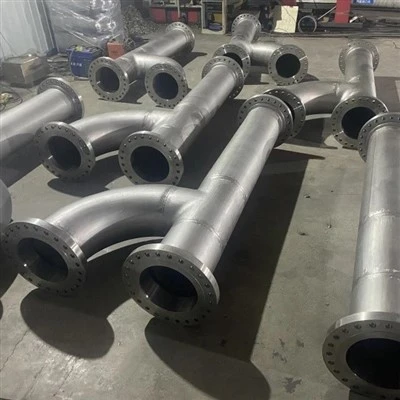
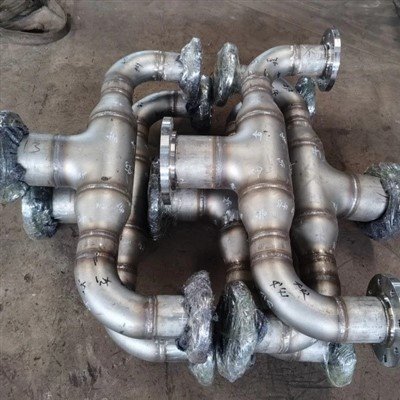
UNS S31603, commonly known by its AISI designation 316L stainless steel, is an austenitic chromium-nickel-molybdenum alloy; it is the low-carbon variant of 316 stainless steel (UNS S31600).

The molybdenum addition sets it apart from the 304 alloy, providing enhanced performance in highly corrosive environments. The crucial difference, indicated by the "L," is the reduced carbon content, which offers distinct advantages, especially in welding applications.
This comprehensive guide delves into the chemical composition, mechanical and physical properties, corrosion resistance, and specific applications.
Chemical Composition (Weight %)
316L is controlled to mitigate the risk of carbide precipitation, a phenomenon critical to maintaining corrosion resistance, particularly after welding.
|
Composition |
Min (%) |
Max (%) |
Function |
|
Carbon (C) |
- |
0.03 |
Low content prevents sensitization/weld decay. |
|
Chromium (Cr) |
16.0 |
18.0 |
Provides primary corrosion and oxidation resistance. |
|
Nickel (Ni) |
10.0 |
14.0 |
Stabilizes the austenitic structure; improves ductility and toughness. |
|
Molybdenum (Mo) |
2.0 |
3.0 |
Enhances resistance to pitting and crevice corrosion, especially in chloride environments. |
|
Manganese (Mn) |
- |
2.0 |
Deoxidizer and aids hot working. |
|
Silicon (Si) |
- |
0.75 |
Improves oxidation resistance. |
|
Phosphorus (P) |
- |
0.045 |
Impurity, kept low. |
|
Sulfur (S) |
- |
0.030 |
Impurity, kept low. |
|
Nitrogen (N) |
- |
0.10 |
Improves mechanical strength and pitting resistance. |
S31603's maximum carbon content of 0.03% directly addresses the potential for intergranular corrosion that can occur in the standard 316 grade when exposed to temperatures between 425℃ and 870℃.
Mechanical and Physical Properties
316L is characterized by excellent strength, toughness, and ductility, even at cryogenic temperatures. It is non-magnetic in the annealed condition but can become slightly magnetic upon cold working.
Mechanical Properties (Annealed Condition)
|
Property |
Value (Metric) |
Value (Imperial) |
|
Tensile Strength |
485 MPa min |
70 ksi min |
|
Yield Strength ) |
170 MPa min |
25 ksi min |
|
Elongation |
40% min |
40% min |
|
Hardness (Rockwell B) |
95 max |
95 max |
Physical Properties
|
Property |
Value |
|
Density |
8.0 g/cm3 |
|
Melting Range |
1375 - 1400 ℃ |
|
Specific Heat |
500 J/Kg·K |
|
Electrical Resistivity |
7.4 µΩ·cm |
|
Thermal Conductivity |
16.2 W/m·K |
|
Coefficient of Thermal Expansion |
15.9 x 10⁻⁶ /K |
Corrosion Resistance
Selecting 316L over 304L is its superior resistance to corrosion and 2-3% molybdenum content.

Pitting and Crevice Corrosion: Molybdenum enhances resistance to pitting and crevice corrosion, particularly in environments containing chlorides, bromides, and other halide ions. This makes 316L the material of choice for marine, coastal, and chemical processing applications.
The Pitting Resistance Equivalent Number (PREN), a measure of an alloy's resistance to pitting, is notably higher for 316L than for 304L.
Intergranular Corrosion: This is the key advantage of the low-carbon "L" grade. When standard stainless steels are welded, the heat-affected zone can form chromium carbides at the grain boundaries, depleting the adjacent material of chromium and thus making it susceptible to corrosion.
With 316L's maximum 0.03% carbon, this carbide precipitation is virtually eliminated, making it suitable for heavy-section welding without the need for post-weld annealing.
General Corrosion: It exhibits excellent resistance to a wide range of corrosive media, including strong acids and bases.
Fabrication and Workability
316L possesses excellent fabrication characteristics, which contribute to its widespread use.

Cold Working: 316L can be readily formed and deep-drawn. It hardens rapidly upon cold working, which can be advantageous for increased strength but may necessitate intermediate annealing for severe forming operations.
Hot Working: Hot working is performed between 900 and 1200℃. For optimal corrosion resistance, hot-worked parts should be fully annealed after processing.
Heat Treatment Annealing (Solution Treatment): This is the only heat treatment that can be applied to 316L. It involves heating to a temperature between 1040 and 1150, followed by rapid cooling to suppress carbide precipitation and maximize corrosion resistance. 316L is not hardenable by thermal treatment.
Welding: 316L is considered exceptionally weldable. It can be readily welded using all standard fusion and resistance welding processes. Due to its low carbon content, it eliminates the risk of weld decay, even in large components.
Post-weld annealing is often unnecessary, simplifying fabrication and reducing cost. If filler metal is required, AWS E316L or ER316L is typically recommended.
UNS S31603 (316L) Applications
Marine and Coastal: Components exposed to saltwater, such as boat fittings, railings, and structural elements.
Chemical and Petrochemical: Equipment for processing and storing chemicals, including reaction vessels, heat exchangers, and pipelines.
Pharmaceutical and Food Processing: Its resistance to cleaning solutions and low carbon content makes it ideal for drug manufacturing and food preparation equipment.
Medical Implants: Due to its high biocompatibility and excellent corrosion resistance to body fluids, it is often used for surgical implants (though specialized alloys may be preferred for long-term use).
Pulp and Paper Industry: Used for digesters, bleach plant equipment, and handling chemicals in the paper-making process.
ASTM A312 UNS S31603 Specification
ASTM A312/A312M is the standard specification for seamless and welded austenitic stainless steel pipe. It specifies the dimensions, tolerances, manufacturing processes, and performance requirements for the pipe.

The dimensional specifications of ASTM A312 steel pipe are primarily determined by three key parameters and are described using the industry-standard nominal pipe diameter (NPS) and schedule number (Schedule Number):
Nominal pipe diameter: This identifies the pipe size and is related to the actual outside diameter (OD). For NPS 14 and above, the NPS is equal to the outside diameter (OD); however, for NPS 12 and below, the actual OD is typically greater than the nominal pipe diameter.
Outer diameter: This is the most critical dimensional parameter for steel pipe. The OD of ASTM A312 steel pipe is fixed, determined by the NPS, and is subject to strict tolerances.
Schedule number: The schedule number determines the wall thickness (WT) of the pipe. Different Schedule Numbers correspond to different wall thicknesses for the same NPS, thus affecting the pipe's pressure-bearing capacity.
Frequently mentioned schedules for ASTM A312 steel pipe include Schedules 5S, 10S, 40S, and 80S. The "S" suffix specifically designates the stainless steel pipe series size. These schedules differ from the carbon steel Schedules 5, 10, 40, and 80 in some sizes, but generally have the same wall thickness above NPS 14.
|
NPS |
DN |
OD (mm) |
Sch. 5S (mm) |
Sch. 10S (mm) |
Sch. 40S (mm) |
Sch. 80S (mm) |
|
1/2 |
15 |
21.34 |
1.65 |
2.11 |
2.77 |
3.73 |
|
3/4 |
20 |
26.67 |
1.65 |
2.11 |
2.87 |
3.91 |
|
1 |
25 |
33.40 |
1.65 |
2.77 |
3.38 |
4.55 |
|
1 \ 1/2 |
40 |
48.26 |
1.65 |
2.77 |
3.68 |
5.08 |
|
2 |
50 |
60.33 |
1.65 |
2.77 |
3.91 |
5.54 |
|
3 |
80 |
88.90 |
2.11 |
3.05 |
5.49 |
7.62 |
|
4 |
100 |
114.30 |
2.11 |
3.05 |
6.02 |
8.56 |
|
6 |
150 |
168.28 |
2.77 |
3.40 |
7.11 |
10.97 |
|
8 |
200 |
219.08 |
2.77 |
3.76 |
8.18 |
12.70 |
|
10 |
250 |
273.05 |
3.40 |
4.19 |
9.27 |
12.70 |
|
12 |
300 |
323.85 |
3.96 |
4.57 |
10.31 |
17.48 |
|
14 |
350 |
355.60 |
3.96 |
6.35 |
11.13 |
15.88 |
|
16 |
400 |
406.40 |
4.19 |
6.35 |
12.70 |
18.26 |
|
24 |
600 |
609.60 |
6.35 |
6.35 |
17.48 |
24.99 |