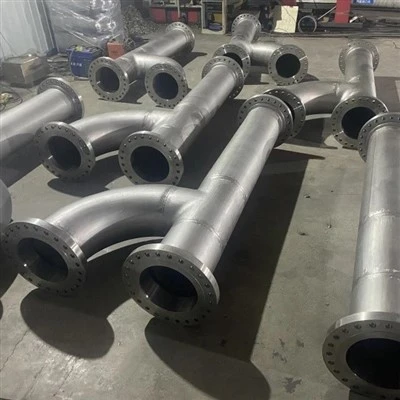
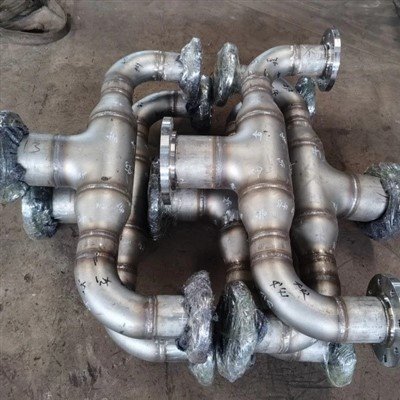
ASTM A312 is the standard specification for seamless, welded, and heavily cold-finished austenitic stainless steel pipe, and UNS S31600 (316 stainless steel) is one of the most widely used grades within this standard.
ASTM A312 covers an extremely wide range, with nominal diameters typically ranging from 1/8 in. to 30 in. and larger. Wall thicknesses are specified in standard schedules, such as SCH 10S to SCH 80S and higher, meeting design requirements from lightweight to high-pressure piping.
UNS S31600 Stainless Steel Overview
S31600 is a molybdenum-containing austenitic stainless steel. Its key advantage is its superior corrosion resistance compared to S30400, particularly in chloride- or halide-containing environments. It offers significant resistance to pitting and crevice corrosion, leading to its frequent designation as "marine-grade stainless steel."

In addition, S31600 also has excellent high-temperature strength, creep strength and fracture stress, and has good ductility and weldability in the annealed state. It is widely used in key industries such as petrochemicals, marine engineering, pharmaceuticals and food processing to transport fluids and gases.
ASTM A312 UNS S31600 Specification
ASTM A312 covers seamless, welded, and heavily cold-worked austenitic stainless steel pipe for use in high-temperature and generally corrosive environments. Steel pipe dimensions under this standard are primarily determined by two key parameters:
Nominal pipe diameter (NPS): This is the nominal pipe size, expressed in inches (e.g., NPS 1/2", NPS 6"). For pipes NPS 12 and below, the outside diameter (OD) is greater than the nominal size; for pipes NPS 14 and above, the OD is the same as the nominal size.
Schedule: Abbreviated as "SCH," it represents the pipe's wall thickness series. A higher schedule number indicates a thicker pipe wall; for the same nominal pipe diameter, increasing wall thickness results in a smaller inside diameter.

Because A312 is a stainless steel pipe, its dimensions are typically referenced by the B36.19M standard, with schedules suffixed with 'S' (e.g., Sch 10S, Sch 40S, Sch 80S). These 'S' series schedules typically have thinner wall thicknesses than their counterparts in B36.10M (e.g., Sch 40, Sch 80), but they may overlap for certain sizes.
The following table lists the outer diameter and wall thickness parameters corresponding to some common nominal pipe diameters and stainless steel pipe schedules (with 'S'). All dimensions are in millimeters (mm).
|
NPS |
DN |
O.D. (mm) |
Sch 5S (mm) |
Sch 10S (mm) |
Sch 40S (STD) (mm) |
Sch 80S (XS) (mm) |
|
1/2" |
15 |
21.3 |
1.65 |
2.11 |
2.77 |
3.73 |
|
3/4" |
20 |
26.7 |
1.65 |
2.11 |
2.87 |
3.91 |
|
1" |
25 |
33.4 |
1.65 |
2.77 |
3.38 |
4.55 |
|
1 1/2" |
40 |
48.3 |
1.65 |
2.77 |
3.68 |
5.08 |
|
2" |
50 |
60.3 |
1.65 |
2.77 |
3.91 |
5.54 |
|
3" |
80 |
88.9 |
2.11 |
3.05 |
5.49 |
7.62 |
|
4" |
100 |
114.3 |
2.11 |
3.05 |
6.02 |
8.56 |
|
6" |
150 |
168.3 |
2.77 |
3.40 |
7.11 |
10.97 |
|
8" |
200 |
219.1 |
2.77 |
3.76 |
8.18 |
12.70 |
Notes:
DN (Diameter Nominal) is a nominal size specified by the International Organization for Standardization (ISO) and approximates the inside diameter.
Schedules 40S and 80S generally correspond to the standard (STD) and extra-strength (XS) wall thicknesses specified in B36.10M for NPS 12 and below.
This table is only a sample of some common sizes; the actual standard covers sizes from NPS 1/8" to NPS 30" and beyond, as well as a more comprehensive series of schedules (e.g., Schedules 5, 10, 20, 30, 60, 100, 120, 140, 160, and XXS).
ASTM A312 UNS S31600 Properties

UNS S31600 Chemical Composition
UNS S31600, also known as TP316 in the ASTM A312 standard, is a molybdenum-containing austenitic stainless steel. Its primary composition includes iron (Fe) as the base element, with chromium (Cr) and nickel (Ni) as the core elements that form the austenitic structure and provide fundamental corrosion resistance.
The most significant difference between this grade and 304 stainless steel is the addition of molybdenum (Mo), which significantly enhances UNS S31600's resistance to pitting and crevice corrosion in chloride-containing environments, making it a "marine-grade" stainless steel.
|
Composition |
UNS S31600 Composition, % |
Purpose |
|
C |
0.08 |
Maintains the austenitic structure; maximum content is limited to reduce grain boundary carbide precipitation. |
|
Mn |
2.00 |
Austenite stabilizer; improves hot workability and strength. |
|
P |
0.045 |
Impurities must be strictly controlled to ensure weldability and toughness. |
|
S |
0.030 |
Excessive levels of impurities impair corrosion resistance and weldability. |
|
Si |
1.00 |
Deoxidizer; improves high-temperature oxidation resistance. |
|
Cr |
16.0 - 18.0 |
Provides a basic passivation layer and corrosion resistance; austenite-forming element. |
|
Ni |
10.0 - 14.0 |
Important austenite stabilizer; improves toughness and ductility. |
|
Mo |
2.00 - 3.00 |
Key element: Significantly improves pitting and crevice corrosion resistance and high-temperature strength. |
|
N |
- |
Stabilizes the austenitic structure and improves strength. |
|
Fe |
Balance |
Base metal. |
UNS S31600 Physical Properties
UNS S31600 has a relatively high density of approximately 7.98g/cm³. Due to its high nickel and chromium content, it is generally non-magnetic or weakly magnetic in the annealed state, with a magnetic permeability close to 1.0.
|
Physical Properties |
Value |
|
Density |
7.98 - 8.00 g/cm3 |
|
Melting Range |
1371 - 1399 ℃ |
|
Thermal Conductivity |
16.2 W/m·K |
|
Specific Heat |
500 J/kg·K |
|
Coefficient of Thermal Expansion |
15.9 x 10⁻⁶ / ℃ |
|
Modulus of Elasticity |
193 - 200 GPa |
|
Electrical Resistivity |
740 µΩ·m |
|
Magnetic Permeability |
About 1.008 |
UNS S31600 Mechanical Properties
|
Mechanical Properties |
Value |
Same Value |
|
Tensile Strength |
515 MPa |
75,000 psi |
|
Yield Strength |
205 MPa |
30,000 psi |
|
Elongation |
40% |
40% |
|
Hardness, Rockwell B |
HRB 95 |
HRB 95 |
|
Hardness, Brinell |
HBW 217 |
HBW 217 |
|
Impact Energy |
> 100 J |
> 74 ft·lb |
ASTM A312 UNS S31600 Steel Pipe Advantages

Corrosion Resistance
UNS S31600's superior corrosion resistance is a key reason for its widespread use, particularly in its resistance to localized corrosion. Due to the inclusion of molybdenum in the alloy, its resistance to pitting and crevice corrosion in chloride environments far exceeds that of S30400.
Heat Resistance
This material offers excellent oxidation resistance and a high continuous operating temperature. In continuous service, UNS 31600 is generally considered resistant to oxidation up to 925°C.
Weldability
TP316, as an austenitic stainless steel, generally exhibits excellent weldability and is suitable for most standard welding methods, including TIG, MIG, and arc welding. Its austenitic structure makes it well weldable and resistant to cracking.
Cold Working and Formability
S31600 exhibits the excellent cold forming properties and high ductility typical of austenitic stainless steels. It is easy to perform deep drawing, bending, stretching and spinning operations, and can be bent into various complex parts by rolling or brake, which is particularly critical for the manufacture of ASTM A312 standard pipes.